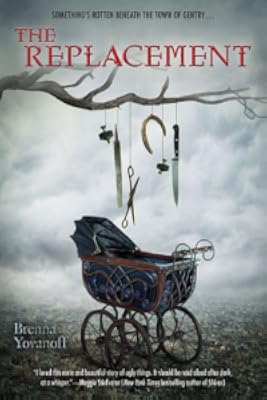
The Replacement
by Brenna Yovanoff 
On This Page
Description
Sixteen-year-old Mackie Doyle knows that he replaced a human child when he was just an infant, and when a friend's sister disappears he goes against his family's and town's deliberate denial of the problem to confront the beings that dwell under the town, tampering with human lives.Tags
Recommendations




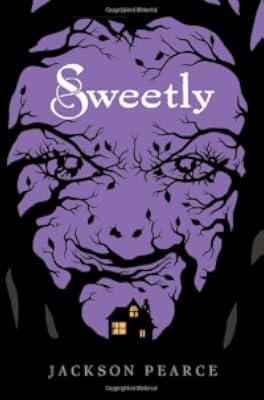
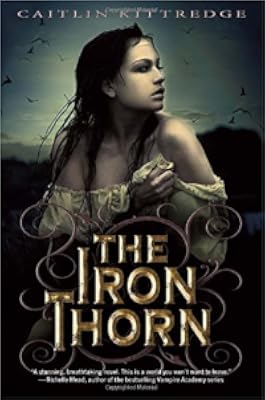
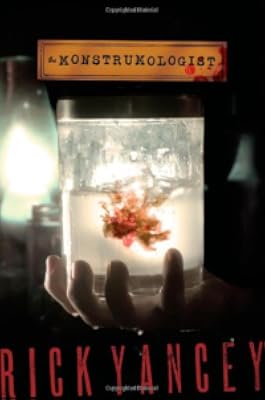
Member Recommendations

Member Reviews
Sixteen year old Mackie Doyle is a young man who doesn’t belong. Anywhere. He has a secret, and it’s one that might destroy him. He is a Replacement; he was left in the crib of a human baby who was snatched in the middle of the night by very scary creatures. His sole mission in life can be summed up succinctly. Don’t. Stand. Out.
It is set in the eerie little town of Gentry where very bad and very scary things happen while the citizens pretend not to see. Gentry is a prosperous town, and it is quickly apparent that there is a horrible price to be paid for its good fortune.
The community has accepted Mackie as the son of the local preacher, but he can never risk exposing his gruesome birthright. Resigned to his health show more limitations—allergies to blood, iron, and consecrated ground, he pulls off his part in the masquerade with support from his devoted sister Emma and friend Roswell. When a classmate’s sister is snatched away in the night, Mackie starts to learn the sinister truth about himself and the place where he lives.
Mackie decides to take a stand, find the courage and the strength to save the missing child and descends into the slithering underworld of Mayhem that lies beneath Gentry. This is a truly terrifying place ruled by the cruel and powerful Morrigan and her court of capricious and deadly creatures.
I loved this book! I loved that this book freaked me out, that it left intense, vivid images in my head that wouldn’t go away. I loved that this book had a messed up, complicated romance but wasn’t a paranormal romance. And most of all, I loved that this book was about the power of love, fierce, angry, insistent love, that can keep you alive against all odds.
Brenna Yovanoff has created a world that is dark, menacing and full of secrets. Her writing is richly atmospheric and very original – not a vampire, werewolf or fallen angel in sight! The fact that this is the author's first published book is phenomenal and she deserves credit for managing to craft its very own tailor-made folklore. Never once did the word 'faerie' get attached to any of the characters, making it feel like a brand-spanking new take on an old concept.
It is also an emotionally fulfilling coming of age story. I was not expecting a vulnerable protagonist searching for a place he belonged. Mackie Doyle is one of the most endearing, likable and heroic guys I've seen in YA fiction in a long time. I find most YA books I read have female lead characters so it was nice to see a male.
Yovanoff has taken the feeling of not belonging that most teens feel to its ultimate extreme. The book explores loneliness and the feeling of being outside of things. Mackie doesn’t quite belong in the human world; he also doesn’t quite belong in the underground world of supernatural creatures that control the fate of the town. He has to decide for himself who he wants to be. He is not perfect, he makes mistakes and bad decisions but ultimately works hard to make things right. You could not find a better guy to root for in a story like this. His voice is perfect. Generally, the characters were well fleshed out and the character growth was convincing and felt real.
And lastly, Yovanoff does a wonderful job of world-building: the town of Gentry is a place of just-below-the-surface evil, and the description of the world under the slag heap is deliciously creepy, peopled with beings that would be truly terrifying to encounter in the light of day, let alone in the gloomy dampness of Gentry.
It is violent and gruesome and I read it in a couple of hours, literally glued to the couch until I reached the last page. I can hardly wait to read more by Brenna Yovanoff. show less
It is set in the eerie little town of Gentry where very bad and very scary things happen while the citizens pretend not to see. Gentry is a prosperous town, and it is quickly apparent that there is a horrible price to be paid for its good fortune.
The community has accepted Mackie as the son of the local preacher, but he can never risk exposing his gruesome birthright. Resigned to his health show more limitations—allergies to blood, iron, and consecrated ground, he pulls off his part in the masquerade with support from his devoted sister Emma and friend Roswell. When a classmate’s sister is snatched away in the night, Mackie starts to learn the sinister truth about himself and the place where he lives.
Mackie decides to take a stand, find the courage and the strength to save the missing child and descends into the slithering underworld of Mayhem that lies beneath Gentry. This is a truly terrifying place ruled by the cruel and powerful Morrigan and her court of capricious and deadly creatures.
I loved this book! I loved that this book freaked me out, that it left intense, vivid images in my head that wouldn’t go away. I loved that this book had a messed up, complicated romance but wasn’t a paranormal romance. And most of all, I loved that this book was about the power of love, fierce, angry, insistent love, that can keep you alive against all odds.
Brenna Yovanoff has created a world that is dark, menacing and full of secrets. Her writing is richly atmospheric and very original – not a vampire, werewolf or fallen angel in sight! The fact that this is the author's first published book is phenomenal and she deserves credit for managing to craft its very own tailor-made folklore. Never once did the word 'faerie' get attached to any of the characters, making it feel like a brand-spanking new take on an old concept.
It is also an emotionally fulfilling coming of age story. I was not expecting a vulnerable protagonist searching for a place he belonged. Mackie Doyle is one of the most endearing, likable and heroic guys I've seen in YA fiction in a long time. I find most YA books I read have female lead characters so it was nice to see a male.
Yovanoff has taken the feeling of not belonging that most teens feel to its ultimate extreme. The book explores loneliness and the feeling of being outside of things. Mackie doesn’t quite belong in the human world; he also doesn’t quite belong in the underground world of supernatural creatures that control the fate of the town. He has to decide for himself who he wants to be. He is not perfect, he makes mistakes and bad decisions but ultimately works hard to make things right. You could not find a better guy to root for in a story like this. His voice is perfect. Generally, the characters were well fleshed out and the character growth was convincing and felt real.
And lastly, Yovanoff does a wonderful job of world-building: the town of Gentry is a place of just-below-the-surface evil, and the description of the world under the slag heap is deliciously creepy, peopled with beings that would be truly terrifying to encounter in the light of day, let alone in the gloomy dampness of Gentry.
It is violent and gruesome and I read it in a couple of hours, literally glued to the couch until I reached the last page. I can hardly wait to read more by Brenna Yovanoff. show less
Mackie Doyle has always felt out of placement in the town of Gentry—and it’s not just because of typical teenage unrest. Mackie is a changeling left in the place of the real Malcolm Doyle 14 years ago. He has only survived this long because of love, but now he is slowly dying, poisoned by the iron that surrounds him.
When his classmate Tate’s “baby sister” dies, Mackie is drawn into her questions about how the town has always turned a blind eye to the stealing of human babies. Mackie is drawn into the world beneath Gentry, a world that is supposed to be his and claim his loyalty.
THE REPLACEMENT is an unusual debut novel that delivers on the lyrical creepiness that its cover promises. Despite some issues with plot development, show more it is a worthy read that will appeal to many different readers on many different levels.
Brenna Yovanoff’s writing absolutely blows my mind. The first chapter is so well written in its mixture of character, setting, conflict, and mood development that you can easily fall under its spell and not be bothered by the few issues in storytelling. You might find yourself stopping every few sentences, eyes lingering on a particular phrase that takes your breath away. Mackie’s world is is a creepy yet magical one, and Brenna’s writing reflects that juxtaposition: you know you are reading about really creepy stuff, but the way in which the creepy stuff is written about is just so delightful.
As the story progressed I felt that there were a few things I would’ve wanted more. I couldn’t get a firm grasp on the politics of the creatures living under Gentry. Why, exactly, are there factions among the world? The humans and creatures of Gentry share a tense but oddly efficient relationship, and I wanted more of a tangible “wrongness” about the deal, more immediacy of the wrongness. In a way, reading THE REPLACEMENT was like experiencing a dream: you know that the world you are seeing or feeling is weird—fantastical, even—and yet there is still a certain veil between you and that world, as if you know it’s a dream and can’t entirely affect you.
Still, both main and supporting characters are strong and likable, and the uniqueness of the story propelled me forward through my few qualms. THE REPLACEMENT is a great choice for an unusual read this fall, and I’m pretty sure I will be going back to this to reread my favorite parts. show less
When his classmate Tate’s “baby sister” dies, Mackie is drawn into her questions about how the town has always turned a blind eye to the stealing of human babies. Mackie is drawn into the world beneath Gentry, a world that is supposed to be his and claim his loyalty.
THE REPLACEMENT is an unusual debut novel that delivers on the lyrical creepiness that its cover promises. Despite some issues with plot development, show more it is a worthy read that will appeal to many different readers on many different levels.
Brenna Yovanoff’s writing absolutely blows my mind. The first chapter is so well written in its mixture of character, setting, conflict, and mood development that you can easily fall under its spell and not be bothered by the few issues in storytelling. You might find yourself stopping every few sentences, eyes lingering on a particular phrase that takes your breath away. Mackie’s world is is a creepy yet magical one, and Brenna’s writing reflects that juxtaposition: you know you are reading about really creepy stuff, but the way in which the creepy stuff is written about is just so delightful.
As the story progressed I felt that there were a few things I would’ve wanted more. I couldn’t get a firm grasp on the politics of the creatures living under Gentry. Why, exactly, are there factions among the world? The humans and creatures of Gentry share a tense but oddly efficient relationship, and I wanted more of a tangible “wrongness” about the deal, more immediacy of the wrongness. In a way, reading THE REPLACEMENT was like experiencing a dream: you know that the world you are seeing or feeling is weird—fantastical, even—and yet there is still a certain veil between you and that world, as if you know it’s a dream and can’t entirely affect you.
Still, both main and supporting characters are strong and likable, and the uniqueness of the story propelled me forward through my few qualms. THE REPLACEMENT is a great choice for an unusual read this fall, and I’m pretty sure I will be going back to this to reread my favorite parts. show less
The story: 16-tear-old Mackie Doyle gets sick at the sight of blood. It's shameful and embarrassing, but worse than that is the fact that he can't touch iron or step on consecrated ground. These are not just inconveniences for Mackie. They are the signs that he is a Replacement, a changeling child placed in the cradle when the human child is stolen. Now a girl at Mackie's school, fierce little Tate, has lost her beloved sister Natalie in the same way. Tate is not letting her sister go without a fight, and she thinks Mackie can help her. Mackie is dying in the human world, and he is pretty sure he can't even help himself.
I loved this book so much that my whole review could be just READ IT, but I did want to say something else, something show more I thought of when I became immersed in the non-human world Yovanoff creates in The Replacement. Why do we read books about (you should excuse the expression) Faerie? Fairies aren't real, so when we read these books, and they resonate with us, we are clearly reading about something that IS real. And I think we are actually reading about classes: especially, people who live at the margins of our pleasant society, people who both support it and subvert it, people who are invisible to most of us, and who, when they become visible, are usually visible as horrors. And that is something worth thinking about...when you read The Replacement. Which you absolutely should. show less
I loved this book so much that my whole review could be just READ IT, but I did want to say something else, something show more I thought of when I became immersed in the non-human world Yovanoff creates in The Replacement. Why do we read books about (you should excuse the expression) Faerie? Fairies aren't real, so when we read these books, and they resonate with us, we are clearly reading about something that IS real. And I think we are actually reading about classes: especially, people who live at the margins of our pleasant society, people who both support it and subvert it, people who are invisible to most of us, and who, when they become visible, are usually visible as horrors. And that is something worth thinking about...when you read The Replacement. Which you absolutely should. show less
Mackie is a changeling who, but all accounts, shouldn’t have survived infancy, but he’s now in high school, living in a small town in which children frequently are stolen and the townspeople mostly suffer in silence, except when they can find a good scapegoat to take their sorrows and frustrations out on. Mackie’s family know what he is but have chosen to love him despite the idea that he was left in place of their actual child/brother, and they help him live his life in such a way that will keep him under the town’s radar. But despite all that, Mackie’s intolerance of iron and his ability to live in the ‘normal’ world are getting worse. If he doesn’t figure out something soon, he’ll die. And then the little sister of show more one of his classmates dies, or rather, the changeling that has been put in her place dies, and Mackie has to decide if he can go on living the half-life he has or if he will face his origins and try to save the town.
A perfect balance of creepy and tender, with excellent characters and equally great writing. Definitely recommended. show less
A perfect balance of creepy and tender, with excellent characters and equally great writing. Definitely recommended. show less
I read this quite a while ago, but I wanted to post a review of it. I only knew it existed because I saw the cover at Costco (of all places!). I immediately rushed to grab a copy from my library and read it. Well, I own it now so that should be a testament to how much I loved this book. From the beginning, I was engaged. Mackie has weaknesses that are really markers of his strength, and he is also strong because of his family and friends who truly love him. I loved Mackie because they cared about him and he cared right back, even if he seemed dismissive of them at times (there was a good reason for it). There wasn't much of a romance, which I liked. The fantasy elements and the mythology and the world-building were all awesome. It was show more dark and believable. Just a great read. The only thing that rubbed me wrong was that the ending seemed a little too... easy. But I'll let you be the judge.
On the plus side, reading this inspired me to start my own novel. That's how good it is, it's inspiring! I'm really looking forward to reading more from this author. show less
On the plus side, reading this inspired me to start my own novel. That's how good it is, it's inspiring! I'm really looking forward to reading more from this author. show less
First of all this is a Horror book so you might want to be wary of it. It is not spooky it's Horror. I had to stop midway through because stupid me started it as soon as I woke up. It can kick you down in the middle of the morning. I needed to get out of my head for a little while because it's not bad it's just something you shouldn't immediately wake up to. After coming back to it I was fine. The rest of the book I was fine too. It just got into my head a little bit too much. So with that rambling portion done let's get on to the book shall we?
So this town is crazy because I would have moved out way before I had a kid. Because they steal your kid. And replace it with one of their sick... creatures. And Mackie is one of those creatures. show more His family knows it but it's something they don't talk about. His "sister" is pretty devoted to him even though there is that underlying problem where he isn't really her brother. It's actually kind of odd to me how much they care and how he got friends because he was really sick in the beginning and everything was going wrong with him. I'm surprised. He wasn't a barrel of laughs if you know what I mean.
He stays in the background because everyone knows what he is but they deny it. But whenever something bad happens like oh say a girl in your class's sister dies he needs to keep his head down before he's bludgeoned to death. It wasn't even her sister Tate says. She's desperate to talk to him because he's the obvious choice. It's not like anyone else would know. So he avoids her. But with a person like Tate that isn't going to last very long.
This is where everything goes awry with Mackie's seemingly good life but truth is he's dying and there is only one place he could get help so of course there is a catch. Now Mackie has to make a choice. The life he's always known or the life he should have had.
Again so creepy but so good in the same sense. I know I keep on saying it and I know I'll probably say it the rest of my life concerning books but I didn't expect this book to be this way. I know what it was about actually in this case which I usually don't or don't remember before I start reading it.... But the characters were so different then what I expected. I didn't expect Mackie to be so... gloomy. And such a background type of guy. He was scary just because of how he acted and then he was not really human so that added to his odd vibe. I seriously could not have kept him if I were his mom. That's just depressing but whatever. Mackie was still quite interesting in his own way and I sort of warmed up to him. I know I must sound weird but this book was really good. If you've read it or if you are going to read it then you'll understand why I can't really describe that it was really good... it was just odd too so that's why I keep tripping over my words. So if you like Horror books I recommend this one and if you know of any others please tell me.
http://shesgotbooksonhermind.blogspot.com/ show less
So this town is crazy because I would have moved out way before I had a kid. Because they steal your kid. And replace it with one of their sick... creatures. And Mackie is one of those creatures. show more His family knows it but it's something they don't talk about. His "sister" is pretty devoted to him even though there is that underlying problem where he isn't really her brother. It's actually kind of odd to me how much they care and how he got friends because he was really sick in the beginning and everything was going wrong with him. I'm surprised. He wasn't a barrel of laughs if you know what I mean.
He stays in the background because everyone knows what he is but they deny it. But whenever something bad happens like oh say a girl in your class's sister dies he needs to keep his head down before he's bludgeoned to death. It wasn't even her sister Tate says. She's desperate to talk to him because he's the obvious choice. It's not like anyone else would know. So he avoids her. But with a person like Tate that isn't going to last very long.
This is where everything goes awry with Mackie's seemingly good life but truth is he's dying and there is only one place he could get help so of course there is a catch. Now Mackie has to make a choice. The life he's always known or the life he should have had.
Again so creepy but so good in the same sense. I know I keep on saying it and I know I'll probably say it the rest of my life concerning books but I didn't expect this book to be this way. I know what it was about actually in this case which I usually don't or don't remember before I start reading it.... But the characters were so different then what I expected. I didn't expect Mackie to be so... gloomy. And such a background type of guy. He was scary just because of how he acted and then he was not really human so that added to his odd vibe. I seriously could not have kept him if I were his mom. That's just depressing but whatever. Mackie was still quite interesting in his own way and I sort of warmed up to him. I know I must sound weird but this book was really good. If you've read it or if you are going to read it then you'll understand why I can't really describe that it was really good... it was just odd too so that's why I keep tripping over my words. So if you like Horror books I recommend this one and if you know of any others please tell me.
http://shesgotbooksonhermind.blogspot.com/ show less
Yovanoff weaves a fantastic tale here about the darker side of what we often think of as faeries but could well also be called demons, gods, or any number of things. That, actually, is part of the point of the novel, mixed and mingled with philosophy about belief being what gives these creatures any power to begin with, no matter what they're called. It's an interesting take on mythology and how it plays in the modern world, and I liked it!
Stylistically, Yovanoff's got some distinction here. I've read some YA novels that could have been written by anybody, for all that their style stood out. This, I'm happy to say, was not one of those books. She plays with stream-of-consciousness, with nonstandard descriptors, and with a slightly show more depressive feeling that suits the plot and the character of the book quite well.
I also loved how the darker secrets of the town were not really secrets. Everyone knew about them, but the code of silence kept anyone from speaking out or doing anything. I was expecting that people would just be rationalizing everything away, that nobody would guess anything's that odd about Mackie or the death of Tate's sister, but no, that wasn't the case. People knew, and they averted their eyes because things were as they had always been, and that was just how it was. Whether they complained about it or believed it really was for the best, it still was.
That whole situation was underscored by an exchange near the end of the novel, when Mackie asks if, after the demise of the Lady, the town would cease to be as good as it had been. He's asked in return if it was ever good, at least in his memory. Simple lines, simple questions, but with a powerful meaning behind them, and that is the essence of what makes Yovanoff so damn good at this! She knows how to condense complicated issues into poignant questions and observations that make you think about them instead of just telling a story that leads you along by the hands and gives you convenient recaps along the way. You've got to have a good understanding of subtleties, of philosophy and the nature of existence and mythology and psychology to appreciate all of the little twists and turns and questions that come up over the course of the 300+ pages.
This is definitely a book worth recommending. If darker intelligent YA urban fantasy is your thing, then definitely grab a copy of The Replacement, and be prepared for something that will leave you a little bit sadder, wiser, and older when it's all said and done. show less
Stylistically, Yovanoff's got some distinction here. I've read some YA novels that could have been written by anybody, for all that their style stood out. This, I'm happy to say, was not one of those books. She plays with stream-of-consciousness, with nonstandard descriptors, and with a slightly show more depressive feeling that suits the plot and the character of the book quite well.
I also loved how the darker secrets of the town were not really secrets. Everyone knew about them, but the code of silence kept anyone from speaking out or doing anything. I was expecting that people would just be rationalizing everything away, that nobody would guess anything's that odd about Mackie or the death of Tate's sister, but no, that wasn't the case. People knew, and they averted their eyes because things were as they had always been, and that was just how it was. Whether they complained about it or believed it really was for the best, it still was.
That whole situation was underscored by an exchange near the end of the novel, when Mackie asks if, after the demise of the Lady, the town would cease to be as good as it had been. He's asked in return if it was ever good, at least in his memory. Simple lines, simple questions, but with a powerful meaning behind them, and that is the essence of what makes Yovanoff so damn good at this! She knows how to condense complicated issues into poignant questions and observations that make you think about them instead of just telling a story that leads you along by the hands and gives you convenient recaps along the way. You've got to have a good understanding of subtleties, of philosophy and the nature of existence and mythology and psychology to appreciate all of the little twists and turns and questions that come up over the course of the 300+ pages.
This is definitely a book worth recommending. If darker intelligent YA urban fantasy is your thing, then definitely grab a copy of The Replacement, and be prepared for something that will leave you a little bit sadder, wiser, and older when it's all said and done. show less
Members
- Recently Added By
Lists

KayStJ's to-read list
1,616 works; 11 members
Author Information

13+ Works 3,842 Members
Brenna Yovanoff is a LibraryThing Author, an author who lists their personal library on LibraryThing.
Awards and Honors
Awards
Common Knowledge
- Canonical title
- The Replacement
- Original publication date
- 2010-09-21
- People/Characters
- Malcolm “Mackie” Doyle; Drew Corbett; Danny Corbett; Roswell Reed; Alice Harms; Stephanie Beecham (show all 18); Jenna Porter; Tate Stewart; Emma Doyle; The Morrigan; Janice; Luther; Carlina Carlyle; The Lady; The Cutter; Sharon Doyle; Natalie Stewart; Connie Stewart
- Important places
- Gentry, Pennsylvania, USA; USA
- Dedication
- FOR DAVID (The first one was always going to be for you.)
- First words
- I don't remember any of the true, important parts, but there's this dream I have.
- Quotations
- "Do you believe in fairy tales?"
"No."
"Not even the nice, grown-up kind where you follow all the rules and you work really hard and get a good job and a family and everything is happily ever after?" - Last words
- (Click to show. Warning: May contain spoilers.)This is just what we do.
- Blurbers
- Stiefvater, Maggie; Kate, Lauren
Classifications
- Genres
- Fiction and Literature, Teen, Fantasy, Horror, Young Adult
- DDC/MDS
- 813.6 — Literature & rhetoric American literature in English American fiction in English 2000-
- LCC
- PZ7 .Y89592 .R — Language and Literature Fiction and juvenile belles lettres Fiction and juvenile belles lettres Juvenile belles lettres
- BISAC
Statistics
- Members
- 1,622
- Popularity
- 13,920
- Reviews
- 141
- Rating
- (3.56)
- Languages
- 10 — English, French, German, Greek, Hungarian, Italian, Korean, Portuguese, Slovenian, Spanish
- Media
- Paper, Audiobook, Ebook
- ISBNs
- 30
- ASINs
- 6