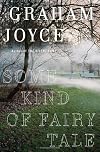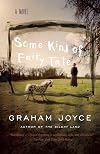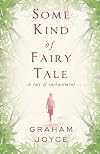
Some Kind of Fairy Tale: A Novel
by Graham Joyce
On This Page
Description
For twenty years after Tara Martin disappeared from her small English town, her parents and her brother, Peter, have lived in denial of the grim fact that she was gone for good. And then suddenly, on Christmas Day, the doorbell rings at her parents' home and there, disheveled and slightly peculiar looking, Tara stands. It's a miracle, but alarm bells are ringing for Peter. Tara's story just does not add up. And, incredibly, she barely looks a day older than when she vanished.Tags
Recommendations
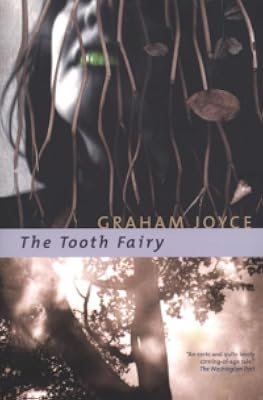
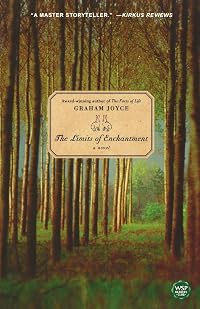
Member Recommendations

Member Reviews
Graham Joyce has just become an author that I will be following. This story of a Tara Harris, teenage girl who disappeared in the woods only to return home virtually unchanged twenty years later has totally captured my heart. For two decades, her family and her lover have grieved and their lives were indelibly altered by Tara’s disappearance and yet now she returns telling a story that nobody can believe. Is this a story of something mundane such as kidnapping or is it something entirely different? And what impact does Tara’s return have on those who have struggled for years to come to terms with her absence?
Deeper meaning resides in the fairy tales told me in my childhood than any truth that is taught in life. - Johann Schiller
Fairy tales were first created not to entertain us, but to teach us. Perhaps Hansel and Gretel was first told to warn children not to wander off in the woods or to accept candy from strangers, but there are other, deeper interpretations of the stories your parents told you as a child. G.K. Chesterton once wrote that “Fairy tales do not tell children the dragons exist. Children already know that dragons exist. Fairy tales tell children the dragons can be killed.”
It doesn’t take long to realize that Joyce has an abiding love of and fascination for the folklore and mythology of his native British Isles. Tara’s name, for starters, just happens to be that of the ritual seat of the High Kings of Ireland, a place of great mystery and magic. Similarly, I doubt that it is coincidental that her brother Peter, has become a farrier, a shoer of horses, a trade long considered natural magicians for their ability to meld the living and the inanimate. Even the names of the pubs they frequent, the Green Man and the Phantom Coach, reek of dark and powerful folklore.
Bottom Line: I loved this book because, from the first page to the last, it is imbued with a sense of the uncanny, am impression that there is something out there beyond our ken that makes the world just a little bit magical. show less
Deeper meaning resides in the fairy tales told me in my childhood than any truth that is taught in life. - Johann
Fairy tales were first created not to entertain us, but to teach us. Perhaps Hansel and Gretel was first told to warn children not to wander off in the woods or to accept candy from strangers, but there are other, deeper interpretations of the stories your parents told you as a child. G.K. Chesterton once wrote that “Fairy tales do not tell children the dragons exist. Children already know that dragons exist. Fairy tales tell children the dragons can be killed.”
It doesn’t take long to realize that Joyce has an abiding love of and fascination for the folklore and mythology of his native British Isles. Tara’s name, for starters, just happens to be that of the ritual seat of the High Kings of Ireland, a place of great mystery and magic. Similarly, I doubt that it is coincidental that her brother Peter, has become a farrier, a shoer of horses, a trade long considered natural magicians for their ability to meld the living and the inanimate. Even the names of the pubs they frequent, the Green Man and the Phantom Coach, reek of dark and powerful folklore.
Bottom Line: I loved this book because, from the first page to the last, it is imbued with a sense of the uncanny, am impression that there is something out there beyond our ken that makes the world just a little bit magical. show less
This is the second Graham Joyce book that I have read and, to my perhaps simplistic view, these novels revolve around core themes. In The Silent Land the theme was love. In Some Kind of Fair Tale it is loss of time/youth.
Peter's sixteen year old sister Tara disappears while taking a walk among the Spring flowers and woods near her home. She returns on cold Christmas day twenty years later, cold, tired, dirty, and to all appearances not having aged in those twenty years. She claims to have spent those years (which to her were only 6 months) with the race of magical creatures that we would call Fairies, although we learn that they not only don't like that term, but that they are very physical and more dangerous and aggressive than we show more imagined.
Woven into a story that is both realistic as well as fantastic is the theme of the loss of youth and of time.
I was struck by the way that the characters are as mystified and unbelieving in the changes that the years have brought to them as they are of the lack of change in Tara. But isn't that the way it always is?
Yesterday I watched my grand-daughter play in my living room and I almost felt as if the fairies had worked some magic because it seems like yesterday that I listened to her mother speak her first words. They clearly have changed so much yet why do I feel that I have not? I didn't feel the rush of years---but I am sure that I look as changed to them as they do to me.
There is a rather sinister scene at the end of the book where we see that the Fairies will soon be after Peter's young daughter. It made me think that even as the Fairies have worked their magic and my little girl is now a mother, I will blink again and my grand-daughter will be a woman. And I will still wonder where it all went. show less
Peter's sixteen year old sister Tara disappears while taking a walk among the Spring flowers and woods near her home. She returns on cold Christmas day twenty years later, cold, tired, dirty, and to all appearances not having aged in those twenty years. She claims to have spent those years (which to her were only 6 months) with the race of magical creatures that we would call Fairies, although we learn that they not only don't like that term, but that they are very physical and more dangerous and aggressive than we show more imagined.
Woven into a story that is both realistic as well as fantastic is the theme of the loss of youth and of time.
Yesterday I watched my grand-daughter play in my living room and I almost felt as if the fairies had worked some magic because it seems like yesterday that I listened to her mother speak her first words. They clearly have changed so much yet why do I feel that I have not? I didn't feel the rush of years---but I am sure that I look as changed to them as they do to me.
There is a rather sinister scene at the end of the book where we see that the Fairies will soon be after Peter's young daughter. It made me think that even as the Fairies have worked their magic and my little girl is now a mother, I will blink again and my grand-daughter will be a woman. And I will still wonder where it all went.
It's become an everyday expression - someone is described as being "away with the fairies" if they seem to be woolgathering, or having odd ideas, or acting strangely. But what if someone came back after twenty years away, claiming actually to have been "away with the fairies"? How would that play with those who were left behind? What does such a disappearance do to family, friends, or the world at large? And how, then, do you undo it when the past comes to call?
That Is the matter at hand in Graham Joyce's last novel, 'Some kind of fairy tale'. Tara returns to her parents' house twenty years after she disappeared, though for her, she claims that only six months have passed; six months that she spent in the Realm of Faerie, a place full show more of earth magic, intense colours and heightened lives full of lust, and love, and art, and death.
Graham Joyce set this novel in his adopted home, the Charnwood Forest to the west of Leicester. The sense of place is such a major factor in this novel, placing the story in a mundane location of semi-rural England, but with the fantastical just a half-turn away. Like other later novels of his, Joyce populated the book with characters from real life contemporary England, and these are well drawn even if they have little more than walk-on parts. Tara turns up on her elderly parents' doorstep; but from an early stage in the book, the central character shifts to her brother, Peter, and her former boyfriend, Ritchie. Ritchie had been given a hard time by the police when Tara first disappeared; the disappearance also killed the friendship between Ritchie and Peter.
Ritchie was perhaps the best-drawn of the characters; an aging muso whose career almost but not quite achieved lift-off. And there's an amusing sub-plot concerning Peter's son, Jack, a thirteen-year-old who is just beginning to discover that the world doesn't always work in his favour. Jack becomes involved, very much against his will, with another character who turns out to be full of surprises.
The style is Joyce's trademark social realism, though I found that the humour quotient was increased in this novel. And one of the chapter-heading epigraphs was a naughty joke on Graham's part. All in all, I found it a compulsive read. The ending is not tidily wrapped up, but really could not have been any other way; and some of the characters find redemption. And the Realm of Faerie is always there, just around the corner... show less
That Is the matter at hand in Graham Joyce's last novel, 'Some kind of fairy tale'. Tara returns to her parents' house twenty years after she disappeared, though for her, she claims that only six months have passed; six months that she spent in the Realm of Faerie, a place full show more of earth magic, intense colours and heightened lives full of lust, and love, and art, and death.
Graham Joyce set this novel in his adopted home, the Charnwood Forest to the west of Leicester. The sense of place is such a major factor in this novel, placing the story in a mundane location of semi-rural England, but with the fantastical just a half-turn away. Like other later novels of his, Joyce populated the book with characters from real life contemporary England, and these are well drawn even if they have little more than walk-on parts. Tara turns up on her elderly parents' doorstep; but from an early stage in the book, the central character shifts to her brother, Peter, and her former boyfriend, Ritchie. Ritchie had been given a hard time by the police when Tara first disappeared; the disappearance also killed the friendship between Ritchie and Peter.
Ritchie was perhaps the best-drawn of the characters; an aging muso whose career almost but not quite achieved lift-off. And there's an amusing sub-plot concerning Peter's son, Jack, a thirteen-year-old who is just beginning to discover that the world doesn't always work in his favour. Jack becomes involved, very much against his will, with another character who turns out to be full of surprises.
The style is Joyce's trademark social realism, though I found that the humour quotient was increased in this novel. And one of the chapter-heading epigraphs was a naughty joke on Graham's part. All in all, I found it a compulsive read. The ending is not tidily wrapped up, but really could not have been any other way; and some of the characters find redemption. And the Realm of Faerie is always there, just around the corner... show less
If you haven't read any Graham Joyce up to now (like me) and you like the kind of fantasy that has a real-world base (I'd call it urban fantasy a la Charles de Lint except this story takes place in a semi-rural setting), a solid grounding in the 'lore' of the fae and wonderful characters and dialogue... well.... you are in for a treat and a half. My husband discovered Joyce and bought up a pile of his novels after reading the first one and now I know why. A young woman, Tara, comes home after being missing for twenty years, presumed dead, although it is an unsolved mystery. She claims that she has only been gone six months. As her parents, brother, and former boyfriend struggle with coming to terms with the story she tells them..... show more that she was taken into.... another realm... Tara herself has to come to terms that whatever else, the time has passed and the changes in herself and in her family, much as she loves them.... the minor plots, the trials and tribulations of a thirteen year old boy, for example, weave marvellously into the bigger story. I'm considering knocking this up to a five, given that I did that thing where you just check out of RL and read like a madwoman until, uh oh, last page. ****1/2 show less
Twenty years ago, at the age of not-quite-sixteen, Tara disappeared in the woods. Now she has reappeared as mysteriously as she vanished, looking a little different but not much older. She claims that she rode off with a man, or a being -- she never uses the word "fairy," but everyone else does -- to some place outside our world, and believes she was gone only six months. Is she telling the literal truth, or is it all some fantasy her mind has manufactured to cope with whatever actually happened? And is she even quite the same person she was when she left?
Personally, I've read enough fantasy that I found her version of events easier to accept than the more psychobabbly explanations, but the story does play around with the ambiguity in show more some interesting ways. And I think there's something about this novel that's deceptively simple. Taken one way, it's a nicely done little story in which ancient folklore is updated to the modern day in a way that asks what it would be like for someone to have that kind of experience and then come back afterward to the real, mundane, modern world and to real, messy human relationships. But I think there's something deeper under there, too, something a little more elusive, something about what those old stories symbolize and mean. Either way, it was an interesting read. show less
Personally, I've read enough fantasy that I found her version of events easier to accept than the more psychobabbly explanations, but the story does play around with the ambiguity in show more some interesting ways. And I think there's something about this novel that's deceptively simple. Taken one way, it's a nicely done little story in which ancient folklore is updated to the modern day in a way that asks what it would be like for someone to have that kind of experience and then come back afterward to the real, mundane, modern world and to real, messy human relationships. But I think there's something deeper under there, too, something a little more elusive, something about what those old stories symbolize and mean. Either way, it was an interesting read. show less
Wow. I was on pins and needles, not sure if this tale was going to pull through the muck of fairy tale pop culture garbage. Or, worse, turn into some kind of horror tale.
It flirted sometimes with both, but then Joyce pulled it out of such dangers and the ending was just wonderful.
This was a wonderfully original story, yet faithful to what is known of old traditional Faery lore (not to be confused with the Disney-fied junk, which is even worse than the sanitized Victorian romantic gossamer notions of the Folk).
Good writing, wonderfully imagined POV, and deliciously satisfying.
It flirted sometimes with both, but then Joyce pulled it out of such dangers and the ending was just wonderful.
This was a wonderfully original story, yet faithful to what is known of old traditional Faery lore (not to be confused with the Disney-fied junk, which is even worse than the sanitized Victorian romantic gossamer notions of the Folk).
Good writing, wonderfully imagined POV, and deliciously satisfying.
Superficially, you'd be correct in thinking Some Kind of Fairy Tale is a straightforward urban fantasy, but you'd be missing the real heart of the book. While the basic premise centres on the return, after a 20 year absence, of a young woman who had been carried off to the fairy realm, it is a heartfelt, insightful and touching exploration of belief, loss, grief, family, friendship, growth and change. There's something deceptively simple and effortless about Graham's crisp, clear, precise, but highly evocative prose style - reminiscent of Robert B. Parker at his best, but with a decidedly 'British' sensibility - that just pulls me straight into the story from the first page and, as with The Silent Land, compelled me to read the book in show more one sitting. Masterful storytelling and easily the best novel I've read in 2012. show less
Members
- Recently Added By
Lists

Faerie Mythology
87 works; 13 members

Books Read in 2016
4,666 works; 199 members

KayStJ's to-read list
1,616 works; 11 members

Books Read in 2021
5,361 works; 114 members
Author Information

47+ Works 5,022 Members
Graham Joyce, a four-time winner of the British Fantasy Award, lives in Leicester, England. His books include Dark Sister, Requiem, and The Tooth Fairy, which received a Booker nomination and was chosen as a Publishers Weekly Best Book of 1998. (Publisher Provided) Graham Joyce was born on October 22, 1954. He received a Master's Degree in modern show more English and American literature from Leicester University. Before becoming an author, he worked for the National Association of Youth Clubs for eight years. His first novel, Dreamside, was published in 1991. His other works included House of Lost Dreams, Requiem, The Tooth Fairy, Some Kind of Fairy Tale, and The Year of the Ladybird. He won several awards including the British Fantasy award. He also taught a creative writing course at Nottingham Trent University. He died of lymphoma cancer on September 9, 2014 at the age of 59. (Bowker Author Biography) show less
Some Editions
Awards and Honors
Awards
Distinctions
Series
Belongs to Publisher Series
Gallimard, Folio SF (570)
Common Knowledge
- Canonical title*
- Comme un conte
- Original title
- Some kind of fairy tale
- Original publication date
- 2012
- Dedication
- To my daughter, Ella
- First words
- In the deepest part of England, there is a place where everything is at fault.
- Publisher's editor
- Kaufman, Jason
- Blurbers
- Straub, Peter
- Canonical DDC/MDS
- 823.914
- Canonical LCC
- PR6060.O93
*Some information comes from Common Knowledge in other languages. Click "Edit" for more information.
Classifications
Statistics
- Members
- 877
- Popularity
- 30,887
- Reviews
- 56
- Rating
- (3.74)
- Languages
- English, French, Italian, Romanian
- Media
- Paper, Audiobook, Ebook
- ISBNs
- 18
- ASINs
- 9