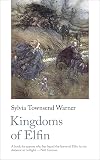
Kingdoms of Elfin
by Sylvia Townsend Warner
On This Page
Description
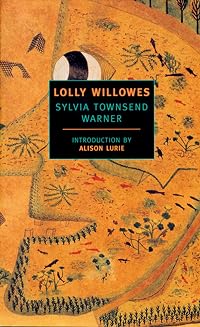
Endorsed with a cover blurb by Neil Gaiman'Handheld Classic's republication this month is a triumph, with a beautiful Arthur Rackham cover' The Bookseller, Paperback Preview Book of the Month for October, 27 July 2018.Sylvia Townsend Warner's final collection of short stories was originally published in The New Yorker, and appeared in book form in 1977. This reprint brings these sixteen sly and enchanting stories of Elfindom to a new readership, and shows Warner's mastery of realist fantasy show more that recalls the success of her first novel, the witchcraft classic Lolly Willowes (1926). Warner explores the morals, domestic practices, politics and passions of the Kingdoms of Elfin by following their affairs with mortals, and their daring flights across the North Sea. The Kingdoms of Brocéliande in France, Zuy in the Low Countries, Gedanken in Austria and Blokula in Lappland entertain Ambassadors, hunt with wolves and rear changelings for the courtiers' amusement. But love and hate strike at fairies of all ranks, as do poverty and the passions of the heart. Enter Elfindom with care.The Foreword is by the noted US fantasy author Greer Gilman, and the Introduction is by Ingrid Hotz-Davies. show lessTags
Recommendations





















Member Recommendations
Member Reviews
Sylvia Townsend Warner has to be one of my favourite writers. I haven’t come across fiction that I viscerally loved as much as ‘Kingdoms of Elfin’ for quite a while. I read most of it last night, after getting home from work to find the internet not working. TalkTalk had decided to cut me off from Brexit coverage and I was grateful for it. In fact, it’s the happiest I’ve ever been about an outage. I listened to the prog rock musical of War of the Worlds on the record player and delighted in these elegant, acidic short stories. The obvious comparison is [b:Jonathan Strange & Mr Norrell|14201|Jonathan Strange & Mr Norrell|Susanna Clarke|https://images.gr-assets.com/books/1357027589s/14201.jpg|3921305], which has a similar show more subject and wit. The writing style, however, is very different. While Susanne Clarke crafts an amusing pastiche of fussy early Victorian narration, Warner has cool acuity that recalls [a:Saki|6076026|Saki|https://images.gr-assets.com/authors/1366003885p2/6076026.jpg]. The stories are linked by recurring characters, but disdain the bourgeois superstition of linear time just as their subjects do.
Warner’s fairies aren’t as actively nefarious as Clarke’s, although they exhibit a sometimes shocking callousness towards humans, animals, and each other. The humans aren’t much better, however, and some of the worst fairy behaviour in the book comes of them imitating humans. The two introductions to the edition I read weren’t hugely enlightening overall, but did comment that Warner’s approach is rather ethnographic. This is certainly the case in [b:The Corner That Held Them|958668|The Corner That Held Them|Sylvia Townsend Warner|https://images.gr-assets.com/books/1348920339s/958668.jpg|943578], a similarly detached narrative about a 14th century convent. Throughout both books, the characters rotate in and out while incident succeeds incident. It's a very decentralised approach to storytelling, one that emphasises atmosphere and institutions over individuals. That Warner creates such fascinating fiction while defying the conventions of plotting and characterisation really emphasises what a great writer she is. Her deft treatment of heavy themes, religion in particular, her deadpan humour, and her artful way with words set her apart. Each of her novels has a very different setting, but I gather they all share this striking sensibility. Those that I’ve read so far have been enchanting.
Before I start quoting my favourite phrases, it’s worth noting that I did not experience ‘Kingdoms of Elfin’ as a book of short stories. As the atmosphere and milieu are so recognisably consistent throughout, I read them as a single novel told in nonlinear fashion. I liked this more than standard short story collections, which I rarely find satisfying unless written by Borges. I couldn’t tell you which story was my favourite, as that would be akin to picking a favourite chapter in a novel. Considering them separately seems inappropriate, as they all fit together so well. Onto some quotes that caught my eye:
And of course that perfect phrase which I couldn’t help mentioning in an update: ‘...the sea, looking like ships wouldn’t melt in its mouth’. Flicking through the book to choose quotes proved challenging, given that practically every paragraph merits acknowledgement of its insight, amusement, strangeness, or beauty. 'Kingdoms of Elfin' is quite simply brilliantly written throughout. In a few deceptively incidental tales, the reader sees the shape of a parallel European history of fairies. The telling of these tales is evocative and clever, full of snide commentary on politics, class, romance, cookery, and much else besides. show less
Warner’s fairies aren’t as actively nefarious as Clarke’s, although they exhibit a sometimes shocking callousness towards humans, animals, and each other. The humans aren’t much better, however, and some of the worst fairy behaviour in the book comes of them imitating humans. The two introductions to the edition I read weren’t hugely enlightening overall, but did comment that Warner’s approach is rather ethnographic. This is certainly the case in [b:The Corner That Held Them|958668|The Corner That Held Them|Sylvia Townsend Warner|https://images.gr-assets.com/books/1348920339s/958668.jpg|943578], a similarly detached narrative about a 14th century convent. Throughout both books, the characters rotate in and out while incident succeeds incident. It's a very decentralised approach to storytelling, one that emphasises atmosphere and institutions over individuals. That Warner creates such fascinating fiction while defying the conventions of plotting and characterisation really emphasises what a great writer she is. Her deft treatment of heavy themes, religion in particular, her deadpan humour, and her artful way with words set her apart. Each of her novels has a very different setting, but I gather they all share this striking sensibility. Those that I’ve read so far have been enchanting.
Before I start quoting my favourite phrases, it’s worth noting that I did not experience ‘Kingdoms of Elfin’ as a book of short stories. As the atmosphere and milieu are so recognisably consistent throughout, I read them as a single novel told in nonlinear fashion. I liked this more than standard short story collections, which I rarely find satisfying unless written by Borges. I couldn’t tell you which story was my favourite, as that would be akin to picking a favourite chapter in a novel. Considering them separately seems inappropriate, as they all fit together so well. Onto some quotes that caught my eye:
For his part, Master Blackbone was delighted with an assistant who was so quick to learn, so free from prejudice, and, above all, a fairy. To employ a fairy was a step up in the world. In London practice every reputable necromancer kept a spiritual appurtenance - fairy, familiar, talking toad, airy consultant. When he had accumulated the money, he would set up in London, where there is always room for another marvel.
[...]
One day in early Spring the Queen was bitten by a mouse.
The result was totally unforeseen. Exhausted by the cares of sovereignty, Balsamine decided to go for a rest cure to Bad Nixenbach, the fashionable Elfin health resort. The greater part of the court went with her, for she did not wish to travel like a nobody. Those she discarded remained at Wirre Gedanken, with a small staff and on the equivalent of board wages.
The discards were named Ludo, Moor, Tinkel, Nimmerlein, and Banian. Ludo was her Consort. Moor, Tinkel, and Nimmerlein had been at various times royal Favourites. All had proved disappointments and were now middle-aged. Banian was young and slender, and had been chosen to make one of her party till at the last moment he became a disappointment by coming out in an anxiety rash.
[...]
Apart from the element of piety, court life at Brocéliande was much the same as in other Kingdoms. There were fashions of the moment - collecting butterflies, determining the pitch of birdsongs, table-turning, cat races, purifying the language, building card castles. There were expeditions to the coast to watch shipwrecks, summer picnics in the forest, deer hunts with the Royal Pack of Werewolves.
[...]
It was of a crawfish soufflé that Count Luxus committed his only metaphor. “It is like eating a cloud,” he said. His cousin Count Brock, who had a more searching mind, replied, “But, unlike a cloud, it nourishes.”
The only person at Dreiviertelstein unmoved by Ludla’s cooking was Queen Aigle. For her, meals recurred like sunrise and sunset. If a sauce had been curdled, a dumpling petrified, she would have acknowledged its cometlike apparition without feeling personally involved.
[...]
The reflection of her earrings flitted about the room like butterflies as she nodded in satisfaction. Rats are wise animals, they know when to move out; they are not immune to mortal diseases as fairies are. If the pestilence came to the very gates of Bourrasque, if the dying, frantic with pain, leaped over the palace wall, if the dead had to be raked into heaps under their noses, no fairy would be a penny the worse. Her court was glad to think this was so but wished there could be a change of subject.
[...]
“My vow forbids me to fly.”
“Your vow?”
“My vow of poverty, chastity, and gravity.”
“Gravity? But you laugh, you tell funny stories.”
“Gravitational gravity. I do not leave the ground.”
And of course that perfect phrase which I couldn’t help mentioning in an update: ‘...the sea, looking like ships wouldn’t melt in its mouth’. Flicking through the book to choose quotes proved challenging, given that practically every paragraph merits acknowledgement of its insight, amusement, strangeness, or beauty. 'Kingdoms of Elfin' is quite simply brilliantly written throughout. In a few deceptively incidental tales, the reader sees the shape of a parallel European history of fairies. The telling of these tales is evocative and clever, full of snide commentary on politics, class, romance, cookery, and much else besides. show less
A collection of wickedly witty stories about an imagined world of Elfin kingdoms (though they are all ruled by rather fickle queens, and their kings tend to be in rather precarious positions).
Although mainly about the Elfin aristocracy, there is also a rag-tag collection of common elfins, changelings, werewolves and humans to add a little breadth and depth. The locales are mainly northern Europe, with the occasional excursion to eastern Europe and the Near East. The time is vaguely 13th to 17th century - it doesn't really matter to the elfins as they live for hundreds, possibly thousands, of years.
These aren't jolly gnomes and fairies, nor noble elves battling evil goblins: the elfins are selfish, untrustworthy, cruel and unpredictable, show more all beneath a veneer of courtly manners and tradition.
The stories read like folktales, and like such they often end suddenly leaving you wanting more. The endings are rarely good ones for the protagonists, few coming away unscathed, though you can never be quite sure. I like this, as nothing is guaranteed and you usually can't predict (at least I couldn't) which way the stories will run.
Fantasy and folklore, murder and the macabre, wonder and wit: brilliant! show less
Although mainly about the Elfin aristocracy, there is also a rag-tag collection of common elfins, changelings, werewolves and humans to add a little breadth and depth. The locales are mainly northern Europe, with the occasional excursion to eastern Europe and the Near East. The time is vaguely 13th to 17th century - it doesn't really matter to the elfins as they live for hundreds, possibly thousands, of years.
These aren't jolly gnomes and fairies, nor noble elves battling evil goblins: the elfins are selfish, untrustworthy, cruel and unpredictable, show more all beneath a veneer of courtly manners and tradition.
The stories read like folktales, and like such they often end suddenly leaving you wanting more. The endings are rarely good ones for the protagonists, few coming away unscathed, though you can never be quite sure. I like this, as nothing is guaranteed and you usually can't predict (at least I couldn't) which way the stories will run.
Fantasy and folklore, murder and the macabre, wonder and wit: brilliant! show less
A collection of short stories about the Elfin kingdoms as Sylvia Townsend Warner imagined them. These elves are not gentle or necessarily wise and definitely not jolly or cute. They are cold, austere, often cruel and careless. Elegant and dazzling for sure but not lovely. They live centuries and have completely different, alien customs and values from ours. They are another race altogether and their depiction in these pages is fascinating. Language is a beautifully crafted thing and by itself enthralled me here. If you like intricate descriptions, that is. The stories are mostly about the elves themselves, and their various courts and aristocracies but sometimes about humans who have been captured by them or tricked into an exchange.... show more The impression lingers, though- of a dim, glittering world in a forest far away and yet close enough to be parallel, a place where beings live their own lives in a strange way, touched differently by time...
from the Dogear Diary show less
from the Dogear Diary show less
Finding the right entry for commenting on Townsend Warner's Kingdoms of Elfin is not unlike going to a reputed fairy brughe and looking for the way in. She has created a place with laws of its own, logic of its own, and a balanced tragic/comic weight of its own. Elfin are not sweet or kind, they are not moral or judgmental, they live in the moment, in part, because they live a good long time and have no reason not to, and because they are not looking out for their immortal souls, not having any. They are not gods, and they are not human but dwell someplace between. They live hierarchically and by rules, many of which serve to point up the inanity and arbitrary quality of social rules (the higher class elfins regard flying to be in bad show more taste) in general. As one mortal visitor learns, it is heaven or hell, living with the elfin and they leave it entirely up to him to decide, which again serves to point out to the reader that much the same applies to us.
The stories beguile and usually end badly for almost everyone involved. The writing is at all times dazzling. I am a sucker for a fictional rant especially a funny one - and Townsend Warner (another brilliant practitioner is Pynchon) is a master of this form, here follows just a tid-bit of the rant on elfin spring cleaning:
"Spring cleanings have a peculiar fascination for those employed in them. A mysterious pair of spectacles is found in a sauceboat; a rusty strongbox in the muniment room is forced open and contains nutmegs; rolls of green baize and a painting of Vesuvius in Eruption are brought to light from the beer cellar; when the brown bed-hangings from the Librarian's bedchamber are hung on the line and the dust beaten out of them, they are discovered to be cloth-of-gold and fall to pieces....." and so on. I like to let that sort of prose wash over me like warm summer rain, and I relish the alliterations, the juxtapositions, and the absurdities. But I imagine that is a matter of taste. show less
The stories beguile and usually end badly for almost everyone involved. The writing is at all times dazzling. I am a sucker for a fictional rant especially a funny one - and Townsend Warner (another brilliant practitioner is Pynchon) is a master of this form, here follows just a tid-bit of the rant on elfin spring cleaning:
"Spring cleanings have a peculiar fascination for those employed in them. A mysterious pair of spectacles is found in a sauceboat; a rusty strongbox in the muniment room is forced open and contains nutmegs; rolls of green baize and a painting of Vesuvius in Eruption are brought to light from the beer cellar; when the brown bed-hangings from the Librarian's bedchamber are hung on the line and the dust beaten out of them, they are discovered to be cloth-of-gold and fall to pieces....." and so on. I like to let that sort of prose wash over me like warm summer rain, and I relish the alliterations, the juxtapositions, and the absurdities. But I imagine that is a matter of taste. show less
I love Warner's whimsical stories. It's a collection, so some are not as spot-on as others, but overall, delightful, slyly funny, highly recommended.
Another book that has long been in my library in paper format. Like The Bloody Chamber, this is a collection of short stories about Faerie, but (mostly) from the perspective of the faeries themselves rather than the unfortunate humans interacting with them or with the narrative. The writing is spare and avoids the lushness of Carter’s prose, yet is equally compelling.
The Faeries of this book are divided into many kingdoms that seem set into the courtliness of the Ancien Regime, but the faeries themselves just are; long-lived but not immortal, and not troubled by notions of religion or scholarship except as a means of whiling away time. Faerie society is very much classified: the aristocracy are primarily courtiers and think it show more déclassé to fly, the servants can and do fly. Their interactions with hunans are, by and large, without malice, but they do take mortal babies, turning them out when the adult grows old.
Recommended. show less
The Faeries of this book are divided into many kingdoms that seem set into the courtliness of the Ancien Regime, but the faeries themselves just are; long-lived but not immortal, and not troubled by notions of religion or scholarship except as a means of whiling away time. Faerie society is very much classified: the aristocracy are primarily courtiers and think it show more déclassé to fly, the servants can and do fly. Their interactions with hunans are, by and large, without malice, but they do take mortal babies, turning them out when the adult grows old.
Recommended. show less
A very specific kind of book for a specific kind of reader. That reader is me. Recommended for fans of Strange and Norrell, who want things to get even more bittersweet, poetic, and distant-from-reality-in-a-way-that-becomes-closer-to-reality…
Members
- Recently Added By
Lists

Best Fantasy Novels
821 works; 357 members

Pleasant Surprises: Books That Exceeded Our Expectations
418 works; 143 members

Faerie Mythology
87 works; 13 members

Books Read in 2022
5,226 works; 115 members
Author Information

69+ Works 6,170 Members
Some Editions
Series
Belongs to Publisher Series
Work Relationships
Contains
Common Knowledge
- Canonical title
- Kingdoms of Elfin
- Alternate titles
- Kingdoms of Elfin: Strange Tales of the Fantastic, the Sinister, and the Impossible
- Original publication date
- 1976
- People/Characters
- Queen Tiphaine; Tiffany; Adam Tod; Minister Guthrie; Pussy Bawdron; Titania (show all 75); Queen Maharit; Morel; Amanita; Thomas of Ercildoune; Elphenor; Weasel (Mustela); Elisha Blackbone; Queen Balsamine (the Red Queen); Ludo; Moor; Tinkel; Nimmerlein; Banian; Mustafa Ibrahim Bey; Queen Melior; Ib; Rollo; Master Tarantula; Aquilon (Master of the Werewolves of Brocéliande); Puck; Lady Pervenche; Beliard; Ivo Penker; Queen Serafica; Dame Habonde; Persis; Dando; Melilot; Queen Morgan Spider; Ludla; Count Horn; Queen Aigle; Prince Ingobaldo; Tamarind; Lady Fidés; Grive; Gobelet; Queen Alionde; Sir Eusebius; Joost; Farouq; Queen Pehlevi; Tomkin; Queen Coventina; Snipe; Queen Jocasta; Sir Bodach; Queen Gruach; Sir Glamie; Nel; Hamlet; Angelica; Castor; Pollux; Sir Bartle; Dame Petronel; Master Caraway; Lady Beline; Sir Maugre; Sir Hune; Lady Ellin; Gibbie; Neep; Sir Moray; Titmuss; Malise; Barco; Gideon Baxter; James Sutherland
- Important places
- Faery; Elfhame, Scotland; Wales, UK; Edinburgh, Scotland, UK; Walsham Borealis, Suffolk, England, UK; Suffolk, England, UK (show all 26); Wirre Gedanken, Harz Mountains, Germany; Bad Nixenbach, Germany; Dreiviertelstein, Styria, Austria; Brocéliande, Brittany, France; Blokula, Sweden; Barenton, Broceliande, Brittany, France; Mynydd Preseli, Preseli Hills, Pembrokeshire, Wales, UK; Castle Ash Grove, Mynydd Preseli, Preseli Hills, Pembrokeshire, Wales, UK; Plynlimon, Cambrian Mountains, Ceredigion, Wales UK; Bourrasque, France; Zuy, Netherlands; Persia; IJmuiden, North Holland, Netherlands; Procolitia, Northumberland, England, UK; Catmere, Northumberland, England, UK; Elfwick, Caithness, Highland, Scotland, UK; Rings Castle, Galloway, Scotland, UK; Pomace, Herefordshire, England, UK; Cotho, Scotland, UK; Foxcastle, Peebleshire, Scottish Borders, Scotland, UK
- Important events
- Elfhame secession
- Epigraph
- The Rev. Dr Opimian: You are determined to connect the immaterial with the material world, as far as you can.
Mr Falconer: I like the material world. I like to live among thoughts and images of the past and the possibl... (show all)e, and even of the impossible, now and then.
-Thomas Love Peacock, ‘Gryll Grange’ - First words
- When the baby was lifted from the cradle, he began to whimper.
- Blurbers
- Gaiman, Neil
- Original language
- English
Classifications
Statistics
- Members
- 421
- Popularity
- 73,726
- Reviews
- 13
- Rating
- (3.88)
- Languages
- English, French, Italian
- Media
- Paper, Ebook
- ISBNs
- 11
- ASINs
- 8