On This Page
Description
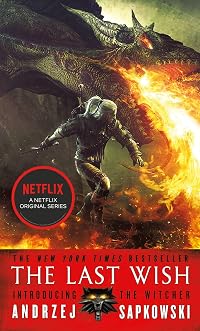
Geralt de Riv, a witcher, uses his vast sorcerous powers to hunt down the monsters that threaten the world, but he soon discovers that not every monstrous-looking creature is evil, and not everything beautiful is good.Tags
Recommendations
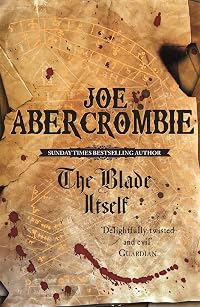
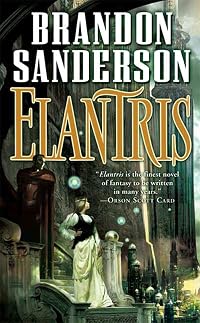
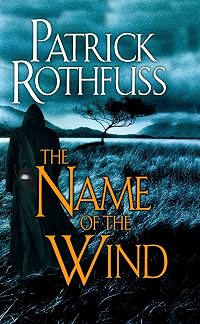
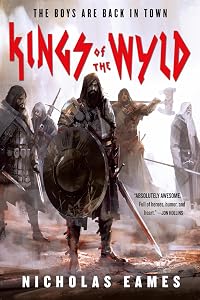




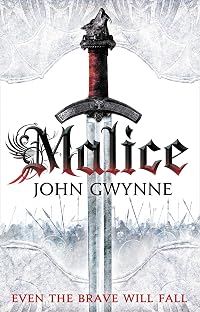
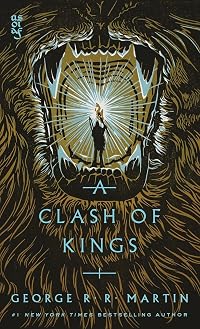
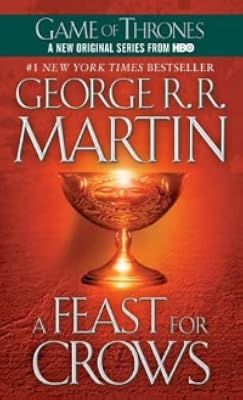
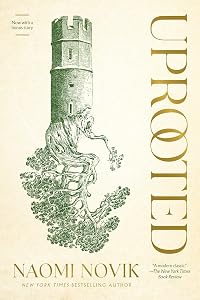
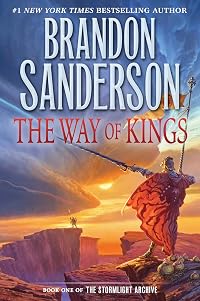

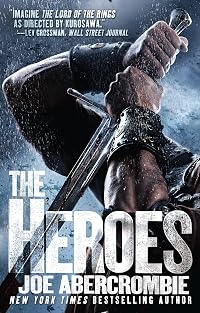

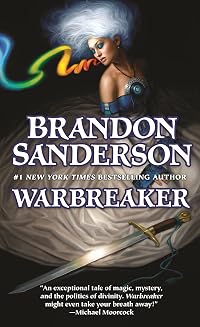
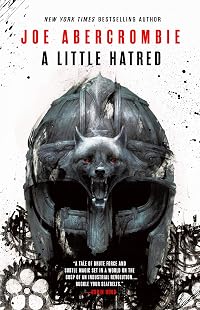


Member Recommendations
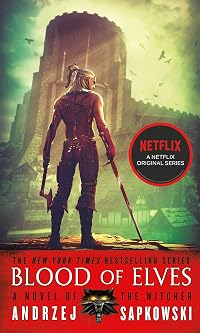
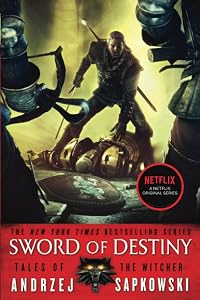
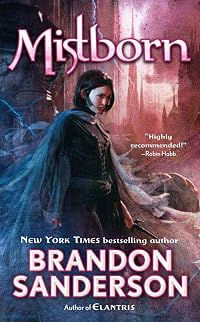
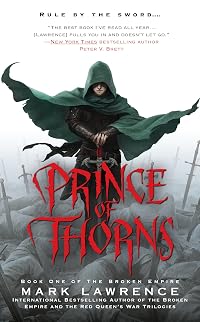
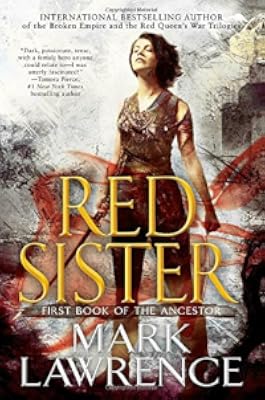
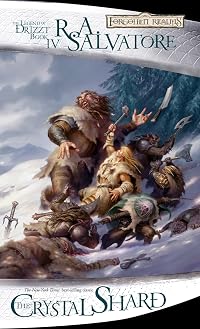
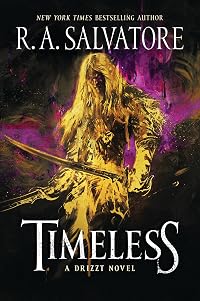
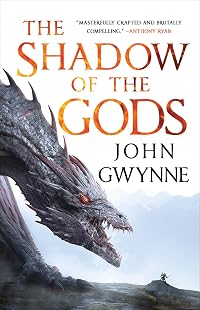
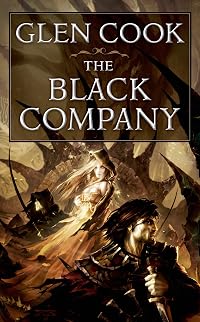
JessiAdams Both are clever adventure fantasy series with some magic and a main character who goes to great lengths to save the world. Both also have moments of laugh out loud hilarity.
Member Reviews
Geralt is a Witcher, tortured and experimented on from childhood to bring out magical abilities, and works as a mercenary, disposing of monsters and rescuing kidnapped baby princesses. Shunned by society for doing their dirty work, but also not allowed to make a living any other way, he lives by his own moral code which often causes him to butt heads with the powerful. This is a frame narrative with a collection of vignettes, stories about jobs he has had and adventures he has gone on, many of which will feel familiar to readers of fairy tales. My favorite was the one based on Beauty and the Beast, which is also my favorite episode of the TV show.
You’d expect the book an extremely popular video game is based on would be a little lame show more but this book absolutely rules. I don’t know why it’s not more popular! The world-building is exquisite and the integration of folklore is so well done. Absolutely read it if you enjoy the video games or the TV show, or if you just like good fantasy. show less
You’d expect the book an extremely popular video game is based on would be a little lame show more but this book absolutely rules. I don’t know why it’s not more popular! The world-building is exquisite and the integration of folklore is so well done. Absolutely read it if you enjoy the video games or the TV show, or if you just like good fantasy. show less
The Last Wish, a collection of short stories centering on the monster-hunting "witcher" Geralt, is the first book in the series from which both The Witcher video games and Netflix's 2020 series The Witcher are adapted.
Overall, I really like this collection. A few things stood out to me as particularly good: the book's clever and well-executed structure, the rich and immersive worldbuilding, and the portrayal of moral complexity.
Unfortunately, there were also some things in this book that made me very uncomfortable, and kept me from rating it a full four stars, notably the text's attitude toward sexual assault.
The book is structured around one longer story set in the present whose chapters are interwoven with shorter, self-contained show more stories set in Geralt's past. The events of the shorter stories serve to illuminate, explain, or give further context to the chapters of the longer story with which they are juxtaposed. This structure is amazingly effective, especially as an introduction to Geralt and the world he inhabits.
Which brings me to the next attribute of this book that really stood out to me: the worldbuilding. The Last Wish and the rest of the Witcher series are secondary world fantasy, and Sapkowski renders that secondary world for the reader with tremendous skill. By casually peppering the narrative and dialogue with place and political names and references to religious practices, gods, historical incidents, and politics, Sapkowski creates a world that feels deep and real and lived in - a world that feels like it exists beyond the borders of the page, and continues to go on when we close the book.
Another thing that makes the world of the The Last Wish feel so real is the way that the morality of the situations portrayed in it are invariably complex and impossible to boil down to a simple right vs wrong binary. Nobody in this book is perfect, and even the worst of characters has an argument that's difficult to simply dismiss out of hand. Like all of us, Geralt is trying to do the right thing in a world where 'the right thing' is rarely obvious or unambiguous, and nearly every choice involves compromising some ideal in favor of another.
All in all, well worth a read, and I definitely recommend it, with the caveat that those particularly sensitive to topics like sexual assault might want to skip both this book, and this series. show less
Overall, I really like this collection. A few things stood out to me as particularly good: the book's clever and well-executed structure, the rich and immersive worldbuilding, and the portrayal of moral complexity.
Unfortunately, there were also some things in this book that made me very uncomfortable, and kept me from rating it a full four stars, notably the text's attitude toward sexual assault.
The book is structured around one longer story set in the present whose chapters are interwoven with shorter, self-contained show more stories set in Geralt's past. The events of the shorter stories serve to illuminate, explain, or give further context to the chapters of the longer story with which they are juxtaposed. This structure is amazingly effective, especially as an introduction to Geralt and the world he inhabits.
Which brings me to the next attribute of this book that really stood out to me: the worldbuilding. The Last Wish and the rest of the Witcher series are secondary world fantasy, and Sapkowski renders that secondary world for the reader with tremendous skill. By casually peppering the narrative and dialogue with place and political names and references to religious practices, gods, historical incidents, and politics, Sapkowski creates a world that feels deep and real and lived in - a world that feels like it exists beyond the borders of the page, and continues to go on when we close the book.
Another thing that makes the world of the The Last Wish feel so real is the way that the morality of the situations portrayed in it are invariably complex and impossible to boil down to a simple right vs wrong binary. Nobody in this book is perfect, and even the worst of characters has an argument that's difficult to simply dismiss out of hand. Like all of us, Geralt is trying to do the right thing in a world where 'the right thing' is rarely obvious or unambiguous, and nearly every choice involves compromising some ideal in favor of another.
All in all, well worth a read, and I definitely recommend it, with the caveat that those particularly sensitive to topics like sexual assault might want to skip both this book, and this series. show less
Honestly I love how much this fleshed out the show for me. I had some questions and this book definitely filled in the gaps! I loved how many of the monsters had backstories from fairy tale lore that we all know and love (Beauty and the Beast, Sleeping Beauty, Snow White). The stories are told mostly through flashbacks as Geralt recovers from wounds he got while fighting a Striga. From meeting Yennefer for the first time, to travelling to the "end of the world," to the law of surprise - Geralt has many an adventure. Nearly all the stories in the book are told during season one of the Netflix series, The Witcher. Freaking fun and I definitely plan on reading more in this series. I want to know more about the man and his adventures!
It took me some time to get used to Sapkowski's style, but when I finally did, I did not want to put this book down. This is not a first book in the traditional sense (as in most other fantasy series), but it introduces the reader to its world through a series of stories. These stories are connected through a continuing frame story: Geralt of Rivia, a Witcher, stays in a temple to rest and reflect on his life. His memories and flashbacks make up the short stories. In this world, Witchers are mutants who are paid to fight monsters, but it becomes clear that sometimes the horrid creatures are not the only monsters.
Sapkowski draws heavily from Slavic mythology, but also from Grimm's fairytales and other stories. He creates a fascinating show more and turbulent world that is as funny as it is dark, as sexy as it is dangerous. But still, there is an underlying sentiment that goes deeper. Geralt knows that he will always be different and more often than not, those who seek his help fear and hate him at the same time.
I did not want this to end and now I cannot wait to read the next book! show less
Sapkowski draws heavily from Slavic mythology, but also from Grimm's fairytales and other stories. He creates a fascinating show more and turbulent world that is as funny as it is dark, as sexy as it is dangerous. But still, there is an underlying sentiment that goes deeper. Geralt knows that he will always be different and more often than not, those who seek his help fear and hate him at the same time.
I did not want this to end and now I cannot wait to read the next book! show less
It took me some time to get used to Sapkowski's style, but when I finally did, I did not want to put this book down. This is not a first book in the traditional sense (as in most other fantasy series), but it introduces the reader to its world through a series of stories. These stories are connected through a continuing frame story: Geralt of Rivia, a Witcher, stays in a temple to rest and reflect on his life. His memories and flashbacks make up the short stories. In this world, Witchers are mutants who are paid to fight monsters, but it becomes clear that sometimes the horrid creatures are not the only monsters.
Sapkowski draws heavily from Slavic mythology, but also from Grimm's fairytales and other stories. He creates a fascinating show more and turbulent world that is as funny as it is dark, as sexy as it is dangerous. But still, there is an underlying sentiment that goes deeper. Geralt knows that he will always be different and more often than not, those who seek his help fear and hate him at the same time.
I did not want this to end and now I cannot wait to read the next book! show less
Sapkowski draws heavily from Slavic mythology, but also from Grimm's fairytales and other stories. He creates a fascinating show more and turbulent world that is as funny as it is dark, as sexy as it is dangerous. But still, there is an underlying sentiment that goes deeper. Geralt knows that he will always be different and more often than not, those who seek his help fear and hate him at the same time.
I did not want this to end and now I cannot wait to read the next book! show less
This was much darker than expected. I have played part of The Witcher 3 and watched Joseph Anderson's video essays about the games maaany times, so I thought I basically knew what to expect, but it's a very dark world and Geralt is much more morally gray than I sort of thought. I was still rooting for Geralt generally speaking, but I felt uncomfortable by many of the things he said/did. All of the characters in this world are very flawed. I wouldn't say I really liked any of them, but they all matched the tone. This world really is full of monsters, but I would say I found all of the humans (or humanoids) more frightening.
The attitude towards women and girls in this world was pretty disgusting, I don't think it's not presented as being show more a good thing, but... at the same time Geralt is the protagonist and although he is definitely less horrible to women than other characters in the book his attitude still isn't uhm the greatest. I'm not sure if as readers we are supposed to agree with some of the things he says or understand that his attitude towards women is something he needs to improve. Some of the things he said/thought were pretty awful/gross. I just have this looming, bad impression that we are supposed to think that some of his weird/bad comments are sensible and I just can't get behind that.
The female characters in the book seemed well-written for the most part at least. I didn't really like Yennefer, but I can see her growing on me. Hopefully. I might feel that way partially because of the way Geralt talks about her. I found it sort of annoying how while in a fight with Geralt her boobs just fall out of her clothes and he keeps looking at them. I guess we're looking at things from Geralt's perspective sort of so it makes sense we hear about him lusting after Yennefer, but it sort of gave me the ick. Look, I like women too. Boobs are great, but some parts of this just felt very much like "dude fantasy" in a way I didn't looove. There are also a lot of female characters that are minors that are described in sort of weird ways. There are many young female characters that have horrible things happen to them and although Geralt never actually does anything bad, his attitude isn't very empathetic. It's off. I don't think that the state of the world is a valid reason for all of this entirely, to a certain extent, but... anyways you can tell the author is a man and I get the impression that maybe his view of women could use some improvement as well. Even just the comments about how Yennefer probably used to be an ugly hunchback were weird and gross and that's definitely not the worst of it. The way Geralt talked about the first girl he saved after becoming a Witcher was just completely disgusting. Sure he saved her from something horrible, he didn't harm her, and he had no wish to harm her sexually or otherwise, so that's all good... buuuuut at the same time, he didn't save her out of kindness and his entire perspective about the interaction was just gross and cold. I won't go into detail, but I was shocked when I read it. It's just not excusable.
I'm still comfortable calling him "morally gray", I think that's accurate, like I said I was still mostly rooting for him, but that kind of thing is sort of difficult to get past especially if it continues. I can see that he's trying and he's not a complete misogynist, but... anyways yeah. He is an interesting character at least. He has done a lot of good and saved people and he has a code and tries to stick to it. Definitely still very flawed, but he's trying idk. I would 10000% understand if somebody else reading this book hated him (and the entire book tbh). His hypocrisy annoyed me in some of these stories too, but I also understand why people like him. I really want to like him. Somehow I still do mostly. I don't really know why/how given all that I've said. I think it's hard to describe without reading the book. He's complicated. I think that's what makes this book work the most probably. The characters feel real and make sense, especially Geralt whether you like him or not. He's definitely not just one thing.
The writing was good overall, I like translations. I liked how there was a main timeline story with side stories throughout that were the majority of the novel. I would like to keep reading through the series. I am looking forward to meeting Ciri. I am interested in the world and I like some of the morality conversations using fairy tale tropes as a jumping off point. The incorporation of fairy tales worked way better than I thought it would because they're all taking sort of vague inspiration rather than retelling the story. They're all twisted, but more than that. You could read this with 0 knowledge of Beauty and The Beast or Aladdin or whatever and it wouldn't matter at all, but I liked the allusions.
I am slightly worried that if I read all of these books that I will feel like I need to go play all three Witcher games or at least Witcher 3 and I just don't know if I can handle that. show less
The attitude towards women and girls in this world was pretty disgusting, I don't think it's not presented as being show more a good thing, but... at the same time Geralt is the protagonist and although he is definitely less horrible to women than other characters in the book his attitude still isn't uhm the greatest. I'm not sure if as readers we are supposed to agree with some of the things he says or understand that his attitude towards women is something he needs to improve. Some of the things he said/thought were pretty awful/gross. I just have this looming, bad impression that we are supposed to think that some of his weird/bad comments are sensible and I just can't get behind that.
The female characters in the book seemed well-written for the most part at least. I didn't really like Yennefer, but I can see her growing on me. Hopefully. I might feel that way partially because of the way Geralt talks about her. I found it sort of annoying how while in a fight with Geralt her boobs just fall out of her clothes and he keeps looking at them. I guess we're looking at things from Geralt's perspective sort of so it makes sense we hear about him lusting after Yennefer, but it sort of gave me the ick. Look, I like women too. Boobs are great, but some parts of this just felt very much like "dude fantasy" in a way I didn't looove. There are also a lot of female characters that are minors that are described in sort of weird ways. There are many young female characters that have horrible things happen to them and although Geralt never actually does anything bad, his attitude isn't very empathetic. It's off. I don't think that the state of the world is a valid reason for all of this entirely, to a certain extent, but... anyways you can tell the author is a man and I get the impression that maybe his view of women could use some improvement as well. Even just the comments about how Yennefer probably used to be an ugly hunchback were weird and gross and that's definitely not the worst of it. The way Geralt talked about the first girl he saved after becoming a Witcher was just completely disgusting. Sure he saved her from something horrible, he didn't harm her, and he had no wish to harm her sexually or otherwise, so that's all good... buuuuut at the same time, he didn't save her out of kindness and his entire perspective about the interaction was just gross and cold. I won't go into detail, but I was shocked when I read it. It's just not excusable.
I'm still comfortable calling him "morally gray", I think that's accurate, like I said I was still mostly rooting for him, but that kind of thing is sort of difficult to get past especially if it continues. I can see that he's trying and he's not a complete misogynist, but... anyways yeah. He is an interesting character at least. He has done a lot of good and saved people and he has a code and tries to stick to it. Definitely still very flawed, but he's trying idk. I would 10000% understand if somebody else reading this book hated him (and the entire book tbh). His hypocrisy annoyed me in some of these stories too, but I also understand why people like him. I really want to like him. Somehow I still do mostly. I don't really know why/how given all that I've said. I think it's hard to describe without reading the book. He's complicated. I think that's what makes this book work the most probably. The characters feel real and make sense, especially Geralt whether you like him or not. He's definitely not just one thing.
The writing was good overall, I like translations. I liked how there was a main timeline story with side stories throughout that were the majority of the novel. I would like to keep reading through the series. I am looking forward to meeting Ciri. I am interested in the world and I like some of the morality conversations using fairy tale tropes as a jumping off point. The incorporation of fairy tales worked way better than I thought it would because they're all taking sort of vague inspiration rather than retelling the story. They're all twisted, but more than that. You could read this with 0 knowledge of Beauty and The Beast or Aladdin or whatever and it wouldn't matter at all, but I liked the allusions.
I am slightly worried that if I read all of these books that I will feel like I need to go play all three Witcher games or at least Witcher 3 and I just don't know if I can handle that. show less
I was surprised by how much I enjoyed Netflix’s adaptation that I decided to order the books to get the rest of the story during what is sure to be an interminable wait for Season 2. The Last Wish is billed as a collection of short stories, but that isn’t quite accurate. The book has a through line with the sections entitled “The Voice of Reason”. These chapters take place while Geralt is in a Temple recovering from his encounter with the Striga, under the care of Mother Nenneke. In between those sections, the book jumps to various adventures. For example, when Dandelion the Bard comes to see Geralt at the Temple, the next section jumps to one of their journeys in the past. I liked the structure a lot more than typical short show more story collections because of this.
I was further surprised at how faithful the show was to the stories here. Ciri doesn’t appear at all, which was an improvement as far as I’m concerned, and Yennefer is mostly referenced in passing – she doesn’t take an active role. This left the focus very much on Geralt, which helped develop his character more. He’s not quite so stoic as the show, mainly because we get to know what he is thinking. The adventures are entertaining, with well-done action pieces, fantastical creatues and a fair amount of dry humor. The worldbuilding is solid considering this isn’t a full novel. Geralt travels frequently which introduces locations and peoples.
The translation in this edition is excellent, with only a few too-modern clichés that didn’t seem to fit the tone/setting (e.g. a character “popped her cherry.”) For those who may be sensitive to violence and/or sex: there is violence, but little gore, and there’s intimacy, but nothing overtly explicit. Overall, I enjoyed this enough that I immediately started the next collection. Recommended. show less
I was further surprised at how faithful the show was to the stories here. Ciri doesn’t appear at all, which was an improvement as far as I’m concerned, and Yennefer is mostly referenced in passing – she doesn’t take an active role. This left the focus very much on Geralt, which helped develop his character more. He’s not quite so stoic as the show, mainly because we get to know what he is thinking. The adventures are entertaining, with well-done action pieces, fantastical creatues and a fair amount of dry humor. The worldbuilding is solid considering this isn’t a full novel. Geralt travels frequently which introduces locations and peoples.
The translation in this edition is excellent, with only a few too-modern clichés that didn’t seem to fit the tone/setting (e.g. a character “popped her cherry.”) For those who may be sensitive to violence and/or sex: there is violence, but little gore, and there’s intimacy, but nothing overtly explicit. Overall, I enjoyed this enough that I immediately started the next collection. Recommended. show less
Members
- Recently Added By
Lists

Best Fantasy Originally Published in a Language Other Than English
84 works; 25 members

EU Fiction: 1950-2022
223 works; 70 members

Top Five Books of 2022
736 works; 272 members

Top Five Books of 2020
982 works; 350 members

Top Five Books of 2021
604 works; 181 members

Books Read in 2023
5,638 works; 147 members

Julie's Read in 2021
19 works; 1 member

Short Story Collections and Anthologies
261 works; 42 members

Books Read in 2026
2,034 works; 68 members

Read in 2020
33 works; 1 member

Book Worlds We'd Like To Visit
322 works; 158 members

Favorite Books in Translation
320 works; 133 members

2022 Challenge
24 works; 1 member

Witchy Fiction
253 works; 126 members

Recommended Fantasy Books
77 works; 5 members

Ranking
66 works; 1 member

The Worst Bestsellers Podcast
295 works; 5 members

Books Read in 2022
5,226 works; 115 members

SF & Fantasy in Translation
95 works; 18 members

Mind Expanding Books by hackerkid
581 works; 8 members

Books Read in 2021
5,361 works; 114 members

Overdue Podcast
806 works; 9 members

infjsarah's wishlist
408 works; 2 members

Books Read in 2020
4,379 works; 124 members

Speculative Fiction from around the World
610 works; 18 members

Books Read in 2017
4,249 works; 130 members

Books referenced in the Astral Library
60 works; 1 member
Author Information

121+ Works 43,667 Members
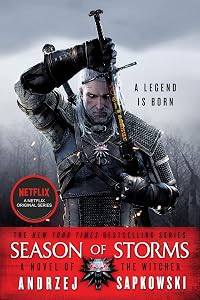
Andrzej Sapkowski is a fantasy writer, economist, and translator, he wrote the best-selling book series The Witcher and recently wrote the best-selling book, Lady of the Lake. In 2018 his title, Season of Storms, made the bestseller list. (Bowker Author Biography)
Some Editions
Awards and Honors
Awards
Distinctions
Notable Lists
Series

Work Relationships
Is contained in
Contains
Has the adaptation
Common Knowledge
- Canonical title
- The Last Wish
- Original title
- Ostatnie życzenie
- Alternate titles*
- واپسین آرزو
- Original publication date
- 1993
- People/Characters
- Geralt of Rivia; Jaskier; Nenneke; Yennefer of Vengerberg; Dennis Cranmer; Falwick (show all 90); Iola; Tailles; Adda the White; Foltest; Ostrit; Segelin; Treska; Velerad; Roach; Nivellen; Rulle Asper; Vereena; Abrad; Aridea; Audoen; Bernika of Talgar; Caldemeyn; Borg; Carrypebble; Karelka; Centurion; Eltibald; Evermir; Fialka; Fredefalk; Idi; Irion; Libushe; Marilka; Renfri; Civril; Fifteen; Nimir; Nohorn; Tavik; Vyr; Stregebor; Silvena; Zavist; Ravix of Fourhorn; Calanthe; Pavetta; Haxo; Vissegerd; Eylembert of Tigg (Coodcoodak); Draig Bon-Dhu; Drogodar; Eist Tuirseach; Mousesack; Urcheon of Erlenwald (Duny); Crach an Craite; Windhalm of Attre; Rainfarn; Tinglant; Fodcat; Wieldhill; Strept; Dana Méadbh; Dhun; Filavandrel aén Fidháil; Galarr; Lille; Nettly; Torque; Toruviel; Vanadáin; Beau Berrant; Cerberus; Chireadan; Dezmod; Errdil; Eskel; Ethain; Geoffrey Monck; Heribert; Krepp; Laurelnose; Lebiodus; Neville; Stammelford; Triss Merigold; Valdo Marx; Virginia; Vratimir
- Important places
- Brokilon; Aedd Gynvael
- Related movies
- Wiedzmin (2001 | IMDb); The Witcher (2019 | IMDb)
- First words
- She came to him toward morning.
- Quotations*
- "Meinst du nicht" - er lächelte -, "dass mein Unglaube an den Sinn solch einer Trance ihren Zweck von vornherein zunichte machen würde?"
"Nein, das meine ich nicht". Und weißt Du, warum?"
"Nein."
Nenneke neigte de... (show all)n Kopf, blickte ihm in die Augen, ein seltsames Lächeln auf den bleichen Lippen. "Weil das der erste mir bekannte Beweis dafür wäre, dass Unglaube irgend etwas bewirken kann." - Last words
- (Click to show. Warning: May contain spoilers.)"Farewell," she whispered, not looking him in the eye.
- Publisher's editor
- Mirosław, Kowalski
- Original language
- Polish
- Disambiguation notice
- Contains 7 short stories. do not combine with 5 story editions.
*Some information comes from Common Knowledge in other languages. Click "Edit" for more information.
Classifications
- Genres
- Fantasy, Fiction and Literature
- DDC/MDS
- 891.8538 — Literature & rhetoric Literatures of other languages East Indo-European and Celtic literatures West and South Slavic languages (Bulgarian, Slovene, Polish, Czech, Slovak, Serbo-Croatian, and Macedonian) Polish Polish fiction 1989–
- LCC
- PG7178 .A65 .O8613 — Language and Literature Slavic languages and literatures. Baltic languages. Albanian language Slavic. Baltic. Albanian Slavic Polish
- BISAC
Statistics
- Members
- 10,012
- Popularity
- 1,002
- Reviews
- 267
- Rating
- (3.94)
- Languages
- 35 — Belarusian, Bulgarian, Czech, Danish, Dutch, English, Estonian, Finnish, French, Georgian, German, Greek, Hebrew, Hungarian, Italian, Japanese, Latvian, Lithuanian, Norwegian, Farsi/Persian, Polish, Romanian, Russian, Serbian, Croatian, Slovak, Slovenian, Spanish, Swedish, Turkish, Ukrainian, Portuguese (Portugal), Portuguese (Brazil), Chinese, traditional, Chinese, simplified
- Media
- Paper, Audiobook, Ebook
- ISBNs
- 112
- ASINs
- 35