On This Page
Description
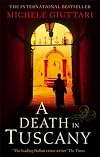
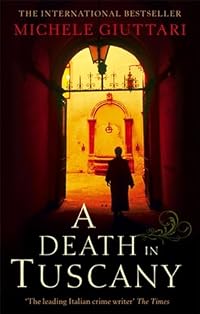
In the picturesque Tuscan hill town of Scandicci, the body of a girl is discovered. Scantily dressed, she is lying by the edge of the woods. Chief Superintendent Michele Ferrara, head of Florence's elite Squadra Mobile, takes the case. Because toxins were discovered in the girl's body, many assume that she died of a drug overdose. But Ferrara quickly realizes that the truth is darker than that: he believes the girl was murdered.--From back cover.Tags
Recommendations







Member Reviews
A long, complex police investigation, headed by Michele Ferrara, Chief Superintendent of Florence's Squadra Mobile. It all begins with the discovery of a young girl, near death, in a field. It is soon found that she was the victim of a drug overdose but Ferrara suspects she was not a habitual user; nor was she a prostitute.
Typically, Ferrara runs afoul of his supervisors when he pursues some aspects of the case, and later when a close friend is implicated in another case. Skirting the edges of standard practice, he pulls together his loyal team, focusing on a case that isn't his, but instead belongs to the carabinieri. With the support of his remarkable wife, Petra, he closes in on a drug ring and more.
Giuttari was formerly head of show more Florence police, and admits in an afterword that he drew from his own experience for this case. I noticed particularly the details about how the case was resolved, how the police crafted the approach and capture, and I thought about how realistic it sounded. I am always gratified when actual police procedure is followed rather than some wild-eyed cowboy action. Therefore, kudos! show less
Typically, Ferrara runs afoul of his supervisors when he pursues some aspects of the case, and later when a close friend is implicated in another case. Skirting the edges of standard practice, he pulls together his loyal team, focusing on a case that isn't his, but instead belongs to the carabinieri. With the support of his remarkable wife, Petra, he closes in on a drug ring and more.
Giuttari was formerly head of show more Florence police, and admits in an afterword that he drew from his own experience for this case. I noticed particularly the details about how the case was resolved, how the police crafted the approach and capture, and I thought about how realistic it sounded. I am always gratified when actual police procedure is followed rather than some wild-eyed cowboy action. Therefore, kudos! show less
A DEATH IN TUSCANY is the second book from former Florence police chief Michele Guittari, billed as a bestseller in Italy and translated into nine languages. I was particularly interested to read this as the first book A FLORENTINE DEATH had a number of elements which didn't work at all for me, and I wanted to see if this was first book syndrome or more to do with this particular author's style of storytelling.
A DEATH IN TUSCANY starts out with the discovery of the body of a girl near a small Tuscan hill town. Scantily dressed, no identification, the problem for police is discovering who she is - let alone who killed her. Stepping into lead the investigation is Chief Superintendent Michele Ferrara, head of Florence's elite Squadra show more Mobile, although he is soon distracted by conspiracies to the left and right of him.
Part of my problems with the first book was the overt self-aggrandisement of the central character - I don't think it was too much of a stretch to imagine that it's very much autobiographical, and frankly, the self-reverential tone got really tiresome, really quickly. The second book is only marginally better in this respect, as once again Ferrara seems to be the only person in the entire cast that knows anything, can see anything, understands the clues. Combine that with a plot that just simply did not work, and this book was very disappointing. At the centre of the story is the discovery of this young girl, who quickly becomes the catalyst for a crusade and much righteous (and reasonable) indignation at her fate. That is until Ferrara's best friend goes missing and he heads off in that direction. Which leaves the reader with absolutely no doubt whatsoever that somehow these two seemingly unconnected events will eventually be connected. Which was disappointingly drawn out and overly convoluted to the point where the whole plot became almost laughably contrived. Add to that the requisite shadowy influence of a secret society (in this case the Freemasons as well as the Mafia), political corruption, international drug running and a greatly put upon and misunderstood Ferrara and the whole thing not only lacked credibility, it got dangerously close to silly at points.
The action either lurched forward in chunks of Ferrara's personal brilliance, or bogged down in endless drives, bizarre chats, and detailed descriptions of procedural elements that frankly got so boring it was a real struggle to stay with the book. Which is a pity. Because the death of young people at the hands of sick adults in powerful positions should be a storyline that makes the reader stop and think about what's going on in the world. show less
A DEATH IN TUSCANY starts out with the discovery of the body of a girl near a small Tuscan hill town. Scantily dressed, no identification, the problem for police is discovering who she is - let alone who killed her. Stepping into lead the investigation is Chief Superintendent Michele Ferrara, head of Florence's elite Squadra show more Mobile, although he is soon distracted by conspiracies to the left and right of him.
Part of my problems with the first book was the overt self-aggrandisement of the central character - I don't think it was too much of a stretch to imagine that it's very much autobiographical, and frankly, the self-reverential tone got really tiresome, really quickly. The second book is only marginally better in this respect, as once again Ferrara seems to be the only person in the entire cast that knows anything, can see anything, understands the clues. Combine that with a plot that just simply did not work, and this book was very disappointing. At the centre of the story is the discovery of this young girl, who quickly becomes the catalyst for a crusade and much righteous (and reasonable) indignation at her fate. That is until Ferrara's best friend goes missing and he heads off in that direction. Which leaves the reader with absolutely no doubt whatsoever that somehow these two seemingly unconnected events will eventually be connected. Which was disappointingly drawn out and overly convoluted to the point where the whole plot became almost laughably contrived. Add to that the requisite shadowy influence of a secret society (in this case the Freemasons as well as the Mafia), political corruption, international drug running and a greatly put upon and misunderstood Ferrara and the whole thing not only lacked credibility, it got dangerously close to silly at points.
The action either lurched forward in chunks of Ferrara's personal brilliance, or bogged down in endless drives, bizarre chats, and detailed descriptions of procedural elements that frankly got so boring it was a real struggle to stay with the book. Which is a pity. Because the death of young people at the hands of sick adults in powerful positions should be a storyline that makes the reader stop and think about what's going on in the world. show less
Florence’s Squarda Mobile is called in to investigate the death of an unidentified girl whose body has been found in a nearby village. At first she is paid scant attention as it is assumed she’s just another dead junkie but the head of the Squadra, Michele Ferrara, thinks there is something fishy enough to warrant a more thorough investigation. Not long after the case is opened Ferrara learns his best friend is missing and he shifts his attention, somewhat abruptly, to searching for him. This book started promisingly but I started losing interest at this rather jarring plot shift. Eventually the two cases were connected but the route to get there was one of the most convoluted I’ve ever come across. There were a lot of detailed show more descriptions of complex procedures (the getting and serving of warrants, and endless driving between one place and another) all carried out by an enormous cast of characters whose names I defy anyone to remember in context. In the end though it was just a run down of who did what and when they did it without much insight into why anything was happening.
I had other problems with the book too. Perhaps the author tried to combine too many of his own experiences into the one novel. We had high level political corruption, a paedophile club, international drug running, Ferrara being put on official suspension, freemasons and (of course) the Sicilian mafia. Perhaps he did come across all these things in his career but I doubt it all happened in the space of a couple of weeks.
I also found some of the procedural elements baffling and totally lacking credibility. I suppose a policeman might discuss confidential elements of a case with his trusted wife but I struggle to imagine that the same kind of discussion would take place with an unrelated third party in the room. And I simply do not believe that any police force in any country in the world would allow the adult son of a presumed paedophile to be in the room while the Police watch videos of the father and numerous other men engaged in the obscene (not to mention criminal) torture and rape of children.
I also think Giuttari succumbed to the natural desire to make the central character, presumably based at least in part on himself, a wee bit too superior in every way from other mere mortals. I know we all have fantasy lives in which we are smarter, more compassionate, the most favoured as a boss and more incorruptible than those around us but most of us would surely add a dash of humility and a frailty or two before turning such fantasies into a character for the consumption of others. None of the other characters had the opportunity to do anything other than bask in the reflected glory of somehow knowing the great man and even though I only finished the book this morning I cannot remember a single one of their names.
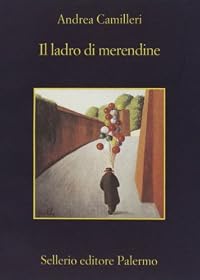
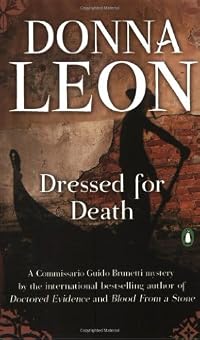
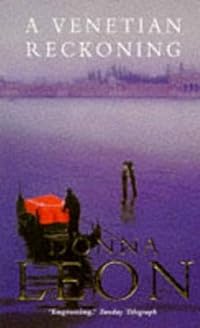
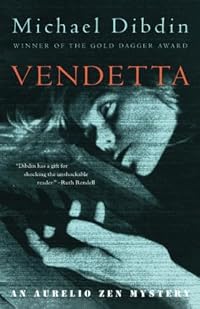
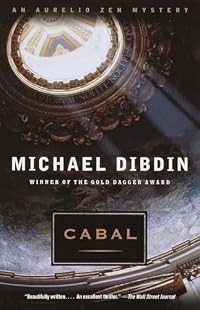
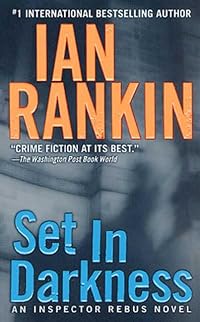
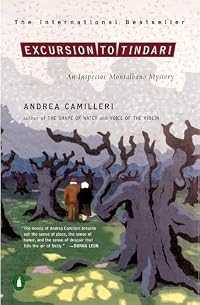
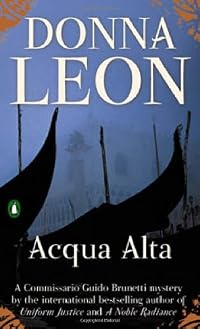
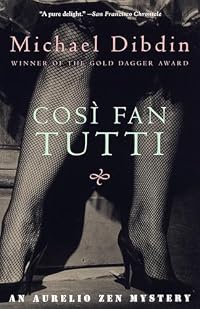
As I’ve written this review I’ve realised there really wasn’t much at all that I liked about the book and my rating has gotten progressively lower. I really can’t recommend it for anyone but to be fair there are more glowing reviews elsewhere. But personally I’d rather read more Michael Dibdin or Donna Leon or give Andrea Camilleri a try next time I want some Italian crime fiction. show less
I had other problems with the book too. Perhaps the author tried to combine too many of his own experiences into the one novel. We had high level political corruption, a paedophile club, international drug running, Ferrara being put on official suspension, freemasons and (of course) the Sicilian mafia. Perhaps he did come across all these things in his career but I doubt it all happened in the space of a couple of weeks.
I also found some of the procedural elements baffling and totally lacking credibility. I suppose a policeman might discuss confidential elements of a case with his trusted wife but I struggle to imagine that the same kind of discussion would take place with an unrelated third party in the room. And I simply do not believe that any police force in any country in the world would allow the adult son of a presumed paedophile to be in the room while the Police watch videos of the father and numerous other men engaged in the obscene (not to mention criminal) torture and rape of children.
I also think Giuttari succumbed to the natural desire to make the central character, presumably based at least in part on himself, a wee bit too superior in every way from other mere mortals. I know we all have fantasy lives in which we are smarter, more compassionate, the most favoured as a boss and more incorruptible than those around us but most of us would surely add a dash of humility and a frailty or two before turning such fantasies into a character for the consumption of others. None of the other characters had the opportunity to do anything other than bask in the reflected glory of somehow knowing the great man and even though I only finished the book this morning I cannot remember a single one of their names.
As I’ve written this review I’ve realised there really wasn’t much at all that I liked about the book and my rating has gotten progressively lower. I really can’t recommend it for anyone but to be fair there are more glowing reviews elsewhere. But personally I’d rather read more Michael Dibdin or Donna Leon or give Andrea Camilleri a try next time I want some Italian crime fiction. show less
I appreciate this series for the authenticity of both the setting and events. It is an intricate plot that requires one to apply your mind to the characters and chronological order of events. This is another book where local and international crime intersects and I find the difference in tone from contemporary American crime fiction refreshing.
A well plotted, police procedural. Well written, although with a slow start, soon all the threads begin to come together, and we have a great novel.
Michele Ferrara, the head of Florence's Squadra mobile, is moved by the death of a very young girl from drug overdose and begins to investigate the circumstances that surrounded the event. He encounters the resistance of the hospital involved in her care and finds his investigation almost halted. In the meantime, his best friend disappears and there are suspicions that he is involved in a murder, which Michelle attempts to investigate. If in the previous novel in this series the author showed the importance of informers in the fight against crime, in this one he underlines the role of investigative journalists, and the need for collaboration between the prosecutor's department and the police if investigations are going to take place show more according to the law. The plot is quite good and the fact that the author was the head of the Florentine police force adds interest to the novel because it is very different from others in the genre. Nevertheless, the fact that there is such a close correlation between the author and the main character makes the later a bit too good to be true, so his intuitions are always right, his relationship with his subordinates exemplary, the goodness of his moral character is above any doubt... As a literary character is not as interesting as other detectives such as Rebus, Montalbano, or even Precious Ramotswe! Michelle's private life is not particularly thrilling either, in particular, his wife is a very boring character which does not seem to do much in life apart from being sweet and beautiful, serve drinks to visitors and being there to offer support to her hard working husband... show less
This is the first book by Michele Giuttari that I have read and I enjoyed it thoroughly. All the different elements in the plot are obviously expected to be brought together at the end and he did not disappoint in his method of doing so. I shall certainly look for his next novel
Members
- Recently Added By
Lists

Italian Murder Mysteries
21 works; 2 members
Author Information

13 Works 1,155 Members
Series

Common Knowledge
- Canonical title
- A Death in Tuscany
- Original title
- La Loggia degli Innocenti
- Important places
- Tuscany, Italy
Classifications
- Genres
- Fiction and Literature, Mystery
- DDC/MDS
- 853.92 — Literature & rhetoric Italian, Romanian & related literatures Italian fiction 1900- 21st Century
- LCC
- PQ4867 .I7998 .L6413 — Language and Literature French, Italian, Spanish and Portuguese literatures Italian literature Individual authors, 1961-2000
- BISAC
Statistics
- Members
- 277
- Popularity
- 116,021
- Reviews
- 12
- Rating
- (3.40)
- Languages
- 7 — Dutch, English, French, German, Greek, Italian, Swedish
- Media
- Paper, Audiobook, Ebook
- ISBNs
- 15
- ASINs
- 2