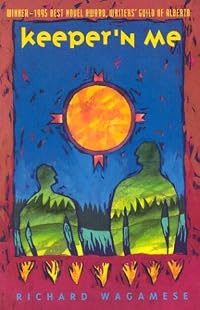
Keeper'n Me
by Richard Wagamese
On This Page
Description
When Garnet Raven was three years old, he was taken from his home on an Ojibway Indian reserve and placed in a series of foster homes. Having reached his mid-teens, he escapes at the first available opportunity, only to find himself cast adrift on the streets of the big city. Having skirted the urban underbelly once too often by age 20, he finds himself thrown in jail. While there, he gets a surprise letter from his long-forgotten native family. The sudden communication from his past spurs show more him to return to the reserve following his release from jail. Deciding to stay awhile, his life is changed completely as he comes to discover his sense of place, and of self. While on the reserve, Garnet is initiated into the ways of the Ojibway--both ancient and modern--by Keeper, a friend of his grandfather, and last fount of history about his people's ways. By turns funny, poignant and mystical, Keeper'n Me reflects a positive view of Native life and philosophy--as well as casting fresh light on the redemptive power of one's community and traditions. show lessTags
Recommendations








Member Reviews
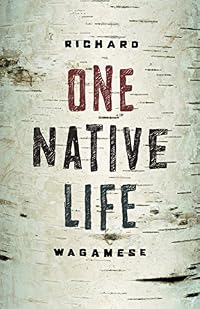
There is an artlessness, a certain tender naiveté that runs through this book that makes it a worthwhile read. This is Wagamese's first novel and all the themes and motifs that he would later come to address, to better effect in this later works, [b:One Native Life|4861295|One Native Life|Richard Wagamese|https://images.gr-assets.com/books/1328759750s/4861295.jpg|4926626] for instance, show their burgeoning here.
The path is familiar: once again, a young native man torn from his culture re-enters his aboriginal world and begins to find himself. In this novel, his mentor, Keeper, is his guide, helping him navigate the narrow waters of re-entry into his culture. Not everybody wants him -- his own brother looks at him with suspicion and show more disdain, as if it were his own fault that he was ripped from his family and raised in the white man's world.
There is a slow, seething anger here, in characters like his brother, who depict the inexpressible rage and frustration at not being able to secure their own home fires because the white man was stronger, more manipulative, intractable. From within this anger, Wagamese's characters demonstrate the damage that anger does when it is turned inward: how it becomes a strong force to render the people impotent, and so make them ashamed enough to not want to regain their cultural roots for a long time. The ultimate betrayal of assimilation.
Lots of pain -- and lots of humour, too.
So, while it is not Wagamese's best book, because it was his first, it is worth reading, for the shared journey that we take alongside one aboriginal man finding his way back into the joy of being himself again. show less
The path is familiar: once again, a young native man torn from his culture re-enters his aboriginal world and begins to find himself. In this novel, his mentor, Keeper, is his guide, helping him navigate the narrow waters of re-entry into his culture. Not everybody wants him -- his own brother looks at him with suspicion and show more disdain, as if it were his own fault that he was ripped from his family and raised in the white man's world.
There is a slow, seething anger here, in characters like his brother, who depict the inexpressible rage and frustration at not being able to secure their own home fires because the white man was stronger, more manipulative, intractable. From within this anger, Wagamese's characters demonstrate the damage that anger does when it is turned inward: how it becomes a strong force to render the people impotent, and so make them ashamed enough to not want to regain their cultural roots for a long time. The ultimate betrayal of assimilation.
Lots of pain -- and lots of humour, too.
So, while it is not Wagamese's best book, because it was his first, it is worth reading, for the shared journey that we take alongside one aboriginal man finding his way back into the joy of being himself again. show less
The first third of Keeper ‘n Me details the life of Garnet Raven who was taken from his Objibway parents when he was three years old and raised in non-native foster homes.
He grows up never knowing who or where his real family is and his search for identity and belonging are authentic and poignant.
Like so many First Nations people from similar backgrounds, his dysfunctional life inevitably finds him in prison where he is contacted by someone who says he’s his brother. Indeed, he has an entire family living on a reserve in northern Ontario.
Upon his release and with nowhere else to go he decides to check it out.
The balance of The Keeper ‘n Me is the story of his reunion with his family on the remote White Dog reserve and his show more introduction to the culture and spirituality of his ancestors by an old man referred to as Keeper.
Life on the White Dog reserve is mostly boring and so is reading about it. The anecdotes about events are quaint but mostly uninspiring. The importance of the connection Indigenous people have with nature is reinforced again and again and ...
The climax of the story comes when Garnet spends four days in the wilderness by himself – a vision quest of sorts, which, of course manifests in meaningful dreams about his ancestors.
If this book wasn’t written by an Indigenous person it would be dismissed as a clichéd misrepresentation of the contemporary First Nations people. show less
He grows up never knowing who or where his real family is and his search for identity and belonging are authentic and poignant.
Like so many First Nations people from similar backgrounds, his dysfunctional life inevitably finds him in prison where he is contacted by someone who says he’s his brother. Indeed, he has an entire family living on a reserve in northern Ontario.
Upon his release and with nowhere else to go he decides to check it out.
The balance of The Keeper ‘n Me is the story of his reunion with his family on the remote White Dog reserve and his show more introduction to the culture and spirituality of his ancestors by an old man referred to as Keeper.
Life on the White Dog reserve is mostly boring and so is reading about it. The anecdotes about events are quaint but mostly uninspiring. The importance of the connection Indigenous people have with nature is reinforced again and again and ...
The climax of the story comes when Garnet spends four days in the wilderness by himself – a vision quest of sorts, which, of course manifests in meaningful dreams about his ancestors.
If this book wasn’t written by an Indigenous person it would be dismissed as a clichéd misrepresentation of the contemporary First Nations people. show less
The first time I read this was in a grade 12 native studies class led by an incredible teacher. Reading it a second time brought a lot of memories back. I feel totally blessed to have been exposed to it when I was. There are still phrases that have stayed with me in the 6-7 years since I read it last, and I expect they'll stay with me longer.
This is one of the most positive books i've ever read. And in a way that I don't think many other books could pull off. It's so hopeful with regards to colonialism, reconnecting families, and seeing people as inherently good. And it does it without feeling cheap. Still, there are subjects that I wish were addressed better, especially gender. Despite that, it's wonderful. A whole lotta' great show more teachin's in this one. Richard Wagamese's passing this year was truly a huge loss. I recommend that everybody give this one a try. show less
This is one of the most positive books i've ever read. And in a way that I don't think many other books could pull off. It's so hopeful with regards to colonialism, reconnecting families, and seeing people as inherently good. And it does it without feeling cheap. Still, there are subjects that I wish were addressed better, especially gender. Despite that, it's wonderful. A whole lotta' great show more teachin's in this one. Richard Wagamese's passing this year was truly a huge loss. I recommend that everybody give this one a try. show less
This is not the first book I have read by Richard Wagamese but it is the first he wrote. As a debut novel it has some of the failings that first time novelists often exhibit. However, I know from reading his later works that he improved his writing craft and went on to become a first class novelist.
This book is roughly autobiographical. Wagamese was apprehended by the Children's Aid Society as a young child and did not return to his Ojibway life until he was in his twenties. This is also what happened to the fictional main character, Garnet Raven (the 'Me' of the title). After being imprisoned for drug possession Garnet was contacted by his older brother, a social worker on the Yellow Dog reserve near Minaki in northwest Ontariio. When show more he was released from prison Garnet caught a bus to Kenora and then a taxi to the reservation where he met his siblings and mother and many other relatives. It was an overwhelming experience for a young man who used to deny that he was Indian but little by little he adapted to the life and his new found family. The Keeper of the title was an elder who took Garnet down the path of traditional teachings, as he had been taken when he was a young man by Garnet's grandfather.
There is a lot of detail about native spirituality and traditions, maybe too much as it becomes somewhat repetitive. The details about life on the reserve seem to gloss over the negative aspects. It is mentioned that Garnet's father essentially committed suicide and that both he and Garnet's mother drank to excess. It is also mentioned that Keeper was an alcoholic but he goes away at the beginning of the book to a clinic and comes back sober. Other than those few mentions the reserve seems to be a place where nothing bad happens which is not an accurate picture. Wagamese's later books were much more realistic.
There are some wonderful passages in the book that foretell Wagamese's talent as a writer. Here's one from the period Garnet spent out on the land in the area where he was born: So I sat there again long into the night. I watched them stars wheel around the deep bowl of the universe and the moon skate across it in a big arc. I listened to the land around me. I could hear the quick little movements of the smaller animals drawn by the shiny light of the fire and from further off the howl of wolves saluting that moon. Every now and then a fish would jump in the bay and the splash would echo over the lake. Me I sat there by that fire listening and thinking. Listening and thinking. Feeling safe in this full and empty land with that blanket of darkness covering all of it. Feeling safe beside the remains of this cabin that was full of my history. Feeling safe beside this fire that burned like Ojibway fires had been burning for thousands of years. Feeling safe because of that growing sense inside me that I was really a part of all of it. show less
This book is roughly autobiographical. Wagamese was apprehended by the Children's Aid Society as a young child and did not return to his Ojibway life until he was in his twenties. This is also what happened to the fictional main character, Garnet Raven (the 'Me' of the title). After being imprisoned for drug possession Garnet was contacted by his older brother, a social worker on the Yellow Dog reserve near Minaki in northwest Ontariio. When show more he was released from prison Garnet caught a bus to Kenora and then a taxi to the reservation where he met his siblings and mother and many other relatives. It was an overwhelming experience for a young man who used to deny that he was Indian but little by little he adapted to the life and his new found family. The Keeper of the title was an elder who took Garnet down the path of traditional teachings, as he had been taken when he was a young man by Garnet's grandfather.
There is a lot of detail about native spirituality and traditions, maybe too much as it becomes somewhat repetitive. The details about life on the reserve seem to gloss over the negative aspects. It is mentioned that Garnet's father essentially committed suicide and that both he and Garnet's mother drank to excess. It is also mentioned that Keeper was an alcoholic but he goes away at the beginning of the book to a clinic and comes back sober. Other than those few mentions the reserve seems to be a place where nothing bad happens which is not an accurate picture. Wagamese's later books were much more realistic.
There are some wonderful passages in the book that foretell Wagamese's talent as a writer. Here's one from the period Garnet spent out on the land in the area where he was born: So I sat there again long into the night. I watched them stars wheel around the deep bowl of the universe and the moon skate across it in a big arc. I listened to the land around me. I could hear the quick little movements of the smaller animals drawn by the shiny light of the fire and from further off the howl of wolves saluting that moon. Every now and then a fish would jump in the bay and the splash would echo over the lake. Me I sat there by that fire listening and thinking. Listening and thinking. Feeling safe in this full and empty land with that blanket of darkness covering all of it. Feeling safe beside the remains of this cabin that was full of my history. Feeling safe beside this fire that burned like Ojibway fires had been burning for thousands of years. Feeling safe because of that growing sense inside me that I was really a part of all of it. show less
About a year ago I read "Medicine Walk" by Richard Wagamese and was stunned by the simple beauty of his writing. This book is basically autobiographical, and is absolutely wonderful. A young boy is taken from his Ojibwe family and bounces around foster homes, ending up in prison. Unexpectedly reunited with his family, the story of his assimilation back into family and culture is told with simple, humorous, beautiful detail. This book provides insight to the Ojibwe culture and is a lovely story of family and community love. A must read!
It is difficult to offer literary comment on a novel which is, in fact, the first published by Richard Wagamese, and second all but autobiographical.
Certainly if one were to study Wagamese's work it would be easy to identify the promising talent of an emerging author with this his first published work. Keeper'n Me offers a great deal to the canon of Canadian literature. There is a deft handling of the idiom of language and dialect. He does create evocative images and settings. Wagamese certainly is capable of drawing emotional response from his readers.
However, as compared to his later work, in particular Indian Horse (in which Wagamese demonstrates an author come to maturity and comfortable with his craft), there is a naivete to show more Keeper'n Me which does discredit to the very real issues that form the foundation of the novel, and the talent of the author.
In telling the story of an Ojibway boy who is seized by Children's Aid authorities and raised severed from his heritage, Wagamese ends up portraying the return of a lost soul to his remote, reservation community. There, he finally comes to accept his birthright.
It has the makings of a moving and profound tale. In its own way the novel is. But it could have been more. Had Wagamese refrained from sketching life on a reserve without water facilities, hydro, sufficient housing as one virtually without hardship, where the people are generally content, relatively well-adjusted, in constant laughter, and all pursuing the path of their ancient paradigms, there would have been a greater ring of truth. Unfortunately, there is a bit of a feeling of Disney in the background, of rainbows and chattering, befriended wildlife.
And that is very sad indeed. Still, Keeper'n Me is worth reading, if for no other reason than to further discover Wagamese's later work and come to understand the profound development of an emerging Canadian author. show less
Certainly if one were to study Wagamese's work it would be easy to identify the promising talent of an emerging author with this his first published work. Keeper'n Me offers a great deal to the canon of Canadian literature. There is a deft handling of the idiom of language and dialect. He does create evocative images and settings. Wagamese certainly is capable of drawing emotional response from his readers.
However, as compared to his later work, in particular Indian Horse (in which Wagamese demonstrates an author come to maturity and comfortable with his craft), there is a naivete to show more Keeper'n Me which does discredit to the very real issues that form the foundation of the novel, and the talent of the author.
In telling the story of an Ojibway boy who is seized by Children's Aid authorities and raised severed from his heritage, Wagamese ends up portraying the return of a lost soul to his remote, reservation community. There, he finally comes to accept his birthright.
It has the makings of a moving and profound tale. In its own way the novel is. But it could have been more. Had Wagamese refrained from sketching life on a reserve without water facilities, hydro, sufficient housing as one virtually without hardship, where the people are generally content, relatively well-adjusted, in constant laughter, and all pursuing the path of their ancient paradigms, there would have been a greater ring of truth. Unfortunately, there is a bit of a feeling of Disney in the background, of rainbows and chattering, befriended wildlife.
And that is very sad indeed. Still, Keeper'n Me is worth reading, if for no other reason than to further discover Wagamese's later work and come to understand the profound development of an emerging Canadian author. show less
Mit drei Jahren wird Garnet Raven von den Behörden in Obhut genommen. Er kommt in verschiedene Pflegefamilien, macht sich als Jugendlicher in die Stadt auf und gerät auf die schiefe Bahn. Als er im Gefängnis ist, erhält er einen Brief seiner Ursprungsfamilie, an die er sich nicht mehr erinnern kann. Nach der Entlassung kehrt er zurück ins Ojibwe-Reservat. Dort verändert sich sein Leben grundlegend und er findet nicht nur ein Zuhause, sondern auch zu sich selbst.
Als Kind habe ich gerne spannende Indianerbücher gelesen. Doch welches Unrecht dort geschehen ist, wurde mir erst sehr viel später bewusst bei Reisen nach USA und Kanada und bei Besuchen in Reservaten. Daher hat mich dieses Buch auch gleich angesprochen.
Richard Wagamese show more erzählt in einfacher Sprache die Geschichte von Garnet Raven, der wie so viele indigene Kinder von Staat und Kirche der Familie entrissen wurde, um sie nach weißen Maßstäben zu erziehen. Sie sollten ihre Traditionen und ihre Sprache vergessen. Wagamese weiß, wovon er erzählt, denn auch ihm erging es nicht anders.
Raven wurde geprägt von Menschen, mit denen ihn nichts verbunden hat. Die Liebe seiner Familie wurde ihm genommen und er fühlt sich entwurzelt. Ist es da verwunderlich, dass er auf die schiefe Bahn geriet? Doch er bekommt die Chance zurückzukehren zu seinen Wurzeln. Er versteht die Sprache und die Bräuche nicht und kommt sich natürlich fremd vor. Doch Keeper, ein Freund seines Großvaters, kümmert sich um ihn und hilft ihm zu verstehen. Damit heilt sich Keeper gleich selbst von seiner Alkoholsucht. Da die Geschichte zum größten Teil aus der Sicht von Garnet Raven erzählt wird, konnte ich mich gut in ihn hineinfühlen.
Es ist eine emotionale Geschichte, die manchmal philosophisch, aber auch humorvoll daherkommt. Mir hat es gut gefallen, etwas über Bräuche und die Kultur der Ojibwe zu erfahren und wie sie mit der Natur leben. Weitere Bücher des Autors sind gleich auf meine Wunschliste gewandert.
Lesenswert! show less
Als Kind habe ich gerne spannende Indianerbücher gelesen. Doch welches Unrecht dort geschehen ist, wurde mir erst sehr viel später bewusst bei Reisen nach USA und Kanada und bei Besuchen in Reservaten. Daher hat mich dieses Buch auch gleich angesprochen.
Richard Wagamese show more erzählt in einfacher Sprache die Geschichte von Garnet Raven, der wie so viele indigene Kinder von Staat und Kirche der Familie entrissen wurde, um sie nach weißen Maßstäben zu erziehen. Sie sollten ihre Traditionen und ihre Sprache vergessen. Wagamese weiß, wovon er erzählt, denn auch ihm erging es nicht anders.
Raven wurde geprägt von Menschen, mit denen ihn nichts verbunden hat. Die Liebe seiner Familie wurde ihm genommen und er fühlt sich entwurzelt. Ist es da verwunderlich, dass er auf die schiefe Bahn geriet? Doch er bekommt die Chance zurückzukehren zu seinen Wurzeln. Er versteht die Sprache und die Bräuche nicht und kommt sich natürlich fremd vor. Doch Keeper, ein Freund seines Großvaters, kümmert sich um ihn und hilft ihm zu verstehen. Damit heilt sich Keeper gleich selbst von seiner Alkoholsucht. Da die Geschichte zum größten Teil aus der Sicht von Garnet Raven erzählt wird, konnte ich mich gut in ihn hineinfühlen.
Es ist eine emotionale Geschichte, die manchmal philosophisch, aber auch humorvoll daherkommt. Mir hat es gut gefallen, etwas über Bräuche und die Kultur der Ojibwe zu erfahren und wie sie mit der Natur leben. Weitere Bücher des Autors sind gleich auf meine Wunschliste gewandert.
Lesenswert! show less
Nov 15, 2021German
Members
- Recently Added By
Author Information

22+ Works 3,429 Members
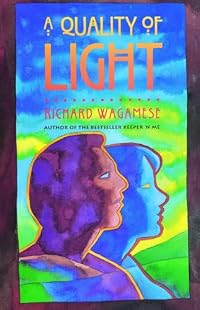
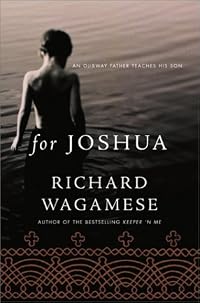
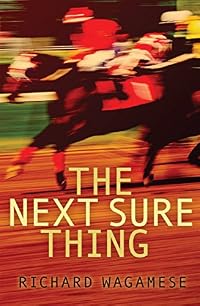
Canadian author Richard Wagamese was one of the leading indigenous writers in North America. He began his writing career in 1979, first as a journalist and then as a radio and television broadcaster. In 1991, he became the first indigenous writer to win a National Newspaper Award for column writing. His debut novel, Keeper 'n Me, won the Alberta show more Writers Guild's Best Novel Award in 1994. His other books included A Quality of Light, Ragged Company, One Native Life, The Next Sure Thing, Indian Horse, Him Standing, and Medicine Walk. He also published an anthology of his newspaper columns entitled The Terrible Summer, a collection of poetry entitled Runaway Dreams, and a memoir entitled For Joshua: An Ojibway Father Teaches His Son. He won the Canadian Authors Association Award for Fiction in 2007 for Dream Wheels and the George Ryga Award for Social Awareness in Literature in 2011 for his memoir One Story, One Song. He was also the 2012 recipient of the National Aboriginal Achievement Award for Media and Communications and the 2013 recipient of the Canada Council on the Arts Molson Prize. He died on March 10, 2017 at the age of 61. (Bowker Author Biography) show less
Common Knowledge
- Important places
- Canada
Classifications
Statistics
- Members
- 222
- Popularity
- 145,688
- Reviews
- 7
- Rating
- (3.67)
- Languages
- English, German
- Media
- Paper, Audiobook, Ebook
- ISBNs
- 9
- ASINs
- 2