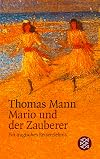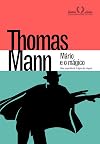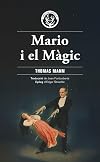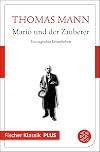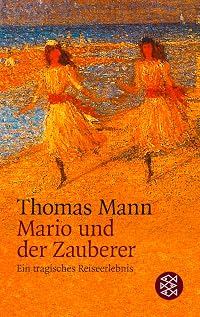
Mario and the Magician
by Thomas Mann 
On This Page
Description
Eingeführte Reihe. Diese ambitionierte Lektürehilfe, die sich für die Sekundarstufe II, aber auch für Studenten der Literaturwissenschaft (in den Anfangssemestern) eignet, widmet sich eingehend der 1929 unter dem Eindruck des europäischen Faschismus entstandenen Novelle Thomas Manns. In reihentypischer Gliederung beschreibt die Autorin den biografischen und historischen Hintergrund sowie die Entstehungsgeschichte, gibt eine detaillierte Inhaltsangabe, und analysiert und interpretiert show more formale und inhaltliche Aspekte. Unter verschiedenen Stichworten, insbesondere Italiendichtung und Faschismuskritik, ordnet sie den Text literaturhistorisch ein. Im Kapitel zur Rezeption der Novelle stellt sie insbesondere die Verfilmung des Stoffes von 1994 vor. Der Anhang bietet, neben Literatur zu Leben und Werk Thomas Manns, ein Verzeichnis ausgewählter Forschungsliteratur zur Novelle. Neben E. Kaltenbach (ID-A 48/10) und W. Grosse (ID-A 20/10), die auch "Tonio Kröger" behandeln und Prüfungsaufgaben mit Lösungen show lessTags
Recommendations
























Member Reviews
This story about a German family's not-very-nice vacation in Fascist Italy becomes a long meditation on freedom and will and what it takes to exercise one's freedom. Although this theme is common in Mann's work, I found it particularly striking set against the background of the Fascist threat, not only to the family in Italy, but to Mann's family in Germany.
Beeindruckende Sprache, must read.
another epic story with an sudden ending. very cool.
“La libertà esiste, ed esiste anche la volontà; ma la libertà di volere non esiste.”
Primo contatto in assoluto con Thomas Mann con un libretto che, raccontando di un’esperienza vera fatta in Italia, assistendo a uno spettacolo di un illusionista, la trasforma, parafrasandola, in una dura requisitoria contro i regimi totalitari.
L’illusionista con le sue doti ipnotiche riesce a piegare la volontà delle persone, mentre Mario il cameriere rappresenta, con la sua reazione al tentativo di controllo, la coscienza di chi cerca di ribellarsi ai vari regimi; va anche detto come in quel preciso momento Thomas Mann, con il suo scritto, facesse riferimento anche al regime fascista in Italia.
Scrittura ricercata, profondità di pensiero show more e… un pizzico di retorica antitaliana, sicuramente figlia dell’epoca, fanno comunque di questo libretto un buon approccio a uno scrittore di cui continuare la conoscenza… show less
Primo contatto in assoluto con Thomas Mann con un libretto che, raccontando di un’esperienza vera fatta in Italia, assistendo a uno spettacolo di un illusionista, la trasforma, parafrasandola, in una dura requisitoria contro i regimi totalitari.
L’illusionista con le sue doti ipnotiche riesce a piegare la volontà delle persone, mentre Mario il cameriere rappresenta, con la sua reazione al tentativo di controllo, la coscienza di chi cerca di ribellarsi ai vari regimi; va anche detto come in quel preciso momento Thomas Mann, con il suo scritto, facesse riferimento anche al regime fascista in Italia.
Scrittura ricercata, profondità di pensiero show more e… un pizzico di retorica antitaliana, sicuramente figlia dell’epoca, fanno comunque di questo libretto un buon approccio a uno scrittore di cui continuare la conoscenza… show less
Jun 14, 2017Italian
In dieser kaum verhohlenen Parabel auf den (italienischen?) Faschismus schildert Thomas Mann einen Familienurlaub in Italien in den 1920er Jahren. Ein Zauberkünstler tritt dort auf und hypnotisiert das Publikum, so dass es den freien Willen verliert und Dinge tut, die es nicht tun will. Zu erkennen ist die seltsame Faszination, die der Hypnotiseur auf nahezu alle Beteiligten ausübt. Thomas Mann findet ein Ende dieses Spektakels und ich kann nicht anders, als das als Handlungsempfehlung zu lesen. „Und ein befreiendes Ende dennoch, – ich konnte und kann nicht umhin, es so zu empfinden!“ schreibt er ja auch selbst.
1930 bereits sieht Mann sehr hellsichtig die politische Gefahr des Faschismus. Und wenn das Büchlein auch viele show more andere, darüber hinausgehende, Motive und Elemente beinhaltet: Das ist aus meiner Sicht trotz allem das Wesentliche und beeindruckend genug.
Nebenbei bemerkt fand ich auch die Darstellung des Familienurlaubs in Italien interessant. Man kann nicht umhin, sich Mann mit seinen sechs Kindern am Strand vorzustellen, innerlich distanziert von der überall sichtbaren „menschliche(n) Mediokrität und (dem) bürgerliche(n) Kroppzeug“. Und dennoch spielen die Kinder am Strand und vergnügen sich. Ein seltsam intimer Einblick ins Mannsche Privatleben! show less
1930 bereits sieht Mann sehr hellsichtig die politische Gefahr des Faschismus. Und wenn das Büchlein auch viele show more andere, darüber hinausgehende, Motive und Elemente beinhaltet: Das ist aus meiner Sicht trotz allem das Wesentliche und beeindruckend genug.
Nebenbei bemerkt fand ich auch die Darstellung des Familienurlaubs in Italien interessant. Man kann nicht umhin, sich Mann mit seinen sechs Kindern am Strand vorzustellen, innerlich distanziert von der überall sichtbaren „menschliche(n) Mediokrität und (dem) bürgerliche(n) Kroppzeug“. Und dennoch spielen die Kinder am Strand und vergnügen sich. Ein seltsam intimer Einblick ins Mannsche Privatleben! show less
Apr 6, 2020German
Mussten wir für die Uni lesen. Der Anfang ging, aber danach wurde es unsagbar langweilig, bis zur letzten Seite. Das Ende kam überraschend. Leider nicht mein Fall.
May 6, 2008German
Members
- Recently Added By
Lists

German Literature
518 works; 56 members

Best Family Stories
241 works; 22 members

Books You Read During High School (For School)
301 works; 53 members

End of Your Life Book Club
134 works; 4 members
Bibliografia essenziale
86 works; 2 members

Favourite Short Stories
157 works; 9 members
Author Information

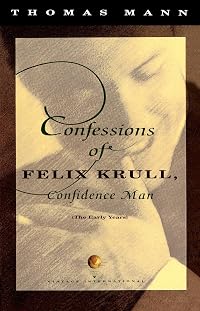
Thomas Mann was born into a well-to-do upper class family in Lubeck, Germany. His mother was a talented musician and his father a successful merchant. From this background, Mann derived one of his dominant themes, the clash of views between the artist and the merchant. Mann's novel, Buddenbrooks (1901), traces the declining fortunes of a merchant show more family much like his own as it gradually loses interest in business but gains an increasing artistic awareness. Mann was only 26 years old when this novel made him one of Germany's leading writers. Mann went on to write The Magic Mountain (1924), in which he studies the isolated world of the tuberculosis sanitarium. The novel was based on his wife's confinement in such an institution. Doctor Faustus (1947), his masterpiece, describes the life of a composer who sells his soul to the devil as a price for musical genius. Mann is also well known for Death in Venice (1912) and Mario the Magician (1930), both of which portray the tensions and disturbances in the lives of artists. His last unfinished work is The Confessions of Felix Krull, Confidence Man (1954), a brilliantly ironic story about a nineteenth-century swindler. An avowed anti-Nazi, Mann left Germany and lived in the United States during World War II. He returned to Switzerland after the war and became a celebrated literary figure in both East and West Germany. In 1929 he was awarded the Nobel Prize for literature. (Bowker Author Biography) show less
Thomas Mann has a Legacy Library. Legacy libraries are the personal libraries of famous readers, entered by LibraryThing members from the Legacy Libraries group.
Some Editions
Awards and Honors
Series
Belongs to Publisher Series
Work Relationships
Is contained in
Death in Venice ; Tristan ; Tonio Kroger ; Doctor Faustus ; Mario and the magician ; A man and his dog ; The black swan ; Confessions of Felix Krull, confidence man by Thomas Mann
Romane und Erzählungen. Bd. 10: Erzählungen - 2. Lyrik und Drama / [Nachw.: Harry Matter] by Thomas Mann
Has the adaptation
Common Knowledge
- Canonical title
- Mario and the Magician
- Original title
- Mario und der Zauberer
- Original publication date
- 1929
- People/Characters
- Cavaliere Cipolla; Sofronia Angiolieri; Signor Angiolieri; Mario
- Important places
- Torre di Venere
- Related movies
- Mario and the Magician (1994 | IMDb)
- First words
- The atmosphere of Torre di Venere remains unpleasant in the memory.
- Quotations
- Between not willing a certain thing and not willing at all--in other words, yielding to another person's will--there may lie too small a space for the idea of freedom to squeeze into.
- Last words
- (Click to show. Warning: May contain spoilers.)Und ein befreiendes Ende dennoch - ich konnte und kann nicht umhin, es so zu empfinden!
(Click to show. Warning: May contain spoilers.)And yet a liberation--for I could not, and I cannot, but find it so! - Original language*
- Deutsch
- Disambiguation notice*
- Dies ist die Einzelerzählung, bitte nicht mit Sammelbänden gleichen Titels verbinden.
*Some information comes from Common Knowledge in other languages. Click "Edit" for more information.
Classifications
Statistics
- Members
- 366
- Popularity
- 86,118
- Reviews
- 7
- Rating
- (3.48)
- Languages
- 14 — Catalan, English, Estonian, French, German, Hungarian, Italian, Polish, Portuguese, Romanian, Russian, Serbian, Spanish, Turkish
- Media
- Paper, Audiobook, Ebook
- ISBNs
- 30
- UPCs
- 1
- ASINs
- 19