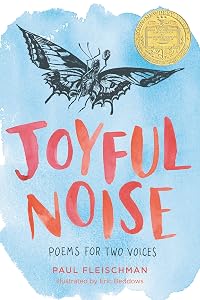
Joyful Noise: Poems for Two Voices
by Paul Fleischman
On This Page
Description
A collection of poems describing the characteristics and activities of a variety of insects.Tags
Recommendations
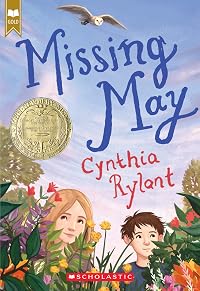
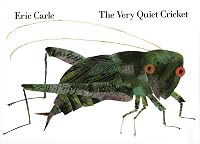
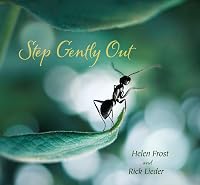







Member Recommendations
Member Reviews
What a fun read, and what an even more fun listen! I was captivated by listening to the audio version of the two voices back and forth and then in unison, it was very hypnotic and musical. I loved picturing each of these insects interacting! The final poem's transition from fall to winter to spring was a highlight for me. The natural birth, death, and rebirth of the world is such a poignant reality and Fleischman does not overplay it or under deliver. I will be sure to read this with my spouse to my children. This would be such a joyful noise to perform!
In a few days our church will be holding its annual talent show. We’ll gather in the basement Fellowship Hall. We feast on hamburgers anjd hot dogs, and some of the world’s best potato salad and baked beans. Desserts will multiply, and waists will thicken. Then we’ll clear the tables. Someone will roll out the piano. One or two guitatrs, a fiddle or violin (depending on who’s playing what). Some lovely little sylphs will show what they’ve been learning in dance lessons the past year. A make-shift combo will materialize. And, at some point, my wife and I will don glittery antennae to become insects for the evening. We’ll be wearing yellow t-shirts with black stripes, vaguely suggestive of honeybees. She’ll drape herself show more voluptuously on one of the tables; I’ll lounge around indifferently in my best impersonation of a Humphrey Bogart character. “Being a bee,” we’ll recite together, she will her best Southern-lady drawl, me with classic working-man indifference, “is a joy,” she’ll say languorously; “is a pain,” I’ll chip in as a rejoinder. “I’m a queen.” “I’m a worker.” Then together we’ll say, in our very different tones, “I’ll gladly explain.” She’ll stretch and yawn and drawl.”Upon rising. I’m fed / by my royal attendants.” Ignoring her (or pretending to) and stepping on her last words, I’ll complain, “I’m up at dawn, guarding / the hive’s native entrance.” And on and on we’ll go – for the forty-leventh time.
We’re reading (as we often do) from Paul Fleischman’s Newbery winner Joyful Noise: Poems for Two Voices (Harper & Row, 1988). The surprising thing about this tour de force is that the thirteen poems are delightful: very good as poetry, some whimsical or downright humorous, others lively and challenging, and a few serious and rather moving. “Honeybees” is an example of the first, of course: so is “Book Lice.” It fits my wife and me so perfectly that it’s almost uncanny:
We’re book lice . . . . . . . . . We’re book lice
who chew . . . . . . . . . . . . . who chew
on the bookbinding glue . . . on the bookbinding glue.
We honeymooned in an
old guide book on Greeece.
. . . . . . . . . . . . . . . . . . . .I missed Conan Doyle,
...................................... he pined for his Keats.
We’re book lice . . . . . We’re book lice
fine mates . . . . . . . . . . fine mates
despite different tastes . . .despite different tastes.
“Whirligig Beetles” is an example of the second type, almost like a tongue twister. We seldom make it through without one or two mistakes and a passel of giggles – on our part and the audience’s, who join us in the fun.
And then there are a few serious, meaningful ones, like “The Digger Wash,” about insects that prepare their nests, but never see their independent children.
When they care
for their own children
never to be looked on,
. they’ll feel my love
in replica in replica
. and know they,
in turn,
. were cherished
. by the mother digger wasp
whose face and form whose face and form
they never see. they never see
They’re good poems. They’re all about insects. They fun to read and to perform. Even if I do have to wave glittery antennae and bow down to the queen bee in the basement Fellowship Hall.
Oh, and there’s a perfect one for this year (2011): “Cicadas”
[Thirteen] years [Thirteen] years
spent underground
. among the roots,
in darkness in darkness
So if you have a bit of the ham in you and a partner to perform with, if you love poetry, especially humor in verse, and if you think insects can be a fit subject, keep a copy of Joyful Noise on hand – no, make that two copies. The Queen bee has to have her own while she jiggles her glittery antennae seductively, and the worker needs his own, as he paces edgily around her, pretending to ignore her charms.
. I lay eggs
Or maybe I am on
larvae detail
. by the hujndred show less
We’re reading (as we often do) from Paul Fleischman’s Newbery winner Joyful Noise: Poems for Two Voices (Harper & Row, 1988). The surprising thing about this tour de force is that the thirteen poems are delightful: very good as poetry, some whimsical or downright humorous, others lively and challenging, and a few serious and rather moving. “Honeybees” is an example of the first, of course: so is “Book Lice.” It fits my wife and me so perfectly that it’s almost uncanny:
We’re book lice . . . . . . . . . We’re book lice
who chew . . . . . . . . . . . . . who chew
on the bookbinding glue . . . on the bookbinding glue.
We honeymooned in an
old guide book on Greeece.
. . . . . . . . . . . . . . . . . . . .I missed Conan Doyle,
...................................... he pined for his Keats.
We’re book lice . . . . . We’re book lice
fine mates . . . . . . . . . . fine mates
despite different tastes . . .despite different tastes.
“Whirligig Beetles” is an example of the second type, almost like a tongue twister. We seldom make it through without one or two mistakes and a passel of giggles – on our part and the audience’s, who join us in the fun.
And then there are a few serious, meaningful ones, like “The Digger Wash,” about insects that prepare their nests, but never see their independent children.
When they care
for their own children
never to be looked on,
. they’ll feel my love
in replica in replica
. and know they,
in turn,
. were cherished
. by the mother digger wasp
whose face and form whose face and form
they never see. they never see
They’re good poems. They’re all about insects. They fun to read and to perform. Even if I do have to wave glittery antennae and bow down to the queen bee in the basement Fellowship Hall.
Oh, and there’s a perfect one for this year (2011): “Cicadas”
[Thirteen] years [Thirteen] years
spent underground
. among the roots,
in darkness in darkness
So if you have a bit of the ham in you and a partner to perform with, if you love poetry, especially humor in verse, and if you think insects can be a fit subject, keep a copy of Joyful Noise on hand – no, make that two copies. The Queen bee has to have her own while she jiggles her glittery antennae seductively, and the worker needs his own, as he paces edgily around her, pretending to ignore her charms.
. I lay eggs
Or maybe I am on
larvae detail
. by the hujndred show less
This slim volume of poetry is dedicated entirely to insects. Sounds like it could be gross, but it’s not. Various insects take on different roles, but nearly all are sympathetically portrayed. In fact, some even seem to take the role of the tragic hero. All are accompanied with black-and-white illustrations, which are realistic but also somehow make the insects look inviting. The poems are all written “for two voices” with each page having a right column for the first reader and a left column for the second reader. These columns sometimes contain contrasting lines, complementing lines, or even on occasion the same line. This method of poetry serves better for some poems than others. For instance, the book lice poem is the story of show more a couple, while the honeybees poem contrasts a worker bee’s life with a queen bee’s life, so the choral reading style works well for both of these. On the other hand, the digger wasp poem is clearly narrated by one being, so having two voices does not make sense here. Of course, another downside with the poems for two voices is that they do not make for the best reading material when waiting in a doctor’s office by yourself (which is when I read this book), so this book works better if you have a partner and are able to read aloud. Overall though, I would recommend this as a short and sweet volume extolling the virtues of nature that can be enjoyed at any age. show less
Poems for two voices are always more fun read out loud than silently, but even silent reading of Joyful Noise shows how clever Fleischman's poems can be. My favorite poem in this collection is Book Lice, the amusing tale of a book lice romance. Each louse loves a different type of book so they choose to settle together in Roget's Thesaurus. Requiem, on the other hand, inspires reader's sympathy for all the bugs that die in fall's first freeze.
This book was fun! It's designed to be read by two readers at once, one reader taking the left hand side and the other taking the right and the poems should be read top to bottom. Some lines are formatted to be said simultaneously. I read this with my daughter and we both had a great time! It took some skill to be able to go back and forth and to sync up our voices, but that was the challenge and joy of it. Also, having the two voices made for a really nice "song" style. For example, on Water Boatmen, we said "stroke" together and it was a nice rhythmic break to the poem. This could be a fun book to use for kids practicing fluency or a theatre warm up, or to do different voices with students. I think the formatting of this book of poems show more really makes it shine. show less
Absolutely marvelous for the right audience. The insect 'voices' are excellent enough that this could be used in a Science unit. Read for Newbery club in Children's Books group.
My comments:
Omg, why didn't I read this with my children when they were young enough to be willing to read with me? The duet effect would clearly be absolutely wonderful out loud, and now I know nobody who would read with me.
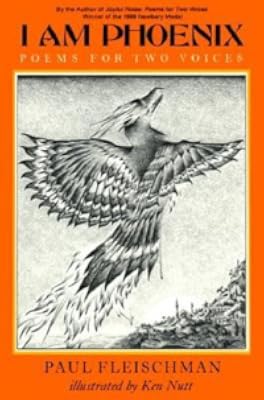
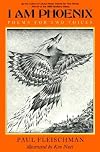
I'm only about 1/3 done but I already know I'm going to try to find the companion, published first, I Am Phoenix: Poems for Two Voices. Paul Fleischman absolutely deserves the accolade.
---
I actually had an opportunity today. I met with the book club at my new library, and what we do is book talk one or two books that we've read the previous show more month. I talked up Joyful Noise, then asked if someone wanted to try to do it with me, and we read Cicadas together. With no rehearsal it wasn't terrifically effective, but it was fun and the other women were appreciative. show less
My comments:
Omg, why didn't I read this with my children when they were young enough to be willing to read with me? The duet effect would clearly be absolutely wonderful out loud, and now I know nobody who would read with me.
I'm only about 1/3 done but I already know I'm going to try to find the companion, published first, I Am Phoenix: Poems for Two Voices. Paul Fleischman absolutely deserves the accolade.
---
I actually had an opportunity today. I met with the book club at my new library, and what we do is book talk one or two books that we've read the previous show more month. I talked up Joyful Noise, then asked if someone wanted to try to do it with me, and we read Cicadas together. With no rehearsal it wasn't terrifically effective, but it was fun and the other women were appreciative. show less
This is my favorite poetry book of all time. The way Fleischmann introduces different insects through poetry is so interesting. I love Fireflies! It is by far my favorite poem in this book. I love how students can work together to read through these types of poems.
Members
- Recently Added By
Lists

1001 Children's Books You Must Read Before You Grow Up
774 works; 101 members

Brilliant poetry collections for kids
51 works; 18 members

Scholastic 100 Best Read-Aloud Books
100 works; 8 members
Honey For a Child's Heart
1,152 works; 25 members

Newbery Medal Winners - By Year
105 works; 7 members

4th Grade Books
312 works; 5 members

Poetry Corner
187 works; 15 members

Books Read in 2021
5,361 works; 113 members

Poetry volumes by single author
121 works; 8 members
Author Information

53+ Works 15,882 Members
Paul Fleischman was born in Monterey, California on September 5, 1952. His father is fellow children's author, Sid Fleischman. He attended the University of California at Berkeley for two years, from 1970 to 1972. He dropped out to go on a cross-country train/bicycle trip and along the way took care of a 200-year-old house in New Hampshire. He show more eventually earned a Bachelor of Arts Degree from the University of New Mexico in 1977. Fleischman has written over 25 books for children and young adults including award winners such as Joyful Noise: Poems for Two Voices, Newberry Medal in 1989; Graven Images, Newberry Honor; Bull Run, Scott O'Dell Award for Historical Fiction; Breakout, Finalist for the National Book Award in 2003; Saturnalia, Boston Globe-Horn Book Fiction Honor. He has also garnered numerous awards and recognitions from the American Library Association, School Library Journal, Publisher's Weekly, Booklist, and NCTE. He founded the grammar watchdog groups ColonWatch and The Society for the Prevention of Cruelty to English. (Bowker Author Biography) show less
All Editions
Awards and Honors
Awards
Distinctions
Work Relationships
Is contained in
Has as a teacher's guide
Common Knowledge
- Original publication date
- 1988
- First words
- Sap's rising
- Original language
- English
Classifications
Statistics
- Members
- 2,511
- Popularity
- 7,658
- Reviews
- 104
- Rating
- (4.12)
- Languages
- English
- Media
- Paper, Audiobook, Ebook
- ISBNs
- 27
- ASINs
- 8