Dark Dude
by Oscar Hijuelos
On This Page
Description
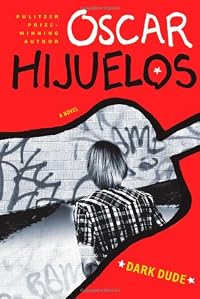
In the 1960s, Rico Fuentes, a pale-skinned Cuban American teenager, abandons drug-infested New York City for the picket fence and apple pie world of Wisconsin, only to discover that he still feels like an outsider and that violent and judgmental people can be found even in the wholesome Midwest.Tags
Recommendations







Member Reviews
Audio book performed by Armando Duran
3.5***
This is a young-adult novel from the Pulitzer-prize winning author of The Mambo Kings Play Songs of Love.
Rico Fuentes is a “dark dude” – which means that he is a very-light-skinned Cubano – living in New York City’s Spanish Harlem. Blond, with hazel eyes and freckles, his appearance gets a lot of attention from the tough guys in the neighborhood, who hassle him for being a “whitey.” The fact that he’s slight of build, and prefers books and music to hanging in the streets doesn’t help. Feeling like he doesn’t belong, tired of getting beat up just for his appearance, and torn by events in his family and neighborhood, Rico decides he cannot continue. With his best friend Jimmy, show more he runs away to Wisconsin, where a former neighborhood boy is now attending college. Gilberto takes the boys in without question. Rico figures he’ll fit in here; he looks like everyone else in Wisconsin. But the 16-year-old soon discovers that he feels just as “different” in Wisconsin as he did in Harlem.
There are elements of this book that I really liked. I enjoyed Rico’s journey of self-discovery and watching him mature and absorb life’s lessons. I liked the fact that he was fairly strong in character – refusing to get involved in drugs or crime. Rico is intelligent, thoughtful, loyal, curious, diligent and conscientious. I was particularly happy to see how his love of reading – especially the works of Mark Twain – helped him understand his situation and consider his options. What I didn’t like was the casual way in which these teens treated alcohol – they were constantly drinking beer. I wondered why Gilberto, who was portrayed originally as a straight-arrow and a role model, tolerated (and even encouraged?) his roommate’s constant use of marijuana. Bad decisions did not seem to have negative consequences; a couple of times I thought “Oh, this is going to turn out badly,” but the expected turn of events never occurred. I know that real life doesn’t always work that way; people behave badly and get away with it every day. But this is a YA novel, and I think the author needs to show consequences for his intended audience. I also wondered why Hijuelos was so circumspect about the time period. If he specifically mentioned that this is set in the mid-1960s I missed that. I figured it out fairly easily due to the cultural references, but I lived those years. I wonder if the teens which are the target audience for this novel will pick up on the time frame so easily. In all, I loved Rico, but I only liked the book.
Armando Duran does a good job of performing the audio book. He has good pacing and good Spanish pronunciation. His skill as a voice artist also made each character sufficiently distinct to avoid confusion. show less
3.5***
This is a young-adult novel from the Pulitzer-prize winning author of The Mambo Kings Play Songs of Love.
Rico Fuentes is a “dark dude” – which means that he is a very-light-skinned Cubano – living in New York City’s Spanish Harlem. Blond, with hazel eyes and freckles, his appearance gets a lot of attention from the tough guys in the neighborhood, who hassle him for being a “whitey.” The fact that he’s slight of build, and prefers books and music to hanging in the streets doesn’t help. Feeling like he doesn’t belong, tired of getting beat up just for his appearance, and torn by events in his family and neighborhood, Rico decides he cannot continue. With his best friend Jimmy, show more he runs away to Wisconsin, where a former neighborhood boy is now attending college. Gilberto takes the boys in without question. Rico figures he’ll fit in here; he looks like everyone else in Wisconsin. But the 16-year-old soon discovers that he feels just as “different” in Wisconsin as he did in Harlem.
There are elements of this book that I really liked. I enjoyed Rico’s journey of self-discovery and watching him mature and absorb life’s lessons. I liked the fact that he was fairly strong in character – refusing to get involved in drugs or crime. Rico is intelligent, thoughtful, loyal, curious, diligent and conscientious. I was particularly happy to see how his love of reading – especially the works of Mark Twain – helped him understand his situation and consider his options. What I didn’t like was the casual way in which these teens treated alcohol – they were constantly drinking beer. I wondered why Gilberto, who was portrayed originally as a straight-arrow and a role model, tolerated (and even encouraged?) his roommate’s constant use of marijuana. Bad decisions did not seem to have negative consequences; a couple of times I thought “Oh, this is going to turn out badly,” but the expected turn of events never occurred. I know that real life doesn’t always work that way; people behave badly and get away with it every day. But this is a YA novel, and I think the author needs to show consequences for his intended audience. I also wondered why Hijuelos was so circumspect about the time period. If he specifically mentioned that this is set in the mid-1960s I missed that. I figured it out fairly easily due to the cultural references, but I lived those years. I wonder if the teens which are the target audience for this novel will pick up on the time frame so easily. In all, I loved Rico, but I only liked the book.
Armando Duran does a good job of performing the audio book. He has good pacing and good Spanish pronunciation. His skill as a voice artist also made each character sufficiently distinct to avoid confusion. show less
This coming-of-age story for young adults by the Pulitzer-Prize winning author of The Mambo Kings Play Songs of Love is, like Sherman Alexie’s The Absolutely True Diary of a Part-Time Indian, semi-autobiographical.
Rico Fuentes is a fifteen-year-old Cubano with blonde hair, hazel eyes, and freckles, thanks to an Irish great-grandfather, and so he straddles two cultures in his impoverished New York City community. The Latinos don’t want him because he looks Irish, but the Irish hate “spics” so he doesn’t belong with them either. He is constantly forced to deal with negative reactions to his situation:
"Like every time I walked into a bodega in another neighborhood and some Latino kids would give me the evil whammy with their show more eyes, like I had no business being there. Or I’d be in a department store with my Moms, going through the discount bins, and folks would look us over, as if wondering what that Cuban lady was doing with the white kid, like she was some kind of maid watching over me. And forget about all the times I’d go down into the Harlem park to play softball: I always brought along ‘get-jumped’ money ‘cause I attracted both Latino and black takeoff artists who saw my white skin as a kind of flashing neon sign that said ‘Rob me.’ I got jumped so often that I wished I could wear a mask, like a superhero, so that I wouldn’t get hassled.’”
Rico may not be able to wear a mask himself, but he creates a superhero comic figure, “The Dark Dude” who can change races as needed, and convinces a talented Puerto Rican friend, Jimmy, to draw the characters for him. But ultimately comics can’t help with reality. When Rico’s protector, Gilberto, leaves for Wisconsin, and Jimmy gets hooked on heroin, Rico decides to runaway to live with Gilberto, and he takes Jimmy with him. Now Rico is in solid white country in a different universe than New York, one in which people say “gosh” and “golly” and grow crops and wear overalls. Rico thinks he has found heaven, but discovers that people are actually pretty much alike wherever you go, and he must make a choice about what his place is in the world, and in particular, which identity will make him feel the best about himself.
Evaluation: The problem of having a divided cultural identity is a natural for the creation of a good story in the hands of a talented writer. Rico isn’t impressively analytical about his feelings or his social dilemma, but I think it was more realistic of Hijuelos to draw him that way than as having the insight associated with more maturity and education. I liked the story, however, and found it gave me much to think about. show less
Rico Fuentes is a fifteen-year-old Cubano with blonde hair, hazel eyes, and freckles, thanks to an Irish great-grandfather, and so he straddles two cultures in his impoverished New York City community. The Latinos don’t want him because he looks Irish, but the Irish hate “spics” so he doesn’t belong with them either. He is constantly forced to deal with negative reactions to his situation:
"Like every time I walked into a bodega in another neighborhood and some Latino kids would give me the evil whammy with their show more eyes, like I had no business being there. Or I’d be in a department store with my Moms, going through the discount bins, and folks would look us over, as if wondering what that Cuban lady was doing with the white kid, like she was some kind of maid watching over me. And forget about all the times I’d go down into the Harlem park to play softball: I always brought along ‘get-jumped’ money ‘cause I attracted both Latino and black takeoff artists who saw my white skin as a kind of flashing neon sign that said ‘Rob me.’ I got jumped so often that I wished I could wear a mask, like a superhero, so that I wouldn’t get hassled.’”
Rico may not be able to wear a mask himself, but he creates a superhero comic figure, “The Dark Dude” who can change races as needed, and convinces a talented Puerto Rican friend, Jimmy, to draw the characters for him. But ultimately comics can’t help with reality. When Rico’s protector, Gilberto, leaves for Wisconsin, and Jimmy gets hooked on heroin, Rico decides to runaway to live with Gilberto, and he takes Jimmy with him. Now Rico is in solid white country in a different universe than New York, one in which people say “gosh” and “golly” and grow crops and wear overalls. Rico thinks he has found heaven, but discovers that people are actually pretty much alike wherever you go, and he must make a choice about what his place is in the world, and in particular, which identity will make him feel the best about himself.
Evaluation: The problem of having a divided cultural identity is a natural for the creation of a good story in the hands of a talented writer. Rico isn’t impressively analytical about his feelings or his social dilemma, but I think it was more realistic of Hijuelos to draw him that way than as having the insight associated with more maturity and education. I liked the story, however, and found it gave me much to think about. show less
looking at reviews of this book now, i'm surprised by how many people are saying that it's "too slow for today's teens" or "not developed enough for today's teens" or "not exciting enough for today's teens." but are these people teens? no. they are not.
let the teens decide.
of course, i had my own problems with this book, namely that it was supposed to be set in the 60's or 70's and it really really didn't feel like it. the language and some of the plot screamed "present day." add that to the fact that characters seem to go against what you think they would do if they were real people, with startling regularity, and it just wasn't doing it for me.
let the teens decide.
of course, i had my own problems with this book, namely that it was supposed to be set in the 60's or 70's and it really really didn't feel like it. the language and some of the plot screamed "present day." add that to the fact that characters seem to go against what you think they would do if they were real people, with startling regularity, and it just wasn't doing it for me.
Reviewed by Cana Rensberger for TeensReadToo.com
How many teens have wished they could escape the darkness of their lives and live in a land of milk and honey? Rico Fuentes does just that in DARK DUDE by Oscar Hijuelos.
Rico is one-hundred-percent Cuban, yet he struggles daily to identify with his Cuban peers. His mom and little sister have brunette hair and cinnamon colored skin. His dad has both dark wavy hair and dark eyes. But Rico, with hazel eyes and fair skin with freckles, looks white. In Harlem, that pretty much guarantees daily harassment.
When Rico has to change to a public school, he is exposed to drugs, crime, and violence like never before. Early in the school year, a student is shot and Rico watches in shock as his new show more classmates celebrate a day off. Soon Rico's skipping school to avoid random beatings. When his pops finds out, he warns Rico that he'll be spending the summer with his military uncle in Florida.
It's not until his friend Jimmy is rushed to the hospital due to a drug-related accident that Rico realizes he has only one way out. He must find a way to Wisconsin to stay with his friend, Gilberto, on his farm. When Jimmy is released, Rico talks him into going to Wisconsin with him. After a road trip to remember on the way to the farm, they wonder what they've gotten themselves into when Gilberto immediately puts them to work painting the outside of the dilapidated farmhouse in exchange for their room and board.
Rico finds farm life in Wisconsin to be much slower than in Harlem. He spends a lot of time re-reading his favorite author, Mark Twain. Then he finds himself attracted to a girl whose father has a drinking problem. He'd never realized that his own experiences with an alcoholic dad could be helpful to someone else. As the months go by, Rico begins to look at himself, and those around him, differently. More importantly, he begins to accept himself.
DARK DUDE is a gritty read. The projects, the bars, and the backstreets of Harlem become real to the reader as Mr. Hijuelos drops you into each scene, and he creates a character with so much promise, but with so much working against him, that we cannot stop at each chapter break. Instead we read on, praying that nothing bad will happen to Rico, and when it does, we find ourselves urging Rico on, to find the best in himself, to reach for those dreams we know he wants. This is a realistic yet inspiring read for anyone who wants to find a way to make a different choice, to find the person they really want to be. show less
How many teens have wished they could escape the darkness of their lives and live in a land of milk and honey? Rico Fuentes does just that in DARK DUDE by Oscar Hijuelos.
Rico is one-hundred-percent Cuban, yet he struggles daily to identify with his Cuban peers. His mom and little sister have brunette hair and cinnamon colored skin. His dad has both dark wavy hair and dark eyes. But Rico, with hazel eyes and fair skin with freckles, looks white. In Harlem, that pretty much guarantees daily harassment.
When Rico has to change to a public school, he is exposed to drugs, crime, and violence like never before. Early in the school year, a student is shot and Rico watches in shock as his new show more classmates celebrate a day off. Soon Rico's skipping school to avoid random beatings. When his pops finds out, he warns Rico that he'll be spending the summer with his military uncle in Florida.
It's not until his friend Jimmy is rushed to the hospital due to a drug-related accident that Rico realizes he has only one way out. He must find a way to Wisconsin to stay with his friend, Gilberto, on his farm. When Jimmy is released, Rico talks him into going to Wisconsin with him. After a road trip to remember on the way to the farm, they wonder what they've gotten themselves into when Gilberto immediately puts them to work painting the outside of the dilapidated farmhouse in exchange for their room and board.
Rico finds farm life in Wisconsin to be much slower than in Harlem. He spends a lot of time re-reading his favorite author, Mark Twain. Then he finds himself attracted to a girl whose father has a drinking problem. He'd never realized that his own experiences with an alcoholic dad could be helpful to someone else. As the months go by, Rico begins to look at himself, and those around him, differently. More importantly, he begins to accept himself.
DARK DUDE is a gritty read. The projects, the bars, and the backstreets of Harlem become real to the reader as Mr. Hijuelos drops you into each scene, and he creates a character with so much promise, but with so much working against him, that we cannot stop at each chapter break. Instead we read on, praying that nothing bad will happen to Rico, and when it does, we find ourselves urging Rico on, to find the best in himself, to reach for those dreams we know he wants. This is a realistic yet inspiring read for anyone who wants to find a way to make a different choice, to find the person they really want to be. show less
Narrated by Armando Duran. Rico is of Cuban descent but appears white which leads to a lot of problems in his New York City neighborhood. Tired of the negativity of his home, school and city life, he and buddy Jimmy hitchhike to Wisconsin to live with Gilberto. Wisconsin is a world away from New York City, but Rico enjoys the mellow and friendly Midwestern culture. The change of atmosphere also gives him time to figure out who he is and the life direction he should take. Rico is an earnest geek, almost too straight arrow to be believed given that he grew up in New York. Narrator Duran interprets in a gee-whiz tone that underlines Rico's earnestness. Lib notes: plenty of recreational alcohol and drug use, some raw language, racist dialog show more and feelings, and a couple of scenes of physical violence. show less
Rico, the main character of Oscar Hijuelos’ Dark Dude straddles two cultures—Latino and American. As a light-skinned Cubano living in Harlem, he is hassled by his friends, school mates, and neighbors for his freckles because he is the “palest cubano who ever existed on the planet” (p. 10). Rico and his family live in a dark, “fourth floor walk up” that has bars on the windows to keep out burglars (p. 13). But the tenements in his neighborhood “had character—like pillars and sometimes stone-carved angels and starts decorating the stoop” (p. 66). To add to this setting, Rico’s new high school is a breeding den of drugs, sex, and violence. Rico gets so fed up that he starts to skip school and finds himself in trouble show more with the truant officers. With the prospect of going to military school in Florida, Rico cuts out of town with Jimmy to Wisconsin to live with his friend Gilberto.
Rico leaves Harlem hoping to escape his troubles in Harlem. When he first arrived in Wisconsin, Rico felt that he was in a “truly different place, all pretty and peaceful” (p. 163). In Wisconsin, his pale skin and blond hair help him blend in. His room at the farm was different than in Harlem. His window no longer was barred and “just looking out that window made [him] feel that [he] was a million miles away from what used to bug” him in Harlem.
Unfortunately, Rico couldn’t escape reality in Wisconsin. He still faced discrimination and was beat up by a group of white guys who just felt like messing with someone. Even before this terrible beating, Rico kept thinking about home, particularly his family. Slowly he was drawn home. It wasn’t easy for Rico to leave Wisconsin, his friends, and his relationships, but he knew that he belonged back in Harlem with his family. In many ways, Hijuelos’ message follows the old saying—home is where your heart is. show less
Rico leaves Harlem hoping to escape his troubles in Harlem. When he first arrived in Wisconsin, Rico felt that he was in a “truly different place, all pretty and peaceful” (p. 163). In Wisconsin, his pale skin and blond hair help him blend in. His room at the farm was different than in Harlem. His window no longer was barred and “just looking out that window made [him] feel that [he] was a million miles away from what used to bug” him in Harlem.
Unfortunately, Rico couldn’t escape reality in Wisconsin. He still faced discrimination and was beat up by a group of white guys who just felt like messing with someone. Even before this terrible beating, Rico kept thinking about home, particularly his family. Slowly he was drawn home. It wasn’t easy for Rico to leave Wisconsin, his friends, and his relationships, but he knew that he belonged back in Harlem with his family. In many ways, Hijuelos’ message follows the old saying—home is where your heart is. show less
Interesting commentary on what it's like to be a white looking Cuban American amongst darker skinner Latinos and African Americans in the NYC of the late 1960's. Rico decides to leave it all behind and hoof it out to Wisconsin. What he finds there reminds him of the old saying "there's no place like home."
Members
- Recently Added By
Author Information

16+ Works 4,841 Members
Óscar Jerome Hijuelos was born in Manhattan, New York on August 24, 1951 to Cuban immigrant parents. He received a bachelor's degree and a master of fine arts degree from City College. His first novel, Our House in the Last World, was published in 1983 and won the Rome Prize of the American Academy of Arts and Letters. His other works include The show more Fourteen Sisters of Emilio Montez O'Brien, Mr. Ives' Christmas, Empress of the Splendid Season, A Simple Habana Melody (From When the World was Good), Beautiful Maria of My Soul, Another Spaniard in the Works, and Twain and Stanley Enter Paradise. His novel, The Mambo Kings Play Songs of Love, won the 1990 Pulitzer Prize for fiction and was made into a 1992 movie starring Armand Assante and Antonio Banderas. He also wrote a young adult novel entitled Dark Dude and a memoir entitled Thoughts Without Cigarettes. In 2000, he received the Hispanic Heritage Award for Literature. He died after collapsing with a heart attack while playing tennis on October 12, 2013 at age 62. (Bowker Author Biography) show less
Awards and Honors
Awards
Distinctions
Common Knowledge
- Original title
- Dark Dude
- Original publication date
- 2008 (eng.) (eng.)
- People/Characters
- Rico Fuentes; Jimmy; Gilberto
- Important places
- Harlem, New York, New York, USA; Wisconsin, USA
Classifications
Statistics
- Members
- 254
- Popularity
- 127,117
- Reviews
- 19
- Rating
- (3.36)
- Languages
- 5 — English, French, German, Spanish, Turkish
- Media
- Paper, Audiobook, Ebook
- ISBNs
- 24
- ASINs
- 4