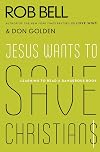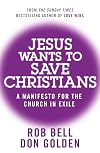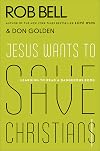
Jesus Wants to Save Christians: A Manifesto for the Church in Exile
by Rob Bell
On This Page
Description
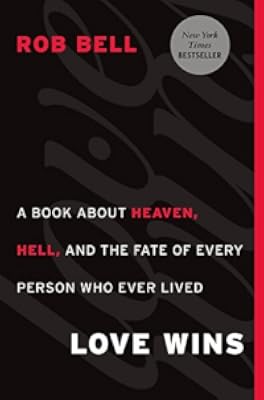
"Bell and Golden trace redemption from Genesis to Revelation...[delivering] a tough message the American church needs to hear." -Christianity Today "Equal parts prophetic warning and call to action, Jesus Wants to Save Christians exhorts Jesus's followers to sacrifice their comforts and hear the 'cry of the oppressed.'" -Grand Rapids Press In Jesus Wants to Save Christians, Rob Bell, the New York Times bestselling author of Love Wins joins with Don Golden, Christian activist and vice show more president of World Relief, to call upon the church to break from its cultural captivity and challenge the assumptions of the American Empire. Bell, whom the New York Times calls "one of the country's most influential evangelical pastors" and whom Time Magazine named one of the most influential people in 2011, is a pioneer in the movement seeking new Christian expression, and anyone who has ever questioned their faith or is those looking for answers they cannot find in their own church's standard teachings will discover a new creed in Bell and Golden's provocative and spiritually enlightening work. show lessTags
Recommendations



Member Reviews
Ouch. Several months ago, Harper One sent me a short collection of Rob Bell reprints to review. I slowly worked my way through them, enjoying each one, and somehow left this one sitting on the shelves. Too many other obligations. I just now picked it up, and read it in one sitting.
I couldn’t put it down. Forget Velvet Elvis. Forget Love Wins. This 180-page sermon, this little obscure work, is for Bible groupies Bell’s real masterpiece. It’s definitely my new favorite, so maybe that says something about co-author Don Golden, a name I hadn’t come across before.
From the Exodus, to the Temple construction, to the Eucharist, Bell and Golden reveal a surprising thread that weaves its way throughout the Bible. This “new perspective show more ” opens up what the Bible means to Americans today, living in the world’s most powerful nation, boasting the greatest military, yet holding the strongest responsibility for the world’s impoverished. America is an empire, and the Bible has a lot to say about empires.
“I hope you see that there is a common humanity we share with everybody alive today, and everybody who has come before us,” writes Bell in the preface. This little book accomplishes just that. show less
I couldn’t put it down. Forget Velvet Elvis. Forget Love Wins. This 180-page sermon, this little obscure work, is for Bible groupies Bell’s real masterpiece. It’s definitely my new favorite, so maybe that says something about co-author Don Golden, a name I hadn’t come across before.
From the Exodus, to the Temple construction, to the Eucharist, Bell and Golden reveal a surprising thread that weaves its way throughout the Bible. This “new perspective show more ” opens up what the Bible means to Americans today, living in the world’s most powerful nation, boasting the greatest military, yet holding the strongest responsibility for the world’s impoverished. America is an empire, and the Bible has a lot to say about empires.
“I hope you see that there is a common humanity we share with everybody alive today, and everybody who has come before us,” writes Bell in the preface. This little book accomplishes just that. show less
A confessed New Exodus attempt at understanding Christianity and its situation in the modern world.
There is much that is good in this book; the New Exodus perspective is certainly useful and a lens through which to see Scripture and the work of God in the world. Envisioning the Bible as providing a critique of civilization and empire, always having a view to the nomad and the oppressed, is most valuable. Revising views of Revelation is quite necessary, yes. The critique of America and its policy is quite prophetic. The call for Christians to change their conduct is laudable.
But it is a lens, and to absolutize it to the point done in the book causes its own set of problems. Yes, Sinai, Jerusalem, Babylon, and Egypt are paradigmatic for show more many reasons. But the answers are not as cut and dry as presented in the book. Egypt is an oppressor, yes, and an image of the world; and yet Egypt was a place of rescue for the Israelites at first and would serve as such again for Jesus. Babylon is the world empire opposed to God, but how many Jews in the Dispersion remained in Babylon and served God there, seeking the general welfare of the city? And did not Paul attempt to take the Gospel itself into the new Babylon, Rome? That Solomon sinned is undeniable; the trends the book lists for him are also true; and yet Solomon is not portrayed as negatively in Scripture as this book portrays him.
Theology is complicated; we do best to remember that God is far beyond us, and Scripture presents different sets of images and paradigms. They are useful, beneficial, and valuable for understanding, but not one of them is sufficient to stand on its own as THE way of understanding everything. The New Exodus theology as elaborated here is no different.
Egregious Biblical error to note: the association of the Philip of Acts 8 with Philip the Apostle of John 1, and speaking of Philip the Evangelist as if he was from Bethsaida and was Philip the Apostle, when Acts 8 and 21 make it clear that the Apostles stayed in Jerusalem when this Philip went out preaching, and that Philip the evangelist was one of the seven of Acts 6, likely Hellenistic in background, and ended up in Caesarea, just as Acts 8 indicates. Since much is made of the connection between Bethsaida and this Philip the Evangelist, a connection not made in Scripture, this should be noted (and hopefully corrected in future editions).
As a way of looking at Scripture through the New Exodus perspective, the book has value. But don't take it too far. show less
There is much that is good in this book; the New Exodus perspective is certainly useful and a lens through which to see Scripture and the work of God in the world. Envisioning the Bible as providing a critique of civilization and empire, always having a view to the nomad and the oppressed, is most valuable. Revising views of Revelation is quite necessary, yes. The critique of America and its policy is quite prophetic. The call for Christians to change their conduct is laudable.
But it is a lens, and to absolutize it to the point done in the book causes its own set of problems. Yes, Sinai, Jerusalem, Babylon, and Egypt are paradigmatic for show more many reasons. But the answers are not as cut and dry as presented in the book. Egypt is an oppressor, yes, and an image of the world; and yet Egypt was a place of rescue for the Israelites at first and would serve as such again for Jesus. Babylon is the world empire opposed to God, but how many Jews in the Dispersion remained in Babylon and served God there, seeking the general welfare of the city? And did not Paul attempt to take the Gospel itself into the new Babylon, Rome? That Solomon sinned is undeniable; the trends the book lists for him are also true; and yet Solomon is not portrayed as negatively in Scripture as this book portrays him.
Theology is complicated; we do best to remember that God is far beyond us, and Scripture presents different sets of images and paradigms. They are useful, beneficial, and valuable for understanding, but not one of them is sufficient to stand on its own as THE way of understanding everything. The New Exodus theology as elaborated here is no different.
Egregious Biblical error to note: the association of the Philip of Acts 8 with Philip the Apostle of John 1, and speaking of Philip the Evangelist as if he was from Bethsaida and was Philip the Apostle, when Acts 8 and 21 make it clear that the Apostles stayed in Jerusalem when this Philip went out preaching, and that Philip the evangelist was one of the seven of Acts 6, likely Hellenistic in background, and ended up in Caesarea, just as Acts 8 indicates. Since much is made of the connection between Bethsaida and this Philip the Evangelist, a connection not made in Scripture, this should be noted (and hopefully corrected in future editions).
As a way of looking at Scripture through the New Exodus perspective, the book has value. But don't take it too far. show less
Rob Bell writes in a breezy, yet emphatic, style with structural brevity and amazing punch. "Jesus Wants to Save Christians" is Bell’s third book, and though he collaborates with Don Golden, his concise, well-researched reasoning combined with his sometimes hilarious, sometimes profound endnotes make this work unmistakably Bell. Golden contributes his expertise on the church’s engagement in impacting global poverty. He currently serves as an executive leader for World Relief, a Christian non-profit organization that pours millions of dollars into addressing some of the world’s biggest crises caused by poverty.
Bell’s perspective is shaped by his insistence that the Bible be read, studied, and lived as a fluid, complete work. Not show more in bits and pieces. His narrative in this book, therefore, starts in Genesis and covers much of the Old and New Testaments all the way through Revelation. With a keen eye for the history of God’s people, Bell draws some frighteningly stark parallels between the “empires” of ancient Egypt and Rome and current-day world power, the United States of America. Like the ancient Israelites, he argues that Americans are caught in exile: “Exile is when you fail to convert your blessing into blessings for others.
Exile is when you find yourself a stranger to the purposes of God”. (1)
Armed with a plethora of shocking statistics (2) and an articulate description of the history of God’s people, Bell shows his readers the difference between a life focused on His Kingdom—one of service and sacrifice—versus the world’s view of power and security. Clearly humans’ lust for wealth and power hasn't changed much since the days of Solomon. With a piercingly insightful look into the human heart, Bell skillfully challenges us, as followers of Jesus, to think beyond our limited earthly views and to joyfully enter into our neighbors’ suffering as the Body of Jesus Himself: “Disconnection from the suffering of the world, isolation from the cry of the oppressed, indifference to the poverty around us will always lead to despair.
We were made for such much more.” (3)
This manifesto begs us to reconsider our priorities as American citizens, identifying the perils of “the vicious cycle of the priority of preservation”: the futile accumulation of military bases, stockpiling of weapons and the compulsion to protect one’s “rights”. Mr. Bell invites us into a life of freedom from the bondage of self-preservation and self-sufficiency. A life that mirrors Jesus’ pouring out of oneself in selfless acts of Kingdom love.
Ever teetering on the edge of controversy (4), this author does write some things that make me shift uncomfortably in my reading chair. At times, Bell over-emphasizes the importance of humanity at the expense of reverence for the Lord. For example, in his descriptions of God’s gift of the Ten Commandments, he writes “The Sabbath command should be understood as being against the inhumane labor conditions and unreasonable production demands of Pharaoh’s Egypt. The text says that ‘Pharaoh’s slave drivers beat the Israelite overseers they had appointed.’ How beautiful, then is a God who commands these Israelites to rest each week?” (5)
Like the other nine, this is a timeless commandment, not predicated on the specific sufferings of its recipients or a particular story in history. As my pastor, Abe Hepler, likes to say, “The Bible is not a story about us. It’s a story about who God is.”
While I found this book compelling and extremely thought-provoking, I yearned for Bell to offer more solutions, more practical ideas to break the spell of materialism. And in the end, I really felt like I had gotten a big lecture on how rotten I am as a middle-class American.
(1) Pg. 45
(2) "More than half the world lives on less than two dollars a day, while the average American teenager spends nearly $150.00 a week." Pg. 122
(3) Pg. 163
(4) See, for example, Mark Driscoll and Gerry Breshears, "Vintage Jesus: Timeless Answers to Timely Questions" (Good News Publishers, 2008), pp. 97 - 98. Driscoll shreds Bell's assertion that Mary's virginity before Jesus' birth isn't a necessary tenant for our faith.
(5) Pg. 191 show less
Bell’s perspective is shaped by his insistence that the Bible be read, studied, and lived as a fluid, complete work. Not show more in bits and pieces. His narrative in this book, therefore, starts in Genesis and covers much of the Old and New Testaments all the way through Revelation. With a keen eye for the history of God’s people, Bell draws some frighteningly stark parallels between the “empires” of ancient Egypt and Rome and current-day world power, the United States of America. Like the ancient Israelites, he argues that Americans are caught in exile: “Exile is when you fail to convert your blessing into blessings for others.
Exile is when you find yourself a stranger to the purposes of God”. (1)
Armed with a plethora of shocking statistics (2) and an articulate description of the history of God’s people, Bell shows his readers the difference between a life focused on His Kingdom—one of service and sacrifice—versus the world’s view of power and security. Clearly humans’ lust for wealth and power hasn't changed much since the days of Solomon. With a piercingly insightful look into the human heart, Bell skillfully challenges us, as followers of Jesus, to think beyond our limited earthly views and to joyfully enter into our neighbors’ suffering as the Body of Jesus Himself: “Disconnection from the suffering of the world, isolation from the cry of the oppressed, indifference to the poverty around us will always lead to despair.
We were made for such much more.” (3)
This manifesto begs us to reconsider our priorities as American citizens, identifying the perils of “the vicious cycle of the priority of preservation”: the futile accumulation of military bases, stockpiling of weapons and the compulsion to protect one’s “rights”. Mr. Bell invites us into a life of freedom from the bondage of self-preservation and self-sufficiency. A life that mirrors Jesus’ pouring out of oneself in selfless acts of Kingdom love.
Ever teetering on the edge of controversy (4), this author does write some things that make me shift uncomfortably in my reading chair. At times, Bell over-emphasizes the importance of humanity at the expense of reverence for the Lord. For example, in his descriptions of God’s gift of the Ten Commandments, he writes “The Sabbath command should be understood as being against the inhumane labor conditions and unreasonable production demands of Pharaoh’s Egypt. The text says that ‘Pharaoh’s slave drivers beat the Israelite overseers they had appointed.’ How beautiful, then is a God who commands these Israelites to rest each week?” (5)
Like the other nine, this is a timeless commandment, not predicated on the specific sufferings of its recipients or a particular story in history. As my pastor, Abe Hepler, likes to say, “The Bible is not a story about us. It’s a story about who God is.”
While I found this book compelling and extremely thought-provoking, I yearned for Bell to offer more solutions, more practical ideas to break the spell of materialism. And in the end, I really felt like I had gotten a big lecture on how rotten I am as a middle-class American.
(1) Pg. 45
(2) "More than half the world lives on less than two dollars a day, while the average American teenager spends nearly $150.00 a week." Pg. 122
(3) Pg. 163
(4) See, for example, Mark Driscoll and Gerry Breshears, "Vintage Jesus: Timeless Answers to Timely Questions" (Good News Publishers, 2008), pp. 97 - 98. Driscoll shreds Bell's assertion that Mary's virginity before Jesus' birth isn't a necessary tenant for our faith.
(5) Pg. 191 show less
I like Bell's total disregard for "correct" book format. Despite the quick read, there are lots of gems to challenge your thinking about church. Some good lines: "When you're struggling,...hurting, wounded, limping, doubting, questioning, barely hanging on, moments away from another relapse, and somebody can identify with you - someone who knows the temptations that are at your door, somebody has felt the pain that you are feeling, when someone can look you in the eyes and say 'me too,' and they actually mean it - IT CAN SAVE YOU" (my emphasis) ; "The Eucharist is not fair...because God is not fair."
This book looks at the huge gap between much of the 21st century church and the principles Jesus taught. Some of it was interesting and quite thought-provoking. Much of it made a great deal of sense, although it wasn't as radical as th blurb implied. From a content point of view, I'd probably put it at four stars or even four and a half.
Unfortunately, the writing style didn't work, and the layout was terrible. It was full of single word or phrase paragraphs, which made it almost unreadable. Perhaps it was meant to be read aloud, slowly - had it been a script of one of Rob Bell's TV shows, it might have worked. But as a book to read, it was so annoying that I kept putting it down after just a couple of pages. I did get through it in the show more end, and tried to extract as much of value as possible. But wouldn't really recommend it as it's so impractical to read. show less
Unfortunately, the writing style didn't work, and the layout was terrible. It was full of single word or phrase paragraphs, which made it almost unreadable. Perhaps it was meant to be read aloud, slowly - had it been a script of one of Rob Bell's TV shows, it might have worked. But as a book to read, it was so annoying that I kept putting it down after just a couple of pages. I did get through it in the show more end, and tried to extract as much of value as possible. But wouldn't really recommend it as it's so impractical to read. show less
A clear indictment of Empire and a warning to Christians who buy into the system rather than acting as the Eucharist. Another good one. That voice crying in the wilderness.
This is a powerful book. It highlights the need for Americans to be more merciful towards others and to also realize that at times we are the ones in need of grace and mercy. The only weakness I found in this book is that it is to some degree a collection of somewhat disconnected thoughts. Overall it's an excellent book to start getting one thinking about the need for social justice.
Members
- Recently Added By
Author Information

78 Works 11,422 Members
Robert Holmes "Rob" Bell Jr. was born on August 23, 1970. Bell grew up in a traditional Christian environment. He attended Wheaton College. While at Wheaton, he roomed with Ian Eskelin of All Star United. With friends Dave Houk, Brian Erickson, Steve Huber and Chris Fall, he formed the indie rock band, "ton bundle". Bell received his bachelor's show more degree in 1992 from Wheaton and taught water skiing in the summers at Wheaton College's Honey Rock Camp. During this time, Bell offered to teach a Christian message to the camp counselors after no pastor could be found. He taught a message about "rest". He said that God led him to teaching at this moment. Bell moved to Pasadena, California to pursue this calling for teaching and received a M.Div. from Fuller Theological Seminary. According to Bell, he never received good grades in preaching class because he always tried innovative ways to communicate his ideas. During his time at Fuller he was a youth intern at Lake Avenue Church. He did, however, occasionally attend Christian Assembly in Eagle Rock, California, which led to him and his wife asking questions in the direction of how a new style of church would appear. Bell and his wife moved from California to Grand Rapids to be close to family and on invitation to study under pastor Ed Dobson. He handled many of the preaching duties for the Saturday Night service at Calvary Church. Bell announced that he would be branching out on his own to start a new kind of community and he would call it "Mars Hill" after the Greek site where the apostle Paul told a group, "For as I walked around and looked carefully at your objects of worship, I even found an altar with this inscription: TO AN UNKNOWN GOD. Now what you worship as something unknown I am going to proclaim to you." In February 1999, Bell founded Mars Hill Bible Church, with the church originally meeting in a school gym in Wyoming, Michigan. As of 2005, an estimated 11,000 people attend the two "gatherings" on Sundays at 9 and 11 AM.[7] As of March 2011, Sunday attendance numbers between 8,000 and 10,000.[8] His teachings at Mars Hill inspired the popular "Love Wins" bumper sticker, and the congregation freely distributes these stickers after services. (Bowker Author Biography) show less
Classifications
Statistics
- Members
- 885
- Popularity
- 30,578
- Reviews
- 12
- Rating
- (3.50)
- Languages
- Danish, English, German, Portuguese (Portugal)
- Media
- Paper, Audiobook, Ebook
- ISBNs
- 18
- UPCs
- 2
- ASINs
- 6