On This Page
Description
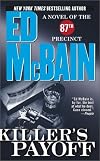
It's like an old-time gangster movie: a speeding car, a blazing gun... and suddenly a guy walking down the street without a care in the world is lying in the gutter without a head on his shoulders. But who pulled the high-powered trigger that turned Sy Kramer from a blackmailer into a chalk outline? Was it the politician's wife with a pornographic past? The soda-pop tycoon desperate to keep a business-busting bungle bottled up? Or was it whoever was paying Kramer a small fortune to hide what show more must've been one very big bad? It falls to detectives Steve Carella and Cotton Hawes of the 87th Precinct to pound the pavement of the city and beat the bushes of the backwoods for the suspect with the best motive, the most blistering weapon, and the biggest set of brass ones. En route, they'll meet pretty ladies and petty lowlifes, great white hunters and gray flannel ad execs, and, when the going gets rough, maybe even their match. It's all in several long days'--and even longer nights'--work for the guys who make their living behind the badge, and under the gun. show lessTags
Recommendations


















Member Reviews
Killer's Payoff veers from the ensemble feel of the previous novels by adhering strictly to one crime, in this case the murder of a blackmailer. The lack of any secondary criminal investigations taking place in the background doesn't take away from McBain's usual layered narrative, as extra time is well spent exploring all of the different paths an investigation can take simultaneously, especially in a case complicated by victims that are as secretive than the criminals themselves. How do you track down and interrogate suspects to a blackmailer's murder, when even the innocent ones have something to hide?
The drama isn't as intense as in previous novels, which might explain the novel's absence of side stories to lighten the mood. Since show more the victim of the case is a criminal himself, the lack of sympathy allows for a lighter approach to the narrative that keeps the mood hovering between serious and humorous. The overall effect is that this installment comes off more like a straight Mystery novel, which can either be viewed as a welcome break in the series format or an unfortunate lapse in the author's recognized style.
Carella and Hawes take up the main brunt of the detective work, with Kling and Meyer doing their fair share, while Willis and Brown pull backup duty with minor roles such as stakeouts and wiretaps. Hawes actually spends a good portion of the novel flying solo, making up for earlier transgressions while gaining a reputation as a rather effective ladies man by bedding a series of beautiful witnesses and strangers, offering a welcome change of pace from the serious love lives of Kling and Carella. McBain's stable of characters also grows beyond the precinct, as sympathetic informant Danny Gimp and the ex-husband of the previous novel's murder victim each lend a hand. show less
The drama isn't as intense as in previous novels, which might explain the novel's absence of side stories to lighten the mood. Since show more the victim of the case is a criminal himself, the lack of sympathy allows for a lighter approach to the narrative that keeps the mood hovering between serious and humorous. The overall effect is that this installment comes off more like a straight Mystery novel, which can either be viewed as a welcome break in the series format or an unfortunate lapse in the author's recognized style.
Carella and Hawes take up the main brunt of the detective work, with Kling and Meyer doing their fair share, while Willis and Brown pull backup duty with minor roles such as stakeouts and wiretaps. Hawes actually spends a good portion of the novel flying solo, making up for earlier transgressions while gaining a reputation as a rather effective ladies man by bedding a series of beautiful witnesses and strangers, offering a welcome change of pace from the serious love lives of Kling and Carella. McBain's stable of characters also grows beyond the precinct, as sympathetic informant Danny Gimp and the ex-husband of the previous novel's murder victim each lend a hand. show less
Another great procedural from McBain, great characters, excellent mystery, juicy procedural detail and his trademark humour. Holds up remarkably well for a 60 year old book.
“Kramer died in a gutter,” Hawes said flatly.
“But he lived in a penthouse,” Nancy answered.
Detective Cotton Hawes falls in love a lot in this book, but only for one day each! And at the end of each of those days, the same thing happens - “And so to bed.” Hilarious!
This book only has one case (usually there are two!) - who killed the blackmailer named Sy Kramer? This particular case is led by the above mentioned Detective Hawes, when he's between bedding, and falling in love with, beautiful women! It's a short read, but a good one, with a good twist as to who actually killed Kramer! And so...
“But he lived in a penthouse,” Nancy answered.
Detective Cotton Hawes falls in love a lot in this book, but only for one day each! And at the end of each of those days, the same thing happens - “And so to bed.” Hilarious!
This book only has one case (usually there are two!) - who killed the blackmailer named Sy Kramer? This particular case is led by the above mentioned Detective Hawes, when he's between bedding, and falling in love with, beautiful women! It's a short read, but a good one, with a good twist as to who actually killed Kramer! And so...
To quote from the blurb on Goodreads: “It’s like an old-time gangster movie: a speeding car, a blazing gun… and suddenly a guy walking down the street without a care in the world is lying in the gutter without a head on his shoulders. But who pulled the high-powered trigger that turned Sy Kramer from a blackmailer into a chalk outline?”
This book, originally published in the mid-1950s, is a solid early installment in the series and is the second to feature Cotton Hawes, the handsome redhead with the streak of white in his hair where he was knifed. According to McBain’s introduction to this edition of Killer’s Payoff, Hawes was introduced at the request of someone at the publisher’s, who thought that the main hero of the show more 87th, Detective Steve Carella, was too boring a hero because he was married (even though his wife, Teddy, is totally awesome). Never mind that the idea behind the 87th Precinct series was to have a rotating ensemble cast of heroes… but anyway, Hawes was introduced, and he’s more of a private eye type than a detective, but he seems to have worked out OK.
This is a fast-paced installment in the series, and it’s light on the gore. It’s mostly blackmail with just a little bit of murder, and of course lots of realistic police legwork. The Thomas and Mercer edition I read this in reproduces the police forms and photostats clearly and legibly, which is more than I can say for some of the earlier mass-market paperback editions of 87th Precinct novels.
Because of when it was published, this book does contain a fair amount of eye-roll-inducing commentary about women’s appearances (and supreme eye-roll-inducing antics on Hawes’ part, sleeping with women he encounters in the course of the job), but in relative terms it’s not as terrible as it could be. So I consider this one of the better books in the series for that reason. show less
This book, originally published in the mid-1950s, is a solid early installment in the series and is the second to feature Cotton Hawes, the handsome redhead with the streak of white in his hair where he was knifed. According to McBain’s introduction to this edition of Killer’s Payoff, Hawes was introduced at the request of someone at the publisher’s, who thought that the main hero of the show more 87th, Detective Steve Carella, was too boring a hero because he was married (even though his wife, Teddy, is totally awesome). Never mind that the idea behind the 87th Precinct series was to have a rotating ensemble cast of heroes… but anyway, Hawes was introduced, and he’s more of a private eye type than a detective, but he seems to have worked out OK.
This is a fast-paced installment in the series, and it’s light on the gore. It’s mostly blackmail with just a little bit of murder, and of course lots of realistic police legwork. The Thomas and Mercer edition I read this in reproduces the police forms and photostats clearly and legibly, which is more than I can say for some of the earlier mass-market paperback editions of 87th Precinct novels.
Because of when it was published, this book does contain a fair amount of eye-roll-inducing commentary about women’s appearances (and supreme eye-roll-inducing antics on Hawes’ part, sleeping with women he encounters in the course of the job), but in relative terms it’s not as terrible as it could be. So I consider this one of the better books in the series for that reason. show less
The sixth book of the 87th Precinct series continues the focus on the new detective, Cotton Hawes, who — at least from a 21st century point of view — is turning out to be rather unlikeable, as he “falls in love” every few pages and winds up in bed with a whole range of passing, forgettable female characters. In an earlier book, McBain had created a strong woman character (though she was being used as bait), but there’s little sign of that here. The book feels, in that sense, more of its time, with voluptuous women seducing or being seduced by tall, powerful men. Nevertheless, McBain continues to show off his liberal values, having already introduced Jewish, Black and disabled characters. This book features a memorable scene in show more a gay bar in which the only people the author detests are the suburban tourists who’ve come in to stare at the queers. Not McBain’s finest work, but still a key part of the emerging story. show less
It's been a while since I last read any of this series - I had forgotten what quick reads these books are!
I wasn't favorably impressed by Cotton Hawes, though there wasn't any specific reason for my feeling. He did do a good job of figuring out much of the mystery surrounding the death of Sy Kramer.
I wasn't favorably impressed by Cotton Hawes, though there wasn't any specific reason for my feeling. He did do a good job of figuring out much of the mystery surrounding the death of Sy Kramer.
A 1950's drive-by with a high-powered rifle shot to the face is assigned to Steve Carella and partner Cotton Hawes. They quickly discover the victim is a blackmailer, and start investigating his monthly marks, which devolve into deadends; however, Cotton's dogged determination eventually unveils a thread, which almost get him killed but solve the crime.
Members
- Recently Added By
Lists

Books - McBain, Ed: 87th Precinct
55 works; 1 member
Author Information

368+ Works 32,567 Members
Ed McBain is a pen name for Evan Hunter who was born in 1926 in East Harlem, New York on October 15, 1926. Hunter was born with the name Salvatore Albert Lombino, and he legally adopted the name Evan Hunter in 1952. During World War II, Hunter joined the Navy and served aboard a destroyer in the Pacific. He graduated from Hunter College, were he show more majored in English and psychology, with minors in dramatics and education. He was a prolific writer who also wrote under the names of Ed McBain, Curt Cannon, Hunt Collins, Ezra Hannon, and Richard Marsten. His first major success came in 1954 with the publication of The Blackboard Jungle, which was later adapted as a film. He published the first three books in the 87th Precinct series in 1956 under the name of Ed McBain. He also wrote juvenile books, plays, television scripts, and stories and articles for magazines. He won the Mystery Writers of America Award in 1957 and the Grand Master Award in 1986 for lifetime achievement. He died of laryngeal cancer on July 6, 2005 at the age of 78. (Bowker Author Biography) Ed McBain is the only American to receive the Diamond Dagger, the British Crime Writers Association's highest award. He also holds the Mystery Writers of America's coveted Grand Master Award. His books have sold over one hundred million copies, ranging from his most recent, "The Last Dance", to the bestselling "The Blackboard Jungle", the screenplay for Alfred Hitchcock's "The Birds" & the bestselling "Privileged Conversation", written under his own name, Evan Hunter. He lives in Connecticut. (Publisher Provided) Ed McBain, aka Evan Hunter, wrote the screenplay for Alfred Hitchcock's The Birds and has written many novels. He is the only American to be awarded Britain's coveted Diamond Dagger Award, the highest honor a suspense writer can achieve. He lives in Connecticut. (Publisher Provided) show less
Some Editions
Series

Work Relationships
Is contained in
Common Knowledge
- Original title
- Killer's Payoff
- Original publication date
- 1958
- People/Characters
- Steve Carella; Cotton Hawes; Meyer Meyer; Hal Willis; Danny Gimp; Bert Kling
- Important places
- Isola, New York
- First words
- It could have been 1937.
- Last words
- (Click to show. Warning: May contain spoilers.)Another day had started.
Classifications
Statistics
- Members
- 373
- Popularity
- 84,228
- Reviews
- 8
- Rating
- (3.64)
- Languages
- 9 — Czech, Danish, English, Estonian, French, German, Italian, Norwegian (Bokmål), Swedish
- Media
- Paper, Audiobook, Ebook
- ISBNs
- 37
- ASINs
- 16