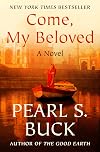
Come, My Beloved
by Pearl S. Buck
On This Page
Description
The New York Times-bestselling, multigenerational family saga that reaches from America to India by the Nobel Prize-winning author of The Good Earth. Beginning in the 1890s, Come, My Beloved describes an American family's involvement with India over four generations. Touched by the poverty he encounters in Bombay, self-made millionaire David MacArd establishes a seminary for Christian missionary workers, and in so doing shapes the fates of his son and grandson. The choices made by each show more generation parallel one another, distinctly marked by the passage of time--though the patriarch remains in New York, the second David becomes a missionary in India himself, while his own son, Ted, goes even further, opting to live in a remote village--and these choices come with unforeseen sacrifices. Nor does their religious journey necessarily mean any growing harmony with their surroundings--something that is powerfully brought home when Ted refuses to let his daughter marry across racial lines. Featuring an unforgettable rendering of India during Gandhi's rise to power, Come, My Beloved is a family saga of rare power and sensitivity. This ebook features an illustrated biography of Pearl S. Buck including rare images from the author's estate. show lessTags
Recommendations
















Member Reviews
After the death of his wife, David MacArd journeys through India with his son. Even though his view of life there is very sheltered, the country influences him once he is back in America to build an innovative school for missionaries in memory of his wife. His son is also changed by the trip and, against his father's wishes, returns to India to preach directly to the people. MacArd's grandson also feels called to be a missionary in India, although he leaves his wealthy father's comfortable compound to life in a poverty-stricken rural village, also against his father's wishes. The fourth generation of the family is more Indian than American, and young Livy falls in love with an Indian man (you guessed it) against her father's wishes.
In show more my opinion, Buck is at her best when she's writing about Eastern cultures, she's not so good when writing about Western cultures, and she's somewhere in between when writing about interactions between Eastern and Western cultures. I definitely liked this book, but I think that the four-generation span was too ambitious for a novel of less than 300 pages. I would have liked each generation to have been fleshed out a little more. However, Buck did do a very good job of illustrating the progress each generation made toward the ultimate goal of equality for everyone on earth. I also really liked how in each generation the children defied their fathers in order to fulfill themselves spiritually. I also have to give Buck credit for the way she handled the religious aspects of the story. Religion could very easily have become the focus of the novel, which would have taken away from a lot of other themes, and Buck managed to avoid making the religious aspects unpleasant. All in all, I don't think this is one of her best novels, but it is pretty high on my list. show less
In show more my opinion, Buck is at her best when she's writing about Eastern cultures, she's not so good when writing about Western cultures, and she's somewhere in between when writing about interactions between Eastern and Western cultures. I definitely liked this book, but I think that the four-generation span was too ambitious for a novel of less than 300 pages. I would have liked each generation to have been fleshed out a little more. However, Buck did do a very good job of illustrating the progress each generation made toward the ultimate goal of equality for everyone on earth. I also really liked how in each generation the children defied their fathers in order to fulfill themselves spiritually. I also have to give Buck credit for the way she handled the religious aspects of the story. Religion could very easily have become the focus of the novel, which would have taken away from a lot of other themes, and Buck managed to avoid making the religious aspects unpleasant. All in all, I don't think this is one of her best novels, but it is pretty high on my list. show less
Fyra generationer amerikaner bildar fond i denna roman om Indiens självständighetskamp och de brittiska protesterna om att "indierna ännu inte är mogna att regera över sitt land". Men huvudrollerna i "Kom, min älskade" innehas av amerikaner, som under tre generationer uppehåller sig till stor del i Indien. Först som kristna missionärer, senare som vita "välgörare", och till sist som "nästan" fullt integrerade indier. Buck visar oss historiska problem, politiska och kulturella likväl som religiösa, med dessa utlänningars förment välmenande gärningar.
Det blir intressant läsning - och, ja - det är inte lätt att vara överhöghet och anse att man alltid har facit i alla kulturrelaterade frågor. Ränderna går inte ur show more så lätt. Det tar generationer, men blir ändå inte alltid bra... show less
Det blir intressant läsning - och, ja - det är inte lätt att vara överhöghet och anse att man alltid har facit i alla kulturrelaterade frågor. Ränderna går inte ur show more så lätt. Det tar generationer, men blir ändå inte alltid bra... show less
Aug 14, 2012Swedish
Pearl S. Buck beschreibt in diesem Buch mehrere Generationen Kolonialismus und Missionierung in Indien. Ich fand die Handlungsstränge zu knapp angelegt. Das Buch hat ein interessantes Thema. Dennoch fand ich, dass es ein schwächeres Buch der Autorin ist.
Jan 20, 2012German
Ratings
Members
- Recently Added By
Author Information

440+ Works 37,205 Members
Pearl S. Buck, June 26, 1892 - March 6, 1973 Pearl Sydenstricker Buck was an American author, best know for her novels about China. Buck was born on June 26, 1892, in Hillsboro, West Virginia, but as the daughter of Presbyterian missionaries she was taken to China in infancy. She received her early education in Shanghai, but returned to the United show more States to attend college, and graduated from Randolph-Macon Woman's College in Virginia in 1914. Buck became a university teacher there and married John Lossing Buck, an agricultural economist, in 1917. Buck and her husband both taught in China, and she published magazine articles about life there. Her first novel East Wind, West Wind was published in 1930. Buck achieved international success with The Good Earth, which won the Pulitzer Prize in 1932. This story of a Chinese peasant family's struggle for survival was later made into a MGM film. Buck resigned from the Presbyterian Board of Foreign Missions after publishing an article that was critical of missionaries. She returned to the United States because of political unrest in China. Buck's novels during this period include Sons, A House Divided, and The Mother. She also wrote biographies of her father (Fighting Angel) and her mother (The Exile). She won the Nobel Prize for Literature in 1938. During her career, Buck published over 70 books: novels, nonfiction, story collections, children's books, and translations from the Chinese. She also wrote under the pseudonym John Sedges. In the United States, Buck was active in the civil rights and women's rights movements. In 1942 she founded the East and West Association to promote understanding between Asia and the West. In 1949, Buck established Welcome House, the first international interracial adoption agency. In 1964, she established the Pearl S. Buck foundation to sponsor support for Amerasian children who were not considered adoptable. Pearl Buck died in Danbury, Vermont, on March 6, 1973. (Bowker Author Biography) show less
Awards and Honors
Distinctions
Series
Belongs to Publisher Series
Work Relationships
Is contained in
Common Knowledge
- Canonical title
- Come, My Beloved
- Original title
- Come, My Beloved
- Original publication date
- 1953
- Epigraph
- "Come, my beloved, let us go forth into the field; let us lodge in the villages."
The Song of Solomon. - First words
- The desk at the Grand Hotel in Bombay was crowded with incoming guests.
- Last words
- (Click to show. Warning: May contain spoilers.)No use knowing, since nothing could be helped and whatever had been was ended.
- Original language*
- Englisch
*Some information comes from Common Knowledge in other languages. Click "Edit" for more information.
Classifications
Statistics
- Members
- 196
- Popularity
- 167,758
- Reviews
- 3
- Rating
- (3.69)
- Languages
- 8 — Dutch, English, Finnish, French, German, Italian, Spanish, Swedish
- Media
- Paper, Ebook
- ISBNs
- 15
- ASINs
- 27