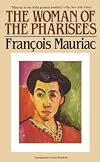
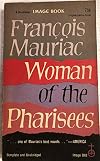
The Woman of the Pharisees
by François Mauriac, François Mauriac (Author)
On This Page
Description
"A deeply impressive novel by an author whose growth has been continuous and whose stature makes so much contemporary fiction seem sadly thin by comparison."--The New Yorker Francois Mauriac--who won the Nobel Prize for Literature in 1952--is famous for his subtle character portraits of the French rural classes and for depicting their struggles, aspirations, and traditions.The Woman of the Pharisees--one of Mauriac's most accomplished novels--is a penetrating evocation of the moral and show more religious values of a Bordeaux community. In Brigitte, we see how the ideals of love and companionship are stifled in the presence of a self-righteous woman whose austere religious principals lead her to interfere--disastrously--in the lives of others. One by one the unwitting victims fall prey to the bleakness of her "perfection." A conscientious schoolteacher, a saintly priest, her husband and stepdaughter and an innocent schoolboy are all confronted with tragedy and upheaval. But the author's extraordinary gift for psychological insight goes on to show how redeeming features inevitably surface from disaster. The unfolding drama is seen through the discerning eye of a young Louis--Brigitte's stepson--whose point of view is skillfully blended into the mature and understanding adult he later becomes. show lessTags
Recommendations






























Member Reviews
Mauriac's deft descriptions of the Pian family in early 20th century Bordeaux comes to us through Louis, the young son, but centers on his tragically pious step-mother, Brigitte Pian. Every character (even the narrator) is pulled apart for the reader, with their best and worst characteristics equally spread out on the page, and their physical and mental flaws held up for laughter and judgement. However no character is given as thorough a treatment as the easy to see through, but impossible to understand, Brigitte. A dark (but sometimes funny) novel that Maruiac wrote during the German occupation of France in the 1940s, this work hits on family, religion, education, love, passion, hypocrisy, and class issues in equal measures. Best of show more all, however, is the voice of our narrator, bringing these stories to us from his vantage point as a grown, embittered man, who realizes how deliciously untrustworthy his narration is and who comes to us with his receipts. Pretty impossible to put down. show less
The writing was excellent and added so much interest to the story of a woman who felt she was living a very religious life. The ending was such a disappointment that I felt a real letdown. The copy I read was published by Noonday Press in 1964
self-righteous austerity
Ratings
Members
- Recently Added By
Lists

Harold Bloom - The Western Canon: D. The Chaotic Age
833 works; 24 members
Author Information

236+ Works 5,755 Members
François Mauriac was born in Bordeaux, France on October 11, 1885. He was a novelist, essayist, poet, and playwright. He studied at the University of Bordeaux and the École Nationale des Chartes at Paris before leaving to focus on writing. His first published work, a volume of poems entitled Joined Hands, was published in 1909. He was better show more known as a novelist. His novels include Young Man in Chains, The Stuff of Youth, The Kiss to the Leper, The Desert of Love, Vipers' Tangle, The Frontenac Mystery, The Unknown Sea, and A Woman of the Pharisees. His plays include Asmodée and The Poorly Loved. Mauriac resisted the Nazi invaders and the Vichy regime consistently and courageously during World War II. He was elected to the French Academy in 1933 and received the Nobel Prize for Literature in 1952. He died on September 1, 1970. (Bowker Author Biography) show less
Some Editions
Series
Belongs to Publisher Series
Common Knowledge
- Canonical title*
- La pharisienne
- Original title
- La pharisienne
- Original publication date
- 1941
- People/Characters*
- Louis Pian; Brigitte Pian
- First words*
- Approche ici, garçon !
- Last words*
- (Click to show. Warning: May contain spoilers.)Elle savait maintenant que ce n'est pas de mériter qui importe mais d'aimer.
- Original language*
- Français
*Some information comes from Common Knowledge in other languages. Click "Edit" for more information.
Classifications
Statistics
- Members
- 243
- Popularity
- 133,292
- Reviews
- 3
- Rating
- (4.04)
- Languages
- 6 — Dutch, English, French, Hungarian, Italian, Swedish
- Media
- Paper, Ebook
- ISBNs
- 13
- ASINs
- 23