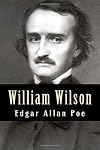
William Wilson [short story]
by Edgar Allan Poe
On This Page
Description
The story follows a man of noble descent who calls himself William Wilson because, although denouncing his past, he does not accept responsibilities blame for his actions, saying that "man was never thus [...] tempted before". After several paragraphs, the narration then segues into a description of Wilson's boyhood, which was spent in a school "in a misty-looking village of England." William meets another boy in his school who shared the same name, who had roughly the same appearance, and show more who was even born on exactly the same date. William's name (he asserts that his actual name is only similar to "William Wilson") embarrasses him because it sounds "plebeian" or common, and he is irked that he must hear the name twice as much on account of the other William...(Excerpt from Wikipedia) show lessTags
Recommendations
















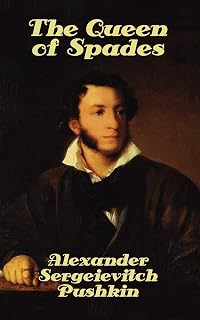
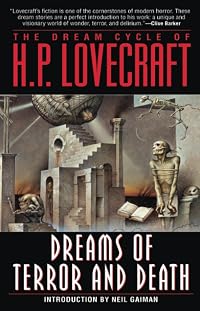

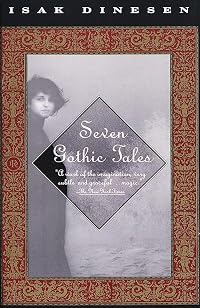
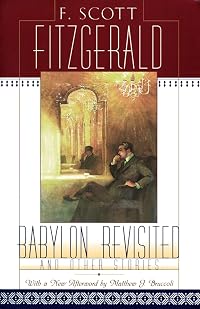

Member Recommendations
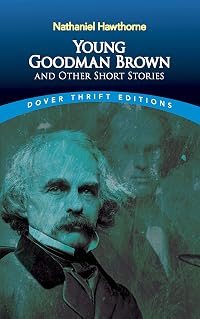
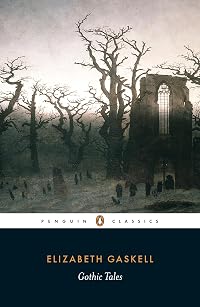
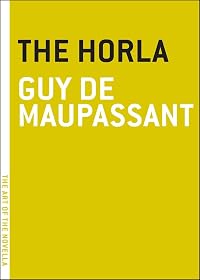
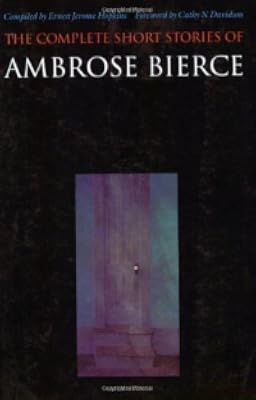
ghr4 Both deal with the existence of a person's double.
Member Reviews
The use of the doppelganger in this tale portrays better than any other the divided personality of Edgar Allan Poe. The sharp inward division between the strength of Poe's rational mind, he possessed enormous erudition, and the force of his irrational apprehension was reflected not only in his poems and stories but also in his conflict with authority, his anxious welcome of personal disaster and his compulsion to destroy his own life. In this autobiographical tale the narrator, like Poe himself in certain moods, has an "imaginative and easily excitable temperament" and is "self-willed, addicted to the wildest caprices, and a prey to the most ungovernable passions." He is tormented and pursued by his double--an inseparable companion in show more Dr. Bransby's school, at Eton and Oxford, and on the Continent--who mimics all his actions. Finally, unable to escape his tiresome other self, he stabs him to death. Only then does he realize that he has destroyed his conscience, or the finer part of himself. He has become dead to the moral world and no longer has a meaningful existence. The story demonstrates Poe's dual impulses: to act destructively and to censure his own irrational behavior.
Beyond that it contains signature aspects of Poe's writing, the building of atmosphere, suspense, and delineation of character through subtle and always important details.
This is one of Poe's finest tales, and has been recognized as such as can be seen through its influence on subsequent writers from Dostoevsky in The Double to Stevenson's Dr. Jekyll and Mr. Hyde and in Chesterton's The Man Who was Thursday. In the cinema Alfred Hitchcock's use of the doppelganger was magnificent. Poe's tale, like so many of his other works, may be the epitome of this type of tale. show less
Beyond that it contains signature aspects of Poe's writing, the building of atmosphere, suspense, and delineation of character through subtle and always important details.
This is one of Poe's finest tales, and has been recognized as such as can be seen through its influence on subsequent writers from Dostoevsky in The Double to Stevenson's Dr. Jekyll and Mr. Hyde and in Chesterton's The Man Who was Thursday. In the cinema Alfred Hitchcock's use of the doppelganger was magnificent. Poe's tale, like so many of his other works, may be the epitome of this type of tale. show less
Una historia muy interesante, que me recordo mucho a "Dr. Jeckill y Mr. Hyde" y a "El experimento del doctor Heidegger", pero de tipo sem-autobiográfica. La frase final ÉPICA.
The titular character has a doppleganger. Meh 24 pages
Ratings
Members
- Recently Added By
Lists

Favourite Short Stories
153 works; 9 members
Author Information

Edgar Allan Poe was born in Boston, Massachusetts on January 19, 1809. In 1827, he enlisted in the United States Army and his first collection of poems, Tamerlane and Other Poems, was published. In 1835, he became the editor of the Southern Literary Messenger. Over the next ten years, Poe would edit a number of literary journals including the show more Burton's Gentleman's Magazine and Graham's Magazine in Philadelphia and the Broadway Journal in New York City. It was during these years that he established himself as a poet, a short story writer, and an editor. His works include The Fall of the House of Usher, The Tell-Tale Heart, The Murders in the Rue Morgue, The Mystery of Marie Roget, A Descent into the Maelstrom, The Masque of the Red Death, and The Raven. He struggle with depression and alcoholism his entire life and died on October 7, 1849 at the age of 40. (Bowker Author Biography) show less
Some Editions
Work Relationships
Is contained in
The Fall of the House of Usher and Other Writings: Poems, Tales, Essays, and Reviews (Penguin Classics) by Edgar Allan Poe
The Works of Edgar Allen Poe in One Volume: Poems, Tales, Essays, Criticisms with New Notes by Edgar Allan Poe
The Best Known Works of Edgar Allan Poe in One Volume: Poems, Tales, Essays, Criticisms by Edgar Allan Poe
The Complete Tales and Poems of Edgar Allan Poe with Selections from His Critical Writings by Edgar Allan Poe
Twice Told Tales: An Anthology of Short Fiction (with Instructors Manual) by Gerard A. Barker (indirect)
The annotated tales of Edgar Allan Poe edited with an introduction, notes, and a bibliography by Edgar Allan Poe
Edgar Allan Poe: Collected Stories and Poems (Collector's Library Editions) by Edgar Allan Poe (indirect)
Has the adaptation
Inspired
Common Knowledge
- Canonical title
- William Wilson [short story]
- Original title
- William Wilson [novelette]
- Original publication date
- 1839-10
- People/Characters
- William Wilson; Rev. Dr. Bransby; Lord Glendinning
- Important places
- Oxford, Oxfordshire, England, UK
- Epigraph*
- »Kein Wort von ihm? Nichts vom Gewissensgrimm.
dem Spuk auf meinem Pfad?«William Chamberlayne
›Pharronida‹ - First words*
- Sei erlaubt, mich für den gegenwärtigen Zweck ›William Wilson‹ zu nennen.
- Last words*
- (Click to show. Warning: May contain spoilers.)In mir warst Du am Leben – nun, in meinem Tode, schau in diesem Bild, es ist Dein eigenes, wie gänzlich Du dich selbst gemordet hast.
- Original language
- English
- Disambiguation notice*
- This is a NOVELETTE. Do NOT combine with any collections.
*Some information comes from Common Knowledge in other languages. Click "Edit" for more information.
Classifications
Statistics
- Members
- 93
- Popularity
- 344,532
- Reviews
- 3
- Rating
- (3.39)
- Languages
- 7 — English, French, German, Italian, Portuguese, Spanish, Swedish
- Media
- Paper, Audiobook, Ebook
- ISBNs
- 35
- ASINs
- 10