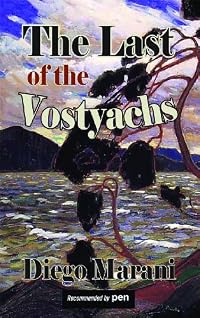
The Last of the Vostyachs
by Diego Marani
On This Page
Description
The Last of the Vostyachs won two literary prizes in Italy: The Premio Campiello and The Premio Stresa.As a child, Ivan and his father work as forced labourers in a mine in Siberia, the father having committed some minor offence against the regime. Ivan's father is then murdered in front of his young son, after which Ivan - who is a Vostyach, an imaginary ethnic group of whose language he is the last remaining speaker - is struck dumb by what he has witnessed. Some twenty years later the show more guards desert their posts and Ivan walks free, together with the other inmates. Guided by some mysterious power, he returns to the region he originally came from... show lessTags
Recommendations




















Member Reviews
Ivan walks out of a Siberian gulag after twenty years when it is abandoned by the guards who are no longer being paid. But when he returns to his home in the remote forest he cannot find any trace of the Vostyachs, the tribe to which he belongs. Struggling to deal with a particularly hard winter Ivan seeks refuge in a village, where he encounters a Russian linguist researching the languages of northern Siberia. And she is even more amazed to encounter a speaker of Vostyach, a language thought to be extinct and one which has never previously been recorded. As Olga Pavlovna gains Ivan's trust and records him speaking she realises that Vostyach forms a missing link between the Native American languages of North America and Finnish and its show more related languages, and so proves her theory that there were once common languages spoken throughout the lands of the far North. She resolves to take Ivan to the upcoming XXIst Congress of Finno-Ugric in Helsinki. But as she needs to stop in Leningrad she asks an fellow academic Professor Jaarmo Aurtova to meet Ivan in Helsinki and look after him until her arrival.
This is where the trouble starts, as the discovery of Vostyach, debunks Professor Aurtova's pet theory that Finnish has been pushed out to the fringes of Europe by barbarian invaders, and has nothing in common with what he views as the primitive languages of North America. And hell hath no fury like an academic whose work of a lifetime has just been discredited...
Another beautifully written and slightly surreal book by Diego Mariani focusing on questions of language and identity. And who knew academics could be so vicious in protecting their academic reputation? A short book but highly recommended. show less
This is where the trouble starts, as the discovery of Vostyach, debunks Professor Aurtova's pet theory that Finnish has been pushed out to the fringes of Europe by barbarian invaders, and has nothing in common with what he views as the primitive languages of North America. And hell hath no fury like an academic whose work of a lifetime has just been discredited...
Another beautifully written and slightly surreal book by Diego Mariani focusing on questions of language and identity. And who knew academics could be so vicious in protecting their academic reputation? A short book but highly recommended. show less
Fascinating how an Italian linguist can turn the obscurities of Finno Ugric languages into an imagined tale of the spiritualism of nature set into a weakly plotted crime thriller. What is it about Finland that so captures the attention of the author? Facing the challenge of the language may have driven him to a state of ecstasy. Who knows.
Diego Marani continues his engagement with the Finnish language with The Last of the Vostyachs. At the start of the novel, Ivan walks free from a Soviet labor camp and heads into the tundra to live on his own. Ivan hasn't spoken for years, because he is the last living speaker of Vostyach, a proto-language long thought lost to the world. When he comes into a little town to sell some skins he meets a Russian linguist, and she prevails on him to come with her to Helsinki for her to show off at a language conference.
From there Marani takes his story into a really trite and silly direction where the last of the Vostyachs becomes the centre of a passionate and arcane academic dispute over the origins of the Finnish language. The book is full show more of linguistic jargon and has some of the worst sex scenes you may ever read. A tiresome and silly book, all the more disappointing because the book's opening premise could have been developed into a much more interesting and moving story. This is a good idea totally wasted. show less
From there Marani takes his story into a really trite and silly direction where the last of the Vostyachs becomes the centre of a passionate and arcane academic dispute over the origins of the Finnish language. The book is full show more of linguistic jargon and has some of the worst sex scenes you may ever read. A tiresome and silly book, all the more disappointing because the book's opening premise could have been developed into a much more interesting and moving story. This is a good idea totally wasted. show less
Ivan and his father are members of an isolated tribe of nomadic hunter gatherers in Siberia and are imprisoned by the Soviets for the crime of 'poaching'. Ivan's father does not survive but when the guards abandon the prison camp on the fall of the Soviet Union, Ivan tries to find his people. Speaking a hitherto unknown Finno-Ugric language, he is befriended by a Russian linguist/anthropologist who sends him to a linguistics conference in Helsinki, much to the displeasure of the Finnish Professor Jaarmo Aurtova.
Another interesting reflection on language and identity from Diego Marani in the form of a thriller - will the mad, bad professor get away the evil plan? I really enjoyed it, though I did wonder throughout whether a coupe de show more glotte is what I know as a glottal stop. Wikipedia says it's a musical term. A mistranslation or is the confusion there in the Italian? show less
Another interesting reflection on language and identity from Diego Marani in the form of a thriller - will the mad, bad professor get away the evil plan? I really enjoyed it, though I did wonder throughout whether a coupe de show more glotte is what I know as a glottal stop. Wikipedia says it's a musical term. A mistranslation or is the confusion there in the Italian? show less
Last of the Voystachs held my attention, was occasionally touching, and passages and strands in it might prove memorable. But like another member I wish Marani had written another draft before publishing, one in which he'd managed to achieve consistency of tone or, better still, harmony of tones. It wouldn't be impossible for a writer so good as he to mix humour with pathos, the absurd with the weighty, and violence with nostalgic yearning smoothly; here, though, those tones were like irregular pieces of patchwork rather than coherent whole. And because they were they competed with, even undermined, each other: The compassion Marani makes the reader feel for Ivan is lessened by the attention given the sit-com ex-wife; the wonderful show more descriptions of nature and weather are weakened by the account of the Laplander's anxious drive to the beach; the thoughtful passages about linguistics seem less thoughtful followed as they are by a character's attempt to get drunk a woman with a hollow leg. Moreover, changes in viewpoint sometimes also have this patchy quality: the account of two professors meeting in a summer cottage, for example, is often awkward because Marani shifts point of view without making clear enough whose viewpoint is being given.
I think this book might have a special appeal to British readers because like many comic British novels it has a far-fetched, very plotty, terribly broad treatment of the humourous. But there's much more to it than the farcical and on the whole I'd recommend it: It's a quite good novel that could with more care and better balance have been a good one. show less
I think this book might have a special appeal to British readers because like many comic British novels it has a far-fetched, very plotty, terribly broad treatment of the humourous. But there's much more to it than the farcical and on the whole I'd recommend it: It's a quite good novel that could with more care and better balance have been a good one. show less
Ivan, is the last of the Vostyachs, the last member of a tribe that connects the language of certain tribes of the North Americas and Finnish, they were also very powerful shamans, with the ability to be understood by most animals. Although he hasn’t spoken a word in years, not since as a child he saw his father shot dead at the slave labour camp they were prisoners at. Shoot forward twenty years and Ivan wanders out of the camp after the guards all left when their wages stopped arriving. He leaves the camp moving out into the woods, then as if led by some occult power, he returns to his place of origin and starts to live as his forebears did, through this mystifying power he also rediscovers his language & the ability to be show more understood by the wildlife. Winter hits the region and the weather turns harsh forcing him to visit a local village to trade for food.
It is here that Ivan is discovered by Olga, a linguist, stuck in the village because of the weather, her curiosity is roused by this man who speaks this strange language, which she soon realises is an ancient tongue, and possibly one that joins Finland to pre-Columbian North America. She confides this information via a letter to Professor Jaarmo Aurtova, an expert on Finno-Ugric. This turns out to be a bad decision (Understatement Alert!!) as he plans a speech at the 21st Congress of Finno-Ugric, and in that speech he aims to pronounce Finnish as Europe's oldest & purest language, meaning Olga’s news will blow his speech out of the water.
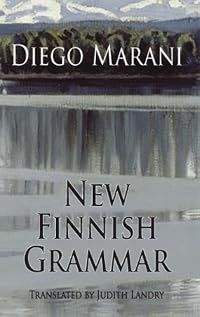
Not knowing this, Olga sends Ivan to Helsinki, and arranges for Jaarmo to meet him. From this point the writer of the book chucks in a couple of murders, a zoo emptied of it’s wildlife, an angry ex-wife trailing around the city & an Estonian folk group, all linked in some way by the professor, as he tries to bury all knowledge of the existence of Ivan & more importantly his language. To find out how the author combines all of this you will have to read this very clever and very funny book. Diego Marani’s book New Finnish Grammar, made the Official Shortlist for the 2012 Independent Foreign Fiction Prize, with the judges stating that..
“This subtle and moving novel shows how much of what we take to be ourselves depends upon the language that we speak and the identity it gives us. It also shows how suddenly that self can be taken away.”
In the Last Of The Vostyachs, the author’s obsessions are still the same, language, it’s purpose not merely as an instrument for communication, but also how it relates to the behavioural codes and cultural values that go to construct ones identity and that not only does language define the characteristics of a specific group or community, it is also the means by which an individual identifies themselves and how they identify with others. Although this time he has used them to create a fantastic clever, funny mystery/thriller complete with a wonderful villain, that you’ll love to hate and whose exploits you’ll be amazed and shocked by, all whilst laughing at him, especially in the end scenes………. but I’ll let you discover the delights of that moment.
This book as with New Finnish Grammar, was translated by Judith Landry, and as with that book, she has my heartfelt thanks for allowing me the opportunity to read this with the ease I did. It has also made the longlist for this years Independent Foreign Fiction Prize, it will be interesting to see if Diego Marani and Judith Landry make the shortlist for the second year running.
http://parrishlantern.blogspot.co.uk/2013/03/the-last-of-vostyachsdiego-marani-i... show less
It is here that Ivan is discovered by Olga, a linguist, stuck in the village because of the weather, her curiosity is roused by this man who speaks this strange language, which she soon realises is an ancient tongue, and possibly one that joins Finland to pre-Columbian North America. She confides this information via a letter to Professor Jaarmo Aurtova, an expert on Finno-Ugric. This turns out to be a bad decision (Understatement Alert!!) as he plans a speech at the 21st Congress of Finno-Ugric, and in that speech he aims to pronounce Finnish as Europe's oldest & purest language, meaning Olga’s news will blow his speech out of the water.
Not knowing this, Olga sends Ivan to Helsinki, and arranges for Jaarmo to meet him. From this point the writer of the book chucks in a couple of murders, a zoo emptied of it’s wildlife, an angry ex-wife trailing around the city & an Estonian folk group, all linked in some way by the professor, as he tries to bury all knowledge of the existence of Ivan & more importantly his language. To find out how the author combines all of this you will have to read this very clever and very funny book. Diego Marani’s book New Finnish Grammar, made the Official Shortlist for the 2012 Independent Foreign Fiction Prize, with the judges stating that..
“This subtle and moving novel shows how much of what we take to be ourselves depends upon the language that we speak and the identity it gives us. It also shows how suddenly that self can be taken away.”
In the Last Of The Vostyachs, the author’s obsessions are still the same, language, it’s purpose not merely as an instrument for communication, but also how it relates to the behavioural codes and cultural values that go to construct ones identity and that not only does language define the characteristics of a specific group or community, it is also the means by which an individual identifies themselves and how they identify with others. Although this time he has used them to create a fantastic clever, funny mystery/thriller complete with a wonderful villain, that you’ll love to hate and whose exploits you’ll be amazed and shocked by, all whilst laughing at him, especially in the end scenes………. but I’ll let you discover the delights of that moment.
This book as with New Finnish Grammar, was translated by Judith Landry, and as with that book, she has my heartfelt thanks for allowing me the opportunity to read this with the ease I did. It has also made the longlist for this years Independent Foreign Fiction Prize, it will be interesting to see if Diego Marani and Judith Landry make the shortlist for the second year running.
http://parrishlantern.blogspot.co.uk/2013/03/the-last-of-vostyachsdiego-marani-i... show less
Well, what a disappointment for a book so widely and effusively praised. The UPSIDE is Marani's descriptive imagery and occasional fresh metaphor. He also writes the indigenous character of Ivan, the last Vostyach, with believability. The philological stuff is interesting too, if a bit obscure for most of us. The translation is very good - it does read like it was written in English.
But the DOWNSIDE is unbelievable plotting and weak characterisation (save perhaps for the aforementioned Ivan). I don't mind if an author asks us to suspend belief from time to time, but every turn of the plot here requires it. And the characters are as shape changing as the Baltic ice. You end up saying "Oh please!" as coincidences pile up.
The voice in show more the letter passages sounds stagey and too formal, as is the section where Margareeta leaves a phone message sounding like it was written by her speech writer.
I'm left thinking the book needed a couple more drafts, with attention to the plot. show less
But the DOWNSIDE is unbelievable plotting and weak characterisation (save perhaps for the aforementioned Ivan). I don't mind if an author asks us to suspend belief from time to time, but every turn of the plot here requires it. And the characters are as shape changing as the Baltic ice. You end up saying "Oh please!" as coincidences pile up.
The voice in show more the letter passages sounds stagey and too formal, as is the section where Margareeta leaves a phone message sounding like it was written by her speech writer.
I'm left thinking the book needed a couple more drafts, with attention to the plot. show less
Members
- Recently Added By
Published Reviews
ThingScore 100
So, we have: 1. An intellectual puzzle. 2. A wild man of nature adrift in a big city. 3. A policier set near the Arctic Circle. (If that alone doesn't make you put down your copies of Fifty Shades of Whatever then I despair. It has that Killingesque atmosphere.) 4. Magic, and a sense of the immensity of the primeval universe. 5. An unmistakable dash of humour, even when your nerves are being show more shredded. 6. Wolves, and a Siberian tiger, let loose from a zoo. And 7. All hanging together. When I reviewed New Finnish Grammar, I edged towards using the word "genius" to describe Marani. I'm doing so again now. show less
added by Stbalbach
Lists

Novels featuring language professionals
98 works; 12 members
Author Information

21+ Works 632 Members
Some Editions
Awards and Honors
Common Knowledge
- Canonical title
- The Last of the Vostyachs
- Original publication date
- 2002
- Important places*
- Helsinki
*Some information comes from Common Knowledge in other languages. Click "Edit" for more information.
Classifications
- Genres
- General Fiction, Fiction and Literature
- DDC/MDS
- 853.92 — Literature & rhetoric Italian, Romanian & related literatures Italian fiction 1900- 21st Century
- LCC
- PQ4873 .A691545 .U44 — Language and Literature French, Italian, Spanish and Portuguese literatures Italian literature Individual authors, 1961-2000
- BISAC
Statistics
- Members
- 70
- Popularity
- 445,943
- Reviews
- 8
- Rating
- (3.53)
- Languages
- English, Finnish, French, Italian
- Media
- Paper, Ebook
- ISBNs
- 8
- ASINs
- 2