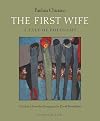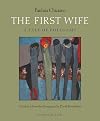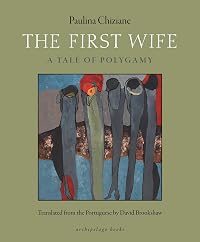
The First Wife: A Tale of Polygamy
by Paulina Chiziane
On This Page
Description
In this, a ground-breaking publication in the canon of non-Western women's literary history, Paulina Chiziani -- the first woman from Mozambique ever to publish a novel -- lifts the lid on her country's values and its hypocracies. After 20 years of marriage, Rami discovers that her husband has been living a double -- or rather, a quintuple -- life. After Tony is forced to marry the four other women -- as well as an additional lover -- according to polygamist custom, the rival lovers join show more together to declare their voices and demand their rights. show lessTags
Recommendations


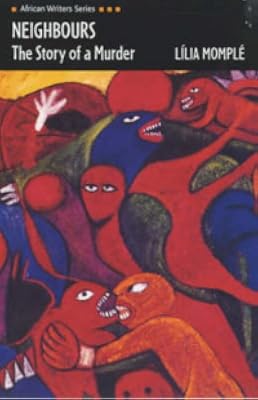


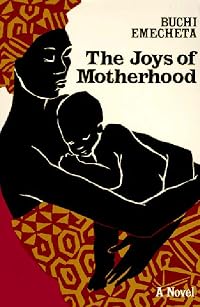
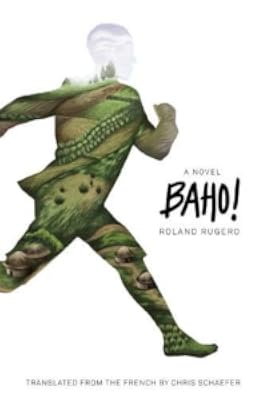
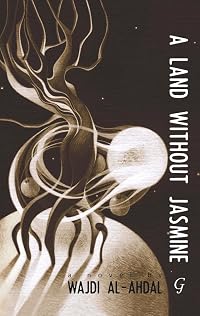













Member Recommendations
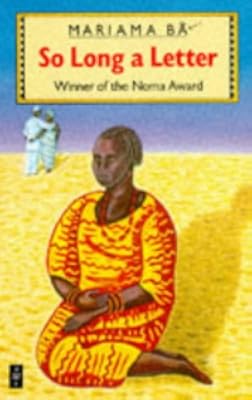
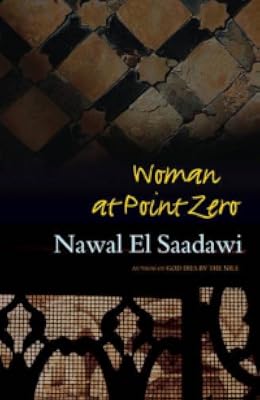
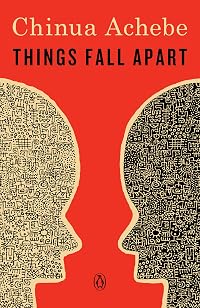
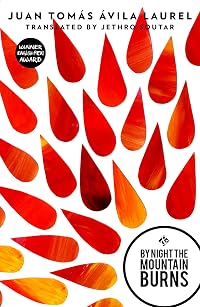
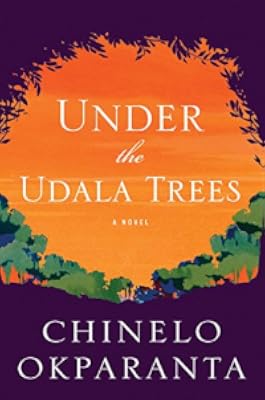
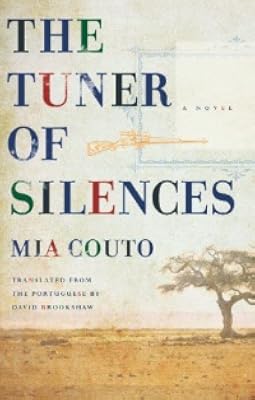
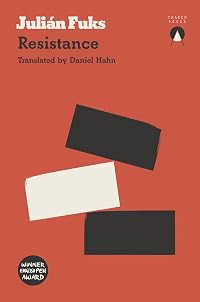
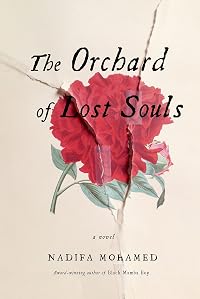
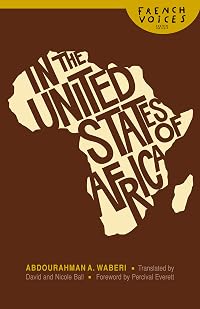
susanbooks these fiction and nonfiction books, paired together, explain each other wonderfully, particularly when it comes to the difference between women in the North and South.
Member Reviews
Rating: 4* of five
The Publisher Says: After twenty years of marriage, Rami discovers that her husband has been living a double—or rather, a quintuple—life. Tony, a senior police officer in Maputo, has apparently been supporting four other families for many years. Rami remains calm in the face of her husband's duplicity and plots to make an honest man out of him. After Tony is forced to marry the four other women—as well as an additional lover—according to polygamist custom, the rival lovers join together to declare their voices and demand their rights.
In this brilliantly funny and feverishly scathing critique, a major work from Mozambique's first published female novelist, Paulina Chiziane explores her country's traditional show more culture, its values and hypocrisy, and the subjection of women the world over.
I RECEIVED A DRC FROM THE PUBLISHER VIA EDELWEISS+. THANK YOU.
My Review: Archipelago Books brought this translation of a novel by the first Mozambican woman novelist published in 2016, fourteen years after it appeared in Portuguese.
The first ever woman novelist in Mozambique had published her first fiction in 1990.
Margaret Cavendish had been dead for three hundred thirty-one years, Murasaki Shikibu for almost a thousand, when this book was brought out in Mozambique. That's just to offer but two of the woman novelists whose work a properly-run society cannot be had without. I think this makes Author Chiziane's point for her all by itself: The culture of Mozambique is deeply misogynistic.
So are all the others I know anything about.
I relished Rami's adamantine determination to redress one small-in-the-scheme-of-things balance. She demanded, and got, a just solution to a bad situation. And it worked fine.
It was also funny as hell to see her lying louse of a husband was, thanks to the rage-fueled cleverness and the strategic solidarity, of the four other women he wronged. In a culture that allows polygamy, he lied about his actions; he suffered consequences but what can make up for lying to and betraying the trust of the woman...the women...who bore your children and cared for you?
Not sure I can think of an answer at all let alone a condign one.
Like all the best tendentious stories, this one needs to be handled with either humor, Author Chiziane's choice, or murderous rage. It was obvious to me that the events of the novel are heartfelt cris-de-cœur from one herself deeply hurt by the extreme inequality of the sexes in her culture. After independence and civil wars, the ruling party had made some progress to curb legal abuses of women. As that progress eroded, Author Chiziane..."storyteller" as she refers to herself not novelist ("I am a storyteller... I take my inspiration from tales around the campfire, my first art school")...wrote this scathing, funny work of revenge fiction. In about two hundred fifty pages she takes on the system that repressed, gave hope to, then let down...again...the people it rebelled to protect.
I'm not sure how to explain the parallels I see in this woman's story and the stories of those (like me) threatened by the impending and the still nebulous rollbacks of progress in the Anglophone world. I'm not sure I should need to. I'm not sure how to convince you more powerfully that an ebook purchase of less than ten dollars will both entertain, and energize you to resist what's happening around us.
I hope I have. show less
The Publisher Says: After twenty years of marriage, Rami discovers that her husband has been living a double—or rather, a quintuple—life. Tony, a senior police officer in Maputo, has apparently been supporting four other families for many years. Rami remains calm in the face of her husband's duplicity and plots to make an honest man out of him. After Tony is forced to marry the four other women—as well as an additional lover—according to polygamist custom, the rival lovers join together to declare their voices and demand their rights.
In this brilliantly funny and feverishly scathing critique, a major work from Mozambique's first published female novelist, Paulina Chiziane explores her country's traditional show more culture, its values and hypocrisy, and the subjection of women the world over.
I RECEIVED A DRC FROM THE PUBLISHER VIA EDELWEISS+. THANK YOU.
My Review: Archipelago Books brought this translation of a novel by the first Mozambican woman novelist published in 2016, fourteen years after it appeared in Portuguese.
The first ever woman novelist in Mozambique had published her first fiction in 1990.
Margaret Cavendish had been dead for three hundred thirty-one years, Murasaki Shikibu for almost a thousand, when this book was brought out in Mozambique. That's just to offer but two of the woman novelists whose work a properly-run society cannot be had without. I think this makes Author Chiziane's point for her all by itself: The culture of Mozambique is deeply misogynistic.
So are all the others I know anything about.
I relished Rami's adamantine determination to redress one small-in-the-scheme-of-things balance. She demanded, and got, a just solution to a bad situation. And it worked fine.
It was also funny as hell to see her lying louse of a husband was, thanks to the rage-fueled cleverness and the strategic solidarity, of the four other women he wronged. In a culture that allows polygamy, he lied about his actions; he suffered consequences but what can make up for lying to and betraying the trust of the woman...the women...who bore your children and cared for you?
Not sure I can think of an answer at all let alone a condign one.
Like all the best tendentious stories, this one needs to be handled with either humor, Author Chiziane's choice, or murderous rage. It was obvious to me that the events of the novel are heartfelt cris-de-cœur from one herself deeply hurt by the extreme inequality of the sexes in her culture. After independence and civil wars, the ruling party had made some progress to curb legal abuses of women. As that progress eroded, Author Chiziane..."storyteller" as she refers to herself not novelist ("I am a storyteller... I take my inspiration from tales around the campfire, my first art school")...wrote this scathing, funny work of revenge fiction. In about two hundred fifty pages she takes on the system that repressed, gave hope to, then let down...again...the people it rebelled to protect.
I'm not sure how to explain the parallels I see in this woman's story and the stories of those (like me) threatened by the impending and the still nebulous rollbacks of progress in the Anglophone world. I'm not sure I should need to. I'm not sure how to convince you more powerfully that an ebook purchase of less than ten dollars will both entertain, and energize you to resist what's happening around us.
I hope I have. show less
update: I just recommended this novel in the "Read Women" group, where we're currently reading [b:So Long a Letter|151374|So Long a Letter|Mariama Bâ|https://images.gr-assets.com/books/1394825021s/151374.jpg|146098] by [a:Mariama Bâ|502766|Mariama Bâ|https://images.gr-assets.com/authors/1263598939p2/502766.jpg], a classic novel about polygamy in Africa. I wanted to recommend both of them on my timeline--and here is my review of The First Wife:
I loved reading this book. It delighted me over and over again for its brash heroine who, even though she finds herself in a loveless marriage, and even though her entire family tells her that what she has is all she deserves, refuses to believe it. She then goes about making her life better, show more all on her own, following a path that is joyful, funny, bawdy, women-centered, and in every way satisfying to me as a reader.
This is a feminist book in all the best ways. Of course one of the core questions of feminism as a philosophy is how culturally inclusive it can be, before it devolves into just another kind of cultural oppression where western white women are telling everyone else what to think about themselves. It's important to honor differences in sexuality, gender identity, race, class, nationality, and religion. So as I read, I didn't want to assume I understood more than I do.
And indeed there were a lot of cultural differences that divided me from the lived experience of the protagonist as described here. Some the cultural practices are so unique that they aren't translated--for example, there is no word in my language for "the right of a dead man's brother to have sex with his widow." I have very little idea, much less experience, with what it would be like to live in a culture where men have such absolute power over women as they do in this novel--so much power that there is a running trope through this novel where any woman who eats the best part of a chicken instead of feeding it to her man is punished in some absurdly excessive way, usually involving death.
Even so, I kept thinking: "I get this." And: "I've felt this way." Chiziane over and over again points out the absurdity of these repressive and misogynistic cultural practices, in ways that are light-hearted and farcical and that are also disarming--Chiziane allows Rami, her protagonist, to confront these practices, point out their selfish contradictions, and to disarm them, one by one. Rami is my latest hero, for the way she takes on the bad guys fearlessly, and for the way, in spite of all odds being against her, she wins in the end. This novel reminded me that some things about living under patriarchy really are universal. show less
I loved reading this book. It delighted me over and over again for its brash heroine who, even though she finds herself in a loveless marriage, and even though her entire family tells her that what she has is all she deserves, refuses to believe it. She then goes about making her life better, show more all on her own, following a path that is joyful, funny, bawdy, women-centered, and in every way satisfying to me as a reader.
This is a feminist book in all the best ways. Of course one of the core questions of feminism as a philosophy is how culturally inclusive it can be, before it devolves into just another kind of cultural oppression where western white women are telling everyone else what to think about themselves. It's important to honor differences in sexuality, gender identity, race, class, nationality, and religion. So as I read, I didn't want to assume I understood more than I do.
And indeed there were a lot of cultural differences that divided me from the lived experience of the protagonist as described here. Some the cultural practices are so unique that they aren't translated--for example, there is no word in my language for "the right of a dead man's brother to have sex with his widow." I have very little idea, much less experience, with what it would be like to live in a culture where men have such absolute power over women as they do in this novel--so much power that there is a running trope through this novel where any woman who eats the best part of a chicken instead of feeding it to her man is punished in some absurdly excessive way, usually involving death.
Even so, I kept thinking: "I get this." And: "I've felt this way." Chiziane over and over again points out the absurdity of these repressive and misogynistic cultural practices, in ways that are light-hearted and farcical and that are also disarming--Chiziane allows Rami, her protagonist, to confront these practices, point out their selfish contradictions, and to disarm them, one by one. Rami is my latest hero, for the way she takes on the bad guys fearlessly, and for the way, in spite of all odds being against her, she wins in the end. This novel reminded me that some things about living under patriarchy really are universal. show less
Rami and Tony have been married for twenty years and have five children. He is a senior police officer, and they live comfortably, if not extravagantly, in Maputo, Mozambique. Lately he has been working late and is often absent when Rami needs him. Soon she discovers that he has a mistress of long-standing, and she goes to confront this other woman. Julieta also has five children with Tony and is pregnant with her sixth. At first the women come to fisticuffs, but eventually realize that they have both been betrayed, for Tony has more families stashed around the city. Rami, as first wife, decides to bring the women together for mutual support and to organize this haphazard polygamous marriage into a more traditional form that grants the show more women some rights.
Although it took me a while to get used to the author's writing style, the plot was a page-turner from the beginning. Rami's struggle to come to terms with her husband's infidelity, and her fight for not only her rights, but the rights of all her husband's wives, is at once universal and unique. The author writes from a strong feminist perspective, but with an acknowledgment of regional differences, the influence of tradition, and the legacy of colonialism. Recommended for anyone interested in gender politics, the lives of women in Mozambique, or simply a poignant, funny satire set in Africa. show less
Although it took me a while to get used to the author's writing style, the plot was a page-turner from the beginning. Rami's struggle to come to terms with her husband's infidelity, and her fight for not only her rights, but the rights of all her husband's wives, is at once universal and unique. The author writes from a strong feminist perspective, but with an acknowledgment of regional differences, the influence of tradition, and the legacy of colonialism. Recommended for anyone interested in gender politics, the lives of women in Mozambique, or simply a poignant, funny satire set in Africa. show less
This superb novel, written by Mozambique's first published female novelist and expertly translated from the Portuguese by David Brookshaw, is narrated by Rami, a modest southern Mozambican woman who has been faithfully married to a police chief in the capital of Maputo for the past 20 years, but is disturbed by the increasing frequency of Tony's nights spent away from home and his inattention to her. She soon learns that he has taken on another lover, which is not uncommon in this patriarchal society that accepts and celebrates male infidelity, permits polygamy as a cultural norm, and looks the other way when wives are abused and beaten by their husbands, while expecting these women to serve their men the best parts of their homecooked show more meals while kneeling in servitude and gratitude. Rami encounters her rival, and after a violent argument they become allies. Soon Rami finds out that Tony has taken on three other lovers, none of whom are completely satisfied with their lot. After he refuses to give up his lovers Rami befriends these four women, who come up with a plot to confront Tony as one, and shame him into becoming a respectable provider and lover to all of them. Tony, however, has other ideas.
"The First Wife" portrays the repressed lives of women in modern Mozambican society while also being easily readable and often lighthearted and humorous, and demonstrates the power of collective action of women in a society that falsely claims that it respects and values them. Despite being nearly 500 pages in length this was a quick and very enjoyable and educational novel, and I hope to read more of Paulina Chiziane's work. show less
"The First Wife" portrays the repressed lives of women in modern Mozambican society while also being easily readable and often lighthearted and humorous, and demonstrates the power of collective action of women in a society that falsely claims that it respects and values them. Despite being nearly 500 pages in length this was a quick and very enjoyable and educational novel, and I hope to read more of Paulina Chiziane's work. show less
Rami is a very ordinary 21st century middle-aged, middle-class housewife: convent-educated, with five kids, a nice house in Maputo, and a husband, Tony, who has made a very successful career in the police force. But she isn't happy: Tony has been neglecting her somewhat, and often only seems to be using the family home as a place to take baths and change his clothes. Women-friends advise her to win her husband back by taking courses in erotic practices or by consulting witches, but that doesn't get her anywhere. When she investigates where Tony is actually spending his time, she's alarmed to discover that as well as his legal household with her, he has been maintaining four other unofficial wives scattered around the city, each with a show more house and children.
Chiziane follows Rami through the process of developing a conscious understanding of the role she and her "rivals" have been manipulated into playing in Mozambican society, where there is a gender-imbalance caused by war and migration, as well as complicated intersections of traditional Bantu culture and colonialist Catholic ideas under a surface coating of FRELIMO Marxism, and the other, older, set of collisions between the largely matriarchal traditions in the north of the country and the more patriarchal culture of the south.
Rami gets together with the other women to take control of their own lives, gaining economic independence with the help of a mutual microcredit scheme and gradually manoeuvring Tony into a position where he becomes aware of the harm he has done through his irresponsible actions and his reliance on the principle of male infallibility.
There's a lot of politics and sociology to get through here, but it's presented very lightly, in the framework of a story that is effectively a romantic comedy, albeit one that doesn't try to conceal the very real oppression and suffering that is going on as a result of the way women are treated in contemporary African society. Chiziane is extremely good at what she does, there are lively characters who never descend into stereotypes, there is clever, funny dialogue, and there are some glorious angry rants and poetic excursions — altogether a very interesting and enjoyable book. show less
Chiziane follows Rami through the process of developing a conscious understanding of the role she and her "rivals" have been manipulated into playing in Mozambican society, where there is a gender-imbalance caused by war and migration, as well as complicated intersections of traditional Bantu culture and colonialist Catholic ideas under a surface coating of FRELIMO Marxism, and the other, older, set of collisions between the largely matriarchal traditions in the north of the country and the more patriarchal culture of the south.
Rami gets together with the other women to take control of their own lives, gaining economic independence with the help of a mutual microcredit scheme and gradually manoeuvring Tony into a position where he becomes aware of the harm he has done through his irresponsible actions and his reliance on the principle of male infallibility.
There's a lot of politics and sociology to get through here, but it's presented very lightly, in the framework of a story that is effectively a romantic comedy, albeit one that doesn't try to conceal the very real oppression and suffering that is going on as a result of the way women are treated in contemporary African society. Chiziane is extremely good at what she does, there are lively characters who never descend into stereotypes, there is clever, funny dialogue, and there are some glorious angry rants and poetic excursions — altogether a very interesting and enjoyable book. show less
I'm not sure what I expected going in, but whatever my expectation was, this book surprised me (in a good way). Soap opera is not quite the word I want to use to describe it, but there were some similarities, mostly due (I think) to the action & wide emotional arcs. ("Loving" Catholic husband has not one, not two, not three, but four mistresses. Plus kids. All behind the back of his "first wife" of 20 years. Antics ensue. Love, hate, jealousy, rage, cunning, exhaustion, revenge, friendship, innovation, hypocrisy, & imperiousness are just some of the emotional explorations.) Sometimes it felt like it was approaching melodrama, but Chiziane generally kept it from going over that edge & let the story serve up a moral, ethical, cultural, or show more social point at those moments. She had some heartfelt yet scathing points to make about men, society, patriarchy, & more. For me, it was a window into a different world. I think the story could have been as affecting even with further editing. Even so, it was a strong book with some withering & well-delivered points. Overall, I found it interesting & worthwhile.
P.S. It's shocking, fascinating, & impressive that Chiziane was the first woman in Mozambique to publish a novel! Glad she led the way & I hope women publishing novels in Mozambique is a trend that has grown since that time. show less
P.S. It's shocking, fascinating, & impressive that Chiziane was the first woman in Mozambique to publish a novel! Glad she led the way & I hope women publishing novels in Mozambique is a trend that has grown since that time. show less
Not just about polygamy, but about what it is to be a woman. An amazing book. Five women in Mozambique share a husband. When the social traditions of polygamy get to be too much for them, they plot their revenge. Excellent.
Members
- Recently Added By
Lists

Best African and African diaspora books
111 works; 4 members

Extremism
31 works; 1 member
Author Information

10 Works 341 Members
Some Editions
Awards and Honors
Common Knowledge
- Canonical title
- The First Wife: A Tale of Polygamy
- Original title
- Niketche
- Original publication date
- 2002; 2016 (English translation) (English translation)
- People/Characters
- Rami; Tony
- Important places
- Maputo, Mozambique
- Epigraph
- A woman is earth. If you don't sow her, or water her, she will produce nothing.
(A proverb from Zambézia) - Dedication
- With Leontina dos Muchangos,
I travel through the world of a woman,
that unknown soul where I discovered sleeping power
and
With Alcinda de Abreu,
I stroll until the sun goes down and th... (show all)e sun comes up,
through the most extraordinary landscape
of a woman's world. - First words
- An explosion can be heard somewhere over there.
- Last words
- (Click to show. Warning: May contain spoilers.)He doesn't fall, but he flies into the abyss, toward the heart of the desert, toward a hell without end.
- Blurbers
- Mengiste, Maaza; Simões da Silva, Tony
- Original language
- Portuguese
Classifications
- Genres
- Fiction and Literature, General Fiction, Romance
- DDC/MDS
- 869.3 — Literature & rhetoric Spanish Literature Literatures of Portuguese and Galician languages Portuguese fiction
- LCC
- PQ9939 .C45 .N5513 — Language and Literature French, Italian, Spanish and Portuguese literatures Portuguese literature Provincial, local, colonial, etc.
- BISAC
Statistics
- Members
- 212
- Popularity
- 154,460
- Reviews
- 13
- Rating
- (3.85)
- Languages
- 7 — Dutch, English, French, Italian, Portuguese (Portugal), Serbian, Spanish
- Media
- Paper, Ebook
- ISBNs
- 19
- ASINs
- 5