On This Page
Description
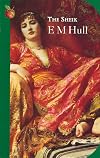
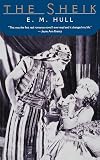
The Sheik is a book by Edith Maude Hull, an English novelist of the early twentieth century. It was her most popular and was the basis for the film of the same name. The novel opens in an hotel in the Algerian city of Biskra. A dance is being held, hosted by Diana Mayo and her brother. It transpires that Diana, who doesn't know what love is and doesn't want to know, is planning to go on a month long trip into the desert, taking no-one with her but the Arab guides. Nobody thinks this to be a show more sensible idea. It doesn't take long until Diana is kidnapped by the eponymous Sheik, Ahmed ben Hassen - it turns out her guide had been bribed - and the desert Sheik takes Diana to his tent and forces her to submit to his will.. show less
Tags
Recommendations














Member Reviews
****************SPOILERS AHOY************************************
Finished The Sheik. Ewwww. Supposed to be a classic overwrought romance, but not much romantic about it. Overwrought, for sure.
Spunky, independent (albeit headstrong and foolhardy) heroine decides to take a month long adventure in the desert, alone, except for servants and guides. She pooh-poohs the warnings that this is NOT A GOOD IDEA. Because she is very independent, and bows to no man. She is almost immediately set upon and kidnapped by a raiding party led by a handsome, powerful and mysterious sheik and whisked away to his desert lair. And raped. Repeatedly. For months. A few months into this, she makes an escape attempt, and he chases her down and brings her back. At show more this point, she apparently decides he is so dang masterful, she must be in LOVE. He has crushed her independent spirit, so he must be pretty hot stuff.
Then she gets captured by a rival sheik, her sheik rescues her in the nick of time, and gets stabbed for his pains, but recovers. At this juncture, he realizes to his horror that he LOVES her too. HORRORS! (Hard to say why, exactly, he fell for her but there's a lot of racial subtext here, and she is the only non-Arab woman around. And BTW, despite his swarthiness and being raised in the desert, our Sheik turns out to be European by blood, so that's OK.) So he decides that he would do her no favors by marrying her (ya think?), and he loves her enough to do right by her now so he tells her he's sending her home. She then tries to kill herself in despair at being cast aside". Just so we know that her spunk and independence are totally gone. He stops her, promises to marry her, ('cause, Hey!, I'm better than a bullet to the brain, anyway!) and all is sweetness and light. Fade to black.
Well. THAT says romance to me for sure. Can you say "Stockholm Syndrome"?" show less
Finished The Sheik. Ewwww. Supposed to be a classic overwrought romance, but not much romantic about it. Overwrought, for sure.
Spunky, independent (albeit headstrong and foolhardy) heroine decides to take a month long adventure in the desert, alone, except for servants and guides. She pooh-poohs the warnings that this is NOT A GOOD IDEA. Because she is very independent, and bows to no man. She is almost immediately set upon and kidnapped by a raiding party led by a handsome, powerful and mysterious sheik and whisked away to his desert lair. And raped. Repeatedly. For months. A few months into this, she makes an escape attempt, and he chases her down and brings her back. At show more this point, she apparently decides he is so dang masterful, she must be in LOVE. He has crushed her independent spirit, so he must be pretty hot stuff.
Then she gets captured by a rival sheik, her sheik rescues her in the nick of time, and gets stabbed for his pains, but recovers. At this juncture, he realizes to his horror that he LOVES her too. HORRORS! (Hard to say why, exactly, he fell for her but there's a lot of racial subtext here, and she is the only non-Arab woman around. And BTW, despite his swarthiness and being raised in the desert, our Sheik turns out to be European by blood, so that's OK.) So he decides that he would do her no favors by marrying her (ya think?), and he loves her enough to do right by her now so he tells her he's sending her home. She then tries to kill herself in despair at being cast aside". Just so we know that her spunk and independence are totally gone. He stops her, promises to marry her, ('cause, Hey!, I'm better than a bullet to the brain, anyway!) and all is sweetness and light. Fade to black.
Well. THAT says romance to me for sure. Can you say "Stockholm Syndrome"?" show less
Reading lightly (as I did) this novel that helped establish romance as a genre merely caters to harmless fantasy. This was Fifty Shades for the 1919 set, if you substitute fade-to-black for graphic scenes and remove the woman's consent. I suppose the idea of consenting to such treatment was probably one step too far for readers to swallow back then. An easy read if not for the strenuously long paragraphs and chapters. The formula must have worked since it was popular enough to launch a movie version that established Rudolph Valentino's fame for all time. It's only the flight-of-fancy romance that matters here, so check your brain at the door.
Reading more seriously will only get you highly offended by the story of a rape victim abruptly show more falling madly in love with her abusive captor, after which they live happily ever after. Good luck finding success with that in 2013, next to today's news headlines and novels like "Room" by Emma Donoghue. The author also strays into describing women as the weaker sex; a feminist tract this ain't. It's a long fall after the introductory description that casts the female lead as being remarkably strong-willed and self-empowered, albeit sexually repressed.
Another reviewer had me ponder the story as a survival guide for abused women being underserved in 1919 - tell yourself you're in love to remove some of the horror. That would be giving this story too much credit for noble intentions. It can't even retain credit for encouraging diversity since the happy ending establishes that, not to worry, the sheik isn't really an Arab after all. The abuse was okay too, because the sheik was only cruel when he was drunk and now he won't get drunk anymore.
I have an e-reader and it was free. Take only the lighter approach, or skip it entirely. show less
Reading more seriously will only get you highly offended by the story of a rape victim abruptly show more falling madly in love with her abusive captor, after which they live happily ever after. Good luck finding success with that in 2013, next to today's news headlines and novels like "Room" by Emma Donoghue. The author also strays into describing women as the weaker sex; a feminist tract this ain't. It's a long fall after the introductory description that casts the female lead as being remarkably strong-willed and self-empowered, albeit sexually repressed.
Another reviewer had me ponder the story as a survival guide for abused women being underserved in 1919 - tell yourself you're in love to remove some of the horror. That would be giving this story too much credit for noble intentions. It can't even retain credit for encouraging diversity since the happy ending establishes that, not to worry, the sheik isn't really an Arab after all. The abuse was okay too, because the sheik was only cruel when he was drunk and now he won't get drunk anymore.
I have an e-reader and it was free. Take only the lighter approach, or skip it entirely. show less
I don't know how this is possible, but somehow I liked and was horrified and repelled by this book, all at the same time. I started reading it after reading snippets of Janet's Dear Author post, “Can't Find My Way Home.” I have read very few older romance novels and no sheik/desert romance novels (although I do own an as-yet unread copy of Marguerite Kaye's Innocent in the Sheikh's Harem). I figured I might as well give this one a try since I could get it for free. I knew to expect racism and a rape-y male protagonist, but that didn't seem to help me much once I was actually reading the book. I almost DNF'ed it a couple times, and yet I can't say I truly hated it. It's weird.
I was most engrossed in the book during the parts before show more Diana realized she was in love with Ahmed. Prior to her journey into the desert, Diana was naive, fearless, and kind of cold. She believed herself to be incapable of emotion, or at least the softer emotions like affection and love. She had absolutely no concept of how dangerous the desert could be and saw it only as a wild and fascinating place that drew her.
After she was kidnapped, nearly everything that initially defined her was ripped away. She learned to fear, as Ahmed's men overtook her guides and as Ahmed raped her. Hull did a fantastic job of depicting Diana's fear, so fantastic that I almost DNF'ed the book. It was almost painful for me to read further, and even worse to realize that, at some point, Diana was going to fall in love with Ahmed. I had serious doubts that Hull could ever redeem him in my eyes, and those doubts turned out to be justified. I'm uncomfortable with calling The Sheik a romance, because it's not like any other romance I can ever remember reading. It's a Stockholm syndrome romance.
I had expected/hoped that Ahmed would change his behavior towards Diana and realize how horribly he had behaved before Diana fell in love with him. Unfortunately, Ahmed's...discomfort...over what he'd done to Diana came well after she fell in love with him.
Her love seemed to happen literally in an instant. She had worked out a way to escape him and was riding away on her beloved horse, Silver Star. Unfortunately, she had been so focused on just getting away that she neglected to think about what she was going to do next, aside from ride as far away as possible. Ahmed caught up with her and told her he'd shoot her horse if she didn't stop running from him. She was so desperate to get away from him that she decided to call him on that, except he wasn't bluffing. He shot and killed her horse. While he was carrying her back to his home, she realized she'd fallen in love with him. The timing of her realization was so incredibly horrible that I was stunned. I even clicked back a few pages, just to make sure I hadn't missed something.
My horror at Diana's “love” for Ahmed grew when I realized she still feared him. Her totally justified fear of him made him more the kind of person a romance novel heroine should be running away from, rather than someone she should hope to continue to be with. Diana knew, because he had told her, that he would probably send her away if her love for him became obvious, so she tried to hide her feelings from him and pretend that nothing had changed.
If I remember correctly, the most notable shift in Ahmed's feelings occurred when his friend Raoul de Saint Hubert arrived. Diana treated him very much the same way she had treated Arbuthnot, a man who, early on in the book, confessed his love to her. She rejected him but asked if they could continue to be friends. Diana and Saint Hubert's relationship was entirely innocent at first, although Saint Hubert soon fell in love with her. Ahmed was ragingly jealous, and he mostly took it out on Diana. Diana, for her part, had no clue why Ahmed was suddenly so cold towards her.
I'm guessing I was supposed to sigh over my secret knowledge that Ahmed cared for Diana enough to feel jealous. I'm also guessing I was supposed to feel giddy over Ahmed's race to save Diana after she was taken by his enemy, and thrilled at his realization that he loved her. I was supposed to forgive him for his earlier behavior, because upsetting Diana suddenly gave him no pleasure. It's possible that all of this could have given me warm fuzzies, maybe even just a little...if it had all happened prior to Diana falling in love with Ahmed. As it was, it was all too little, too late. Also, considering the depth of Diana's fear earlier in the book, I'm not entirely convinced that the shift in Ahmed's feelings and motivation would have been enough to win me over, no matter when it had occurred. Had I been plotting this book, Diana would have stabbed Ahmed's eyes out at some point. She would then have escaped, dressed a boy, and picked up some street smarts while doing her best to evade Ahmed's men.
Had Hull not written this as a romance, I probably would have liked it a lot more. It's weird that, as much as I disliked the “romance” between Diana and Ahmed, I still enjoyed a good portion of the book. It was an interesting read, and the pacing worked really, really well for me. I'm actually planning on giving the one other book of Hull's on Project Gutenberg a shot someday. I'm just going to need a nice, long break first.
(Original review, with read-alikes, posted on A Library Girl's Familiar Diversions.) show less
I was most engrossed in the book during the parts before show more Diana realized she was in love with Ahmed. Prior to her journey into the desert, Diana was naive, fearless, and kind of cold. She believed herself to be incapable of emotion, or at least the softer emotions like affection and love. She had absolutely no concept of how dangerous the desert could be and saw it only as a wild and fascinating place that drew her.
After she was kidnapped, nearly everything that initially defined her was ripped away. She learned to fear, as Ahmed's men overtook her guides and as Ahmed raped her. Hull did a fantastic job of depicting Diana's fear, so fantastic that I almost DNF'ed the book. It was almost painful for me to read further, and even worse to realize that, at some point, Diana was going to fall in love with Ahmed. I had serious doubts that Hull could ever redeem him in my eyes, and those doubts turned out to be justified. I'm uncomfortable with calling The Sheik a romance, because it's not like any other romance I can ever remember reading. It's a Stockholm syndrome romance.
I had expected/hoped that Ahmed would change his behavior towards Diana and realize how horribly he had behaved before Diana fell in love with him. Unfortunately, Ahmed's...discomfort...over what he'd done to Diana came well after she fell in love with him.
Her love seemed to happen literally in an instant. She had worked out a way to escape him and was riding away on her beloved horse, Silver Star. Unfortunately, she had been so focused on just getting away that she neglected to think about what she was going to do next, aside from ride as far away as possible. Ahmed caught up with her and told her he'd shoot her horse if she didn't stop running from him. She was so desperate to get away from him that she decided to call him on that, except he wasn't bluffing. He shot and killed her horse. While he was carrying her back to his home, she realized she'd fallen in love with him. The timing of her realization was so incredibly horrible that I was stunned. I even clicked back a few pages, just to make sure I hadn't missed something.
My horror at Diana's “love” for Ahmed grew when I realized she still feared him. Her totally justified fear of him made him more the kind of person a romance novel heroine should be running away from, rather than someone she should hope to continue to be with. Diana knew, because he had told her, that he would probably send her away if her love for him became obvious, so she tried to hide her feelings from him and pretend that nothing had changed.
If I remember correctly, the most notable shift in Ahmed's feelings occurred when his friend Raoul de Saint Hubert arrived. Diana treated him very much the same way she had treated Arbuthnot, a man who, early on in the book, confessed his love to her. She rejected him but asked if they could continue to be friends. Diana and Saint Hubert's relationship was entirely innocent at first, although Saint Hubert soon fell in love with her. Ahmed was ragingly jealous, and he mostly took it out on Diana. Diana, for her part, had no clue why Ahmed was suddenly so cold towards her.
I'm guessing I was supposed to sigh over my secret knowledge that Ahmed cared for Diana enough to feel jealous. I'm also guessing I was supposed to feel giddy over Ahmed's race to save Diana after she was taken by his enemy, and thrilled at his realization that he loved her. I was supposed to forgive him for his earlier behavior, because upsetting Diana suddenly gave him no pleasure. It's possible that all of this could have given me warm fuzzies, maybe even just a little...if it had all happened prior to Diana falling in love with Ahmed. As it was, it was all too little, too late. Also, considering the depth of Diana's fear earlier in the book, I'm not entirely convinced that the shift in Ahmed's feelings and motivation would have been enough to win me over, no matter when it had occurred. Had I been plotting this book, Diana would have stabbed Ahmed's eyes out at some point. She would then have escaped, dressed a boy, and picked up some street smarts while doing her best to evade Ahmed's men.
Had Hull not written this as a romance, I probably would have liked it a lot more. It's weird that, as much as I disliked the “romance” between Diana and Ahmed, I still enjoyed a good portion of the book. It was an interesting read, and the pacing worked really, really well for me. I'm actually planning on giving the one other book of Hull's on Project Gutenberg a shot someday. I'm just going to need a nice, long break first.
(Original review, with read-alikes, posted on A Library Girl's Familiar Diversions.) show less
Well. What can I even say about this book?
There's racism. There's colonialism. There's rape (so much rape). Another time I might think more on what it was that white women loved so much about this book when it came out (my guess would be it has something to do with the fact that you can change your bad-boy-rapist if you just love him hard enough and also no one is actually having sex with a non-European because ewwww gross). For now, I'll note that for a novel that purports to dwell firmly within the realm of Racy Novel, it's actually quite chaste. All the rape, as others mention, happens off screen. At the end, the hero cannot even bring himself to say the word "pregnant."
So maybe it's easier to gloss over the fact that your heroine show more spends the first half of the book being raped repeatedly by her kidnapper if you don't know the grisly details? I don't know. show less
There's racism. There's colonialism. There's rape (so much rape). Another time I might think more on what it was that white women loved so much about this book when it came out (my guess would be it has something to do with the fact that you can change your bad-boy-rapist if you just love him hard enough and also no one is actually having sex with a non-European because ewwww gross). For now, I'll note that for a novel that purports to dwell firmly within the realm of Racy Novel, it's actually quite chaste. All the rape, as others mention, happens off screen. At the end, the hero cannot even bring himself to say the word "pregnant."
So maybe it's easier to gloss over the fact that your heroine show more spends the first half of the book being raped repeatedly by her kidnapper if you don't know the grisly details? I don't know. show less
"Oh you brute! You brute!" she wailed, until his kisses silenced her.
By sally tarbox on 4 March 2017
Format: Kindle Edition
My goodness me, Fifty Shades of Grey for the 1919 reader !
Opening in Biskra, Algeria, we meet a group of aristocratic Brits at a hotel, among whom is our imperious young heroine, Diana Mayo. Brought up by her older brother, Diana's life revolves around sport and travel; although every man she meets falls for her boyish good looks, Diana scorns such things - her thoughts are currently taken up with a trip she has planned across the desert.
But things do not go as expected, and Diana finds herself taken captive by the handsome but cruel Sheik Ahmed Ben Hassan.
"Why have you brought me here?" she asked, fighting down the show more fear that was growing more terrible every moment.
He repeated her words with a slow smile. "Why have I brought you here? Bon dieu! Are you not woman enough to know?"
Ravished, a prisoner in a desert camp, she attempts an escape attempt and suffers an encounter with an enemy tribe... but the thread of the story is Diana's sudden realisation that she loves her jailer; her abasement from a proud young society lady to complete submission to the Sheik.
"With a greater arrogance and a determination stronger than her own Ahmed Ben Hassan had tamed her as he tamed the magnificent horses that he rode. He had been brutal and merciless, using no half-measures, forcing her to obedience by sheer strength of will and compelling a complete submission."
It goes on a tad, but I have to say it's eminently readable, and while feminists won't like it, it's OK. I wondered at times as I read it whether or not to give it to Oxfam once I'd finished it ... but it's going back on my bookshelf! show less
By sally tarbox on 4 March 2017
Format: Kindle Edition
My goodness me, Fifty Shades of Grey for the 1919 reader !
Opening in Biskra, Algeria, we meet a group of aristocratic Brits at a hotel, among whom is our imperious young heroine, Diana Mayo. Brought up by her older brother, Diana's life revolves around sport and travel; although every man she meets falls for her boyish good looks, Diana scorns such things - her thoughts are currently taken up with a trip she has planned across the desert.
But things do not go as expected, and Diana finds herself taken captive by the handsome but cruel Sheik Ahmed Ben Hassan.
"Why have you brought me here?" she asked, fighting down the show more fear that was growing more terrible every moment.
He repeated her words with a slow smile. "Why have I brought you here? Bon dieu! Are you not woman enough to know?"
Ravished, a prisoner in a desert camp, she attempts an escape attempt and suffers an encounter with an enemy tribe... but the thread of the story is Diana's sudden realisation that she loves her jailer; her abasement from a proud young society lady to complete submission to the Sheik.
"With a greater arrogance and a determination stronger than her own Ahmed Ben Hassan had tamed her as he tamed the magnificent horses that he rode. He had been brutal and merciless, using no half-measures, forcing her to obedience by sheer strength of will and compelling a complete submission."
It goes on a tad, but I have to say it's eminently readable, and while feminists won't like it, it's OK. I wondered at times as I read it whether or not to give it to Oxfam once I'd finished it ... but it's going back on my bookshelf! show less
SO you have to take into context the time this book was written (Number 5 in my self-imposed history of romance curriculum, written in 1919) because it was problematic AF.
For starters, they refer to all the Arabs around them as "Orientals". There are a lot of references to pretty ugly stereotypes.
The main character is a feisty and adventurous young woman and of course, her persistence in going out into the desert without an appropriate male chaperone is the reason she was kidnapped. She was traveling with a full-on caravan of guards, supplies, and a guide, but they were all Arabs and sold her to the Sheik, which of course would never have happened if there had been even one white male chaperone to protect her (eye roll emoji).
There is show more off-page but heavily implied rape. Which is indicative of the time, when it was believed rape was the only way a woman would accept premarital sex and of course, she eventually falls in love with her rapist (puke emoji).
I was optimistic that the main characters were of different races. It's not often in 1919 historical romances you see a white woman and a non-white man together. However, it turns out The Sheik is actually a white man who had been adopted by an Arab sheik.
There were some suspenseful and entertaining parts. If you can ignore or take the problematicness within context it was an entertaining read. show less
For starters, they refer to all the Arabs around them as "Orientals". There are a lot of references to pretty ugly stereotypes.
The main character is a feisty and adventurous young woman and of course, her persistence in going out into the desert without an appropriate male chaperone is the reason she was kidnapped. She was traveling with a full-on caravan of guards, supplies, and a guide, but they were all Arabs and sold her to the Sheik, which of course would never have happened if there had been even one white male chaperone to protect her (eye roll emoji).
There is show more off-page but heavily implied rape. Which is indicative of the time, when it was believed rape was the only way a woman would accept premarital sex and of course, she eventually falls in love with her rapist (puke emoji).
I was optimistic that the main characters were of different races. It's not often in 1919 historical romances you see a white woman and a non-white man together. However, it turns out The Sheik is actually a white man who had been adopted by an Arab sheik.
There were some suspenseful and entertaining parts. If you can ignore or take the problematicness within context it was an entertaining read. show less
Wow that was a wild ride of a book. A lot like Beauty and the Beast, but sketchy-er. The emotions were so real and powerful. The narration quite interesting and experimental, I think. The characters so strong, complex and terrifying.
Members
- Recently Added By
Lists

Books referenced in A Very Great Profession: The Woman's Novel 1914-39
199 works; 6 members

Publisher's Weekly Bestsellers Part I - 1895-1939
399 works; 8 members
Author Information

11+ Works 414 Members
Awards and Honors
Distinctions
Series

Belongs to Publisher Series
Work Relationships
Is abridged in
Common Knowledge
- Canonical title
- The Sheik
- Original title
- The Sheik
- Original publication date
- 1919
- People/Characters
- Diana Mayo; Sheik Ahmed ben Hassan; Mustafa Ali; Gaston; Ibraheim Omair; Raoul Saint Hubert (show all 8); Aubrey Mayo; Arbuthnot
- Important places
- Biskra, Algeria; Algeria
- Related movies
- The Sheik (1921 | IMDb)
- First words
- The idea of danger brought a little laugh to her lips. (Introduction)
'Are you coming in to watch the dancing, Lady Conway?' - Last words
- (Click to show. Warning: May contain spoilers.)Enjoy. (Introduction)
(Click to show. Warning: May contain spoilers.)'I am not afraid of anything with your arms round me, my desert lover. Ahmed! Monseigneur!
Classifications
Statistics
- Members
- 244
- Popularity
- 133,240
- Reviews
- 10
- Rating
- (3.02)
- Languages
- 8 — Danish, Dutch, English, Finnish, French, German, Japanese, Spanish
- Media
- Paper, Audiobook, Ebook
- ISBNs
- 52
- ASINs
- 23