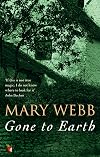
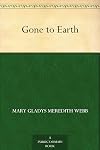
Gone to Earth
by Mary Webb
On This Page
Description
Although to outside eyes, her existence may seem beset by difficult circumstances, 18-year-old Hazel Woodus loves her idyllic life in the gorgeous Shropshire countryside, where she spends most of her time communing with the forest and woodland creatures. But when a clash with her eccentric father causes unbearable tension in the household, Hazel decides it's time to make her own way in the world..
Tags
Recommendations












Member Reviews
I recently discovered Mary Webb through her best-known work, "Precious Bane." While "Gone to Earth" also has the lush and lyrical natural descriptions, it is not as compelling because its main character, Hazel Woodus, is not a well rounded figure with clear desires and thoughts, unlike Prue Sarn in "Precious Bane," who is fully realized and fleshed out.
Hazel lives in a glade with her father, a beekeeper and coffin maker, but takes after her deceased mother, who is described as a gypsy with a dark, wild soul (or something like that). The implication is that Hazel is her purest self when close to nature, a sort of elemental child of the earth. Trouble comes along when two men, the preacher Edward and the squire Reddin, both become show more obsessed with Hazel. The story plays out a bit like "Tess of the D'Urbervilles" but told from a woman's perspective, the moral of the story being (thank you, "Breakfast at Tiffany's") that you "can't tame a wild thing."
For me the problem is that Hazel never progresses beyond the status of a "wild thing," a manic pixie dreamgirl without any other qualities than her intense love of nature, pagan urges, and protection of injured and vulnerable animals. She is so passive about her relationships with men that she becomes more of a symbol and not a person (this bugs me about Tess, too).
Webb is pretty frank about sex, franker than Hardy without being at all explicit, and I think part of the message she is trying to get across is that both Hazel's relationships are unfulfilling because each is missing an essential part. Reddin is sexually attractive and obsesses her, but she doesn't get any enjoyment out of their relationship because he is emotionally and physically abusive and wants to tame her. Edward seems to try and understand her wild soul and wants to let her be herself, but he's too afraid of taking her innocence away to actually consummate their marriage.
It is the setup for a wonderfully tragic story, but Hazel herself wasn't compelling enough to bring everything together for me. Still, it is gorgeously written and immersive in the world of rural Shropshire, and I look forward to reading more of Webb's novels. show less
Hazel lives in a glade with her father, a beekeeper and coffin maker, but takes after her deceased mother, who is described as a gypsy with a dark, wild soul (or something like that). The implication is that Hazel is her purest self when close to nature, a sort of elemental child of the earth. Trouble comes along when two men, the preacher Edward and the squire Reddin, both become show more obsessed with Hazel. The story plays out a bit like "Tess of the D'Urbervilles" but told from a woman's perspective, the moral of the story being (thank you, "Breakfast at Tiffany's") that you "can't tame a wild thing."
For me the problem is that Hazel never progresses beyond the status of a "wild thing," a manic pixie dreamgirl without any other qualities than her intense love of nature, pagan urges, and protection of injured and vulnerable animals. She is so passive about her relationships with men that she becomes more of a symbol and not a person (this bugs me about Tess, too).
Webb is pretty frank about sex, franker than Hardy without being at all explicit, and I think part of the message she is trying to get across is that both Hazel's relationships are unfulfilling because each is missing an essential part. Reddin is sexually attractive and obsesses her, but she doesn't get any enjoyment out of their relationship because he is emotionally and physically abusive and wants to tame her. Edward seems to try and understand her wild soul and wants to let her be herself, but he's too afraid of taking her innocence away to actually consummate their marriage.
It is the setup for a wonderfully tragic story, but Hazel herself wasn't compelling enough to bring everything together for me. Still, it is gorgeously written and immersive in the world of rural Shropshire, and I look forward to reading more of Webb's novels. show less
This was an interesting book, and more compelling than I'd expected it to be.
It's very didactic and philosophical, but the gist of the plot (in modern terms)is of a young and naive woman torn between the desires of a Nice Guy (tm) and a Bad Boy.
It is very clear that neither of them are more concerned about her than of their ideas about her- this is explicitly stated, many times, in the text. She has her passion- for the natural world- and neither of her suitors pay any attention to that.
I will say the Nice Guy (tm) actually did stand up for her more than one would have expected, and without making demands on her (except in his mind). Nonetheless, it was rather a classic tragedy, win which the sad outcome is inevitable based on the show more various characters and situations involved.
I am not really sure what Webb's opinion was; although she laid the fault of the tragedy squarely on the men, she also did not treat Hazel- the female protagonist- as an entire person, capable of choosing; she was more of a force of nature. I assume that the dialog of "what women are" has, in the past 100 years, changed enough that it's hard for me to grasp her point without absent context.
This novel also has some brilliant passages describing the natural world- flowers, storms, trees, etc.- worth reading for that. show less
It's very didactic and philosophical, but the gist of the plot (in modern terms)is of a young and naive woman torn between the desires of a Nice Guy (tm) and a Bad Boy.
It is very clear that neither of them are more concerned about her than of their ideas about her- this is explicitly stated, many times, in the text. She has her passion- for the natural world- and neither of her suitors pay any attention to that.
I will say the Nice Guy (tm) actually did stand up for her more than one would have expected, and without making demands on her (except in his mind). Nonetheless, it was rather a classic tragedy, win which the sad outcome is inevitable based on the show more various characters and situations involved.
I am not really sure what Webb's opinion was; although she laid the fault of the tragedy squarely on the men, she also did not treat Hazel- the female protagonist- as an entire person, capable of choosing; she was more of a force of nature. I assume that the dialog of "what women are" has, in the past 100 years, changed enough that it's hard for me to grasp her point without absent context.
This novel also has some brilliant passages describing the natural world- flowers, storms, trees, etc.- worth reading for that. show less
It took me a little while to get into a comfortable flow when reading the colloquial conversation but I did eventually. My first by Mary Webb and I’ll look for more. Young Hazel doesn’t have the right skills to survive in a mans world, nor does she want to, she's happiest with the animals, trees and plants that live and grow all around her. Circumstance, destiny, fate, call it what you like, but Hazel’s life is sadly on a road to derailment. I got very attached to Hazel and the ending was a surprise!
This author and book was suggested to me by my daughter. The main character is Hazel Woodus, a childlike woman who lives in the forest outside of Shropshire, England in the later part of the 19th Century. She is loved by two men: a pastor, Edward and a squire, Reddin. Both of them with two different natures but both of one desire, to tame her. This book sounds like a gothic tale, but it is not. Mary Webb, the author, has her own wonderful voice and unique style of writing, like none other. It recalls the work of Thomas Hardy and the Brontes in it's darkness and angst. I plan on reading Precious Bane next. This is one of my all time favorite novels.
This author and book was suggested to me by my daughter. The main character is Hazel Woodus, a childlike woman who lives in the forest outside of Shropshire, England in the later part of the 19th Century. She is loved by two men: a pastor, Edward and a squire, Reddin. Both of them with two different natures but both of one desire, to tame her. This book sounds like a gothic tale, but it is not. Mary Webb, the author, has her own wonderful voice and unique style of writing, like none other. It recalls the work of Thomas Hardy and the Brontes in it's darkness and angst. I plan on reading Precious Bane next. This is one of my all time favorite novels.
This was like Thomas Hardy mixed up with Jane Austen with a smattering of DH Lawrence and an extra helping of melodrama at the end. It was a reasonable story, but it helps if you like lots of descriptions of nature and fey characters. An understanding of Potteries dialect would help too.
really didn't like this at first. started reading about 1 chapter every other day. then I got into it and then I didn't like the ending.
Members
- Recently Added By
Lists

Favourite Virago Modern Classics
183 works; 38 members

First published in 1917
132 works; 3 members
Author Information

11+ Works 1,622 Members
Some Editions
Series
Belongs to Publisher Series
Work Relationships
Is parodied in
Common Knowledge
- Canonical title*
- Tornata alla terra
- Original title
- Gone to Earth
- Original publication date
- 1917
- People/Characters
- Hazel Woodus; Edward Marston; Jack Reddin; Foxy
- Related movies
- Gone to Earth (1950 | IMDb); The Wild Heart (1952 | IMDb)
- Dedication
- To him
whose presence is home - First words
- Every so often one discovers something which strikes a chord so personal that, though unfamiliar, it seems to function as a fragment of a memory long lost. (Introduction)
Small feckless clouds were hurried across the vast untroubled sky - shepherdless, futile, imponderable - and were torn to fragments on the fangs of the mountains, so ending their ephemeral adventures with nothing of their fug... (show all)itive existence left but a few tears. - Last words
- (Click to show. Warning: May contain spoilers.)On October 8 1927, she died of pernicious anaemia and a recurrence of Graves disease. (Introduction)
(Click to show. Warning: May contain spoilers.)Gone to earth! Gone to earth! - Blurbers
- Buchan, John
*Some information comes from Common Knowledge in other languages. Click "Edit" for more information.
Classifications
Statistics
- Members
- 398
- Popularity
- 78,282
- Reviews
- 8
- Rating
- (3.40)
- Languages
- 5 — Czech, English, French, Italian, Spanish
- Media
- Paper, Audiobook, Ebook
- ISBNs
- 45
- UPCs
- 1
- ASINs
- 28