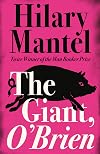
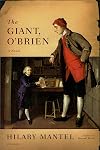
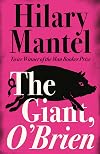
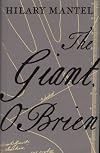
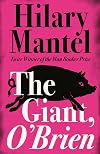
The Giant, O'Brien
by Hilary Mantel
On This Page
Description
London, 1782: Charles O'Brien, hard and giant, arrives from Ireland to seek his fortune. A freak of nature, he has a poet's soul. His opposite is a man of science, John Hunter. Celebrated surgeon and famed anatomist, he buys dead men from the gallows nd babies' corpses by the inch - and he wants the Giant's bones.Tags
Recommendations
























Member Reviews
Long-listed for the Orange Prize in 1999, this is a moving, delightful and heart-breaking sort of story with a pig in it. In other words, very Irish. Based loosely on two historical figures, the giant Charles O'Brien/Charles Byrne and the anatomist/surgeon John Hunter, this is a compelling tale of living with your circumstances and being who you are. The giant, O'Brien, and a band of ne'er-do-well minders leave Ireland, where their prospects are virtually nil, to go to England where their prospects are merely dim. Exhibited as a freak of nature, Charles is really a deeply thoughtful, self-contained man, with a gift for irony and story-telling. He comes to the attention of John Hunter, who has an insatiable thirst for knowledge, and who show more realizes, as Charles does himself, that the giant is literally growing to his death. Hunter is not above grave-robbing, body snatching and making contracts with men condemned to the gallows in order to get the specimens he craves for his work. Hell, he isn't even above injecting himself with the pox so he can watch and document the progress of the disease. (Street people are so unreliable.) Charles, however, balks at selling himself to be dismantled after death, fearing he will not be able to rise to heaven if his bones be scattered. 4 stars and a hanky. show less
I have to think of this novel as Mantel's warmup exercise for the Cromwell trilogy: stretching, playing, noodling around with the colors and flavors and music of a long bygone age, creating interiors (both locational and mental or emotional) for two historical figures, practicing the speech and storytelling of the giant Charles O'Brien / Byrne and his "followers," and surgeon and anatomist John Hunter. She plays with themes of poetry and science, myth and research, suffering and hedonism, purity and corruption, England and Ireland, not to mention some Christian symbolism of the dying, parable-spouting giant and his betrayal by a follower for a sack of pounds sterling. Colorful, fragmented, violent, funny, often lyrical, but mostly sad, show more sad, sad (especially the tortured, desperate women).
I've seen poor Charles's stolen bones in the Hunterian museum in London, a place that made me gasp with the obsessive, meticulous, and stunningly beautiful work done by one driven, unethical zealot of anatomy. The giant's skull and teeth have led 21st-century scientists to identify the specific genetic twist that generated more than one Irish giant, and led to treatments to mitigate their pain and extend their lives. I hope the Royal College of Surgeons will now let him go to rest. show less
I've seen poor Charles's stolen bones in the Hunterian museum in London, a place that made me gasp with the obsessive, meticulous, and stunningly beautiful work done by one driven, unethical zealot of anatomy. The giant's skull and teeth have led 21st-century scientists to identify the specific genetic twist that generated more than one Irish giant, and led to treatments to mitigate their pain and extend their lives. I hope the Royal College of Surgeons will now let him go to rest. show less
This is one of those books where from the very first sentences you know it's going to be a solid read. Good writers have this sense of confidence that beams from the pages. Not to say that this is an easy read. Frequently I had to re-read sentences or look up events and expressions. Most of the time when an author attempts to write a tale tightly based on facts you end up with a litany of events but no story. Not this one, it's full of main stories, sub stories, side stories, which is remarkable for such a small book.
A word of caution, if you have a weak stomach or simply do not want to read about the dregs of the 18th century then I would pass this one by. I did read it and I'm someone who does not enjoy the graphic approach to show more historical immersion. Then again the book was so captivating it was worth it. show less
A word of caution, if you have a weak stomach or simply do not want to read about the dregs of the 18th century then I would pass this one by. I did read it and I'm someone who does not enjoy the graphic approach to show more historical immersion. Then again the book was so captivating it was worth it. show less
As I've read more of Hilary Mantel's work, I've been struck by how much her narrative style changes so markedly from book to book. Here the story is based, loosely, on Irish giant Charles Byrne (Charlie O'Brien here) and the Scottish anatomist John Hunter. O'Brien and his entourage travel to London so that he can raise money by putting himself on display, and we're treated to several of his traditional Irish stories throughout. We also follow Hunter's various experiments (including on himself) and his desires for additional specimens for his anatomical showcase.
Somehow both sparse and lush at once - a short read, but one you'll probably want to linger over.
Somehow both sparse and lush at once - a short read, but one you'll probably want to linger over.
In 1782 London, an Irish giant and a Scot anatomist separately try to understand life: the former through stories, the latter through dissections. The Giant dreams of rebuilding a fabled Ireland; the doctor dreams of cutting apart the Giant.
The Giant, O'Brien offers the tantalizing hint of an idea, hovering just out of reach and never quite steady, that the dual pursuits of O'Brien and John Hunter parallel one another in their particulars: a search for immortality, an end justifying its grisly means, and the unpredictable intrusion of their lives into their art. But I'm less interested in The Giant, O'Brien as a novel than as a collection of incredible lines. I wish I could eat every sentence in this story.
The Giant, O'Brien offers the tantalizing hint of an idea, hovering just out of reach and never quite steady, that the dual pursuits of O'Brien and John Hunter parallel one another in their particulars: a search for immortality, an end justifying its grisly means, and the unpredictable intrusion of their lives into their art. But I'm less interested in The Giant, O'Brien as a novel than as a collection of incredible lines. I wish I could eat every sentence in this story.
In 1782 O'Brien, the giant, travels from Ireland to London to be presented by his unscrupulous agent Joe Vance as "The Surprising Irish Giant, The Tallest Man in the World." Surprising, indeed. Charles O'Brien has the compassionate heart of a poet and the gift of storytelling. He is accompanied by three "friends" who wish to make their fortune by any means possible. Every tale needs a villain. Who could fill that role better than the anatomist, John Hunter from Scotland, who needs fresh corpses to hone his skills? I shuddered when I read the ghoulish description of how men desperate for work were trained as grave robbers.When the two men meet as they must to further the story, "his eyes are boring into Charlie; the Giant feels his bones show more will split open and the marrow ooze out." (116)
Mantel writes a fascinating story based on two men in history. O'Brien (who takes the name of the real GIant Byrne), portrays the oppression and exploitation foisted on the downtrodden Irish, while Turner represents the age of reason with his obsessive thirst for knowledge about human anatomy. There is a strange fusion of horror and humor. The horror is self-evident in the grave robbing and other means of acquiring bodies for dissection. The humor mostly came from Charles O'Brien in his pithy retorts to the buffoons around him: In his tale about the pig-faced woman, he replied to Joe Vance's question "Very piggy?" with a typical understated response, "Essence of hog". I loved the numerous Irish fairy tales. He has a very interesting (and unsettling) conclusion to the story of the Seven Dwarves that was particularly memorable.
This is truly a unique book by the talented Hilary Mantel. It may not be for the squeamish reader, but I thought it was a good example of realistic historic fiction about the grittier side of London in the late 18th century. show less
Mantel writes a fascinating story based on two men in history. O'Brien (who takes the name of the real GIant Byrne), portrays the oppression and exploitation foisted on the downtrodden Irish, while Turner represents the age of reason with his obsessive thirst for knowledge about human anatomy. There is a strange fusion of horror and humor. The horror is self-evident in the grave robbing and other means of acquiring bodies for dissection. The humor mostly came from Charles O'Brien in his pithy retorts to the buffoons around him: In his tale about the pig-faced woman, he replied to Joe Vance's question "Very piggy?" with a typical understated response, "Essence of hog". I loved the numerous Irish fairy tales. He has a very interesting (and unsettling) conclusion to the story of the Seven Dwarves that was particularly memorable.
This is truly a unique book by the talented Hilary Mantel. It may not be for the squeamish reader, but I thought it was a good example of realistic historic fiction about the grittier side of London in the late 18th century. show less
I think Hilary Mantel is a terrific writer - the three star rating is only because I have a hard time doing more than 'liking' a story that is such a harsh slice of life. Characters, plot, writing, authenticity of 18th century London lowlife, - all felt pitch perfect to me.
Members
- Recently Added By
Published Reviews
ThingScore 100
The Giant, O'Brien offers a different and more bizarre glimpse of unquiet history. More like Swift than Scott, its dazzling technique has Swift's way of taking the extraordinary for granted, while demurely drawing our attention to some silly spectacle that attracted the crowds. To London in 1782 came the Irish Giant, a freak well over seven feet tall, spied out in the bogs by an unscrupulous show more agent who lures him to the rich center of the civilized world, a place where poverty can be even direr than it was among the Irish cabins, and injustice still more commonplace. show less
added by kidzdoc
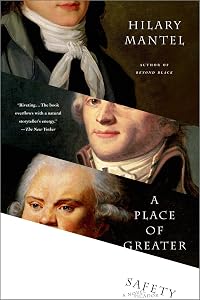
Mantel herself is one of the great 20th century storytellers, and in The Giant, O'Brien she returns to the late 18th century world she mastered in her acclaimed novel A Place of Greater Safety. At her best -- and there are passages in The Giant, O'Brien that are breathtaking in their imaginative daring, their word-magic and their philosophical reach -- she is a novelist without peer in her show more generation, who deserves to take her place among the greatest of all historical novelists. show less
added by kidzdoc
Lists

real people in fiction circumstances
74 works; 10 members

Books Read in 2015
3,299 works; 129 members

BingoDOG - Scientists in Fiction
111 works; 17 members
Author Information

62+ Works 38,951 Members
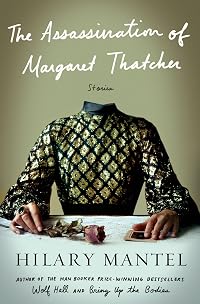
Hilary Mantel was born in Glossop, Derbyshire, England on July 6, 1952. She studied law at the London School of Economics and Sheffield University. She worked as a social worker in Botswana for five years, followed by four years in Saudi Arabia. She returned to Britain in the mid-1980s. In 1987 she was awarded the Shiva Naipaul Memorial Prize for show more an article about Jeddah. She worked as a film critic for The Spectator from 1987 to 1991. She has written numerous books including Eight Months on Ghazzah Street, A Place of Greater Safety, A Change of Climate, The Giant, O'Brien, Giving up the Ghost: A Memoir, and Beyond Black. She has won several awards for her work including the Winifred Holtby Memorial Prize, the Cheltenham Prize and the Southern Arts Literature Prize for Fludd; the 1996 Hawthornden Prize for An Experiment in Love, the 2009 Man Booker Prize for Wolf Hall, and the 2012 Man Booker Prize for Bring up the Bodies. She made The New York Times Best Seller List with her title The Assassination of Margaret Thatcher. (Bowker Author Biography) show less
Awards and Honors
Awards
Work Relationships
Common Knowledge
- Canonical title
- The Giant, O'Brien
- Original title
- The Giant, O'Brien
- Original publication date
- 1998
- People/Characters
- John Hunter (anatomist, surgeon & experimentalist); Charles O'Brien (also called Charles Byrne); Francis Claffey; Pybus; Jankin; Joe Vance (show all 13); Connor; Constantine Claffey; Mr Howison; Bride Caskey; Bitch Mary; Kane; Tibor the Terrible Tartar
- Important places
- London, England, UK; Ireland
- Epigraph
- ...But then,
All cribs from skulls and bones who push the pen.
Readers crave bodies. We're the resurrection men.
—George Macbeth, The Cleaver Garden - Dedication
- For Lesley Glaister
- First words
- "Bring in the cows now. Time to shut up for the night."
- Quotations
- 'I want knowledge. I want time.'
'Englishmen are a type of ape,' he explained.
...
'Not so,' he said. 'Low in stature, barbarous in manner, incomprehensible in speech: unlettered, incontinent and a joke when they have drink taken: but not hairy. At lea... (show all)st, not all over.'
London is like the sea and the gallows. It refuses none. - Last words
- (Click to show. Warning: May contain spoilers.)And time wants you, John. You will become a grain of wheat. You will be changed to a pool of water. To a worm, a fly. And a wind will blow the fly away.
- Original language
- English
Classifications
Statistics
- Members
- 622
- Popularity
- 46,877
- Reviews
- 27
- Rating
- (3.57)
- Languages
- English, French, German, Portuguese
- Media
- Paper, Audiobook, Ebook
- ISBNs
- 26
- ASINs
- 10