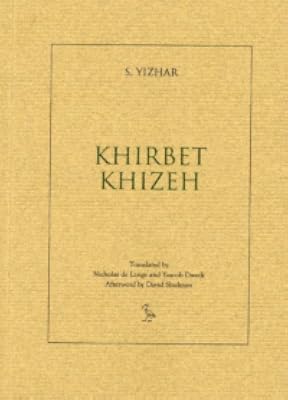
Khirbet Khizeh
by S. Yizhar
On This Page
Description
It's 1948 and the Arab villagers of Khirbet Khizeh are about to be violently expelled from their homes. A young Israeli soldier who is on duty that day finds himself battling on two fronts: with the villagers and, ultimately, with his own conscience. Published just months after the founding of the state of Israel and the end of the 1948 war, the novella Khirbet Khizeh was an immediate sensation when it first appeared. Since then, the book has continued to challenge and disturb, even finding show more its way onto the school curriculum in Israel. The various debates it has prompted would themselves make Khirbet Khizeh worth reading, but the novella is much more than a vital historical document: it is also a great work of art. Yizhar's haunting, lyrical style and charged view of the landscape are in many ways as startling as his wrenchingly honest view of modern Israel's primal scene. Considered a modern Hebrew masterpiece, Khirbet Khizeh is an extraordinary and heartbreaking book that is destined to be a classic of world literature. show lessTags
Recommendations









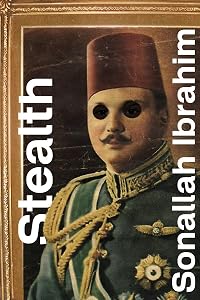




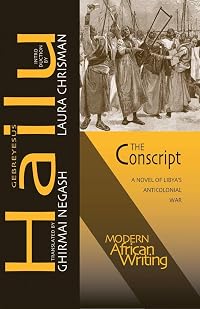



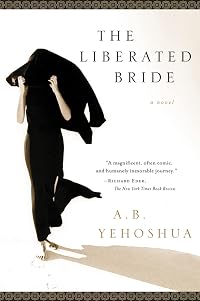

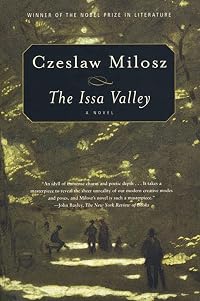

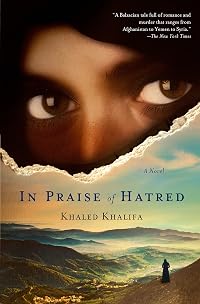
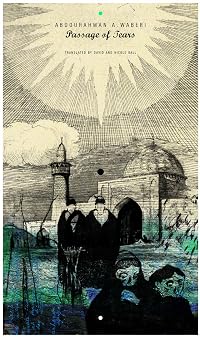

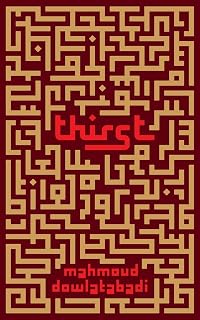

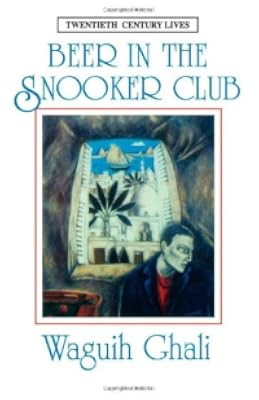
Member Recommendations
Member Reviews
"Jews being killed. Europe. We were the masters now", 15 February 2015
This review is from: Khirbet Khizeh: A Novel (Paperback)
I didn't think I was going to get into this work, with its sometimes meandering sentences, but made a determined effort and read it in one sitting (120 p) and it's absolutely brilliant.
First published in 1949, it's narrated by a young Israeli soldier out with his platoon, carrying out orders to clear out the eponymous Arab village, remove the occupants and blow up the houses. Yizhar brings the whole situation to life, with vivid descriptions of the Palestinian landscape and of the soldiers' demeanour:
'there was to be no battle for us today...today we were going on an outing.'
But as the remaining Arabs are show more heartlessly 'cleared' onto 'transports', the reader sees uncomfortable similarities with the awful situation of the Jews themselves in Europe just a few years previously. As the narrator, himself opposed to the situation, observes:
'the Diaspora...Our nation's protest to the world: exile! It had entered me, apparently, with my mother's milk. what, in fact, had we perpetrated here today?'
Very powerful read, and for readers like myself who weren't around in the 40s, very informative. This edition is enhanced by an afterword by David Shulman which explains some of the Biblical references in 'Yizhar's dense web of allusion', and discusses the situation today between settlers and their Palestinian neighbours. show less
This review is from: Khirbet Khizeh: A Novel (Paperback)
I didn't think I was going to get into this work, with its sometimes meandering sentences, but made a determined effort and read it in one sitting (120 p) and it's absolutely brilliant.
First published in 1949, it's narrated by a young Israeli soldier out with his platoon, carrying out orders to clear out the eponymous Arab village, remove the occupants and blow up the houses. Yizhar brings the whole situation to life, with vivid descriptions of the Palestinian landscape and of the soldiers' demeanour:
'there was to be no battle for us today...today we were going on an outing.'
But as the remaining Arabs are show more heartlessly 'cleared' onto 'transports', the reader sees uncomfortable similarities with the awful situation of the Jews themselves in Europe just a few years previously. As the narrator, himself opposed to the situation, observes:
'the Diaspora...Our nation's protest to the world: exile! It had entered me, apparently, with my mother's milk. what, in fact, had we perpetrated here today?'
Very powerful read, and for readers like myself who weren't around in the 40s, very informative. This edition is enhanced by an afterword by David Shulman which explains some of the Biblical references in 'Yizhar's dense web of allusion', and discusses the situation today between settlers and their Palestinian neighbours. show less
Khirbet Khizeh is an Arab village in the newly formed state of Israel, designated to be cleared by Israeli forces, made uninhabitable, and its occupants exiled. The novel, originally published in 1949 and written from an Israeli soldier's perspective, it was only recently translated from Hebrew. While nearly seventy years since the birth of the Israeli state and the genesis of this story, it expresses a fundamental tension that still exists: a many-times exiled Jewish people find themselves doing the same unto another group. It's a short, thought-provoking read, told by someone who understands the stress, the fear, the boredom, and the conflicts that can arise between duty and conscience in service to the state. I can't speak to the show more quality of the translation, but I can say it's expressed beautifully in English. The NYT book review intrigued me enough to read it http://www.nytimes.com/2015/02/22/books/review/khirbet-khizeh-by-s-yizhar.html show less
It's not KK, it's me: that this book is wise I can agree with absolutely. That it is "still-shockingly wise," as the blurb suggests, is a little bit much. Turns out the Israeli occupation wasn't and isn't all that noble a thing. The prose was decent, but not so good that it took me away from the obviousness of the rest of the book. I'm glad this was written, that it's still in print, and that people are reading it. But I think I just expected too much.
An anomalously lovely account of the evacuation of a Palestinian village by young Israeli soldiers largely unaware of what they are doing to other people's lives. It is connected in various ways to My Happiness Bears No Relation to Happiness: a Poet's Life in the Palestinian Century by Adina Hoffman, about Israeli Arab poet Taha Muhamad Ali.
It's hard to say I "loved" this book, because the subject is so tough. That said, it is beautiful, spare, and poetic even in translation. The history of Israel's war for independence in 1948 is complicated, and relying on a novel as a guide has its complications. But the book's focus on one small sliver of that moment makes it effective.
I mentioned the book in my essay "Dueling E-mails," at http://www.thetruthasiseeit.com/2009/01/dueling-e-mails.html
Also, there are two good reviews I can recommend, both of which provide helpful external context:
The New York Times, "Cultural Crossroads of the Levant," by Rachel Donadio,
http://www.nytimes.com/2008/06/29/books/review/Donadio-t.html
The Economist, "The good soldier," show more target="_top">http://www.economist.com/books/displaystory.cfm?story_id=11010266 show less
I mentioned the book in my essay "Dueling E-mails," at http://www.thetruthasiseeit.com/2009/01/dueling-e-mails.html
Also, there are two good reviews I can recommend, both of which provide helpful external context:
The New York Times, "Cultural Crossroads of the Levant," by Rachel Donadio,
http://www.nytimes.com/2008/06/29/books/review/Donadio-t.html
The Economist, "The good soldier," show more target="_top">http://www.economist.com/books/displaystory.cfm?story_id=11010266 show less
Et dokument fra 1949 skrevet af en israelsk soldat og forfatter, som beskriver israelske soldaters indtagelse af en arabisk landsby og fordrivelse af befolkningen. Forfatteren føler sig magtesløs, skønt hans samvittighed martrer ham. Smukt sprog med mange billeder.
Sep 6, 2016Danish
Samengevat : De Joden met hun aanklacht van hun volk tegen de wereld : ballingschap !
En wat richtten dezelfde nu aan in Palestina. Zij, die Joden, legden hun die ballingschap op.
En wat richtten dezelfde nu aan in Palestina. Zij, die Joden, legden hun die ballingschap op.
Mar 6, 2026Dutch
Members
- Recently Added By
Published Reviews
ThingScore 100
Series: RereadingPrevious | Next | Index Rereading: Khirbet Khizeh by S YizharIn his novella of the 1948 war, the Israeli writer S Yizhar sought to preserve the memory of the Palestinian nakba. Jacqueline Rose on a haunting tale that still stirs intense controversy
Near the beginning of Khirbet Khizeh, the extraordinary 1949 novella by S Yizhar, the narrator describes the dangers, to a show more soldier, of thinking: "we knew that when the thoughts came, troubles began; better not to start thinking." Khirbet Khizeh is a tribute to the power of critical thought to register the injustices of history. It is published by Granta this month in its first full English translation, first issued by Adina Hoffman for Ibis editions in Jerusalem in 2008. Khirbet Khizeh tells the story of the expulsion of Palestinian villagers from their home and land during the 1948 war that immediately followed the founding of the Israeli state: the war of independence or liberation, as it is referred to in Israel; for the Palestinians, the nakba or catastrophe. By the end of it, 750,000 Palestinians had become refugees. This story, this moment, is, to say the least, still controversial. In July 2009, Israel's education ministry announced that the term nakba, introduced two years previously into Palestinian-Israeli textbooks, was to be removed on the grounds that its use was tantamount to spreading propaganda against Israel. In May last year, a law was passed – widely termed the "Nakba Law" – that withdraws government funding from any group judged to be "acting against the principles of the country", which includes the commemoration of the nakba. The law effectively criminalises the right of the Palestinian people to remember.. show less
Near the beginning of Khirbet Khizeh, the extraordinary 1949 novella by S Yizhar, the narrator describes the dangers, to a show more soldier, of thinking: "we knew that when the thoughts came, troubles began; better not to start thinking." Khirbet Khizeh is a tribute to the power of critical thought to register the injustices of history. It is published by Granta this month in its first full English translation, first issued by Adina Hoffman for Ibis editions in Jerusalem in 2008. Khirbet Khizeh tells the story of the expulsion of Palestinian villagers from their home and land during the 1948 war that immediately followed the founding of the Israeli state: the war of independence or liberation, as it is referred to in Israel; for the Palestinians, the nakba or catastrophe. By the end of it, 750,000 Palestinians had become refugees. This story, this moment, is, to say the least, still controversial. In July 2009, Israel's education ministry announced that the term nakba, introduced two years previously into Palestinian-Israeli textbooks, was to be removed on the grounds that its use was tantamount to spreading propaganda against Israel. In May last year, a law was passed – widely termed the "Nakba Law" – that withdraws government funding from any group judged to be "acting against the principles of the country", which includes the commemoration of the nakba. The law effectively criminalises the right of the Palestinian people to remember.. show less
added by Krishna-1
Lists

Middle East Fiction
179 works; 16 members

Book Riot's 100 must-read works of Jewish Fiction
100 works; 8 members

Judaism & Israel
104 works; 2 members
Author Information

45+ Works 368 Members
S. Yizhar was the pen name of Yizhar Smilansky who taught education at the Hebrew University for many years.
Some Editions
Series
Belongs to Publisher Series
Work Relationships
Is contained in
Common Knowledge
- Canonical title*
- Het verhaal van Chirbet Chiz'a
- Original title
- Sippoer Chirbet Chiz’a; Sipur Hirbet-Hizah : ha-Šavuy
- Original publication date
- 1949 (Hebreeuws) (Hebreeuws); 2013 (Nederlands) (Nederlands)
- Important places*
- Chirbet Chiz'a, Palestina
- Important events*
- Onafhankelijkheidsoorlog (1948)
- First words
- True, it all happened a long time ago, but it has haunted me ever since.
- Last words
- (Click to show. Warning: May contain spoilers.)And when silence had closed in on everything and no man disturbed the stillness, which yearned noiselessly for what was beyond silence - then God would come forth and descend to roam the valley, and see whether all was according to the cry that had reached him.
- Original language*
- Hebreeuws
*Some information comes from Common Knowledge in other languages. Click "Edit" for more information.
Classifications
- Genres
- Fiction and Literature, General Fiction
- DDC/MDS
- 813 — Literature & rhetoric American literature in English American fiction in English
- LCC
- PJ5053 .Y55 .S54513 — Language and Literature Oriental languages and literatures Oriental philology and literature Hebrew Literature Individual authors and works
- BISAC
Statistics
- Members
- 226
- Popularity
- 144,548
- Reviews
- 8
- Rating
- (3.92)
- Languages
- 6 — Danish, Dutch, English, French, Norwegian (Bokmål), Spanish
- Media
- Paper, Ebook
- ISBNs
- 10
- ASINs
- 2