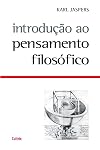
Way to Wisdom: An Introduction to Philosophy
by Karl Jaspers
On This Page
Description
One of the founders of existentialism, the eminent philosopher Karl Jaspers here presents for the general reader an introduction to philosophy. In doing so, he also offers a lucid summary of his own philosophical thought. In Jaspers' view, the source of philosophy is to be found "in wonder, in doubt, in a sense of forsakenness," and the philosophical quest is a process of continual change and self-discovery. In a new foreword to this edition, Richard M. Owsley provides a brief overview of show more Jaspers' life and achievement. show lessTags
Recommendations



























Member Reviews
There are many books about philosophy but I have found only a few about how to philosophize. I read this years ago and this is one of those. KJ goes through a quick history of philosophical thought focusing on his ideas. At the edge is where we philosophize. Beyond objective realization lies thinking within the inner self where are thoughts swirl. Questions without answers emerge and are thought upon. It has taken a while but I am starting to, at least slightly, understand the idea of philosophy. I thought KJ was an existentialist but he is more complex.
One of the truly GREAT contributors to existentialism and phenomenology from a scientific frame of reference.
100 JAS 2
L'intento di questo libro è dichiarato dal titolo. È la trascrizione di una serie di conferenze radiofoniche (la data non viene detta, ma è intorno al 1950) che trattano in breve di argomenti generali: la filosofia e la sua origine, l'essere, Dio, l'uomo e il mondo, fede e ragione, la storia, l'indipendenza dell'uomo, la vita filosofica, la storia della filosofia; segue un'appendice con sommarie indicazioni per lo studio della disciplina. Non è un testo "neutrale", ma è intriso della particolare visione che Jaspers ha della filosofia: quindi si introducono concetti come il "tutto-abbracciante", la "rottura soggetto-oggetto", particolari concezioni dell'"esistenza" umana, della "trascendenza", della storia e un ideale di vita. Tutto show more ciò è esposto con brevità, in modo pacato e sereno e non senza accenti suggestivi, nell'ottimo italiano della traduzione di Pietro Chiodi. E, nella limitata misura in cui l'ho compresa, in questa filosofia ci sono aspetti che ho trovato attraenti. La filosofia non è un insieme di verità da tramandare e applicare, ma è un'attività, una pratica infinitamente varia e mai conclusa, un esercizio incessante attraverso il quale l'uomo (ciascun uomo) si eleva al di sopra dell'"esserci" in uno slancio verso l'"essere" trascendente e irraggiungibile (che, secondo me in modo fuorviante, Jaspers chiama "Dio"). Questa ricerca è destinata a fallire (a portare allo "scacco") per la limitatezza dell'essere umano, ma è ciò attraverso cui l'uomo (ciascun uomo) può prendere coscienza della propria condizione, dare un significato alla propria vita e trovare se stesso. Jaspers sottolinea l'individualità e la libertà di ciascuno, ed è nemico di ogni dogmatismo e di ogni autoritarismo (di chiesa, di stato, di partito). Diffida della vita tecnicizzata e uniformante tipica della società di oggi, sottolinea la necessità dell'impegno personale, l'infinita varietà delle possibilità umane, la necessità del confronto con gli altri (che definisce "lotta amorosa"), sostiene che la pace e la serenità non si trovano fuori dalla vita ma nella vita stessa. (Naturalmente, tutto ciò è molto più facile a dirsi che a praticarsi).
Questo libro può essere una buona introduzione alla visione che Jaspers ha della filosofia. Ma come avviamento alla disciplina destinato al profano, temo che fallisca. È semplicemente troppo difficile. Si avvolge in discorsi sottili, sfuggenti, astratti e non privi di ambiguità. Per il profano è una lettura assai dura, o almeno io l'ho trovata così (senza dubbio anche per la mia difficoltà con la materia), e certamente l'ho compresa solo in parte. Per andare sul concreto, userò un'immagine probabilmente irriverente, forse addirittura sfacciata, per cui mi scuso, ma non resisto alla tentazione di scriverla: leggere questo libro è stato un po' come tentare di spremere una zucca. Il risultato è sì nutriente e salutare, ma ha richiesto una fatica spossante, e una parte non piccola è rimasta nel frutto. show less
Questo libro può essere una buona introduzione alla visione che Jaspers ha della filosofia. Ma come avviamento alla disciplina destinato al profano, temo che fallisca. È semplicemente troppo difficile. Si avvolge in discorsi sottili, sfuggenti, astratti e non privi di ambiguità. Per il profano è una lettura assai dura, o almeno io l'ho trovata così (senza dubbio anche per la mia difficoltà con la materia), e certamente l'ho compresa solo in parte. Per andare sul concreto, userò un'immagine probabilmente irriverente, forse addirittura sfacciata, per cui mi scuso, ma non resisto alla tentazione di scriverla: leggere questo libro è stato un po' come tentare di spremere una zucca. Il risultato è sì nutriente e salutare, ma ha richiesto una fatica spossante, e una parte non piccola è rimasta nel frutto. show less
Dec 6, 2011 (Edited)Italian
Existensialist. Men hur mycket läste jag egentligen?
May 20, 2014Swedish
GB-5
Oct 27, 2020Catalan
""
Sep 2, 2015French
Members
- Recently Added By
Lists

Books That Changed Me
158 works; 47 members

Books Referenced by Izetbegovic's Islam Between East and West
233 works; 2 members
Author Information

193+ Works 4,402 Members
Karl Jaspers was one of the originators of German existentialism. He began his career as a psychiatrist but was increasingly concerned about philosophical and moral issues. His was "a lucid and flexible intelligence in the service of a genuine and passionate concern for mankind." Removed from his professorship at the University of Heidelberg by show more the Nazis in 1937, he was reinstated in 1945 on the approval of the American occupation forces. In 1949 he went to the University of Basel. The New York Times wrote of him in his lifetime: "Jaspers shows himself . . . to be one of the most diligent and sensitive students of contemporary history. He has a good eye for the present because he knows what to fear in it---particularly the loss of individual freedom." Jaspers was deeply concerned about the human condition, and in his book The Future of Mankind (1957), entitled in its updated edition The Atom Bomb and the Future of Man (1961), he attempted to arouse conscience in the face of the deadly danger of atomic warfare "at the same time . . . attempt[ing] to apply the principles of his philosophy to a new field, and to lay the foundations of a political philosophy" (Times Literary Supplement). After the German publication of this book, Jaspers was awarded the German Peace Prize at the 1958 Frankfurt Book Fair. Hannah Arendt, who had been his student and a translator of some of his works, made the presentation. Jaspers's multivolume work, The Great Philosophers---edited by Hannah Arendt, translated by Ralph Manheim, and published in English from 1962 to 1966---was hailed by the Library Journal as "a major work, a brilliant book . . . Jaspers defends the unity of philosophy and his aim is to make philosophy available to all, to provide the serous reader with a guide "to the thinking of the great philosophers and to a personal encounter with them." The obituary of Jaspers in the New York Times said in assessing him: "With Soren Kierkegaard, Martin Heidegger, and Jean-Paul Sartre, Karl Jaspers was one of the makers and shapers of existentialist philosophy. For almost 50 years, in books, essays and lectures, he strove to give a personalist answer to modern man's questions about his own nature and the nature of existence." (Bowker Author Biography) show less
Some Editions
Series
Belongs to Publisher Series
Common Knowledge
- Canonical title
- Way to Wisdom: An Introduction to Philosophy
- Original title
- Einführung in die Philosophie
- Original publication date
- 1950 (Duits) (Duits); 1938
- First words
- What philosophy is and how much it is worth are matters of controversy.
- Last words
- (Click to show. Warning: May contain spoilers.)And the very essence of philosophical thought is openness to the truth as a whole, not to barren, abstract truth but to truth in the diversity of its supreme realizations.
- Original language*
- Duits
*Some information comes from Common Knowledge in other languages. Click "Edit" for more information.
Classifications
- Genres
- Philosophy, Nonfiction, General Nonfiction, Religion & Spirituality
- DDC/MDS
- 100 — Philosophy & psychology Philosophy Philosophy, parapsychology and occultism, psychology
- LCC
- BD23 .J313 — Philosophy, Psychology and Religion Speculative philosophy Speculative philosophy General philosophical works
- BISAC
Statistics
- Members
- 557
- Popularity
- 53,314
- Reviews
- 7
- Rating
- (3.63)
- Languages
- 16 — Catalan, Czech, Dutch, English, Finnish, French, German, Hungarian, Italian, Latvian, Lithuanian, Norwegian (Bokmål), Polish, Portuguese, Spanish, Swedish
- Media
- Paper, Audiobook, Ebook
- ISBNs
- 33
- ASINs
- 23