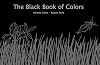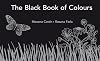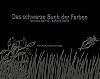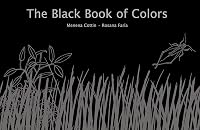
The Black Book of Colors
by Menena Cottin, Rosana Faria
On This Page
Description
This title invites readers to imagine living without sight through remarkable illustrations done with raised lines and descriptions of colors based on imagery. Braille letters accompany the illustrations and a full Braille alphabet offers sighted readers help reading along with their fingers.Tags
Recommendations










Member Reviews
Venezuelan author/illustrator team Menena Cottin and Rosana Faría team up in this innovative picture-book that attempts to communicate the experience of being blind, and of how colors might be perceived by the blind, to young children. Simple but poetic text describes how colors are experienced by a young blind boy named Thomas, while the artwork on the facing page is done in raised clear line drawings on the deep black paper. The text for sighted children is in white text on the black paper, and is also translated into Braille.
Originally published in Mexico as El libro negro de los colores, and translated into many languages around the world, this lovely, thought-provoking book is really quite unique. I have never really thought about show more how something like color, which relies on exposure to light, might be communicated to and/or thought about by the blind, but The Black Book of Colors has prompted me to do just that, and to consider how so much of what we think we know is filtered through our method of perceiving it. In this respect, I was reminded of some of the conversations I have had with people who have conditions like synesthesia, and the different ways in which they experience things like words. I really enjoyed Rosana Faría's artwork here, although I am constrained to admit that I simply couldn't perceive much shape, when running my fingers over her raised illustrations, while keeping my eyes closed. It's a shame that the Braille text isn't of a quality that it could actually be read by the blind - apparently production costs would have been too high - but this makes an excellent introduction to the topic for sighted children. Recommended to anyone looking for innovative books addressing blindness, color, and how we look at issues of disability and perception in general. show less
Originally published in Mexico as El libro negro de los colores, and translated into many languages around the world, this lovely, thought-provoking book is really quite unique. I have never really thought about show more how something like color, which relies on exposure to light, might be communicated to and/or thought about by the blind, but The Black Book of Colors has prompted me to do just that, and to consider how so much of what we think we know is filtered through our method of perceiving it. In this respect, I was reminded of some of the conversations I have had with people who have conditions like synesthesia, and the different ways in which they experience things like words. I really enjoyed Rosana Faría's artwork here, although I am constrained to admit that I simply couldn't perceive much shape, when running my fingers over her raised illustrations, while keeping my eyes closed. It's a shame that the Braille text isn't of a quality that it could actually be read by the blind - apparently production costs would have been too high - but this makes an excellent introduction to the topic for sighted children. Recommended to anyone looking for innovative books addressing blindness, color, and how we look at issues of disability and perception in general. show less
I love “The Black Book of Colors” by Menena Cottin and Rosana Faria, and it has officially become my favorite children’s book. I love this book because of its use of Braille and no color to portray how a child with a visual impairment or blindness would read a book. I love how the book does not openly state that the main character, Thomas is blind, but the reader gets a sense that this is the case due to the fact that the book contains no color. His disability is not what defines him as a character. I also love how each page of the book has pictures that are not relatively visible (due to the fact that they are black on a black page), but are textured so that one can feel what the picture is. The pictures also relate and represent show more what the words on the pages read. For instance, one page talks about brown leaves crunching. On the page beside the text about the brown leaves are textured leaves that the reader can feel and connect with the words or Braille on the adjacent page. I also think that it is great that the authors included the fact that black was Thomas’ favorite color. I think that this was an imperative part of the story to include because the entire book is black (besides the white words on some pages), and black is also what a person with blindness sees. Finally, I think that the language of this book is very effective in the sense that it really helps a reader feel what Thomas feels. The language is descriptive and detailed, which gives way to Thomas’ senses. For example, one page reads, “he says that green tastes like lemon and ice cream smells like grass that’s just been cut.” Although Thomas cannot see green the reader can connect with what his perception of the color is through his senses. The central message of this book is that we see life through our senses and not just our eyes. show less
This book doesn't tell its reader what it's like to be blind, it shows them. The book is shockingly different at first glance, with all black pages, black illustrations, and stark white text. The top of the page features the story in braille, with the text translation following. The simple line drawings are slightly raised off the page, allowing the reader a pleasing tactile experience. With each page, Cottin describes a color using similes and metaphors related to taste, smell, sound, and feeling. I am withholding one star because I have read some reviews stating that the braille is unreadable for those who actually need it.
In this book, Thomas describes what all the colors feel, smell, sound, and taste like. The all black pages boast raised texture images that invite the reader to experience the book through the words on the page and through the feel of the pages.
This book takes the reader into a realm where the begin to experience life as though they were blind. The descriptions of what this apparently blind boy experiences in relation to colors is thought provoking and wonderful. A true eye opening experience for all sighted readers. Interestingly, the braille that is printed on the page is not intended for readers who are blind because of production quality. This book was really meant to raise awareness of blindness, and promote acceptance and show more understanding of the differences between the sighted and the blind. show less
This book takes the reader into a realm where the begin to experience life as though they were blind. The descriptions of what this apparently blind boy experiences in relation to colors is thought provoking and wonderful. A true eye opening experience for all sighted readers. Interestingly, the braille that is printed on the page is not intended for readers who are blind because of production quality. This book was really meant to raise awareness of blindness, and promote acceptance and show more understanding of the differences between the sighted and the blind. show less
This book is wild. The whole time reading it I was running my fingers over the braille and the slightly lifted drawings and my fingers feel so dull! It is truly amazing that people can read with their fingertips. Really mind blowing. Also as an artist, I could not imagine life without sight. God, even not as an artist! This book touches the realm and the aspects that allow a person to imagine what it is like but it nearly pushed the idea farther away from me because it is so unbelievable. I really like how they put the braille alphabet at the end as well. If a reader wanted they could go back and coordinate the braille text with the written text and learn quite a bit.
THE BLACK BOOK OF COLORS is now one of my very favorite children's books! I can hardly put into words how brilliant I found this book to be. The raised illustrations on the black pages and the vivid descriptions of each color really give the reader a sense how a blind person "sees" colors. The story is also written in braille and a braille alphabet key is included in the back of the book. This would also make a great writing mentor text.
I absolutely love this book. The idea of a book of colors without actual colors is so fascinating to me, and I am heavily considering buying it for my godson for Christmas. No only does it help you to use your imagination, but I think it has the potential to be an interesting way to help teach children to read and write.
Members
- Recently Added By
Lists

Unshelved Book Clubs
579 works; 5 members
Author Information

16 Works 1,107 Members
1 Work 972 Members
All Editions
Some Editions
Awards and Honors
Awards
Distinctions
Common Knowledge
- Canonical title
- The Black Book of Colors
- Original title
- El libro negro de los colores
- Original publication date
- 2006
- People/Characters
- Thomas
- First words
- Thomas says that yellow tastes like mustard, but is as soft as a baby chick's feathers.
- Last words
- (Click to show. Warning: May contain spoilers.)Thmas likes all the colors because he can hear them and smell them and touch them and taste them.
Classifications
Statistics
- Members
- 972
- Popularity
- 27,144
- Reviews
- 90
- Rating
- (4.56)
- Languages
- 9 — Catalan, English, French, German, Italian, Japanese, Portuguese, Spanish, Turkish
- Media
- Paper
- ISBNs
- 19
- ASINs
- 2