
Elisa Amado
Author of Tricycle
About the Author
Works by Elisa Amado
Associated Works
Somos como las nubes / We Are Like the Clouds (2016) — Translator, some editions — 113 copies, 13 reviews
What There Is Before There Is Anything There: A Scary Story (2006) — Translator, some editions — 48 copies, 3 reviews
Lom y los nudones/ Lom and the Gnatters (Spanish Edition) (2008) — Translator, some editions — 24 copies, 1 review
Tagged
Common Knowledge
Members
Reviews

The Day of the Dead is approaching in the small Guatemalan village of Santiago Sacatepéquez, and Juan and his friends get ready to make a barrilete, or kite, to be flown over the cemetery. Juan's Abuelo (grandfather) had always made the beautiful multicolored paper kite for their family, with his grandsons' assistance, but now that he has died, it falls to Juan to carry on the tradition...
With the exception of Birte Müller's Felipa and the Day of the Dead, which is set in Bolivia, every show more other book I have previously read about this holiday has been centered on Mexican and Mexican-American celebrations. Elisa Amado's Barrilete: A Kite for the Day of the Dead however, is set in the author's native Guatemala, and offers a view of a Day of the Dead tradition that is less well-known, here in the states. Unlike the Mexican Day of the Dead tradition, which is heavily influenced by Aztec culture and iconography, the traditions of this Guatemalan village are a product of Mayan culture. Santiago Sacatepéquez is known for its kite festival, which marks the Day of the Dead, and the kites themselves are apparently some of the largest in the world. I found this book both informative and engaging, and I appreciated Joya Hairs' accompanying photographs, taken in Santiago Sacatepéquez, although I did wish that more of them were in color. After all, Mayan artwork (including these kites) is known for its brilliant use of color! This is a blend of fiction and non-fiction, and truthfully, I found the latter more interesting, largely because the customs discussed were new to me. I was also fascinated to learn, from the author's afterword, that there are many different words for kite, in various Latin American countries - papalote in Mexico, chiringa in Puerto Rico, papagayo in Venezuela, etc. - and that barrilete is specific to Guatemala. Recommended to picture-book readers looking for Day of the Dead stories, especially if they are seeking ones that address non-Mexican traditions. show less
With the exception of Birte Müller's Felipa and the Day of the Dead, which is set in Bolivia, every show more other book I have previously read about this holiday has been centered on Mexican and Mexican-American celebrations. Elisa Amado's Barrilete: A Kite for the Day of the Dead however, is set in the author's native Guatemala, and offers a view of a Day of the Dead tradition that is less well-known, here in the states. Unlike the Mexican Day of the Dead tradition, which is heavily influenced by Aztec culture and iconography, the traditions of this Guatemalan village are a product of Mayan culture. Santiago Sacatepéquez is known for its kite festival, which marks the Day of the Dead, and the kites themselves are apparently some of the largest in the world. I found this book both informative and engaging, and I appreciated Joya Hairs' accompanying photographs, taken in Santiago Sacatepéquez, although I did wish that more of them were in color. After all, Mayan artwork (including these kites) is known for its brilliant use of color! This is a blend of fiction and non-fiction, and truthfully, I found the latter more interesting, largely because the customs discussed were new to me. I was also fascinated to learn, from the author's afterword, that there are many different words for kite, in various Latin American countries - papalote in Mexico, chiringa in Puerto Rico, papagayo in Venezuela, etc. - and that barrilete is specific to Guatemala. Recommended to picture-book readers looking for Day of the Dead stories, especially if they are seeking ones that address non-Mexican traditions. show less
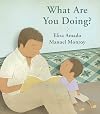
Chepito doesn't want to go to his first day of school and is trying his best to avoid it. So he's going all over the place, asking people why they're doing what they're doing. They all have something in common: they're reading. He asks them why and gets a variety of different answers. When Chepito finally arrives at school, he asks his teacher what she is doing and finds out that she will be reading to him. This starts a whole new mindset for Chepito, his story comes full circle with his show more little sister at the end of the school day. I'd put this at a first grade level to read to because it's a book about encouraging students to read and telling them why it's helpful. show less
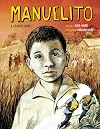
An attempt to humanize the asylum seekers trying to cross the United States' southern border from Central America, this book is well intentioned if not particularly well done. The narration of the young protagonist is just sort of awkward, and the writer and artist sometimes do not seem in sync with their words and images.
Also, I think the intended audience is children, but I'm not sure younger readers will be able to handle the very real, very bleak ending.
Also, I think the intended audience is children, but I'm not sure younger readers will be able to handle the very real, very bleak ending.
Thirteen-year-old Manuelito's parents worry about the gangs in their Guatemalan town, so they send Manuelito off with a coyote in hopes of uniting him with his aunt in Long Island for a better life.
This book tackles the very tough and important topic of asylum seekers leaving Central America due to threats of violence. I had seen some positive reviews and had been very interested in reading it. However, I felt that the actual book did not quite live up to expectations.
The writing style is show more very sparse with little time wasted on describing a single thing outside the fleeing violence plotline. In other words, books that tackle that this subject often spend a little bit of time describing the good parts of a child or teen's home life prior to when an escalating situation makes them have to leave. Not so here.
Again, the language is very tight, with no words minced or spared for anything flowery or evocative. For example, among the opening lines are "Besides the people who live in our village, there is a convent, a school, and the PACs --armed civil patrol. They are men from the village. The army gave them weapons. They are very dangerous because they don't mind killing people they don't agree with." There may be some folks who enjoy such direct, to-the-point writing, but I did not care for it.
The illustrations are all black-and-white drawings that have a sketchy charcoal feel to them. Again, some readers may really enjoy that style, but it did not do much for me. Backmatter includes a couple of notes about the situation in Central America and the need for refugee status. Like the story itself, it is presented as entirely bleak with no cause for hope at all. (Granted, the situation IS bleak, but at least the fictional part could have a glimmer of cautious optimism, especially given that the audience for this book is young.) show less
This book tackles the very tough and important topic of asylum seekers leaving Central America due to threats of violence. I had seen some positive reviews and had been very interested in reading it. However, I felt that the actual book did not quite live up to expectations.
The writing style is show more very sparse with little time wasted on describing a single thing outside the fleeing violence plotline. In other words, books that tackle that this subject often spend a little bit of time describing the good parts of a child or teen's home life prior to when an escalating situation makes them have to leave. Not so here.
Again, the language is very tight, with no words minced or spared for anything flowery or evocative. For example, among the opening lines are "Besides the people who live in our village, there is a convent, a school, and the PACs --armed civil patrol. They are men from the village. The army gave them weapons. They are very dangerous because they don't mind killing people they don't agree with." There may be some folks who enjoy such direct, to-the-point writing, but I did not care for it.
The illustrations are all black-and-white drawings that have a sketchy charcoal feel to them. Again, some readers may really enjoy that style, but it did not do much for me. Backmatter includes a couple of notes about the situation in Central America and the need for refugee status. Like the story itself, it is presented as entirely bleak with no cause for hope at all. (Granted, the situation IS bleak, but at least the fictional part could have a glimmer of cautious optimism, especially given that the audience for this book is young.) show less
Lists
Awards


You May Also Like


Associated Authors
Statistics
- Works
- 15
- Also by
- 8
- Members
- 449
- Popularity
- #54,621
- Rating
- 4.2
- Reviews
- 38
- ISBNs
- 45
- Languages
- 2