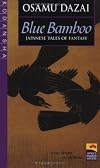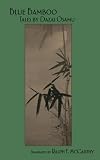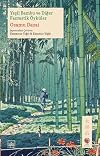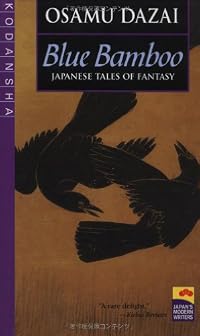
Blue Bamboo: Tales by Dazai Osamu
by Osamu Dazai
On This Page
Description
Blue Bamboo is a collection of seven short stories by one of Japan's preeminent postwar writers and prose stylists, Osamu Dazai. Not the typical romantic fantasies so often seen in Japanese writing, filled with water sprites and vengeful ghosts, these stories are a mixture of fantastic allegory, slightly skewed fables, and affecting romantic tales. Revealing the wide range of Dazai's imaginative powers, they also give a glimpse of his humane and idealistic side. From the title story, about show more an impoverished, henpecked scholar who is transformed by the love of a voluptuous bird, to "The Chrysanthemum Spirit," about a passionate gardener who meets a brother and sister with extraordinary powers, Dazai creates a world of fantasy and romance that is infused with his own psychological concerns. Many readers may recall the poignancy of Oscar Wilde's The Happy Prince or Han Christian Andersen. The collection is capped by two delightful stories-within-a-story, in which the assorted members of a quirky family compose alternate episodes of a slightly gothic romance with hints of Poe and Saki (in "On Love and Beauty") and a wildly elaborate retelling of Rapunzel that is engaging, horrifying, and touching by turns (in "Lanterns of Romance"). All in all, these warm, inventive, and life-affirming stories will strike a deep, satisfying chord in many readers. show lessTags
Recommendations







Member Reviews
This collection of short stories was my first encounter with Dazai Osamu. The stories have a dark undercurrent, and a black humour sits across them. I laughed out loud a few times. Dazai has an interesting writing style and a wry turn of phrase, highlighting the ridiculous in a situation. In a few of the stories, he reminded me of J D Salinger, particularly the stories about the Irie family, who are like a Japanese version of Salinger's Glass family. The stories are self-referential, with characters reappearing and meeting each other across different tales, and focus on the frustrations of life in rule-bound Japanese society. Many of the main characters are disaffected, some of them are downright unpleasant, all of them are misfits. show more They try to break free of the very Japanese concept of filial piety (honouring your parents no matter what) and go their own, sometimes apathetic, sometimes debauched way. I don't know if I enjoyed everything in the book, but I definitely appreciated the style, which is quite different to that of his contemporaries, Ryūnosuke, Mishima and Sōseki. Dazai seems very modern, as though he were living now, rather than 70 years ago. I will try out one of his novels. show less
Probably the most fun I've had reading a book. Marry me Dazai.
Ratings
Members
- Recently Added By
Lists

Japanese Literature
230 works; 40 members

Books Read in 2023
5,547 works; 145 members
Author Information

139+ Works 7,785 Members
Born into a near-aristocratic family whose declining world he depicts in The Setting Sun (1947), Dazai had the means to become an accomplished dilettante and rake. Around 1933 he began to think seriously about writing, but his life was complicated by drug addiction, a string of affairs, and two attempts at suicide. The end of the war brought a show more change in Dazai, and he produced his finest works, even though his own life was ending because of alcoholism and tuberculosis. The darkness of his works reveals his tortured existence, which he ended by suicide. (Bowker Author Biography) show less
Some Editions
Series
Belongs to Publisher Series
Work Relationships
Common Knowledge
- Canonical title
- Blue Bamboo: Tales by Dazai Osamu
- Original title
- Blue Bamboo: Japanese Tales of Fantasy
- Original publication date
- 1993 (English collection) (English collection)
- People/Characters
- Mayama Sainosuke; Tōmoto Saburō; Tōmoto Kié; Chūdō Konnai; Aosaki Hyakuemon; Chūdō Yaé (show all 20); Yü Jung; Blue Bamboo; Osamu Dazai (in Japanese name order as Dazai Osamu); Takabe Sakichi; Tarō the Wizard; Jirōbei the Fighter; Saburō the Liar; Rapunzel; Irie Kazuo (youngest son); Irie Hatsué (eldest daughter); Irie Takeshi (second son); Irie Rumi (youngest daughter); Irie Miyo (mother); Irie Eldest Brother
- Important places
- Japan; Mukōjima, Edo, Japan; Matsumae, Oshima, Hokkaido, Japan; Hunan, China; Mishima, Shizuoka, Japan; Kanagi, Tsugaru, Japan (show all 8); Fukagawa, Edo, Japan; Kōjimachi, Japan
- First words
- There were five brothers and sisters, and all of them loved romances.
- Last words
- (Click to show. Warning: May contain spoilers.)It seemed to them a very special honour indeed.
- Original language
- Japanese
Classifications
- Genres
- Fiction and Literature, General Fiction, Fantasy
- DDC/MDS
- 813 — Literature & rhetoric American literature in English American fiction in English
- LCC
- PL825 .A8 .A25 — Language and Literature Languages and literatures of Eastern Asia, Africa, Oceania Languages of Eastern Asia, Africa, Oceania Japanese language and literature Japanese literature Individual authors and works
- BISAC
Statistics
- Members
- 236
- Popularity
- 137,390
- Reviews
- 2
- Rating
- (3.73)
- Languages
- English, French, Japanese, Turkish
- Media
- Paper, Ebook
- ISBNs
- 6
- ASINs
- 3