On This Page
Description
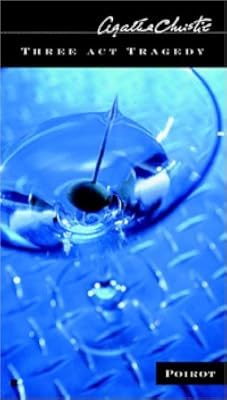
In Agatha Christie's classic, Three Act Tragedy, the normally unflappable Hercule Poirot faces his most baffling investigation: the seemingly motiveless murder of the thirteenth guest at dinner party, who choked to death on a cocktail containing not a trace of poison.Sir Charles Cartwright should have known better than to allow thirteen guests to sit down for dinner. For at the end of the evening one of them is dead—choked by a cocktail that contained no trace of poison.
Predictable, says show more Hercule Poirot, the great detective. But entirely unpredictable is that he can find absolutely no motive for murder....
. show less
Tags
Recommendations















Member Reviews
A renowned but retired British actor throws a dinner party at his country home, where the village vicar unexpectedly drops dead. Was it ... murder?! No one seems to think so except the actor, his friend Satterthwaite ("A dried-up little pipkin of a man"), and the actor's erstwhile young lover, Miss Hermione Lytton Gore (Egg to you, if you please). Even Hercule Poirot, who was a guest at the party, pooh-poohs the idea.
But when one of the other guests at that party, a nerve doctor named Strange, throws his own dinner party with more or less the same guest list back in London some months later, another death occurs and suddenly no one is pooh-poohing anything, least of all Poirot.
Another twisty plot from the queen of twisty plots, as the show more spotlight of suspicion falls plausibly on one after another of the characters. Poirot's part is seemingly minor, except that he is the one in the end who solves the seemingly unsolvable mystery. Additional kudos to Dame Agatha for structuring a mystery involving denizens of the theater scene as a play: Act One, the first murder; Act Two, the second murder and the amateur investigation; Act Three, the unmasking of the murderer. Or, as she says in the mock Production Notes at the beginning, Illumination by Hercule Poirot. Bravo! show less
But when one of the other guests at that party, a nerve doctor named Strange, throws his own dinner party with more or less the same guest list back in London some months later, another death occurs and suddenly no one is pooh-poohing anything, least of all Poirot.
Another twisty plot from the queen of twisty plots, as the show more spotlight of suspicion falls plausibly on one after another of the characters. Poirot's part is seemingly minor, except that he is the one in the end who solves the seemingly unsolvable mystery. Additional kudos to Dame Agatha for structuring a mystery involving denizens of the theater scene as a play: Act One, the first murder; Act Two, the second murder and the amateur investigation; Act Three, the unmasking of the murderer. Or, as she says in the mock Production Notes at the beginning, Illumination by Hercule Poirot. Bravo! show less
This is one of Agatha Christie's 'magic trick' books, written to make the reader look anywhere except where they should be looking. Like all magic tricks, it's only fun if the magician has charisma and a good line of patter and you can't see the wires or, better yet, are so engrossed in the trick that you don't want to look for them.
Christie, of course, is a master magician and kept me entertained throughout.
I was less interested in the puzzle - who killed whom and how and why - than in the way the story was presented and the characters who populated it. I rather liked that Poirot spent most of the novel off-stage. I liked it even more when I found out why he was absent. I think it shows the elegance of Christie's design that having show more Poirot off-stage kept the storytelling fresh by allowing other characters to come to the fore, allowed the action to take place in multiple locations and saved us from Poirot's endless references to little grey cells and method, while also being a key structural element in the execution of the conceit at the heart of the magic trick.
The beginning of the story, where Christie assembles and introduces the cast of potential victims and suspects, creaks a little, but she lubricates it by having the exposition done by three male characters, two of whom have known one another from childhood and one, Satterthwaite who is an outsider but an astute and compulsive observer and assessor of people. This gave the whole story more texture. Having Satterthwaite, described as an 'old Victorian', lead us through the relationships between the parties is clever as it gives the leading lady 'Egg' a context beyond energetic ingenue.
As the story progresses, Satterthwaite becomes the main pair of eyes through which we see the action. I liked that he was so different from Hastings: astute, secretive, insightful and immune to the charms of young women while being fully sensitive to how those charms are being used. His quiet curiosity lifted the tone of the book for me.
The two other main characters. Cartwright, a revered (especially by himself) and rich actor in his mid-fifties and Egg, a twenty-something daughter of impoverished gentlefolk and equipped with the boundless energy of the young and the unquestioning self-confidence of the cherished were the main sources of both the charisma and the humour that kept the magic act running along.
I can't say that I liked either of them but I believed in both of them. If I didn't know that this book was published twenty-six years before he was born, I'd have sworn that Christie had based Cartwright on Kenneth Branagh. I struggled a little with Egg. I could see I was supposed to like her, I just couldn't see why. She is ruthless and dishonest in her pursuit of Cartwright and she habitually manipulates the men around her (which is largely their fault for letting her get away with it).
The pair also surfaced my own prejudices with regard to age-gap couples. Actually, this isn't a gap, it's a chasm. It's the Grand Canyon of age differences. it's a difference of three decades. I just can't make myself see that as anything but a consensual delusion. So I rather liked that Christie didn't try to sell it, she just put it out there as part of the routine of the magic trick. What magic trick would be complete without the pretty young assistant to distract and entertain the audience?
I was impressed by the mechanics behind this magic trick. It's a very clever puzzle. So challenging that no solution seems possible yet, when the solution is furnished, everything makes sense.
My enjoyment of the book was increased by its quiet humour. I loved the scene where Poirot, who was born poor and is now rich and successful, is confronted by his own ennui when, looking out over the Mediterranean from Monte Carlo, he hears a bored child say to its mother. "I've looked at the sea Mummy. What do I do now?" and realises that he has no answer to that question.
This was an entertaining quick read if you're in the mood to be dazzled by Christie's cleverness and distracted by the foibles of the rich, leisured and self-absorbed who live lives untroubled by the collapsing economy of England in the 1930s. show less
This is a unique title in the body of Christie's work. One of the leading investigators is Mr. Satterthwaite, who had previously only appeared in a collection of Christie's short stories (The Mysterious Mr. Quin). Here he has an important role as he works with the renowned stage actor Sir Charles Cartwright to identify a murderer who kills seemingly at random. The murders take place at small social gatherings so it shouldn't be that challenging to identify the guilty party. An energetic young woman, known as Egg, willingly joins in, but the case ultimately requires the supervision of Hercule Poirot. Will Mr. Satterthwaite be able to bring two lovers together? In other stories, that's his usual role.
The most striking aspect to this book show more is the way in which Agatha Christie perceives and presents those engaged in the work of the theater. Indeed Anthony Astor (a pseudonym) is actually a nod to Josephine Tey who wrote plays under the name of Gordon Daviot. The opening paragraphs are particularly worth attention; Christie is, of course, always good with her openings. show less
The most striking aspect to this book show more is the way in which Agatha Christie perceives and presents those engaged in the work of the theater. Indeed Anthony Astor (a pseudonym) is actually a nod to Josephine Tey who wrote plays under the name of Gordon Daviot. The opening paragraphs are particularly worth attention; Christie is, of course, always good with her openings. show less
"Am I being a complete fanciful ass, or does this business remind you of—of—?’ ‘Of that business at Loomouth? Yes, it does. But of course we may be mistaken. The resemblance may be only superficial. After all, sudden deaths occur the whole time from a variety of causes.’ "
Really, the whole time? Of course they do ... but only if you are a protagonist in an Agatha Christie mystery. And after re-reading Three Act Tragedy very, very slowly this time so I wouldn't miss anything, I was so drawn into the story I felt like a member of the sleuthing party. And what a party it was!
This - in my book - is one of Christie's best stories. Partly because this is the first one of hers I ever read, and because it is one of the stories where show more all the clues are there and it is just so much fun piecing them all together.
I should have spelled "fun" in capital letters just there: FUN because the characters are brilliantly intricate and engage in some quite flippant and down-to earth (well, compared to some of Christie's other characters the cast of Three Act Tragedy is surprisingly and ironically unpretentious) dialogue -
some progressing the line of investigation
"Where’s the body? There’s twelve stone or so of solid butler to be accounted for."
much more than others:
"Mr Satterthwaite glanced over at Mrs Babbington, who was talking earnestly to Sir Charles on the subject of manure."
And of course it is "FUN" because not only do we get to enjoy the superb performance(s) of Sir Charles Cartwright, but we also get to catch up with another fellow.
"The fellow is the most conceited little devil I ever met.’ Mr Satterthwaite’s eyes twinkled. He had always been of the opinion that the vainest men in creation were actors. He did not exempt Sir Charles Cartwright. This instance of the pot calling the kettle black amused him. ‘Who is the egoist?’ he asked."
Yes, you guessed it - Hercule Poirot of whom we learn that:
" ‘That events come to people—not people to events. Why do some people have exciting lives and other people dull ones? Because of their surroundings? Not at all. One man may travel to the ends of the earth and nothing will happen to him. There will be a massacre a week before he arrives, and an earthquake the day after he leaves, and the boat that he nearly took will be shipwrecked. And another man may live at Balham and travel to the City every day, and things will happen to him. He will be mixed up with blackmailing gangs and beautiful girls and motor bandits. There are people with a tendency to shipwrecks—even if they go on a boat on an ornamental lake something will happen to it. In the same way men like your Hercule Poirot don’t have to look for crime—it comes to them.’ "
I must confess I first found the idea of re-reading Three Act Tragedy a little unsettling. What if I didn't like the book the same as when I first read it? What if my nostalgia for the story tainted my impression of how good a read it was?
Well, it turned out the re-read did not take away any of my appreciation of the story.
And even if it had, the worst that could be said about it is that if a reader
"was fond of mysteries, and he liked observing human nature, and he had a soft spot for lovers. All three tastes seemed likely to be gratified in this affair."*
*Obviously for "he" read "he or she". show less
Really, the whole time? Of course they do ... but only if you are a protagonist in an Agatha Christie mystery. And after re-reading Three Act Tragedy very, very slowly this time so I wouldn't miss anything, I was so drawn into the story I felt like a member of the sleuthing party. And what a party it was!
This - in my book - is one of Christie's best stories. Partly because this is the first one of hers I ever read, and because it is one of the stories where show more all the clues are there and it is just so much fun piecing them all together.
I should have spelled "fun" in capital letters just there: FUN because the characters are brilliantly intricate and engage in some quite flippant and down-to earth (well, compared to some of Christie's other characters the cast of Three Act Tragedy is surprisingly and ironically unpretentious) dialogue -
some progressing the line of investigation
"Where’s the body? There’s twelve stone or so of solid butler to be accounted for."
much more than others:
"Mr Satterthwaite glanced over at Mrs Babbington, who was talking earnestly to Sir Charles on the subject of manure."
And of course it is "FUN" because not only do we get to enjoy the superb performance(s) of Sir Charles Cartwright, but we also get to catch up with another fellow.
"The fellow is the most conceited little devil I ever met.’ Mr Satterthwaite’s eyes twinkled. He had always been of the opinion that the vainest men in creation were actors. He did not exempt Sir Charles Cartwright. This instance of the pot calling the kettle black amused him. ‘Who is the egoist?’ he asked."
Yes, you guessed it - Hercule Poirot of whom we learn that:
" ‘That events come to people—not people to events. Why do some people have exciting lives and other people dull ones? Because of their surroundings? Not at all. One man may travel to the ends of the earth and nothing will happen to him. There will be a massacre a week before he arrives, and an earthquake the day after he leaves, and the boat that he nearly took will be shipwrecked. And another man may live at Balham and travel to the City every day, and things will happen to him. He will be mixed up with blackmailing gangs and beautiful girls and motor bandits. There are people with a tendency to shipwrecks—even if they go on a boat on an ornamental lake something will happen to it. In the same way men like your Hercule Poirot don’t have to look for crime—it comes to them.’ "
I must confess I first found the idea of re-reading Three Act Tragedy a little unsettling. What if I didn't like the book the same as when I first read it? What if my nostalgia for the story tainted my impression of how good a read it was?
Well, it turned out the re-read did not take away any of my appreciation of the story.
And even if it had, the worst that could be said about it is that if a reader
"was fond of mysteries, and he liked observing human nature, and he had a soft spot for lovers. All three tastes seemed likely to be gratified in this affair."*
*Obviously for "he" read "he or she". show less
“In all the world there is nothing so curious and so interesting and so beautiful as truth.”
I accidentally read this one before [b:Murder on the Orient Express|853510|Murder on the Orient Express (Hercule Poirot, #10)|Agatha Christie|https://i.gr-assets.com/images/S/compressed.photo.goodreads.com/books/1486131451l/853510._SY75_.jpg|2285570] (because, as a reread, it wasn't on my to-read list), and maybe this would be less impressive after that better-known title, but clearly Dame Christie hit her stride in the mid-1930s.
[b:Thirteen at Dinner|121651|Thirteen at Dinner|Agatha Christie|https://i.gr-assets.com/images/S/compressed.photo.goodreads.com/books/1597006899l/121651._SY75_.jpg|2313455] is the American title of the last Poirot show more novel I read, but it would be more applicable to this one, which features two dinner parties which run the risk of having thirteen members. Whether the unlucky number is invoked or not, people will die.
Hercule Poirot is a guest at the first dinner party, but other than that, he's barely in the first half of the novel. This is actually an asset, as it allows his British counterpart, socialite Mr. Satterthwaite (who previously appeared in [b:The Mysterious Mr. Quin|16356|The Mysterious Mr. Quin (Harley Quin, #1)|Agatha Christie|https://i.gr-assets.com/images/S/compressed.photo.goodreads.com/books/1476892657l/16356._SY75_.jpg|18056]), his actor friend Sir Charles Cartwright, and Cartwright's young admirer Hermione "Egg" Lytton Gore to play amateur detectives.
When a well-liked vicar drops dead at the first party, almost everyone believes natural causes were to blame, but when someone else dies in a similar manner at another party where many of the same guests are present, it all looks more suspicious. But who would have wanted both victims dead? And how did they commit murder without leaving a trace? Can Satterthwaite and friends solve the crime before the self-described "world's best detective" steps in?
Solution: It was Sir Charles Cartwright, who poisoned a random cup at his own party just to test things out. When the poison and the cup switch work (on poor Reverend Babbington), he knows it will work to murder his childhood friend, Dr. Bartholomew Strange. He poses as a temporary butler for Strange, then lures his romantic rival, Oliver Manders, to the party to frame him. The night of the murder, the butler disappears, but no one suspects his real identity. Thanks to a very observant, dowdy playwright, Poirot puts the pieces together. Cartwright seems to have a mental illness that makes him unable to draw a line between acting and reality, but was cognizant enough to fear Dr. Strange knew and was going to have him committed. And thanks to the meddling of Satterthwaite and Poirot, "Egg" and Oliver will live happily ever after.
Mr. Satterthwaite looked cheered. Suddenly an idea struck him. His jaw fell. "My goodness," he cried, "I've only just realized it! That rascal, with his poisoned cocktail! Anyone might have drunk it! It might have been me!"
"There is an even more terrible possibility that you have not considered," said Poirot.
"Eh?"
"It might have been me," said Hercule Poirot.
show less
I accidentally read this one before [b:Murder on the Orient Express|853510|Murder on the Orient Express (Hercule Poirot, #10)|Agatha Christie|https://i.gr-assets.com/images/S/compressed.photo.goodreads.com/books/1486131451l/853510._SY75_.jpg|2285570] (because, as a reread, it wasn't on my to-read list), and maybe this would be less impressive after that better-known title, but clearly Dame Christie hit her stride in the mid-1930s.
[b:Thirteen at Dinner|121651|Thirteen at Dinner|Agatha Christie|https://i.gr-assets.com/images/S/compressed.photo.goodreads.com/books/1597006899l/121651._SY75_.jpg|2313455] is the American title of the last Poirot show more novel I read, but it would be more applicable to this one, which features two dinner parties which run the risk of having thirteen members. Whether the unlucky number is invoked or not, people will die.
Hercule Poirot is a guest at the first dinner party, but other than that, he's barely in the first half of the novel. This is actually an asset, as it allows his British counterpart, socialite Mr. Satterthwaite (who previously appeared in [b:The Mysterious Mr. Quin|16356|The Mysterious Mr. Quin (Harley Quin, #1)|Agatha Christie|https://i.gr-assets.com/images/S/compressed.photo.goodreads.com/books/1476892657l/16356._SY75_.jpg|18056]), his actor friend Sir Charles Cartwright, and Cartwright's young admirer Hermione "Egg" Lytton Gore to play amateur detectives.
When a well-liked vicar drops dead at the first party, almost everyone believes natural causes were to blame, but when someone else dies in a similar manner at another party where many of the same guests are present, it all looks more suspicious. But who would have wanted both victims dead? And how did they commit murder without leaving a trace? Can Satterthwaite and friends solve the crime before the self-described "world's best detective" steps in?
Solution:
Mr. Satterthwaite looked cheered. Suddenly an idea struck him. His jaw fell. "My goodness," he cried, "I've only just realized it! That rascal, with his poisoned cocktail! Anyone might have drunk it! It might have been me!"
"There is an even more terrible possibility that you have not considered," said Poirot.
"Eh?"
"It might have been me," said Hercule Poirot.
Una novela muy divertida y bien construida, en la que Agatha Christie dosifica con acierto las apariciones de Poirot, logrando que cada una de ellas sea memorable —su última frase, en particular, captura la esencia del detective con maestría. Eso sí, la resolución del misterio me parece algo forzada y repetitiva, recordando a soluciones de libros anteriores.
Sin embargo, Christie compensa este punto débil con un trabajo excepcional en la construcción de los personajes, especialmente los tres detectives aficionados que intentan resolver el caso de manera torpe mientras esperan la intervención de Poirot. Sus personalidades y dinámicas —como el egocentrismo de uno de ellos, a la altura del del propio belga— añaden profundidad show more y humor a la trama, demostrando una vez más el talento de la autora para manejar ambientes y caracteres.
Tragedia en tres actos es una lectura amena, donde Christie equilibra intriga, comedia y psicología. Aunque el desenlace no sea el más original, la brillantez de los personajes y la solidez del estilo lo compensan con creces. show less
Sin embargo, Christie compensa este punto débil con un trabajo excepcional en la construcción de los personajes, especialmente los tres detectives aficionados que intentan resolver el caso de manera torpe mientras esperan la intervención de Poirot. Sus personalidades y dinámicas —como el egocentrismo de uno de ellos, a la altura del del propio belga— añaden profundidad show more y humor a la trama, demostrando una vez más el talento de la autora para manejar ambientes y caracteres.
Tragedia en tres actos es una lectura amena, donde Christie equilibra intriga, comedia y psicología. Aunque el desenlace no sea el más original, la brillantez de los personajes y la solidez del estilo lo compensan con creces. show less
Como siempre Agatha Christie es una delicia, siempre me sorprende y siempre, invariablemente me entretiene de una manera increíble.
Me ha llamado mucho la atención que en toda la primera parte de este libro apenas vemos a Poirot, incluso llegue a pensar que no brillaría o aparecería nunca, pero es que Agatha maneja los tiempos y los compases de una manera impresionante, me ha encantado que no ha necesitado incluir a Poirot la primera mitad del libro para, por un lado, desviar nuestra atención y por el otro lado para, por supuesto, añorarlo.
Honestamente pensé que sabía quien era el asesino, esta vez, Agatha me ha ganado y me ha sorprendido, como casi siempre lo hace.
¡Chapó! Para esa última frase del libro, me ha encantado y ha show more hecho el cierre de esta lectura mas deliciosa si se puede.
En cuanto a los personajes, solo voy a comentar a Egg, me ha parecido una mujer tan odiosa, es que en verdad cada vez que aparecía, hacía berrinches y tenía sus tontos ataques de celos me daban ganas de darle un bofetón, no me imagino a ninguna mujer siendo así, creo que de alguna manera Agatha ha querido caricaturizar a la mujer florero y lo ha logrado perfectamente.
Por lo demás, como siempre una lectura maravillosa y me falta mucho para poder terminar con todo lo que me falta de esta autora, pero poco a poco y llegaremos en algún momento. show less
Me ha llamado mucho la atención que en toda la primera parte de este libro apenas vemos a Poirot, incluso llegue a pensar que no brillaría o aparecería nunca, pero es que Agatha maneja los tiempos y los compases de una manera impresionante, me ha encantado que no ha necesitado incluir a Poirot la primera mitad del libro para, por un lado, desviar nuestra atención y por el otro lado para, por supuesto, añorarlo.
Honestamente pensé que sabía quien era el asesino, esta vez, Agatha me ha ganado y me ha sorprendido, como casi siempre lo hace.
¡Chapó! Para esa última frase del libro, me ha encantado y ha show more hecho el cierre de esta lectura mas deliciosa si se puede.
En cuanto a los personajes, solo voy a comentar a Egg, me ha parecido una mujer tan odiosa, es que en verdad cada vez que aparecía, hacía berrinches y tenía sus tontos ataques de celos me daban ganas de darle un bofetón, no me imagino a ninguna mujer siendo así, creo que de alguna manera Agatha ha querido caricaturizar a la mujer florero y lo ha logrado perfectamente.
Por lo demás, como siempre una lectura maravillosa y me falta mucho para poder terminar con todo lo que me falta de esta autora, pero poco a poco y llegaremos en algún momento. show less
Members
- Recently Added By
Lists

British Mystery
469 works; 14 members

Agatha Christie Poirot
43 works; 2 members

Books About Murder
313 works; 7 members

Detective Stories
343 works; 5 members

Books Read in 2022
5,226 works; 112 members

Books With Numbers in the Title
308 works; 13 members

Books Read in 2023
5,638 works; 147 members

Agatha Christie Chronology
93 works; 1 member
Author Information

2,183+ Works 441,639 Members
One of the most successful and beloved writer of mystery stories, Agatha Mary Clarissa Christie was born in 1890 in Torquay, County Devon, England. She wrote her first novel, The Mysterious Affair at Styles, in 1920, launching a literary career that spanned decades. In her lifetime, she authored 79 crime novels and a short story collection, 19 show more plays, and six novels written under the name of Mary Westmacott. Her books have sold over a billion copies in the English language with another billion in 44 foreign languages. Some of her most famous titles include Murder on the Orient Express, Mystery of the Blue Train, And Then There Were None, 13 at Dinner and The Sittaford Mystery. Noted for clever and surprising twists of plot, many of Christie's mysteries feature two unconventional fictional detectives named Hercule Poirot and Miss Jane Marple. Poirot, in particular, plays the hero of many of her works, including the classic, The Murder of Roger Ackroyd (1926), and Curtain (1975), one of her last works in which the famed detective dies. Over the years, her travels took her to the Middle East where she met noted English archaeologist Sir Max Mallowan. They married in 1930. Christie accompanied Mallowan on annual expeditions to Iraq and Syria, which served as material for Murder in Mesopotamia (1930), Death on the Nile (1937), and Appointment with Death (1938). Christie's credits also include the plays, The Mousetrap and Witness for the Prosecution (1953; film 1957). Christie received the New York Drama Critics' Circle Award for 1954-1955 for Witness. She was also named Dame Commander of the Order of the British Empire in 1971. Christie died in 1976. (Bowker Author Biography) show less
Some Editions
Series

Belongs to Publisher Series
Öölane (4)
Weltbild SammlerEditionen (4815)
The Albatross Crime Club (No. 140)
SaPo (50)
Collins Crime Club (White Circle No. 13)
Scherz Krimi (1301)
Fontana (1899)
Goldmann (43952)
Work Relationships
Is contained in
Agatha Christie Crime Collection: The Hollow / The Moving Finger / Three Act Tragedy by Agatha Christie
Murder in Three Acts / Death in the Clouds / The A.B.C. Murders / Murder in Mesopotamia / Cards on the Table by Agatha Christie
Poirot: Four Classic Cases: Three Act Tragedy, Sad Cypress, Evil Under the Sun, The Hollow by Agatha Christie
The Body in the Library | Three Act Tragedy | Murder in the Mews and Other Stories by Agatha Christie
Common Knowledge
- Canonical title
- Three Act Tragedy; Murder in Three Acts
- Original title
- Three act tragedy; THREE ACT TRAGEDY
- Alternate titles
- Murder in Three Acts
- Original publication date
- 1934-06-01
- People/Characters
- Sir Charles Cartwright; Hermione Lytton Gore; Mary Lytton Gore; Oliver Manders; Hercule Poirot; Mr. Satterthwaite (show all 7); Sir Bartholomew Strange
- Important places
- Cornwall, England, UK; United Kingdom
- Related movies
- Murder in Three Acts (1986 | IMDb); "Agatha Christie: Poirot" Three Act Tragedy (2009 | IMDb)
- Dedication
- Dedicated to
My friends, Geoffrey and Violet Shipston - First words
- Mr. Satterthwaite sat on the terrace of ‘Crow’s Nest’ and watched his host, Sir Charles Cartwright, climbing up the path from the sea.
- Quotations*
- "I like men to have affairs," said Egg. "It shows they're not queer or anything."
- Last words
- (Click to show. Warning: May contain spoilers.)‘It might have been ME,’ said Hercule Poirot.
- Original language
- English UK
- Disambiguation notice
- aka Murder in Three Acts
*Some information comes from Common Knowledge in other languages. Click "Edit" for more information.
Classifications
Statistics
- Members
- 3,864
- Popularity
- 4,100
- Reviews
- 79
- Rating
- (3.67)
- Languages
- 28 — Bulgarian, Catalan, Chinese, Czech, Dutch, English, Estonian, Finnish, French, German, Greek, Hungarian, Icelandic, Indonesian, Italian, Japanese, Norwegian (Bokmål), Norwegian, Polish, Portuguese, Romanian, Russian, Serbian, Croatian, Slovenian, Spanish, Swedish, Turkish
- Media
- Paper, Audiobook, Ebook
- ISBNs
- 152
- UPCs
- 1
- ASINs
- 92