On This Page
Description
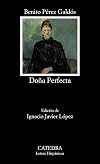
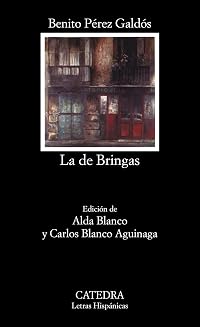
This novel from Benito Perez Galdos is one of the towering masterpieces of nineteenth-century Spanish literature, a distinction that rests in large part on the indelible character of Dona Perfecta. As a new widow desperate to escape destitution, Dona Perfecta promised the hand of her young daughter in marriage to her nephew Pepe. But when the time comes for the wedding to be planned, Dona Perfecta has changed her mind — and she embarks on a ruthless campaign of terror to ensure that the show more ceremony never takes place.. show less
Tags
Recommendations























Member Reviews
Doña Perfecta reflects the Spanish atmosphere of the time in which Galdós lived. The bitter struggle between traditionalists and liberals, the contrast between the countryside and the city, and the failed attempts to establish a climate of dialogue and tolerance structure the whole work, turning the argumentative plot and the characters around these elements in such a way that it emerges with all its patheticism: the Spanish coexistence of a dramatic possibility of diversity ways of understanding life and the world. Hence the validity and relevance of this work.
Witness to the devastating effect of the religious problem in Spain -more acute during the first years of the the Bourbon Restoration (1875)- and the terrible clash between the Europeanized, liberal, egalitarian spirit and the traditionalist, provincial spirit, that opposed with ferocious fanaticism any new ideas that might challenge their cherished beliefs, Benito Perez Galdos believed that religiousness exceeded the personal questions and was tearing apart families, not to mention the entire nation. He thus set to write Doña Perfecta: a warning cry about a theocratical and mummified society in which the self-interest of the Church (Don Inocencio) caused it to work with the feudal landowners (Doña Perfecta) to stir up local political show more bosses and guerrilla leaders (Caballuco), who in turn lead the labradores and peasants (el tío Paso Largo, Frasquito González, José Esteban Romanero) to slaughter. If Juan Valera's Pepita Jiménez can be considered the epitome of the idealistic Spanish XIX century novel, Doña Perfecta seems to be Perez Galdos' answer or rebuttal. show less
Pepe Rey is sent to the town of Orbajosa to meet his aunt Doña Perfecta and cousin Rosario. His visit is preceded by a letter from his father to Doña Perfecta indicating that young Pepe should marry Rosario. So he's going there to check things out and make sure his cousin is a suitable life partner. She lives up to his expectations, but nothing else goes right when the cultured engineer from the big city pays his visit to the Spanish countryside. He bungles his first couple of conversations with Doña Perfecta, a true pillar of the Orbajosa community, and her partner in crime, the virtuous priest Penitenciario. Rather than nod his head and fall in line as the priest employs some mildly offensive sarcasm, Pepe decides to get a rise out show more of the him by countering his snide religiosity with some wit of his own, bombarding the man of the cloth with some 19th century scientific enlightenment. This was probably the wrong tactic to employ, even in jest, because pretty soon everyone starts calling Pepe Rey a mathematician, an idolater of the German philosophers, and worst of all, an atheist. The hits keep coming, and Pepe soon concludes that powerful forces have aligned against him. He'd leave, but he's become quite taken with Rosario. She's into him too, but you can't just run away from Orbajosa, especially when you're living under Doña Perfecta's watchful eye.
I enjoyed the cast of characters that fill Doña Perfecta's pages with drama and intrigue. Besides the young educated protagonist, the two women of Pepe's family and Patrimonio, there are more than a dozen others who all contribute to the growing conflict between Pepe and the town in their own way, either intentionally or unintentionally. Some are sympathetic to Pepe, but their sympathy only ends up twisting the popular perception of the city boy even further. Eventually the army comes to Orbajosa to set up camp, and the citizenry is able to expand their antipathy and fold Pepe into the entire occupying force, since both come from the big city of Madrid and are hell-bent on destroying or degrading their simple rural way of life. Everybody's scheming, and in the end, somebody dies.
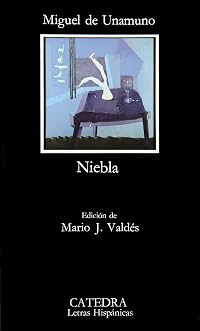
I decided to read two Spanish books this week: this one by Pérez Galdós and Miguel de Unamuno's San Manuel Bueno, martir. I'm planning to investigate 20th century Spanish fiction over the next three or four months, and I thought these two authors would be a great introduction to the literary world of Spain at the turn of the 20th century. I didn't realize that San Manuel Bueno, mártir wasn't published until 1930 (I thought it was from around 1900) but I decided to stick with it, because it still fit my original intent: to see Pérez Galdós' works as a synthesis of the literature of the past, and Unamuno as a forward-thinking innovator in modern Spanish literature. Reading Doña Perfecta with an eye to the past proved to be a fruitful endeavor: the conflicts between the city man and countryside society immediately made me think of Lope's Fuenteovejuna and El villano en su rincón, and I liked imagining Pérez Galdós' novel as a retelling of those Golden Age plays as a 19th century psychological novel. The refrain that provides the backbone for El villano en su rincón is "Él es rey, el que no ve rey" (He is King, he who sees no King). In Lope's play, the countryside noble is content to live far from the court, away from the blinding virtue of the king he does not see. Of course, by the end of the play, this godly Kingly virtue wins him over. But that was a different time. Here in the 19th century, the citizens of Orbajosa are content in their simple existence and don't want to hear what's going on in Madrid, in Germany, in the greater world. Then suddenly there's a Rey in their midst, and they're forced to examine that kingly presence they'd ignored for so long. They don't like it.
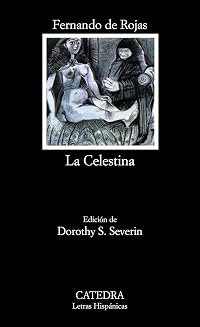
There was also an orchard and Pepe Rey was once sarcastically referred to as Melibeo by Penitenciario. It was a funny way of twisting around the names from La Celestina, another canonical work that Pérez Galdós references here. In that book, Melibea is the damsel seduced by Calisto in her family´s orchard. Here too there are scenes of romantic intrigue and action amongst the fruit trees on Doña Perfecta's property.
A good book, all in all, and one I'd recommend to those who are interested in 19th century Spain or 19th century literature in general. show less
I enjoyed the cast of characters that fill Doña Perfecta's pages with drama and intrigue. Besides the young educated protagonist, the two women of Pepe's family and Patrimonio, there are more than a dozen others who all contribute to the growing conflict between Pepe and the town in their own way, either intentionally or unintentionally. Some are sympathetic to Pepe, but their sympathy only ends up twisting the popular perception of the city boy even further. Eventually the army comes to Orbajosa to set up camp, and the citizenry is able to expand their antipathy and fold Pepe into the entire occupying force, since both come from the big city of Madrid and are hell-bent on destroying or degrading their simple rural way of life. Everybody's scheming, and in the end, somebody dies.
I decided to read two Spanish books this week: this one by Pérez Galdós and Miguel de Unamuno's San Manuel Bueno, martir. I'm planning to investigate 20th century Spanish fiction over the next three or four months, and I thought these two authors would be a great introduction to the literary world of Spain at the turn of the 20th century. I didn't realize that San Manuel Bueno, mártir wasn't published until 1930 (I thought it was from around 1900) but I decided to stick with it, because it still fit my original intent: to see Pérez Galdós' works as a synthesis of the literature of the past, and Unamuno as a forward-thinking innovator in modern Spanish literature. Reading Doña Perfecta with an eye to the past proved to be a fruitful endeavor: the conflicts between the city man and countryside society immediately made me think of Lope's Fuenteovejuna and El villano en su rincón, and I liked imagining Pérez Galdós' novel as a retelling of those Golden Age plays as a 19th century psychological novel. The refrain that provides the backbone for El villano en su rincón is "Él es rey, el que no ve rey" (He is King, he who sees no King). In Lope's play, the countryside noble is content to live far from the court, away from the blinding virtue of the king he does not see. Of course, by the end of the play, this godly Kingly virtue wins him over. But that was a different time. Here in the 19th century, the citizens of Orbajosa are content in their simple existence and don't want to hear what's going on in Madrid, in Germany, in the greater world. Then suddenly there's a Rey in their midst, and they're forced to examine that kingly presence they'd ignored for so long. They don't like it.
There was also an orchard and Pepe Rey was once sarcastically referred to as Melibeo by Penitenciario. It was a funny way of twisting around the names from La Celestina, another canonical work that Pérez Galdós references here. In that book, Melibea is the damsel seduced by Calisto in her family´s orchard. Here too there are scenes of romantic intrigue and action amongst the fruit trees on Doña Perfecta's property.
A good book, all in all, and one I'd recommend to those who are interested in 19th century Spain or 19th century literature in general. show less
"Doña Perfecta" (1876) no es sólo la novela de Benito Pérez Galdós (1843-1920) que suscitó más encendidas polémicas, sino también una obra sumamente representativa de su primera etapa creadora. Pepe Rey, joven ingeniero, llega a la ciudad episcopal de Orbajosa con la intención de casarse con Rosarito, prima suya e hija de doña Perfecta, puntal de la sociedad orbajonense. Mezclado con el enredo sentimental, el conflicto entre la mentalidad progresista y europeizante del joven y la actitud inmovilista de una sociedad apegada a creencias y formas de existencia tradicionales es la urdimbre en torno a la cual se teje la novela.
Set in the 19th century by Spain's leading fiction writer of his time in this novel we find one Pepe Rey the son of a wealthy Madrileno on a trip into the more rural world of Spain to visit his aunt Perfecta and with the intention of marrying her daughter Rosario (his first cousin--who he has never met)--an event arranged by both his father and his aunt.
Pepe Rey represents the modern Spain of his time--he is university educated--an architect and bridge builder by trade--his views tend towards a skeptical enlightenment. He is looking forward to seeing both his aunt and cousin--looking forward to his eventual marraige to Rosario. Initially things go fairly well--Pepe looks past the backwardness of Obrajosa (the town of Perfecta and show more Rosario) and the neighboring Villahorenda (Horribleville) and towards a future--one of which he hopes to play there with at least one particular project to improve the lives of its citizens. Soon things start falling apart though. A priest Don Inocencio (a regular visitor to Perfecta's home and Rosario's confessor) grills him at the first meeting. Inocencio twists whatever it is Pepe Rey has to say into his own much more narrow outlook. Inocencio is not interested in the divide between the haves and havenots of Obrajosa but much more interested in the divide in the reality between Pepe's modern Spain represented by Madrid and Inocencio's supposed more innocent and backward Spain as represented right there in the rurally backward Obrajosa. Pepe fends him off for a time but in attending the local Cathedral on his first sunday there for mass--he is more taken with the architecture of the church (which he considers to be grotesque) than he is with the service. The local community is scandalized--first that he paid so little attention to Mass and second that he thought so little of their Cathedral which they consider to be quite the opposite--very beautiful. With further grilling from Inocencio the conclusion is reached that Pepe is an atheist and nothing Pepe can say on the matter is going to change things in the minds of Perfecta and the townspeople except to maybe reinforce these perceptions they've decided on. At this point Perfecta decides to get rid of Pepe and to stop the marraige. Pepe and Rosario however have fallen head over heels for each other. Perfecta's stratagem is to keep Rosario out of sight from him. At the same time the Spanish Army moves into the region to suppress bands of rebels and bandits that infest the area. An officer is billeted on Perfecta's household and unknown to her and everyone else he is a friend of Pepe's and they concoct a plan that will allow Pepe and Rosario to meet on the sly and thereby surreptitiously continue their relationship. Perfecta and Inocencio representing local power interests resent the Spanish Army's presence. They in fact know and have some control over many of these roving bands that the Spanish Army is chasing--particularly the most fearsome one of them led by one Caballuco--a big powerful and fearless man who is a touch short on imagination and fairly easily manipulated. As the situations above continue to evolve Inocencio and Perfecta take more and more of a hand in directing Caballuco and company. The shock upon finding that her daughter has been seeing Pepe Rey behind her back though leads directly to the books conclusion with the murder of Pepe Rey by Caballuco and thereafter the committing of Rosario to an insane asylum and the breakup of the relationship between Inocencio and Perfecta.
For those who have never read Galdos--this would be a good book to start with--one of his earliest. Galdos has a very engaging tone--often quite humorous--even Cervantesque at times. His stories are well plotted and look deep within to the cultural and political underpinnings from which they spring. show less
Pepe Rey represents the modern Spain of his time--he is university educated--an architect and bridge builder by trade--his views tend towards a skeptical enlightenment. He is looking forward to seeing both his aunt and cousin--looking forward to his eventual marraige to Rosario. Initially things go fairly well--Pepe looks past the backwardness of Obrajosa (the town of Perfecta and show more Rosario) and the neighboring Villahorenda (Horribleville) and towards a future--one of which he hopes to play there with at least one particular project to improve the lives of its citizens. Soon things start falling apart though. A priest Don Inocencio (a regular visitor to Perfecta's home and Rosario's confessor) grills him at the first meeting. Inocencio twists whatever it is Pepe Rey has to say into his own much more narrow outlook. Inocencio is not interested in the divide between the haves and havenots of Obrajosa but much more interested in the divide in the reality between Pepe's modern Spain represented by Madrid and Inocencio's supposed more innocent and backward Spain as represented right there in the rurally backward Obrajosa. Pepe fends him off for a time but in attending the local Cathedral on his first sunday there for mass--he is more taken with the architecture of the church (which he considers to be grotesque) than he is with the service. The local community is scandalized--first that he paid so little attention to Mass and second that he thought so little of their Cathedral which they consider to be quite the opposite--very beautiful. With further grilling from Inocencio the conclusion is reached that Pepe is an atheist and nothing Pepe can say on the matter is going to change things in the minds of Perfecta and the townspeople except to maybe reinforce these perceptions they've decided on. At this point Perfecta decides to get rid of Pepe and to stop the marraige. Pepe and Rosario however have fallen head over heels for each other. Perfecta's stratagem is to keep Rosario out of sight from him. At the same time the Spanish Army moves into the region to suppress bands of rebels and bandits that infest the area. An officer is billeted on Perfecta's household and unknown to her and everyone else he is a friend of Pepe's and they concoct a plan that will allow Pepe and Rosario to meet on the sly and thereby surreptitiously continue their relationship. Perfecta and Inocencio representing local power interests resent the Spanish Army's presence. They in fact know and have some control over many of these roving bands that the Spanish Army is chasing--particularly the most fearsome one of them led by one Caballuco--a big powerful and fearless man who is a touch short on imagination and fairly easily manipulated. As the situations above continue to evolve Inocencio and Perfecta take more and more of a hand in directing Caballuco and company. The shock upon finding that her daughter has been seeing Pepe Rey behind her back though leads directly to the books conclusion with the murder of Pepe Rey by Caballuco and thereafter the committing of Rosario to an insane asylum and the breakup of the relationship between Inocencio and Perfecta.
For those who have never read Galdos--this would be a good book to start with--one of his earliest. Galdos has a very engaging tone--often quite humorous--even Cervantesque at times. His stories are well plotted and look deep within to the cultural and political underpinnings from which they spring. show less
Great portrayal of hypocrisy in action. The character of Doña Perfecta feels like a precursor of H. Potter's Dolores Umbridge.
I could have read it in one afternoon, had I the time. Maybe is a biased view of the people that live in small towns, but nevertheless it was engaging.
I loathe false modesty, totally hate it, and there was a part on the book were I almost threw it away, I was so enraged!
I loathe false modesty, totally hate it, and there was a part on the book were I almost threw it away, I was so enraged!
Members
- Recently Added By
Lists

Lamont's Hundred Best Novels (1947)
100 works; 4 members

Books Read in 2016
4,666 works; 199 members

Trinity College Booklist (1951): Class Nine, Foreign Literatures
161 works; 3 members
Author Information

607+ Works 9,596 Members
Perez Galdos was Spain's outstanding nineteenth-century novelist. At a time when most Spanish novelists were limited by their regional backgrounds, Galdos possessed the intellect and vision to embrace the Spanish people as a nation. In 1873 he began the Episodios nacionales (National Episodes), a 46--volume series of historical novels in which he show more was concerned less with details and facts of history than with their impact on the lives of ordinary people. His works are sometimes divided into two periods: novels of the first period and contemporary Spanish novels. His early novels, Dona Perfecta (1876), Gloria (1877), Marianela (1878), and The Family of Leon Roch (1879), may be characterized as realistic with touches of romanticism. The novels are united by common characters and themes in the manner of Balzac's Human Comedy. Dona Perfecta is a denunciation of intolerance. Marianela explores the irony and tragedy of the destruction of love by scientific progress. Fortunata and Jacinta (1886-87), a four-volume masterpiece of the second period, contrasts two women - Jacinta, wife of the wealthy middle-class Juanito Santa Cruz, and Fortunata, his mistress. Both are admirable characters, but it is Fortunata who bears a son, demonstrating the vitality of the lower classes. The character of Maxi reveals Galdos's interest in mental illness and his naturalistic strain. Born and educated in the Canary Islands, Perez Galdos studied law briefly and spent most of his adult life in Madrid. His study of lower-class Spanish life and his attempts to improve it led him to the advocacy of more equal distribution of wealth and outspoken opposition to the Catholic church. While always popular with the people, he fared less well in literary circles. In 1889 he sought admission to the Royal Academy, an honor he was refused until 1897, and the Nobel Prize went to a contemporary, Jose Echegaray, a writer of considerably less talent. Galdos died poor and blind. Although the government refused him a state funeral, the entire Spanish nation mourned him. English translations of his novels now out of print are The Disinherited Lady (1881), Miau (1888), Compassion (1897), and Tristana. (Bowker Author Biography) show less
Some Editions
Awards and Honors
Series

Belongs to Publisher Series
Work Relationships
Common Knowledge
- Canonical title
- Doña Perfecta
- Original title
- Doña Perfecta
- Original publication date
- 1876 (original Spanish) (original Spanish)
Classifications
Statistics
- Members
- 441
- Popularity
- 69,726
- Reviews
- 17
- Rating
- (3.66)
- Languages
- 9 — Czech, Danish, English, German, Hebrew, Farsi/Persian, Russian, Spanish, Tagalog
- Media
- Paper, Audiobook, Ebook
- ISBNs
- 84
- ASINs
- 20