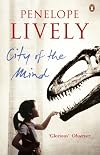
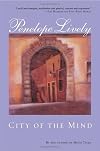
City of the Mind
by Penelope Lively
On This Page
Description
A "well crafted . . . fascinating" story of a London architect's struggle for identity in love and career (Time Out).This is the city in which everything is simultaneous. There is no yesterday, nor tomorrow, merely weather, and decay, and construction.
In London's changing heartland, architect Matthew Halland can't help but contemplate how the past and the present blend. It stirs memories of his boyhood, the early years with his daughter, and the failed marriage he has not yet put behind show more him. Here, too, is the London of prehistory, of Georgian elegance, of the Blitz. But at the same time, Matthew must keep focused on the constructing of a new future for London—his latest project in Docklands—and with it he begins to forge new beginnings of his own.
City of the Mind is the "lucid and complex, meditative and playful, concise and expansive" second novel from the Man Booker Prize–winning author (The Washington Post Book World).
. show less
Tags
Recommendations





























Member Recommendations

Member Reviews
An almost manic look at the city of London as it bursts forth in the perceptive descriptions of the main character, Matthew Halland. Matthew, a London architect, feels the pulse of the city as it speaks to him of the present as well as the past. Lively aids this sense of the city as a living thing by inserting vignettes of people past and present who experience London in completely different ways to Matthew, examples being Rose, the child living in poverty and on the streets, Rutter, the ruthless real estate developer willing to bend the moral rules that Matthew lives by, and Jim, the warden who must contend with the London that is falling apart during the WWII bombing.
The author balances these views of London at the same time she show more describes Matthew's life as he comes to terms with his broken marriage, interacts with his daughter Jane, attempts to keep sinister Rutter away, and contemplates the possibility of love with someone new. The insight she brings to Matthew's interactions made one want to follow more of Matthew's life but the city continues to intrude over and over again as Lively develops the themes of memory and time and how the past always lives in the present in some mysterious fashion. My only criticism is the story seemed overwhelming at times with so much going on at once, and that perhaps the city played too big a role when one wanted more of the human element. show less
The author balances these views of London at the same time she show more describes Matthew's life as he comes to terms with his broken marriage, interacts with his daughter Jane, attempts to keep sinister Rutter away, and contemplates the possibility of love with someone new. The insight she brings to Matthew's interactions made one want to follow more of Matthew's life but the city continues to intrude over and over again as Lively develops the themes of memory and time and how the past always lives in the present in some mysterious fashion. My only criticism is the story seemed overwhelming at times with so much going on at once, and that perhaps the city played too big a role when one wanted more of the human element. show less
I adored this. One of those books you don't want to finish. I left it lying around for a long time, just reading it a chapter at a time when I wanted something great to savour.
I'm not sure if everyone would think it a great book; mostly I suspect it just hit a nerve with me and everything about it seemed perfect. It was written in 1990 about the changing landscape of London. I went to college in London in 1990 and the book seemed to capture the city just as I see it. The city of my mind.
It's a bit of an odd story in many ways. It's a 1990 tale of an architect, about what he's building, his love life, his daughter. But it also flashes back to look at London in previous times, notably the second world war but other times too. As if time show more has collapsed in on itself and all the things that have happened in the city are going on together. Somewhat quirky, but I loved it.
One to re-read, for sure. show less
I'm not sure if everyone would think it a great book; mostly I suspect it just hit a nerve with me and everything about it seemed perfect. It was written in 1990 about the changing landscape of London. I went to college in London in 1990 and the book seemed to capture the city just as I see it. The city of my mind.
It's a bit of an odd story in many ways. It's a 1990 tale of an architect, about what he's building, his love life, his daughter. But it also flashes back to look at London in previous times, notably the second world war but other times too. As if time show more has collapsed in on itself and all the things that have happened in the city are going on together. Somewhat quirky, but I loved it.
One to re-read, for sure. show less
At first this novel develops as a story about an architect, one Matthew Halland. As the narrative develops, it is evident that this is actually an historical account of the City of London. The viewpoint often changes but Lively achieves this alternating 'voice' so adroitly, the reading is not disrupted and one rarely feels the story is suddenly out of context.
Matthew's insightful musings as he goes about the City to supervise the work his firm has in hand slide across modern day London and rolls back the centuries. The philosophical theme is held together by the architect's life, which even on its own, was very rewarding. It is an effective technique in engaging one's attention.
For my tastes, the occasional segue into the era of the show more London blitz was jarring. The historical aspect was of buildings lost. Although I found the detail of lives-lost and families-disrupted a little too gritty for the theme in the book as a whole, I recommend this literary fiction for those who have enjoyed philosophical perspectives of time and place. show less
Matthew's insightful musings as he goes about the City to supervise the work his firm has in hand slide across modern day London and rolls back the centuries. The philosophical theme is held together by the architect's life, which even on its own, was very rewarding. It is an effective technique in engaging one's attention.
For my tastes, the occasional segue into the era of the show more London blitz was jarring. The historical aspect was of buildings lost. Although I found the detail of lives-lost and families-disrupted a little too gritty for the theme in the book as a whole, I recommend this literary fiction for those who have enjoyed philosophical perspectives of time and place. show less
Although architect Matthew Halland plays the main part in the story, London is the real character. Set in the early 1990s when London is being rebuilt, reconstructed, renovated, the past occasionally emerges, after all, the past never goes away. Demolishing buildings uncovers memories, vermin, misery, mingled with scientists, exploration, art, and success, to portray a complex living city, always changing. An excellent story that held my attention throughout.
Penelope Lively gives us the life of a moderately successful architect, Matthew Halland, and a developing London that is being refurbished and rebuilt, buildings going higher. Matthew Halland feels that his life is a failure, his marriage is over but he maintains a good relationship with his young daughter. At work he is not convinced by the new turquoise skyscraper he is responsible for in Docklands and only cares about the glass engraving of a ship that he commissions. We meet Matthew Halland with his daughter and with his elderly mother and occasionally with his colleagues, we also meet up with a developer whose method of working he disapproves. In these scenes we mostly see a thoughtful and caring man, the developer brings out his show more assertive side while demonstrating that Matthew is a good person. The novel is interspersed with flashes back to other London's. Particularly dramatic are those from the blitz and some of these scenes are hard to read and brutal. These stories remain in the fabric of the older buildings of London. An enjoyable novel. show less
I liked this novel for various reasons. One reason was the overarching theme of London, its ever changing townscape, its people, its variety: like a kaleidoscope being swivelled back and forwards. This multifariousness mirrored Matthew's moods and days, both emotional and businesslike. It was also a subtle novel, with both the burgeoning romance and the problems with the rogue developer never overdone. Matthew's relationship with his daughter was also very well handled as was Lively's depiction of the child's personality. Finally, as with her 'Moon Tiger' a welcome lack of sentimentality.
This is one of my favourites. I love the way Penelope Lively contrasts past events with the present. This reminded me a bit of Ackroyd's Hawkmoor although the stories are different the brooding atmosphere of the city is the same.
Members
- Recently Added By
Author Information

73+ Works 14,512 Members
Penelope Lively has written over 18 books for children, and over 15 titles for adults, distinguishing herself on both levels. Among the awards she has received are the coveted Booker Prize for the adult novel "Moon Tiger" (1987) and the Carnegie Medal for the highly acclaimed juvenile work, "The Ghost of Thomas Kempe" (1973). In Lively's writing, show more for both adults and children, the recurrent theme is interpreting the past through exploring the function of memory. "My particular preoccupation as a writer is with memory. Both with memory in the historical sense and memory in the personal sense." Beginning her writing career in the early 1970's, Lively wrote exclusively for children for over a decade. Because children have limited memories, devices were used to explore their perceptions of the past, such as ghosts in "Uninvited Ghosts and Other Stories" (1985), and a sampler in "A Stitch in Time' (1976). Lively's first adult novel, "The Road to Lichfield" (1977) was the result of turning to an older audience when she felt inspiration running out. Her adult novels include "Passing On" (1995), the story of a mother's legacy to her children and 'Oleander, Jacarandi: A Childhood Perceived' (1994) which is a memoir of Lively's childhood. Penelope (Low) Lively, born March 17, 1933 in Cairo, Egypt, had a most unusual childhood. She grew up in Cairo with no formal education until age 12, when her family put her in boarding school in England. After earning a B.A. in history at Oxford in 1955, she married Jack Lively, a university professor, whom she calls her most useful critic. They have a son and a daughter, Adam and Josephine. (Bowker Author Biography) show less
Common Knowledge
- Original publication date
- 1991
- People/Characters
- Matthew Halland
- Important places
- London, England, UK
- First words
- Night. Lights on.
- Quotations
- Matthew thinks about happiness. It occurs to him that this is rarely identified at the very moment of experience. ... It is children alone who experience immediacy; the rest of us have lost the ability to inhabit the present ... (show all)and spend our time in anticipation and recollection.
Around the room there were examples of her work. A white and haloed saint-figure floating in a great sheet of glass; goblets etched with delicate lettering; butterflies caught in the corner of a bowl. Matthew prowled - inspec... (show all)ting, approving. He visualized her at work: a Pont Express bike courier creating miracles with a dentist's drill.
They considered the engraving. It occupied the panel above the large glass revolving doors, framed in a marble surround, and hung there as a delicate white tracery of light, an intricate ghost ship rocked upon the scrolls of ... (show all)phantom waves. - Last words
- (Click to show. Warning: May contain spoilers.)"There", he says. "You're hre, I'm here."
- Original language
- English
Classifications
Statistics
- Members
- 412
- Popularity
- 74,903
- Reviews
- 11
- Rating
- (3.80)
- Languages
- English, French, German
- Media
- Paper, Audiobook, Ebook
- ISBNs
- 16
- ASINs
- 6