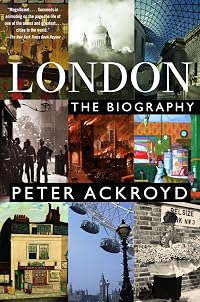
London: The Biography
by Peter Ackroyd
On This Page
Description
London: The Biograph is the pinnacle of Peter Ackroyd's brilliant obsession with the eponymous city. In this unusual and engaging work, Ackroyd brings the listener through time into the city whose institutions and idiosyncrasies have permeated much of his works of fiction and nonfiction. Peter Ackroyd sees London as a living, breathing organism, with its own laws of growth and change. Reveling in the city's riches as well as its raucousness, the author traces thematically its growth from the show more time of the Druids to the beginning of the twenty-first century. Anecdotal, insightful, and wonderfully entertaining, London is animated by Ackroyd's concern for the close relationship between the present and the past, as well as by what he describes as the peculiar "echoic" quality of London, whereby its texture and history actively affect the lives and personalities of its citizens. London confirms Ackroyd's status as what one critic has called "our age's greatest London imagination.". show lessTags
Recommendations
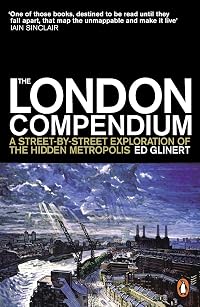

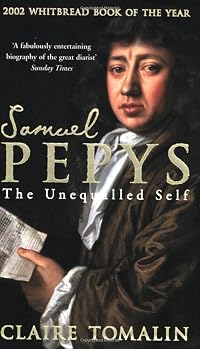
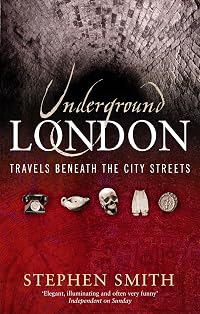
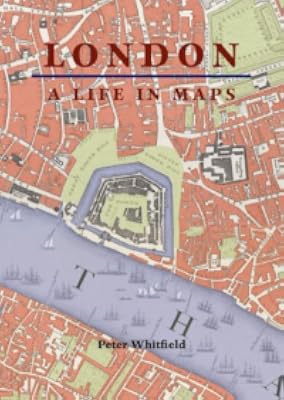








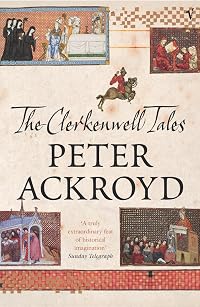
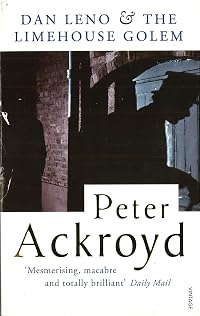
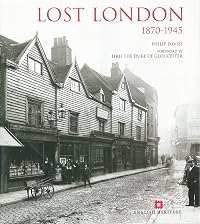
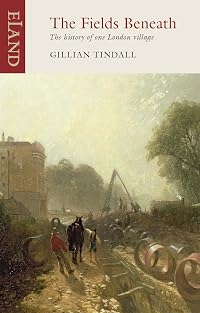



Member Recommendations

John_Vaughan Knowing and loving London means you have to know the Thames. Peter Ackroyd lovingly describes both with a deep knowledge of history.



Cecrow A fiction work, but innundated with factual information in the style of James Michener. Best of all, it's chronological.
Member Reviews
This book is a fantastic achievement. Every aspect of the city is both explained and connected. Its motivations and desires are laid bare. To an American, it cannot help but be interesting as this British giant has had so many centuries that it sometimes loses track of them. In its constant rebuilding, whether caused by fire, bombing, or the wreckage of revision, the past is always present.
I did find that Ackroyd made loving use of words such as "palimpsest", "atavistic" and "demotic". However, if those aren't terms that ought to be utilized for London, I puzzle where they do find work. The author's passion for his subject translates well to the reader. We are not left puzzled in his absorption by the very thing he studies. We, in turn, show more thank him for his sacrifice.
This isn't a quick read. This is a book to get lost in, not unlike the streets that Ackroyd lovingly revisits. show less
I did find that Ackroyd made loving use of words such as "palimpsest", "atavistic" and "demotic". However, if those aren't terms that ought to be utilized for London, I puzzle where they do find work. The author's passion for his subject translates well to the reader. We are not left puzzled in his absorption by the very thing he studies. We, in turn, show more thank him for his sacrifice.
This isn't a quick read. This is a book to get lost in, not unlike the streets that Ackroyd lovingly revisits. show less
What a book. Ackroyd has created the ultimate portrait of London as a living, breathing entity, not just a collection of old buildings and monuments. Rather than a dry chronological trawl through the history of our nation's capital, instead Ackroyd chooses themes and explores them through time and space, focussing on specific areas or ideas. Thus he paints a picture of an ever evolving city that defies all attempts to change or control it. London is its own master.
Ackroyd ranges back and forth through time in pursuit of his themes and as a consequence throws up facts that are never less than interesting, frequently fascinating. All the while he slowly moves us through London's development through the centuries, and my only quibble would show more be that he skips through the 20th century rather too quickly. But considering the book is 800 pages long and he had a heart attack after finishing it, I'll forgive him that.
If you are looking for a dry history book, look elsewhere. If you are in search of a book about London that is full of ideas and facts backed up by a wealth of research then London: The Biography is for you. Not to everyone's taste, but I found it a great read. show less
Ackroyd ranges back and forth through time in pursuit of his themes and as a consequence throws up facts that are never less than interesting, frequently fascinating. All the while he slowly moves us through London's development through the centuries, and my only quibble would show more be that he skips through the 20th century rather too quickly. But considering the book is 800 pages long and he had a heart attack after finishing it, I'll forgive him that.
If you are looking for a dry history book, look elsewhere. If you are in search of a book about London that is full of ideas and facts backed up by a wealth of research then London: The Biography is for you. Not to everyone's taste, but I found it a great read. show less
If you want a book about the History of London, then move away. This isn't it. This is more a book about the history or, rather, the stories of London. How so?
It's not that History with a capital "H" doesn't feature, prominently at times. There are, for instance, very detailed chapters about the Great Fire of 1666 and how it led to a city to be radically redesigned and rebuilt. Chapters about how such random topics as to how the main centre, heart of the town shifted under the Anglo-Saxons; how to define the East End; or, again, how the emergence of a radical transport system and its resulting sprawling out of the suburbs also falls into that detailed, historical narrative expected in any history book, as are those on language and show more slang which can be pretty geeky. If you love History, then -of course!- you will find some true jewels in here although they will be sparse (sparse not because they're rare, but because if -like me- you truly are in love with London already then you will probably know most of the information put forth by the author...). But that's not it.
London may be famous as an international money centre, a place where greedy capitalists rule supreme, and from a City which could be easily called the European Wall Street. However it is, also, a city which has always sheltered and, most importantly, attracted the downtrodden of all sorts. The sheer brilliance of Peter Ackroyd, here, is to tell their stories and so experiences of London, besides telling how London has been impacted by their presence over the centuries.
Now, clocking at nearly 800 pages (!!) it is, obviously, next to impossible to make a summary that could do it justice. Nevertheless, the emphasis put on socio-cultural history; of how the Black Death affected the poor especially; of the prison networks and fate of prisoners when incarcerated; of the various jobs taken up by the poor in order to survive especially during the Victorian era (many, thankfully, now lost into history!); the vicissitudes of the vagrants and the alcoholics; the race riots that have stained whole communities; and, even, the myths and folktale of otherwise neglected demographics, here is a read packed with exuberance as much as it is with a delightful multitude of trivia.
Is it chaotic? Yes! Is it so disorganised and random in its handling of chapters to chapters that it can feel jarring? Yes! Is Ackroyd's writing style far too poetic and idealist for such an otherwise geeky, academic topic? Yes too! But then again, I personally found that these contributed to shape the book at the image of the city it describes that is, untamed and untameable, bursting with life, and unconcerned for any sense of order. Like with London itself indeed, one will either love to get lost in it and wander, puzzled and astonished and curious and enthralled by it all or, on the contrary, feel completely overwhelmed, give up, and move along as if not belonging. Both reactions are perfectly fine of course, but so be warned: if you do not know London very well already, or are not truly in love with it and its history and becoming, then this may not be the book for you. Otherwise, then you can happily pick it up... and re-discover London as if for the first time all over again! show less
It's not that History with a capital "H" doesn't feature, prominently at times. There are, for instance, very detailed chapters about the Great Fire of 1666 and how it led to a city to be radically redesigned and rebuilt. Chapters about how such random topics as to how the main centre, heart of the town shifted under the Anglo-Saxons; how to define the East End; or, again, how the emergence of a radical transport system and its resulting sprawling out of the suburbs also falls into that detailed, historical narrative expected in any history book, as are those on language and show more slang which can be pretty geeky. If you love History, then -of course!- you will find some true jewels in here although they will be sparse (sparse not because they're rare, but because if -like me- you truly are in love with London already then you will probably know most of the information put forth by the author...). But that's not it.
London may be famous as an international money centre, a place where greedy capitalists rule supreme, and from a City which could be easily called the European Wall Street. However it is, also, a city which has always sheltered and, most importantly, attracted the downtrodden of all sorts. The sheer brilliance of Peter Ackroyd, here, is to tell their stories and so experiences of London, besides telling how London has been impacted by their presence over the centuries.
Now, clocking at nearly 800 pages (!!) it is, obviously, next to impossible to make a summary that could do it justice. Nevertheless, the emphasis put on socio-cultural history; of how the Black Death affected the poor especially; of the prison networks and fate of prisoners when incarcerated; of the various jobs taken up by the poor in order to survive especially during the Victorian era (many, thankfully, now lost into history!); the vicissitudes of the vagrants and the alcoholics; the race riots that have stained whole communities; and, even, the myths and folktale of otherwise neglected demographics, here is a read packed with exuberance as much as it is with a delightful multitude of trivia.
Is it chaotic? Yes! Is it so disorganised and random in its handling of chapters to chapters that it can feel jarring? Yes! Is Ackroyd's writing style far too poetic and idealist for such an otherwise geeky, academic topic? Yes too! But then again, I personally found that these contributed to shape the book at the image of the city it describes that is, untamed and untameable, bursting with life, and unconcerned for any sense of order. Like with London itself indeed, one will either love to get lost in it and wander, puzzled and astonished and curious and enthralled by it all or, on the contrary, feel completely overwhelmed, give up, and move along as if not belonging. Both reactions are perfectly fine of course, but so be warned: if you do not know London very well already, or are not truly in love with it and its history and becoming, then this may not be the book for you. Otherwise, then you can happily pick it up... and re-discover London as if for the first time all over again! show less
This book was truly extraordinary.
I was looking for an in-depth history of London, and I certainly found it between this book's covers. [a:Peter Ackroyd|16881|Peter Ackroyd|http://photo.goodreads.com/authors/1232835556p2/16881.jpg] truly did write a biography of London, from its sprawling streets to its strange citizens. His writing is fluid, and fascinating to read; his use of primary sources is utterly astounding, and somewhat maddening, as the cockney can be a bit hard on the eyes.
[a:Peter Ackroyd|16881|Peter Ackroyd|http://photo.goodreads.com/authors/1232835556p2/16881.jpg]'s book is told in a very loose chronology. While the 'story' begins with prehistory, and ends in the 80s, not much in this book is linear. He makes London show more timeless, and turns the city into the icon that it is today. The emphasis of the text is upon how little things have changed, even while London is destroyed and rebuilt cyclically. The essence of the city can be found in the hospitals raised upon the sites of druidic wells, the very wells that the Victorians later claimed had healing capabilities.
The triumph of this text is not in the traditional dates and names of rulers, battles, and the like... rather, the triumph is in the fact that it focuses upon the citizens of the empire. Reading this book, you will learn about the conditions of the jails, what Londoner's favorite pasttimes were, how the role of women changed, and how London assimilates the immigrants. You'll read about how little Cockney has changed from the 1500s, and how London's taste for the theatrical existed before Shakespeare came on the scene.
After reading this book, I feel that I have learned more about London than I have from the World History courses I've taken. [a:Peter Ackroyd|16881|Peter Ackroyd|http://photo.goodreads.com/authors/1232835556p2/16881.jpg] has an eye for what's importance, and brings this city of commerce, violence, and theater to life in a way that no one else has.
Smashing book. show less
I was looking for an in-depth history of London, and I certainly found it between this book's covers. [a:Peter Ackroyd|16881|Peter Ackroyd|http://photo.goodreads.com/authors/1232835556p2/16881.jpg] truly did write a biography of London, from its sprawling streets to its strange citizens. His writing is fluid, and fascinating to read; his use of primary sources is utterly astounding, and somewhat maddening, as the cockney can be a bit hard on the eyes.
[a:Peter Ackroyd|16881|Peter Ackroyd|http://photo.goodreads.com/authors/1232835556p2/16881.jpg]'s book is told in a very loose chronology. While the 'story' begins with prehistory, and ends in the 80s, not much in this book is linear. He makes London show more timeless, and turns the city into the icon that it is today. The emphasis of the text is upon how little things have changed, even while London is destroyed and rebuilt cyclically. The essence of the city can be found in the hospitals raised upon the sites of druidic wells, the very wells that the Victorians later claimed had healing capabilities.
The triumph of this text is not in the traditional dates and names of rulers, battles, and the like... rather, the triumph is in the fact that it focuses upon the citizens of the empire. Reading this book, you will learn about the conditions of the jails, what Londoner's favorite pasttimes were, how the role of women changed, and how London assimilates the immigrants. You'll read about how little Cockney has changed from the 1500s, and how London's taste for the theatrical existed before Shakespeare came on the scene.
After reading this book, I feel that I have learned more about London than I have from the World History courses I've taken. [a:Peter Ackroyd|16881|Peter Ackroyd|http://photo.goodreads.com/authors/1232835556p2/16881.jpg] has an eye for what's importance, and brings this city of commerce, violence, and theater to life in a way that no one else has.
Smashing book. show less
This was just fucking brilliant. It's not a linear history. Rather, each chapter is a new topic, and Ackroyd covers the history of that topic before moving on to the next topic/chapter. There are chapters on the history of lighting London (torches, gas lights, etc.), one on the behavior of crowds over the centuries, one on churches, one on effluvia (read: poop), one on the buried rivers of London (yes there's more than one)... It's amazing. And 79 chapters long. This mother is HUGE. And worth it. Ackroyd plays it pretty straight, but every so often he'll say things like, "The bowels of God moved, and he took a shit on London." Peter Ackroyd is AWESOME.
The word thorough does not do London: the Biography justice. Think of it as a chronology of London's biggest events from 54 BC to 2000 AD. It is an explanation and examination of culture, architecture, religion, invention, society, education, slang, literature, food, immigration, sanitation, crime, entertainment, commerce, economics, weather... I could go on. There are a lot of opinions about this book floating around. Someone said it took them six months to read it. Someone else said you have to read it before visiting London, while someone else suggested using London: the Biography as a walking guide. Good luck carrying the thing around. It's heavy!
London is the book to read if you want to know what Charles Dickens thought about show more London cats or the pervasive fog; what Daniel Defoe thought about the poor, the prison system, or London's suburbs; or Samuel Johnson's thoughts on public intoxication or witnessing a well-attended execution in a courtyard. Ackroyd's meticulous research has uncovered those opinions and more. You will learn about the Great Fire of 1666 and how no one knew how it started; yet it burned for five days straight. You will hear stories about the infamous London fog and how a man could get lost in the ominous mist. Speaking of ominous, penal and criminal behaviors are discussed at great length. I particularly liked the man who couldn't stay imprisoned. Time and time again he found ways to escape. show less
London is the book to read if you want to know what Charles Dickens thought about show more London cats or the pervasive fog; what Daniel Defoe thought about the poor, the prison system, or London's suburbs; or Samuel Johnson's thoughts on public intoxication or witnessing a well-attended execution in a courtyard. Ackroyd's meticulous research has uncovered those opinions and more. You will learn about the Great Fire of 1666 and how no one knew how it started; yet it burned for five days straight. You will hear stories about the infamous London fog and how a man could get lost in the ominous mist. Speaking of ominous, penal and criminal behaviors are discussed at great length. I particularly liked the man who couldn't stay imprisoned. Time and time again he found ways to escape. show less
I've only had the opportunity to spend a few days in London, so I can't claim to know the city well. But, says Ackroyd - himself seemingly a lifelong Londoner, it's been centuries since anyone can claim to really know the city. His bibliographic essay notes there are at least 21, 778 works on the city, and he doesn't claim to have read them all. Still, he has overturned a fair sized library for this book , added some personal observations, and produced an impressionistic, kaleidoscopic book.
Ackroyd eschews a straightforward chronological history. There are sections on London from its beginnings to 1066, medieval London, the Great Fire, Victorian London, and the city's destruction in the Blitz and its later rebuilding. But most of the show more book is essay like chapters built around themes covering every aspect of London life from its Underground and buried past to its notorious fogs and smogs, its wildlife and street life, markets illicit and licit, disasters and buildings, festivals and executions. And it's not exactly a celebration of the city. Again and again he returns to the metaphor of London as prison. The exemplar here is Jack Sheppard who escaped from London prisons six times. Yet, he never left the city for more than a few days even though it cost him his life.
London as theater is Ackroyd's other metaphor. It extends far beyond the literal stage to the garb of its inhabitants or the speeches of the soon to be hanged at Newgate. London, emphasizes Ackroyd, is a great commercial maw. All has been subsumed in trade at one time or another from the goods of empire coming in at the Thames docks to the sewer hunters and mudlarks scouring muck for treasures. Men, women, and children all played their roles. Even would-be rebels became a trade in Carnaby Street.
One of the most fascinating things in the book is Ackroyd's frequent quotes from foreign visitors. Yoshio Markino, a Japanese painter, noted that the garish colors of London's buildings became beautiful when seen in a fog. Dostoevsky remarked on Londoners haste to drink themselves insensible. (After reading the book's accounts of London riots and drinking, one is tempted to see some modern London problems as a return to some sort of default state for the city.)
How certain London neighborhoods have long been associated with certain acivities is also well told by Ackroyd. He not only talks about the famous Soho but Clerkenwell as well. The latter has, for centuries, been associated with religious heretics and revolutionaries. (Lenin lived there for a time.) And the same neighborhood has a long tradition of clockmaking. (Perhaps explaining why Hiram Maxim worked on his machine guns there.)
Given Ackroyd's many books on literary figures, quotes from British literary figures are to be expected. (Ackroyd notes that it is exceptional for them not to have a London connection.) Dickens, Defoe, Smollett, Milton, Boswell, Orwell, and Wolfe all had things to say about London in essays, letters, and fiction. The literary minded reader may be tempted to make a game of remembering relevant quotes and writers not in the book.
As well as being associated with literature and the capitol of empire, London's bustle helped develop the theories of Darwin and Engels - though Ackroyd asserts this in passing without much proof. The instrument makers of London were crucial to developing the science of the Enlightenment.
There are three minor quibbles with the book. Some of the anecdotes do get repeated though not many in a book so long. Second and more seriously, Ackroyd exhibits some unquestioned pieties. Seeing the poor as diseased and dirty is not a totally groundless stereotype. Mental illness can underlie all three conditions as well as less pathological mental traits. And Ackroyd, in a section on immigrants to London, makes the lazy analogy that complaints about today's immigrants are the same - and equally groundless - as those of the past. That ignores the numbers and cultures of Britian's current immigrants and the corrosive effects of modern transportation and communication on assimilation. One wonders, now that Islamic terrorism has made its way to Britain and sharia law can be enforced by the state, if he feels the same eight years after the book was published. The third quibble is that sometimes Ackroyd thinks he is describing a unique trait of Londoners when it's really more universal. For instance, in what city aren't children attracted to dangerous and forbidden places?
Still, this is a remarkable book in its variety, and it almost never bores despite its length. Anybody interested in one of the great cities of the Western Mind will want to read it. show less
Ackroyd eschews a straightforward chronological history. There are sections on London from its beginnings to 1066, medieval London, the Great Fire, Victorian London, and the city's destruction in the Blitz and its later rebuilding. But most of the show more book is essay like chapters built around themes covering every aspect of London life from its Underground and buried past to its notorious fogs and smogs, its wildlife and street life, markets illicit and licit, disasters and buildings, festivals and executions. And it's not exactly a celebration of the city. Again and again he returns to the metaphor of London as prison. The exemplar here is Jack Sheppard who escaped from London prisons six times. Yet, he never left the city for more than a few days even though it cost him his life.
London as theater is Ackroyd's other metaphor. It extends far beyond the literal stage to the garb of its inhabitants or the speeches of the soon to be hanged at Newgate. London, emphasizes Ackroyd, is a great commercial maw. All has been subsumed in trade at one time or another from the goods of empire coming in at the Thames docks to the sewer hunters and mudlarks scouring muck for treasures. Men, women, and children all played their roles. Even would-be rebels became a trade in Carnaby Street.
One of the most fascinating things in the book is Ackroyd's frequent quotes from foreign visitors. Yoshio Markino, a Japanese painter, noted that the garish colors of London's buildings became beautiful when seen in a fog. Dostoevsky remarked on Londoners haste to drink themselves insensible. (After reading the book's accounts of London riots and drinking, one is tempted to see some modern London problems as a return to some sort of default state for the city.)
How certain London neighborhoods have long been associated with certain acivities is also well told by Ackroyd. He not only talks about the famous Soho but Clerkenwell as well. The latter has, for centuries, been associated with religious heretics and revolutionaries. (Lenin lived there for a time.) And the same neighborhood has a long tradition of clockmaking. (Perhaps explaining why Hiram Maxim worked on his machine guns there.)
Given Ackroyd's many books on literary figures, quotes from British literary figures are to be expected. (Ackroyd notes that it is exceptional for them not to have a London connection.) Dickens, Defoe, Smollett, Milton, Boswell, Orwell, and Wolfe all had things to say about London in essays, letters, and fiction. The literary minded reader may be tempted to make a game of remembering relevant quotes and writers not in the book.
As well as being associated with literature and the capitol of empire, London's bustle helped develop the theories of Darwin and Engels - though Ackroyd asserts this in passing without much proof. The instrument makers of London were crucial to developing the science of the Enlightenment.
There are three minor quibbles with the book. Some of the anecdotes do get repeated though not many in a book so long. Second and more seriously, Ackroyd exhibits some unquestioned pieties. Seeing the poor as diseased and dirty is not a totally groundless stereotype. Mental illness can underlie all three conditions as well as less pathological mental traits. And Ackroyd, in a section on immigrants to London, makes the lazy analogy that complaints about today's immigrants are the same - and equally groundless - as those of the past. That ignores the numbers and cultures of Britian's current immigrants and the corrosive effects of modern transportation and communication on assimilation. One wonders, now that Islamic terrorism has made its way to Britain and sharia law can be enforced by the state, if he feels the same eight years after the book was published. The third quibble is that sometimes Ackroyd thinks he is describing a unique trait of Londoners when it's really more universal. For instance, in what city aren't children attracted to dangerous and forbidden places?
Still, this is a remarkable book in its variety, and it almost never bores despite its length. Anybody interested in one of the great cities of the Western Mind will want to read it. show less
Members
- Recently Added By
Published Reviews
ThingScore 100
London is what was meant to be, secured across the centuries in a multiplicity of races, ways and tongues. You could not re-create it; you cannot destroy it. This London is our London, and if you want to know it better, to see it with eyes wide open, then Ackroyd is your indispensable companion.
added by waitingtoderail
Lists

Best Books on London (non-fiction)
43 works; 11 members

501 Must-Read Books
529 works; 72 members

Non-Fiction Worth Reading
1,025 works; 264 members

Unread books
1,063 works; 84 members

Bibliography of How the Old World Ended by Jonathan Scott
308 works; 1 member

In Our Time books
4,934 works; 2 members
Author Information

90+ Works 31,852 Members
Peter Ackroyd was born in London in 1949. He graduated from Cambridge University and was a Fellow at Yale (1971-1973). A critically acclaimed and versatile writer, Ackroyd began his career while at Yale, publishing two volumes of poetry. He continued writing poetry until he began delving into historical fiction with The Great Fire of London show more (1982). A constant theme in Ackroyd's work is the blending of past, present, and future, often paralleling the two in his biographies and novels. Much of Ackroyd's work explores the lives of celebrated authors such as Dickens, Milton, Eliot, Blake, and More. Ackroyd's approach is unusual, injecting imagined material into traditional biographies. In The Last Testament of Oscar Wilde (1983), his work takes on an autobiographical form in his account of Wilde's final years. He was widely praised for his believable imitation of Wilde's style. He was awarded the British Whitbread Award for biography in 1984 of T.S. Eliot, and the Whitbread Award for fiction in 1985 for his novel Hawksmoor. Ackroyd currently lives in London and publishes one or two books a year. He still considers poetry to be his first love, seeing his novels as an extension of earlier poetic work. (Bowker Author Biography) Peter Ackroyd is the award-winning author of four biographies, most recently the national bestseller "The Life of Thomas More", as well as ten novels, including "Chatterton" & "Hawksmoor". He lives in London, where he is at work on his next book, "London: The Biography. (Publisher Provided) Peter Ackroyd is a bestselling writer of both fiction and nonfiction. He lives in London. (Publisher Provided) show less
Some Editions
Awards and Honors
Distinctions
Series
Belongs to Publisher Series
Common Knowledge
- Canonical title
- London: The Biography
- Original title
- London. Biography
- Original publication date
- 2000
- Important places
- London, England; River Thames, England
- Dedication
- For Iain Johnston and Frederick Nicholas Robertson
- First words
- If you were to touch the plinth upon which the equestrian statue of King Charles I is placed, at Charing Cross, your fingers might rest upon the projecting fossils of sea lilies, starfish, or sea urchins.
- Last words
- (Click to show. Warning: May contain spoilers.)It is Infinite London.
- Blurbers
- Wilson, A.N.; Holmes, Richard; Marr, Andrew; Morris, Jan
- Original language
- English
Classifications
Statistics
- Members
- 3,558
- Popularity
- 4,648
- Reviews
- 56
- Rating
- (3.97)
- Languages
- 7 — English, French, German, Italian, Polish, Russian, Spanish
- Media
- Paper, Audiobook, Ebook
- ISBNs
- 36
- ASINs
- 16