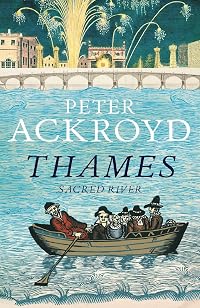
Thames: Sacred River
by Peter Ackroyd
On This Page
Description
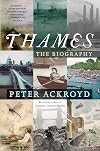
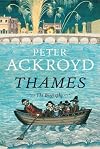
In Thames: the Biography, Ackroyd writes about connections between the Thames and such historical figures as Julius Caesar and Henry VIII, and offers memorable portraits of the ordinary men and women who depend on the river for their livelihoods. He visits all the towns and villages along the river, from Oxfordshire to London, and describes the magnificent royal residences, as well as the bridges and docks, locks and weirs, found along its 215-mile run. The Thames as a source of artistic show more inspiration comes brilliantly to life as Ackroyd invokes Chaucer, Shakespeare, Turner, Shelley, and other writers, poets, and painters who have been enchanted by its many moods and colors.--From publisher description. show lessTags
Recommendations





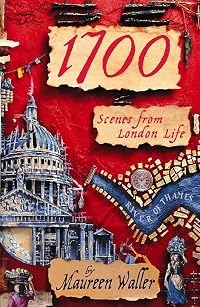
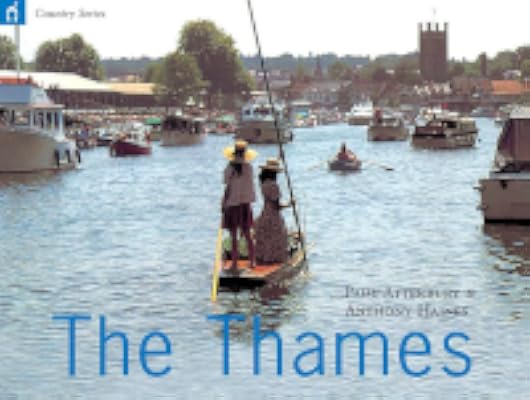
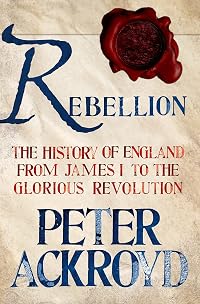
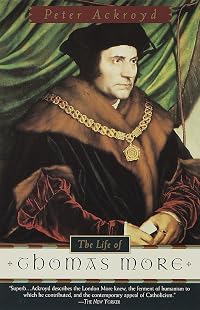
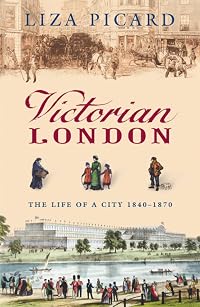
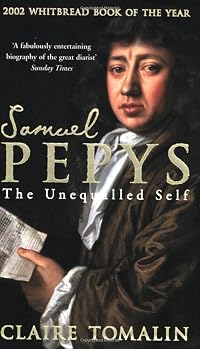
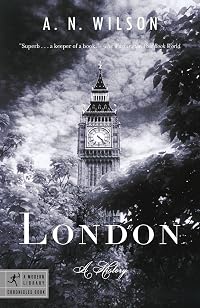
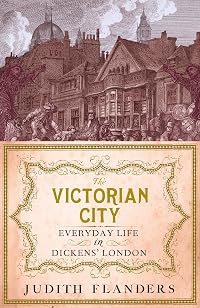
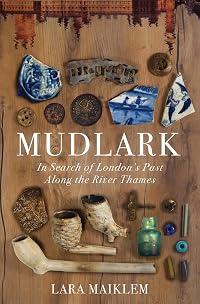
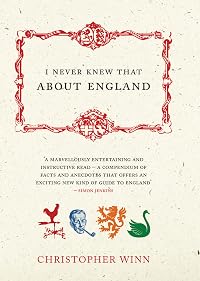
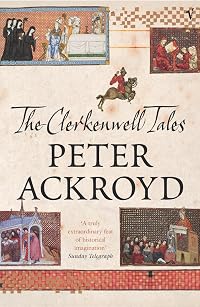
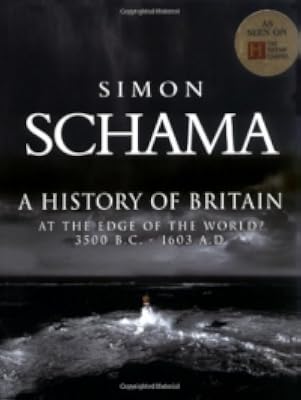
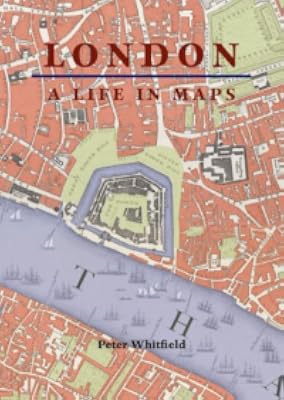


Member Recommendations
John_Vaughan Knowing and loving London means you have to know the Thames. Peter Ackroyd lovingly describes both with a deep knowledge of history.

John_Vaughan Belloc extends his portrait up to the source, while Peter Ackroyd, covering the same geography, includes marvellous illustrations.


Member Reviews
I enjoyed the book because the subject was new to me. The author doesn't know if he is writing a history, a travel book, or a prose poem. He fails at the latter and it blights his history and travelogue. I get really tired of his attempts to link Thames lore to classical mythology, except when he's talking about the Romans, of course. The pictures and photos are excellent. There's a case to be made that the Thames and Britain are closely linked in their history, that without the Thames, British history would have been very different, especially in regard to trade and military power.
Thames: The Biography by Peter Ackroyd purports to offer a sister volume to the highly successful London: The Biography. To a point it succeeds, but in general the feeling of pastiche dominates to such an extent that the idea of biography soon dissolves into a scrapbook.
The book presents an interesting journey and many fascinating encounters. But it also regularly conveys a sense of the incomplete, sometimes that of a jumbled ragbag of associations that still needs the application of work-heat and condensation in order to produce something palatable. Thus a book that promises much eventually delivers only a partially-formed experience.
Ostensibly the project makes perfect sense. London: The Biography described the life of the city, its show more history and its inhabitants. There was a stress on literary impressions, art and occasional social history to offer context. This was no mere chronicle and neither was it just a collection of tenuously related facts. It was a selective and, perhaps because of that, an engaging glimpse into the author’s personal relationship with this great city.
Thames River flows like an essential artery through and within London’s life. Peter Ackroyd identifies the metaphor and returns to it repeatedly, casting this flow of water in the role of bringer of both life and death to the human interaction that it engenders. And the flow is inherently ambiguous, at least as far downstream as the city itself, where the Thames is a tidal estuary. At source, and for most of its meandering life, it snakes generally towards the east, its flow unidirectional. But this apparent singularity of purpose is complicated by its repeated merging with sources of quite separate character via almost uncountable tributaries, some of which have quite different, distinct, perhaps contradictory imputed personalities of their own.
Thus Peter Ackroyd attempts by occasional geographical journey but largely via a series of thematic examinations to chart a character, an influence and a history that feeds, harms, threatens and often beautifies London, the metropolis that still, despite the book’s title, dominates the scene. These universal themes – bringer of life, death, nurture, disease, transcendence and reality, amongst many others – provides the author with an immense challenge. Surely this character is too vast a presence to sum up in a single character capable of biography. And, sure enough, this vast expanse of possibility is soon revealed as the book’s inherent weakness. Thus the overall concept ceases to work quite soon after the book’s source.
A sense of potpourri and pastiche begins to dominate. Quotations abound, many from poets who found inspiration by this great river, but their organisation and too often their content leaves much to be desired. Ideas float past, sometimes on the tide, only to reappear a few pages on, going the other way. Sure enough they will be back again before the end. Dates come and go in similar fashion, often back and forth within a paragraph. No wonder the tidal river is murky, given that so many metaphors flow through it simultaneously.
And then there are the rough edges, the apparently unfinished saw cuts that were left in the rush to get the text to press. We learn early on that water can flow uphill. Young eels come in at two inches, a length the text tells us is the same as 25mm. We have an estuary described as 250 miles square, but only 30 miles long. We have brackish water, apparently salt water mixed with fresh in either equal or unequal quantities. Even a writer as skilful as Peter Ackroyd can get stuck in mud like this.
At the end, as if we had not already tired of a procession of facts only barely linked by narrative, we have an ‘Alternative Typology’ where the bits that could not be cut and pasted into the text are presented wholly uncooked – not even prepared.
Thames: The Biography was something of a disappointment. It is packed with wonderful material and overall is worth the lengthy journey but, like the river itself, it goes on. The book has the feel of a work in progress. This may be no bad thing, since the river is probably much the same. show less
The book presents an interesting journey and many fascinating encounters. But it also regularly conveys a sense of the incomplete, sometimes that of a jumbled ragbag of associations that still needs the application of work-heat and condensation in order to produce something palatable. Thus a book that promises much eventually delivers only a partially-formed experience.
Ostensibly the project makes perfect sense. London: The Biography described the life of the city, its show more history and its inhabitants. There was a stress on literary impressions, art and occasional social history to offer context. This was no mere chronicle and neither was it just a collection of tenuously related facts. It was a selective and, perhaps because of that, an engaging glimpse into the author’s personal relationship with this great city.
Thames River flows like an essential artery through and within London’s life. Peter Ackroyd identifies the metaphor and returns to it repeatedly, casting this flow of water in the role of bringer of both life and death to the human interaction that it engenders. And the flow is inherently ambiguous, at least as far downstream as the city itself, where the Thames is a tidal estuary. At source, and for most of its meandering life, it snakes generally towards the east, its flow unidirectional. But this apparent singularity of purpose is complicated by its repeated merging with sources of quite separate character via almost uncountable tributaries, some of which have quite different, distinct, perhaps contradictory imputed personalities of their own.
Thus Peter Ackroyd attempts by occasional geographical journey but largely via a series of thematic examinations to chart a character, an influence and a history that feeds, harms, threatens and often beautifies London, the metropolis that still, despite the book’s title, dominates the scene. These universal themes – bringer of life, death, nurture, disease, transcendence and reality, amongst many others – provides the author with an immense challenge. Surely this character is too vast a presence to sum up in a single character capable of biography. And, sure enough, this vast expanse of possibility is soon revealed as the book’s inherent weakness. Thus the overall concept ceases to work quite soon after the book’s source.
A sense of potpourri and pastiche begins to dominate. Quotations abound, many from poets who found inspiration by this great river, but their organisation and too often their content leaves much to be desired. Ideas float past, sometimes on the tide, only to reappear a few pages on, going the other way. Sure enough they will be back again before the end. Dates come and go in similar fashion, often back and forth within a paragraph. No wonder the tidal river is murky, given that so many metaphors flow through it simultaneously.
And then there are the rough edges, the apparently unfinished saw cuts that were left in the rush to get the text to press. We learn early on that water can flow uphill. Young eels come in at two inches, a length the text tells us is the same as 25mm. We have an estuary described as 250 miles square, but only 30 miles long. We have brackish water, apparently salt water mixed with fresh in either equal or unequal quantities. Even a writer as skilful as Peter Ackroyd can get stuck in mud like this.
At the end, as if we had not already tired of a procession of facts only barely linked by narrative, we have an ‘Alternative Typology’ where the bits that could not be cut and pasted into the text are presented wholly uncooked – not even prepared.
Thames: The Biography was something of a disappointment. It is packed with wonderful material and overall is worth the lengthy journey but, like the river itself, it goes on. The book has the feel of a work in progress. This may be no bad thing, since the river is probably much the same. show less
As usual, Ackroyd takes his reader on a bit of a whirlwind, this time a tour of the Thames river from source to mouth. The first few sections dragged a bit, and I didn't find his usual riveting prose there, but the later sections were extremely interesting and sparkling with his typical energy. I zipped through this. It's never a daunting task to read one of Ackroyd's doorstopping nonfiction works, because they are such a delight, and so well written. I now know all I probably want or need to know about the river. (One downside: since this was a review copy, none of the many listed illustrations were included. Oh, how I would have loved to see those illustrations!)
Ackroyd takes the reader on a long meander along London's river from source to Sea, taking in anecdotes, historical fact, fiction art, life and death along the way. Beautifully written and fantastically researched as with all his books and probably best read as a companion guide to Ackroyd's earlier bestseller "London: the Biography".
The beauty of this book is there is no timeline, no set journey, we wander in and out of the Thames and in and out of history, both fact and fiction and so we can dip into the book wherever and whenever we please.
Highly recommended - half a star knocked off because sometimes there is just *too* much information!
The beauty of this book is there is no timeline, no set journey, we wander in and out of the Thames and in and out of history, both fact and fiction and so we can dip into the book wherever and whenever we please.
Highly recommended - half a star knocked off because sometimes there is just *too* much information!
I have always liked Peter Ackroyd’s writing and feasted on London: The Biography.
This however is disappointing. Full of facts, supposition, myth and mystery but thrown together in a mélange of stuff that lacks cohesion. What it lacks in structure it makes up for in bulk.
Never mind the quality, feel the width.
This however is disappointing. Full of facts, supposition, myth and mystery but thrown together in a mélange of stuff that lacks cohesion. What it lacks in structure it makes up for in bulk.
Never mind the quality, feel the width.
Early in Thames: The Biography the first post-Roman bridge is noted at being at York in the eighth century; we know this from church records stating that a witch was thrown from such and drowned. So, okay, what is the significance of this? We don't know, the events is passed over and the facts and images keep flowing. Employing a riparian model, Peter Ackroyd allows the jetsam and debris of history to be washed and buried in the mud immemorial. Thames proceeds thematically, but each sections is scattered in bits: Pepys, the Saxons and Victorian industry may appear under a heading, or maybe Turner, Satanism and angling. You never quite know and it doesn't appear to ultimately matter. Walter Raleigh appears a few times and Ackroyd notes show more that several volumes of his History of the World only led to a led B.C. timeline. Maybe Mr. Ackroyd should consider such focus. But that isn't the point here, is it?
Sure enough Ackroyd has since started his history of everything British. He and Simon Schama can now stage pay-per-view pissing contests. Just remember 30 million years ago the Thames was connected to the Rhine. show less
Sure enough Ackroyd has since started his history of everything British. He and Simon Schama can now stage pay-per-view pissing contests. Just remember 30 million years ago the Thames was connected to the Rhine. show less
Author should be put in jail along with his book until he adds all the sources and citations. Until then copies of this book should be moved to the fiction section. Myths, speculation, facts, legends, hearsay, author's wild imaginings, drug induced hallucinations are all reported in the same way as if they had equal value. I've listened to drunks in pubs who sourced their material more transparently.
Members
- Recently Added By
Published Reviews
Elegant and erudite, Ackroyd's gathering of rich treats does the famed tributary proud.
added by John_Vaughan
Lists

Best Books on London (non-fiction)
43 works; 11 members

Best of Travel Narratives (Rivers)
22 works; 1 member

Books about the Thames Estuary or have events/chapters set there...
30 works; 4 members

Pleasant Surprises: Books That Exceeded Our Expectations
418 works; 143 members
Author Information

90+ Works 31,852 Members
Peter Ackroyd was born in London in 1949. He graduated from Cambridge University and was a Fellow at Yale (1971-1973). A critically acclaimed and versatile writer, Ackroyd began his career while at Yale, publishing two volumes of poetry. He continued writing poetry until he began delving into historical fiction with The Great Fire of London show more (1982). A constant theme in Ackroyd's work is the blending of past, present, and future, often paralleling the two in his biographies and novels. Much of Ackroyd's work explores the lives of celebrated authors such as Dickens, Milton, Eliot, Blake, and More. Ackroyd's approach is unusual, injecting imagined material into traditional biographies. In The Last Testament of Oscar Wilde (1983), his work takes on an autobiographical form in his account of Wilde's final years. He was widely praised for his believable imitation of Wilde's style. He was awarded the British Whitbread Award for biography in 1984 of T.S. Eliot, and the Whitbread Award for fiction in 1985 for his novel Hawksmoor. Ackroyd currently lives in London and publishes one or two books a year. He still considers poetry to be his first love, seeing his novels as an extension of earlier poetic work. (Bowker Author Biography) Peter Ackroyd is the award-winning author of four biographies, most recently the national bestseller "The Life of Thomas More", as well as ten novels, including "Chatterton" & "Hawksmoor". He lives in London, where he is at work on his next book, "London: The Biography. (Publisher Provided) Peter Ackroyd is a bestselling writer of both fiction and nonfiction. He lives in London. (Publisher Provided) show less
Awards and Honors
Distinctions
Series
Belongs to Publisher Series
Common Knowledge
- Canonical title
- Thames: Sacred River
- Original publication date
- 2007
- Important places
- River Thames, England, UK
- Dedication
- FOR PENELOPE HOARE
Classifications
- Genres
- History, Nonfiction, General Nonfiction, Travel, Biography & Memoir
- DDC/MDS
- 942.2 — History & geography History of Europe England and Wales Southeast England
- LCC
- DA670 .T2 .A316 — History of Europe, Asia, Africa and Oceania Great Britain History of Great Britain England Local history and description Counties, regions, etc., A-Z
- BISAC
Statistics
- Members
- 966
- Popularity
- 27,462
- Reviews
- 15
- Rating
- (3.69)
- Languages
- English, German, Italian, Russian
- Media
- Paper, Audiobook, Ebook
- ISBNs
- 12
- ASINs
- 9