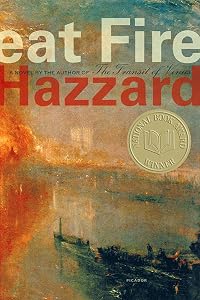
The Great Fire
by Shirley Hazzard
On This Page
Description
In war-torn Asia and stricken Europe, men and women, still young but veterans of harsh experience, must reinvent their lives and expectations, and learn, from their past, to dream again. Some will fulfill their destinies, others will falter. At the center of the story, a brave and brilliant soldier find that survival and worldly achievement are not enough. His counterpart, a young girl living in occupied Japan and tending her dying brother, falls in love, and in the process discovers herself.Tags
Recommendations
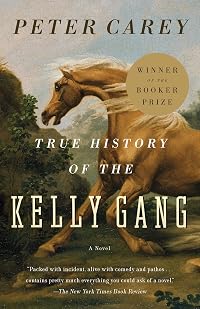
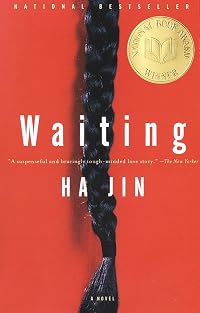
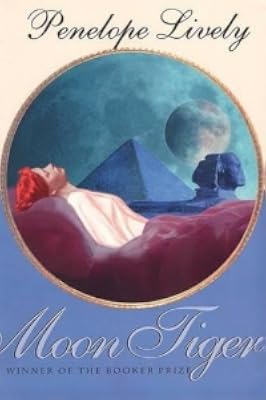
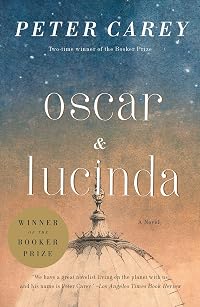



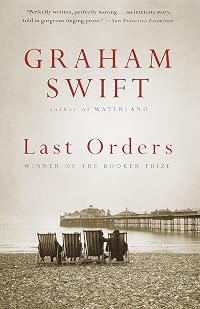
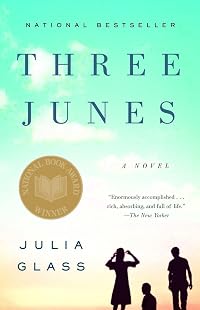

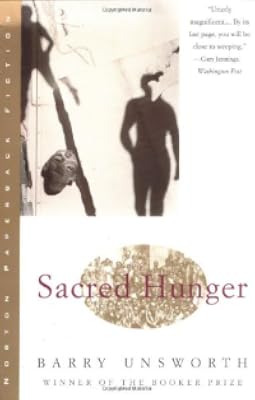
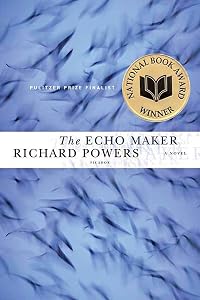
Member Recommendations

Member Reviews
I have read Hazzard’s Great Fire and, sadly, do not share Liam’s enthusiasm. First and foremost, I did not think that either Aldred Leith or Helen Driscoll, the two major characters, was particularly well-drawn or fleshed out. I found the story more about the relationship than about two individuals. In addition, I was surprised that I didn’t find either one of them particularly sympathetic, certainly not as much as, for example, as Peter Exley, a major character whom Hazzard essentially drops entirely when his story seems to get in her way. Her sudden and virtually total dispensation with this character I found inexplicable. Just as startling is her dropping of Ben, another central character for at least the first half of the show more novel. Not only is he essentially dropped, he is disposed of late in the book in a matter of a few quick sentences.
Hazzard spends little time drawing minor characters. Thus, Helen's parents barely register; they occupy one very early scene and then become stick figures, as are virtually all of the minor characters, with a couple noteworthy exceptions. Minor characters can be minor and yet well-drawn, with depth, fullness, and even a modicum of complexity. That simply wasn’t the case with Great Fire.
I thought the last chapters on Leith in England and Helen in NZ were overlong and added little to either the characters or the plot or even to Hazzard’s theme(s). I am also baffled that Hazzard reintroduces a very minor character (Raimonda Mancini) for all of a paragraph. Moreover, the introduction of so many new characters toward the end—Aurora Searle and an entire cast of people in NZ—felt like padding: it was beside the point, unnecessary to the plot or the theme(s), and ultimately more distracting than anything else. These chapters added virtually nothing to the picture we already had of Leith and Helen.
I also found most of the characters to be so self-involved that I honestly had trouble accepting them as real or as sympathetic. Yes, we are all self-involved to a degree. But not so deeply and constantly as the characters here are. Helen also seemed to me to be far too “wise” for her age. Few 18-year-old women talk or think as she does. Hell, few 28-year-olds, for that matter. Why does it bother me? Because, in the end, I found it very challenging to consider her a believable character.
The “tone” of so many conversations also seemed off: most people’s conversations do not wax philosophic all the time. Sometimes, sure. But virtually all the time? Angst, world-weariness, metaphysical speculation are constants here. Moreover, everyone speaks in the same voice: well-spoken, “literate” and not much like “real” people—or maybe I should say not the people I know. (Maybe that should be a lesson to me.) There is virtually no distinguishing one character from another: they all have the same tone, the same literate vocabulary, regardless of background, interests, or position.
All this said, I still think Hazzard tells a (mostly) interesting story and her themes are worthwhile and (mostly) well set out. She is a good writer—though I for one found her stylistic tics (sentences without subjects, sentence fragments) offputting. Having poked around a bit, I recognize that this book is highly regarded, so take my criticisms with a grain (or more) of salt. No doubt others (maybe most) will disagree. But that's my take. show less
Hazzard spends little time drawing minor characters. Thus, Helen's parents barely register; they occupy one very early scene and then become stick figures, as are virtually all of the minor characters, with a couple noteworthy exceptions. Minor characters can be minor and yet well-drawn, with depth, fullness, and even a modicum of complexity. That simply wasn’t the case with Great Fire.
I thought the last chapters on Leith in England and Helen in NZ were overlong and added little to either the characters or the plot or even to Hazzard’s theme(s). I am also baffled that Hazzard reintroduces a very minor character (Raimonda Mancini) for all of a paragraph. Moreover, the introduction of so many new characters toward the end—Aurora Searle and an entire cast of people in NZ—felt like padding: it was beside the point, unnecessary to the plot or the theme(s), and ultimately more distracting than anything else. These chapters added virtually nothing to the picture we already had of Leith and Helen.
I also found most of the characters to be so self-involved that I honestly had trouble accepting them as real or as sympathetic. Yes, we are all self-involved to a degree. But not so deeply and constantly as the characters here are. Helen also seemed to me to be far too “wise” for her age. Few 18-year-old women talk or think as she does. Hell, few 28-year-olds, for that matter. Why does it bother me? Because, in the end, I found it very challenging to consider her a believable character.
The “tone” of so many conversations also seemed off: most people’s conversations do not wax philosophic all the time. Sometimes, sure. But virtually all the time? Angst, world-weariness, metaphysical speculation are constants here. Moreover, everyone speaks in the same voice: well-spoken, “literate” and not much like “real” people—or maybe I should say not the people I know. (Maybe that should be a lesson to me.) There is virtually no distinguishing one character from another: they all have the same tone, the same literate vocabulary, regardless of background, interests, or position.
All this said, I still think Hazzard tells a (mostly) interesting story and her themes are worthwhile and (mostly) well set out. She is a good writer—though I for one found her stylistic tics (sentences without subjects, sentence fragments) offputting. Having poked around a bit, I recognize that this book is highly regarded, so take my criticisms with a grain (or more) of salt. No doubt others (maybe most) will disagree. But that's my take. show less
In this exceptional story, Shirley Hazzard gives us the eternal story of Aldred and Helen, thrown together in the chaotic and threatening aftermath of the Second World War. He's a major in the British Army who re-upped at war's end to study the effects of war on old cultures. She is the daughter of horrid and ambitious parents and has a terminally ill brother to whom she is devoted. She's loyal, erudite, fifteen years Aldred's junior, and falls unalterably in love with him. War's fortunes and the designs of empires unfortunately separate them and put an entire world between them - he is sent back the the U.K., and Helen goes with her family to her father's new posting in New Zealand.
There are several Great Fires here. One is World War show more II itself, and one is specifically the bombing of Hiroshima. Another is Aldred and Helen's love. Ms. Hazzard's prose comes across as reserved and cautionary, but is deeply touched by what we witness. The intellect and the heart are both deep, and deeply affected. Our author inspires awe at our renewed understanding of the power of language.
Our hero Aldred is a very virtuous man. He hides his severe wounds,which are physical as well as emotional. He is aghast in the wake of war and weary in the role of occupier (his superiors assign him to a study of Hiroshima after The Bomb). His friends and colleagues see it, too: one potential rival for Helen's heart gives up the field when he comes to know Aldred better.
Besides a very memorable love story, this is also the story of civilization and hope surviving cataclysm. (Not to spoil anything, but the force of Helen's and Aldred's love will at length not be denied.) Helen's beloved brother dies, and the cataclysm becomes close and personal. Aldred helps people in the U.K. - our author never flinches in her willingness to protray sympathetic characters - minor heroes - of either sex or any age. (The secondary characters would make a very fertile area of study.)
I honor Ms. Hazzard. I recommend this piece in the highest terms possible. Would that she produced fiction more often - I will definitely be taking up her other novels. Wow. show less
There are several Great Fires here. One is World War show more II itself, and one is specifically the bombing of Hiroshima. Another is Aldred and Helen's love. Ms. Hazzard's prose comes across as reserved and cautionary, but is deeply touched by what we witness. The intellect and the heart are both deep, and deeply affected. Our author inspires awe at our renewed understanding of the power of language.
Our hero Aldred is a very virtuous man. He hides his severe wounds,which are physical as well as emotional. He is aghast in the wake of war and weary in the role of occupier (his superiors assign him to a study of Hiroshima after The Bomb). His friends and colleagues see it, too: one potential rival for Helen's heart gives up the field when he comes to know Aldred better.
Besides a very memorable love story, this is also the story of civilization and hope surviving cataclysm. (Not to spoil anything, but the force of Helen's and Aldred's love will at length not be denied.) Helen's beloved brother dies, and the cataclysm becomes close and personal. Aldred helps people in the U.K. - our author never flinches in her willingness to protray sympathetic characters - minor heroes - of either sex or any age. (The secondary characters would make a very fertile area of study.)
I honor Ms. Hazzard. I recommend this piece in the highest terms possible. Would that she produced fiction more often - I will definitely be taking up her other novels. Wow. show less
Although I loved 'Transit of Venus', and still love Hazzard's language, she didn't quite know what to do with herself here. There are more loose ends than a yarn factory, and endless painfully flatlined passages. After awhile, it's hard to pay attention because you know that she's not going to USE these characters, settings, ideas. She's just moving through them, as if she were a passenger on a worldwide train. It has a listless feeling, except where the plot bursts out, (one always feels) against her will.
The Great Fire is a novel set in the aftermath of World War II. Aldred Leith is a thirty-two year old British officer, who is writing a book about the destruction in China and Japan and initial rebuilding efforts. Severely wounded in the European fighting, Leith has recovered sufficiently to spend months traipsing across China and is now entering Japan. There he takes quarters on the grounds of the Driscoll compound and soon befriends the young Driscoll's, Ben and Helen. Intelligent and innocent, the adolescents represent both the culture of the past and the hope for the future.
Despite having been written in 2003, the novel feels like a novel of an earlier time. Frocks, gentlemen callers, and afternoons spent reading poetry make much of show more the action seem disembodied from the setting. Although the bombings of Hiroshima and Nagasaki are alluded to, they are never discussed. The Japanese are servants only, and there is little interaction with them, despite Leith speaking the language. Most of the action centers around the love affair between Leith and Helen, made scandalous by the fifteen year age difference. There was great potential for a book set in this time and place, but the author focuses on the domesticity of a European love story instead. show less
Despite having been written in 2003, the novel feels like a novel of an earlier time. Frocks, gentlemen callers, and afternoons spent reading poetry make much of show more the action seem disembodied from the setting. Although the bombings of Hiroshima and Nagasaki are alluded to, they are never discussed. The Japanese are servants only, and there is little interaction with them, despite Leith speaking the language. Most of the action centers around the love affair between Leith and Helen, made scandalous by the fifteen year age difference. There was great potential for a book set in this time and place, but the author focuses on the domesticity of a European love story instead. show less
In a vague but overwhelming postwar depression studded with images of physical acedia, injury, and disease the characters haltingly seek to escape (to the past or the future?) via very romantic love. This won the National Book Award, and was nominated for my own Stage IV Oy Vey Award, but was too well-written to make the shortlist.
The author writes in sentences that sometimes seem to have holes in them. I first thought that this was some kind of synecdoche, but it isn’t. Her writing is abstract, oblique, and peppered with poetic or odd word choices; adjectives as nouns, etc. She also likes to occasionally give her punctuation a strenuous work-out:
By now, misery would have circulated: the dead would be named, the relatives informed; show more existences derailed.
Near the book's slowly approaching ending, a character comments,
"What a cruel story. Does everyone have a cruel story?”.
They certainly do here, although it sometimes seems as though they both exaggerate and cherish it. I sometimes felt like the family practitioner who dealt with various mental disorders by slapping his patients and saying, Get a hold of yourself, man! show less
The author writes in sentences that sometimes seem to have holes in them. I first thought that this was some kind of synecdoche, but it isn’t. Her writing is abstract, oblique, and peppered with poetic or odd word choices; adjectives as nouns, etc. She also likes to occasionally give her punctuation a strenuous work-out:
By now, misery would have circulated: the dead would be named, the relatives informed; show more existences derailed.
Near the book's slowly approaching ending, a character comments,
"What a cruel story. Does everyone have a cruel story?”.
They certainly do here, although it sometimes seems as though they both exaggerate and cherish it. I sometimes felt like the family practitioner who dealt with various mental disorders by slapping his patients and saying, Get a hold of yourself, man! show less
I am trying not to be over-influenced by the learned voices on the cover lauding this book as a work of genius because I thought it was as dull as ditchwater. I think it’s fiction aimed at people who read books on a higher plane, where realistic dialogue is not required, and indeed nothing needs to happen from one page to the next. One can simply sit back and admire a well turned metaphor.
The post-war Japan setting seemed interesting enough, and I was hoping it would have some educational value, but what we got instead was a lukewarm love story in which a guy takes a fancy to a girl practically half his age (anyone else find that distinctly icky?) despite hardly knowing eachother, and conduct a stiff courtship described by a narrative show more voice reminiscent of the Pathe Newsreel. There was nothing to hook the reader, no handholds, nothing. I really didn’t like it - maybe that makes me a literary philistine, but so be it. show less
The post-war Japan setting seemed interesting enough, and I was hoping it would have some educational value, but what we got instead was a lukewarm love story in which a guy takes a fancy to a girl practically half his age (anyone else find that distinctly icky?) despite hardly knowing eachother, and conduct a stiff courtship described by a narrative show more voice reminiscent of the Pathe Newsreel. There was nothing to hook the reader, no handholds, nothing. I really didn’t like it - maybe that makes me a literary philistine, but so be it. show less
Started off excruciatingly slowly and was very hard to get into. The characters seemed so insubstantial at first, but as time went on Hazzard built them up through inference and action, and I was able to comprehend them as real beings. The book is written in a style more in line with the time it takes place, rather than the early 2000s. Beautiful set pieces, opaque dialogue, elliptical plots in which much takes place off stage, so to speak. The style reminds me somewhat of Elizabeth Bowen or Henry Green.
The pure physicality of place and evocation of sites as separate as the Japanese hills outside Hiroshima, or Hong Kong, or provincial Wellington, or bombed-out postwar London is spectacular. Worth reading for the writing alone, though show more don't expect a plot of much moment. show less
The pure physicality of place and evocation of sites as separate as the Japanese hills outside Hiroshima, or Hong Kong, or provincial Wellington, or bombed-out postwar London is spectacular. Worth reading for the writing alone, though show more don't expect a plot of much moment. show less
Members
- Recently Added By
Published Reviews
ThingScore 100
added by John_Vaughan
What makes The Great Fire such a special novel is the lush and palpable desire present in so many of its pages, desire not just for physical consummation but for human connection and hope, made all the more meaningful by the backdrop of the cruelty and violence of war.
added by Shortride
Except for a very slightly improbable ending, this almost indescribably rich story (which will remind many of Michael Ondaatje’s The English Patient) moves from strength to strength, and no reader will be unmoved by its sorrowing, soaring eloquence.
One of the finest novels ever written about war and its aftermath, and well worth the 23-year wait.
One of the finest novels ever written about war and its aftermath, and well worth the 23-year wait.
added by Richardrobert
Lists

Best Historical Fiction
620 works; 261 members

Booker Prize
491 works; 62 members

Backlisted
109 works; 9 members

International IMPAC Dublin Literary Award
179 works; 6 members

Authors from Australia
9 works; 2 members

Man Booker Prize Longlist 2004
22 works; 2 members

Australian Women's Writing 2003 - 2014
49 works; 3 members

Best Books on London (non-fiction)
43 works; 11 members

A Novel Cure
742 works; 23 members

Art of Reading
188 works; 5 members
Backlisted Podcast
65 works; 2 members

National Book Award - Fiction
78 works; 10 members

Not the NYT list of top 100 21st century books
100 works; 6 members

Australian Women Writers
9 works; 1 member

Retrospective of 20th- and 21st-century literature
154 works; 1 member
Author Information

15+ Works 5,043 Members
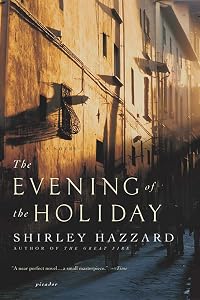
Shirley Hazzard was born in Sydney, Australia on January 30, 1931. Before becoming an author in the early 1960s, she went to work for the British Combined Intelligence Services in Hong Kong, was an employee of the British High Commissioner's Office in Wellington, New Zealand, and was a technical assistant to under-developed countries for the show more United Nations. Her first book, Cliffs of Fall and Other Stories, was published in 1963. Her other books include The Evening of the Holiday, People in Glass Houses, The Bay of Noon, Greene on Capri, Countenance of Truth: The United Nations and the Waldheim Case, Defeat of an Ideal, and The Ancient Shore: Dispatches From Naples written with her husband Francis Steegmuller. She won the National Book Critics Circle Award for fiction in 1980 for The Transit of Venus and the National Book Award for fiction in 2003 for The Great Fire. She died on December 12, 2016 at the age of 85. (Bowker Author Biography) Shirley Hazzard's books include "The Evening of the Holiday", "The Bay of Noon", & "The Transit of Venus" (winner of the 1981 National Book Critics Circle Award for Fiction). (Publisher Provided) show less
Awards and Honors
Awards
Distinctions
Notable Lists
Series
Belongs to Publisher Series
Common Knowledge
- Canonical title
- The Great Fire
- Original publication date
- 2003
- People/Characters
- Aldred Leith; Peter Exley; Helen Driscoll; Benedict Driscoll; Audrey Fellowes; Aurora Searles (show all 7); Rita Xavier
- Important places
- Kure, Japan; Hong Kong; Norfolk, England, UK; USA; Australia
- Important events
- World War II
- Epigraph
- Parce que, j'ai voulu te redire je t'aime
Et que le mot fait mal quand il est dit sans toi.
Louis Aragon - Dedication
- For F.S.
- First words
- Now they were starting.
- Last words
- (Click to show. Warning: May contain spoilers.)But not she, not he; not yet.
- Blurbers
- Norman, Howard; Marler, Regina; McDermott, Alice; Taylor, Charles; Claxton, Eve; Charles, Ron (show all 11); Mallon, Thomas; Didion, Joan; Patchett, Ann; Shreve, Anita; Cunningham, Michael
Classifications
- Genres
- General Fiction, Fiction and Literature, Historical Fiction
- DDC/MDS
- 823.914 — Literature & rhetoric English & Old English literatures English fiction 1900- 1901-1999 1945-1999
- LCC
- PR9619.3 .H369 .G74 — Language and Literature English English Literature English literature: Provincial, local, etc.
- BISAC
Statistics
- Members
- 2,107
- Popularity
- 9,762
- Reviews
- 45
- Rating
- (3.41)
- Languages
- 6 — Dutch, English, French, German, Italian, Portuguese
- Media
- Paper, Audiobook, Ebook
- ISBNs
- 29
- UPCs
- 1
- ASINs
- 9