On This Page
Description
Making use of every possible contemporary source - diaries, memoirs, advice books, government papers, almanacs, even the Register of Patents - Liza Picard presents an enthralling picture of how life in London was really lived in the 1600s: the houses and streets, gardens and parks, cooking, clothes and jewellery, cosmetics, hairdressing, housework, laundry and shopping, medicine and dentistry, sex, education, hobbies, etiquette, law and crime, religion and popular beliefs. 'There is almost show more no aspect of life in Restoration London that is not meticulously described in these 300-odd pages' Jan Morris, Independent show lessTags
Recommendations






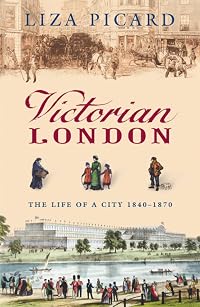

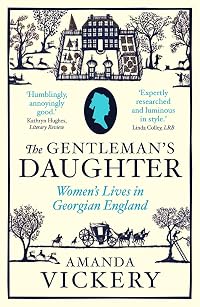
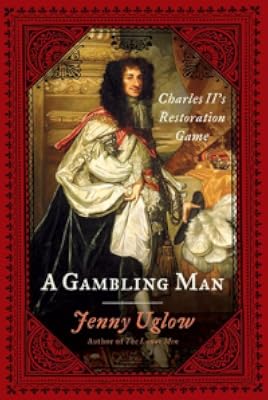
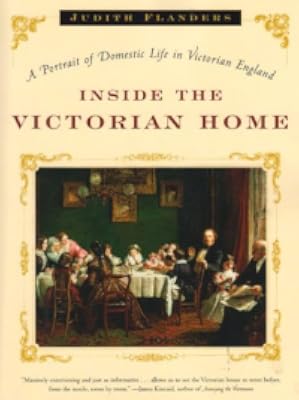
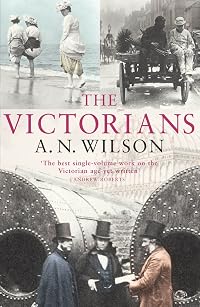
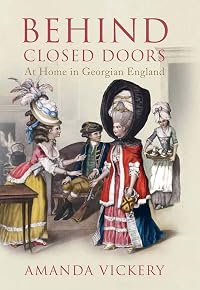

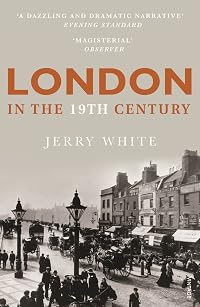
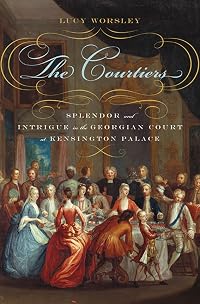






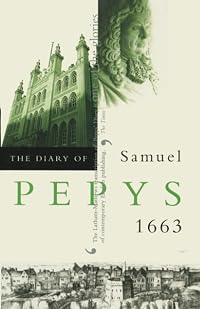

Member Recommendations

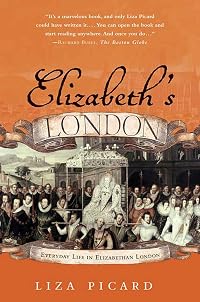
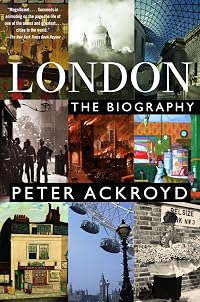
John_Vaughan Liza details the city of the period of the Pepys Diary
The Time Traveller's Guide to Restoration Britain: Life in the age of Samuel Pepys, Isaac Newton and The Great Fire of London by Ian Mortimer
nessreader Both have an empathetic, full sensory try to show how it would have felt to be there.

Member Reviews
What I like about [a:Liza Picard|198645|Liza Picard|http://d.gr-assets.com/authors/1283396668p2/198645.jpg]'s books is that she tells you what is was like to live in the period she was writing about including all the interestesting minutae to do with sex, love and if not rock n roll, then what everyone did for fun. But she does not, as with most historians, include the political minutae of the times. Politics are described with broad strokes and which politician said what and to whom about which war in some far flung outpost of empire is thankfully absent from Picard's histories.
They are particularly wonderful if you are reading novels set in a particular period and you want to know how people lived, what they wore, what they ate, what show more they did with their chamberpots (between the Romans flush toilets and ours, in general the disposal of the contents was a horrible process and there can't have been many places that didn't have an ammoniac and manure-like stench).
History books often describe what the rich and their servants wore and ate, occasionally peasants coming in for the anthropological treatment as well, but rarely the ordinary independent person. And this is where Liza Picard shines, she illuminates the every day lives of people like us, neither beholden to the rich nor scraping a day-to-day existence.
The book can be read cover to cover or dipped reading an interesting chapter here and there. If you enjoy knowing about other cultures and other times, you might well enjoy this. show less
They are particularly wonderful if you are reading novels set in a particular period and you want to know how people lived, what they wore, what they ate, what show more they did with their chamberpots (between the Romans flush toilets and ours, in general the disposal of the contents was a horrible process and there can't have been many places that didn't have an ammoniac and manure-like stench).
History books often describe what the rich and their servants wore and ate, occasionally peasants coming in for the anthropological treatment as well, but rarely the ordinary independent person. And this is where Liza Picard shines, she illuminates the every day lives of people like us, neither beholden to the rich nor scraping a day-to-day existence.
The book can be read cover to cover or dipped reading an interesting chapter here and there. If you enjoy knowing about other cultures and other times, you might well enjoy this. show less
Based almost entirely on primary sources, Picard has written a book that looks at almost every area of day to day life in Restoration London: from medicine to housing and social life to waste disposal, anything that can be gleaned from contemporary accounts has been. I found it completely fascinating. I had never stopped to think how they went about rebuilding London after the Great Fire and the chapter on childbirth really made me shudder.
The only negative comments I can make about the book are the lack of maps and the inclusion of too few drawings or photographs. There are some photographs included but in a book that so often mentions a stately home that's a good example of 17th century architecture or a piece of furniture in the V&A show more museum there really need to be pictures of those items - it's frustrating to put the book down every few pages to try and google something as I ended up doing. I expect this was a publishing decision rather than an authorial one (and probably for cost reasons) but it was frustrating for me as a reader. show less
The only negative comments I can make about the book are the lack of maps and the inclusion of too few drawings or photographs. There are some photographs included but in a book that so often mentions a stately home that's a good example of 17th century architecture or a piece of furniture in the V&A show more museum there really need to be pictures of those items - it's frustrating to put the book down every few pages to try and google something as I ended up doing. I expect this was a publishing decision rather than an authorial one (and probably for cost reasons) but it was frustrating for me as a reader. show less
Picard is always an interesting read. Hers is a history of the bits that happen between the dates learned in history class. Quite a bit of the telling is through the diarist Samuel Pepys. However, it is all tempered with an uncompromising wit and a bit of understanding for feminine views that not all historians would explore. And as Picard says herself, she isn't an historian. This may be exactly why I like her.
Picard is a lawyer turned author and searcher through original sources to note the minutiae of everyday life in London. This particular volume is good but I felt it perhaps falls short of the others which she has written on Georgian and Elizabeth London, which I also have. There's a bit more randomness to this one. Her authorial interpolations are always to the point. Worth buying and reading.
'This is a joy of a book. Its style is both simple and evocative ... it radiates throughout that quality so essential in a good historian: infinite curiosity'
OBSERVER
In 1660, London seethed with a population of 300,000. In Europe only Paris and Constantinople were larger. King Charles II – a lover of women and of good living – was on the throne, and the streets were crowded with velvet-clad noblemen making their way to the reopened theatres. Watermen plied their trade along the River Thames between the Palace of Westminster and the City, and in the newly fashionable St James's Park, Londoners took the air by day and sought other – illicit – pleasures at night.
In her acclaimed book Restoration London: Everyday Life in London, show more 1660–1670, Liza Picard brings the city to life for us – both the public arena and the world behind closed doors. Organised thematically, it presents a marvellous kaleidoscope of the age – from the city's geography to personal grooming methods; education opportunities to rules on etiquette; religious observances to sexual practices. Throughout, Picard illustrates the facts with delightful anecdotes. We journey from the humble two-roomed cottage of Widow Kinrich to the mansions of City Aldermen, hung with wool cloth, or perhaps even with fine damask. We learn what a toothbrush was made of, what underwear was like (and where you dried it) and read advice to city gardeners. And we discover how Samuel Pepys came rushing home from the office because he heard that Lady Sandwich had called. Unfortunately he dashed in to find her in the dining room upon ‘the Pott’. Both rather embarrassed, they attempted to chat in an off-hand manner.
A lawyer by training with a self-confessed passion for ‘primary evidence’, Picard devoted years to examining household accounts, legal records, conduct books, reports from visitors and diplomats, contemporary newssheets, as well as the diaries of John Evelyn and, of course, Pepys. Our edition is filled with paintings and pictures of evocative objects from coins to road maps, and pictorial endpapers show London as it appeared before the Great Fire. As Jenny Uglow writes in a new introduction: ‘With the ebullient, scholarly Liza Picard as your guide, welcome to Restoration London – a world to enjoy.’ show less
OBSERVER
In 1660, London seethed with a population of 300,000. In Europe only Paris and Constantinople were larger. King Charles II – a lover of women and of good living – was on the throne, and the streets were crowded with velvet-clad noblemen making their way to the reopened theatres. Watermen plied their trade along the River Thames between the Palace of Westminster and the City, and in the newly fashionable St James's Park, Londoners took the air by day and sought other – illicit – pleasures at night.
In her acclaimed book Restoration London: Everyday Life in London, show more 1660–1670, Liza Picard brings the city to life for us – both the public arena and the world behind closed doors. Organised thematically, it presents a marvellous kaleidoscope of the age – from the city's geography to personal grooming methods; education opportunities to rules on etiquette; religious observances to sexual practices. Throughout, Picard illustrates the facts with delightful anecdotes. We journey from the humble two-roomed cottage of Widow Kinrich to the mansions of City Aldermen, hung with wool cloth, or perhaps even with fine damask. We learn what a toothbrush was made of, what underwear was like (and where you dried it) and read advice to city gardeners. And we discover how Samuel Pepys came rushing home from the office because he heard that Lady Sandwich had called. Unfortunately he dashed in to find her in the dining room upon ‘the Pott’. Both rather embarrassed, they attempted to chat in an off-hand manner.
A lawyer by training with a self-confessed passion for ‘primary evidence’, Picard devoted years to examining household accounts, legal records, conduct books, reports from visitors and diplomats, contemporary newssheets, as well as the diaries of John Evelyn and, of course, Pepys. Our edition is filled with paintings and pictures of evocative objects from coins to road maps, and pictorial endpapers show London as it appeared before the Great Fire. As Jenny Uglow writes in a new introduction: ‘With the ebullient, scholarly Liza Picard as your guide, welcome to Restoration London – a world to enjoy.’ show less
Essentially a book of facts regarding every day life in London between 1660 and 1670. I was a bit disappointed as the only time London seemed to come alive was when the book quoted from the diary of Samuel Pepys. There is some interesting information in here but I found it mostly a bit flat.
What life was like in London in the 1660s, covering city development, houses, interiors, gardens and open spaces, medicine, clothes and adornment, housework and shopping, food, sex, people, education, hobbies and entertainment, the law, money and class, and religion.
Pretty comprehensive coverage, interesting, and some good illustrations. I would have liked some illustrations in the section on clothing, which I found difficult to visualise from the descriptions.
Pretty comprehensive coverage, interesting, and some good illustrations. I would have liked some illustrations in the section on clothing, which I found difficult to visualise from the descriptions.
Members
- Recently Added By
Published Reviews
ThingScore 100
[H]ow our 17th-century ancestors ate, slept, travelled, worshipped, loved, clothed themselves, tried to keep healthy ... [A] marvellous source-book for historical novelists and film-makers out for authenticity, and a near-perfect bedside book for anyone else.
added by Cynfelyn
Lists

Best Books on London (non-fiction)
43 works; 11 members

Folio Society
831 works; 48 members

A Good Read (Radio 4)
287 works; 1 member
Author Information

6 Works 2,878 Members
Liza Picard was born in 1927. She read law at London School of Economics and was called to the Bar by Gray's Inn, but did not practice. She worked in London for many years in the office of the Solicitor of Inland Revenue until she retired in 1987. She now lives in Oxford.
Series

Common Knowledge
- Canonical title
- Restoration London: Everyday Life in London 1660-1670
- Original publication date
- 1997
- People/Characters
- Charles II, King of England, Scotland, and Ireland; Nell Gwynne; Barbara Palmer, duchess of Cleveland; Samuel Pepys; Elizabeth Pepys
- Important places
- London, England, UK
- Important events
- Great Fire of London (1666); Restoration of the Monarchy
Classifications
- Genres
- History, Nonfiction, General Nonfiction
- DDC/MDS
- 942.1066 — History & geography History of Europe England and Wales London Historical periods; Modified standard subdvisions of London 1603-1714, House of Stuart and Commonwealth periods
- LCC
- DA681 .P53 — History of Europe, Asia, Africa and Oceania Great Britain History of Great Britain England Local history and description London
- BISAC
Statistics
- Members
- 690
- Popularity
- 41,615
- Reviews
- 11
- Rating
- (4.03)
- Languages
- English
- Media
- Paper, Audiobook, Ebook
- ISBNs
- 9
- ASINs
- 6