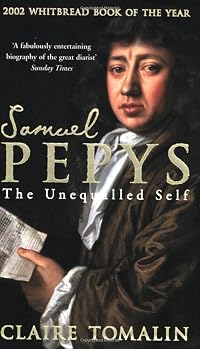
Samuel Pepys: The Unequalled Self
by Claire Tomalin
On This Page
Description
A biography of the master diarist and chronicler of Restoration London draws on the famous diaries, as well as on other sources and period material, to furnish a candid chronicle of the life and times of Samuel Pepys.Tags
Recommendations
























Member Recommendations


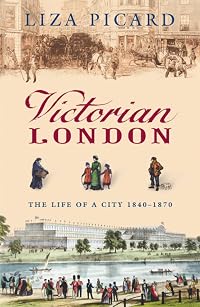
John_Vaughan Liza details the city of the period of the Pepys Diary
31



charl08 Both compelling biographies of 17th C significant innovators in England.
Member Reviews
http://www.livejournal.com/community/bibliophilia/77522.html
This book richly deserves all the praise it has received. I was aware that Pepys was a senior naval civil servant who dabbled in science (he was President of the Royal Society when it published Newton's Principia so his name is on the title page) and famously kept a secret diary. (The Secret Diary of Samuel Pepys, aged 26-35???) But Tomalin makes him really come alive.
The early period, when Pepys witnessed civil war in the streets of London, and truanted from school to watch King Charles I's head being cut off, is superbly depicted, as is the story of how he used distant family connections to climb away from his humble origins (his father was a tailor, his mother a show more laundrywoman). Then we follow him through the uncertain times of Cromwell, a hasty (and ultimately childless) marriage to a fourteen-year-old bride, and then the dramatic year of 1660, when suddenly everything goes right for him; he starts keeping a diary on January 1st and within a few weeks he is chatting to Charles II on the boat bringing him back to England to retake the throne.
For the 1660s, of course, Tomalin is helped by the existence of Pepys' diary. The political stuff is fascinating, and as an aspirant on that career path myself I would make this compulsory reading for all young wannabee statesman. Among other jewels, Pepys is the man who tells the King that the Great Fire of London has broken out in 1666. And he intermingles love, politics, mistresses, religion, illness, friendship into what can rapidly become an addictive combination. The diary lay hidden in plain view in Magdalen College Cambridge for a century and a half after his death before it was decoded; a full version, leaving in all the naughty bits, wasn't published until the 1970s.
The post-1669 story is inevitably a bit flatter, because mostly gained from secondary sources. (Pepys stopped keeping a diary because he was worried that he was losing his sight, though in fact he had no real problems with it in the remaining thirty-four years of his life.) Even so, he gets elected to Parliament, imprisoned in the Tower of London, demolishes the British naval base at Tangier in Morocco, publishes Newton's Principia and rapidly acquires a new permanent lady friend after his wife dies. Tomalin leaves us with a sympathetic but honest portrait of a man who saw his entire world (a world which actually didn't extend very far out of London) change in his lifetime, and left us a unique chronicle of what he thought about it. Strongly recommended, to anyone who likes a good story. show less
This book richly deserves all the praise it has received. I was aware that Pepys was a senior naval civil servant who dabbled in science (he was President of the Royal Society when it published Newton's Principia so his name is on the title page) and famously kept a secret diary. (The Secret Diary of Samuel Pepys, aged 26-35???) But Tomalin makes him really come alive.
The early period, when Pepys witnessed civil war in the streets of London, and truanted from school to watch King Charles I's head being cut off, is superbly depicted, as is the story of how he used distant family connections to climb away from his humble origins (his father was a tailor, his mother a show more laundrywoman). Then we follow him through the uncertain times of Cromwell, a hasty (and ultimately childless) marriage to a fourteen-year-old bride, and then the dramatic year of 1660, when suddenly everything goes right for him; he starts keeping a diary on January 1st and within a few weeks he is chatting to Charles II on the boat bringing him back to England to retake the throne.
For the 1660s, of course, Tomalin is helped by the existence of Pepys' diary. The political stuff is fascinating, and as an aspirant on that career path myself I would make this compulsory reading for all young wannabee statesman. Among other jewels, Pepys is the man who tells the King that the Great Fire of London has broken out in 1666. And he intermingles love, politics, mistresses, religion, illness, friendship into what can rapidly become an addictive combination. The diary lay hidden in plain view in Magdalen College Cambridge for a century and a half after his death before it was decoded; a full version, leaving in all the naughty bits, wasn't published until the 1970s.
The post-1669 story is inevitably a bit flatter, because mostly gained from secondary sources. (Pepys stopped keeping a diary because he was worried that he was losing his sight, though in fact he had no real problems with it in the remaining thirty-four years of his life.) Even so, he gets elected to Parliament, imprisoned in the Tower of London, demolishes the British naval base at Tangier in Morocco, publishes Newton's Principia and rapidly acquires a new permanent lady friend after his wife dies. Tomalin leaves us with a sympathetic but honest portrait of a man who saw his entire world (a world which actually didn't extend very far out of London) change in his lifetime, and left us a unique chronicle of what he thought about it. Strongly recommended, to anyone who likes a good story. show less
Samuel Pepys presents a double-edged sword to his biographers: a wonderful, personal source document to work from that provides a treasure of insights not just into his daily activities but also into his uncensored personal life, at the same time as it leaves little from those years to explore. What can a biographer do but to summarize those key nine years of his life, like a condensed abridged version of what would be better read in full?
Claire Tomalin overcame this obstacle with aplomb. She draws out the diary's themes and expands them into full chapters that move forwards and backwards in time. She adds colour and context from other source material to provide the background to events and people that Samuel knew so well he took no show more time to explain. In this we have the evidence that Samuel did not write for readers beyond himself, and this is the gap that his biographer so ably fills. This biography proved an excellent aid to interpreting the much-abridged version of the diary I chose to read, which I would have found underwhelming otherwise.
A full biography also requires exploring the before-and-after. Here we have a good picture of Pepys' birth, upbringing, education and political leanings prior to the diary. The diary's first entry in 1660 plunges us into the Interregnum's final thrashings at a most uncertain moment, when no one knew what form of government was going to take shape prior to General Monck's march on London. Tomalin explores why this was the diary's starting point, why a diary at all, and what Samuel might have been aiming to accomplish with it. On the other side, nine years later, she explores why it was discontinued and then describes Pepys' life afterwards, which did not lack for additional significant events.
Tomalin maintains objectivity throughout even when Sam doesn't deserve it, particularly when he is philandering with the unwilling and the very young (i.e. sexual abuse, cut and dried). She is not necessarily a proponent of the man, but she is certainly one for the diary: for the multi-faceted insight it provides into the merging between the public face that Pepys presents in all official records and who he was behind closed doors. The diary sees no line between the two, transitioning back and forth at will. Tomalin's thesis is that the result is a unique and significant record, not merely for its period but possibly for all time, and Pepys' greatest legacy, even above the good he did for the British Royal Navy. A biography fantastically well-written, researched and delivered. show less
Claire Tomalin overcame this obstacle with aplomb. She draws out the diary's themes and expands them into full chapters that move forwards and backwards in time. She adds colour and context from other source material to provide the background to events and people that Samuel knew so well he took no show more time to explain. In this we have the evidence that Samuel did not write for readers beyond himself, and this is the gap that his biographer so ably fills. This biography proved an excellent aid to interpreting the much-abridged version of the diary I chose to read, which I would have found underwhelming otherwise.
A full biography also requires exploring the before-and-after. Here we have a good picture of Pepys' birth, upbringing, education and political leanings prior to the diary. The diary's first entry in 1660 plunges us into the Interregnum's final thrashings at a most uncertain moment, when no one knew what form of government was going to take shape prior to General Monck's march on London. Tomalin explores why this was the diary's starting point, why a diary at all, and what Samuel might have been aiming to accomplish with it. On the other side, nine years later, she explores why it was discontinued and then describes Pepys' life afterwards, which did not lack for additional significant events.
Tomalin maintains objectivity throughout even when Sam doesn't deserve it, particularly when he is philandering with the unwilling and the very young (i.e. sexual abuse, cut and dried). She is not necessarily a proponent of the man, but she is certainly one for the diary: for the multi-faceted insight it provides into the merging between the public face that Pepys presents in all official records and who he was behind closed doors. The diary sees no line between the two, transitioning back and forth at will. Tomalin's thesis is that the result is a unique and significant record, not merely for its period but possibly for all time, and Pepys' greatest legacy, even above the good he did for the British Royal Navy. A biography fantastically well-written, researched and delivered. show less
Tomalin makes an excellent case for Pepys as a literary genius, and for the diary's intrinsic worth as literature over and above its value as history. The subtitle "The Unequalled Self" is perfect; the book demonstrates how the diary really is a supremely high-fi transcription of person (complete with blind spots and self-deceptions) to page. The other great charm of this biography is its tenderness for Pepys the man, while not occulting his personal failings (many of which he owned). Although perhaps an affection for the man is a prerequisite to enjoying the diary? In any case, this is what I come to literature for — to feel how it is to be other — and Tomalin groks how Pepys provides this service par excellence to his posthumous show more readers.
Inevitably the best part of this book is the diary years, when Pepys' energetic prose is on tap to supplement Tomalin's narrative. They're also Pepys' salad days, and his vigour is amazing to behold as he tears around London dispatching business and oysters in equal measure. His early life and his long (but not uneventful) post-diary existence seem kinda flat in comparison. But Tomalin is great at contextualising the people, places and events wihch Pepys describes, at setting the stage for the drama of his life. It's an essential companion to the diary and also, with its felicitous use of quotation, a great stand-alone read. show less
Inevitably the best part of this book is the diary years, when Pepys' energetic prose is on tap to supplement Tomalin's narrative. They're also Pepys' salad days, and his vigour is amazing to behold as he tears around London dispatching business and oysters in equal measure. His early life and his long (but not uneventful) post-diary existence seem kinda flat in comparison. But Tomalin is great at contextualising the people, places and events wihch Pepys describes, at setting the stage for the drama of his life. It's an essential companion to the diary and also, with its felicitous use of quotation, a great stand-alone read. show less
Read for the Motley Fool book club; well I say read, but the library only had an audio-book copy on the shelves when I went in. I didn't know before reading this that Samuel Pepys' relatives were right at the centre of the Roundhead faction. Very interesting! I liked the way the book started, with a diary entry about an argument with his wife being used to show how he tells things as they happened, and doesn't twist things to make himself always appear to be in the right. Reading about Pepys wading knee-deep in cloves and nutmeg in the captured Dutch ship reminded me of a book I read last month; "Nathaniel's Nutmeg", a non-fiction account of the struggles between the English and Dutch East Indies companies for control of the spice trade show more earlier in the 17th century.
The diaries give a picture of a complex man, at times romantic and usually loyal but always pragmatic. As a naval administrator he was well-organised, thorough and hard-working and it seems clear that Pepys survived the vagaries of 17th Century political life through being very good at his job. He left such a detailed view of London life, politics and society, that you just can't help being drawn into the 1660s.
Most amusing moment: Mrs Skinner, mother of the woman Pepys has lived with for 30 years, left Pepys a small bequest in her will - just enough gold to make a ring. Obviously a woman who believed in having the last word! show less
The diaries give a picture of a complex man, at times romantic and usually loyal but always pragmatic. As a naval administrator he was well-organised, thorough and hard-working and it seems clear that Pepys survived the vagaries of 17th Century political life through being very good at his job. He left such a detailed view of London life, politics and society, that you just can't help being drawn into the 1660s.
Most amusing moment: Mrs Skinner, mother of the woman Pepys has lived with for 30 years, left Pepys a small bequest in her will - just enough gold to make a ring. Obviously a woman who believed in having the last word! show less
I've read enough fiction and nonfiction about Restoration England to know who Samuel Pepys was, but this biography provided a fuller account of his life and his famous diary than the glimpses I'd had previously. Analysis and overviews of the diary Pepys kept from 1660 to 1669 account for nearly a third of this book, dividing his life into periods before, during, and after he kept the diary so well known today. I found the later period of Pepys' life fascinating, as I hadn't known he was a loyal Jacobite and largely sacrificed his career due to his personal loyalty to James II, and, of course, the story of how the famous diary came to be discovered, transcribed, and published is a tale all its own. This is an excellent read for those show more interested in the Restoration period and is a highly valuable biography for fleshing out the entirety of Samuel Pepys' life. show less
Plague, fire, civil war, treason, the fall of kings: Samuel Pepys experienced them all. His was a life that coincided with one of the most momentous periods of English history and he recorded his experiences in meticulous detail in leather-bound diaries writing every day for nine years.
Such a rich source of original material would be a gift for any biographer but for Claire Tomalin they didn’t go far enough because they tell us nothing of Pepys’ childhood and education or, after the Restoration, his public disgrace and humiliation. Through extensive research and examination of contemporary letters and diaries, Admiralty papers, judicial reports, memoirs and biographies, she seeks to fill in these considerable gaps in Pepys’ show more story.
Tomalin tells the story with panache and energy. Although she has to resort to guess-work and surmise on some occasions, she never stretches credulity too far. Nor, although much of what she writes is necessarily full of facts, she never allows that detail to get in the way of telling a good story. One of the most memorable episodes she tells is of the operation Pepys underwent to remove the bladder stone which had given him excruciating pain for decades. In Tomalin’s imaginative re-creation we experience the same tension Pepys must have felt as he was trussed and bound to the bed and sense every moment of the operation he suffered without the benefit of anaesthetic or numbing alcohol.
Tomalin treats her subject with warmth, enjoying his pleasure in ordinary human activities and admiring his curiousity, his love and support for learning and his intelligence. She acknowledges his egotism, his often bad treatment of the women in his life and his lecherous behaviour but concludes that these never dim his brightness so we ‘rarely lose all sympathy for him. His energy burns off blame.” It’s a credit to Tomalin’s skill that we come to share her enthusiasm for this ‘most ordinary and the most extraordinary’ of men. show less
Such a rich source of original material would be a gift for any biographer but for Claire Tomalin they didn’t go far enough because they tell us nothing of Pepys’ childhood and education or, after the Restoration, his public disgrace and humiliation. Through extensive research and examination of contemporary letters and diaries, Admiralty papers, judicial reports, memoirs and biographies, she seeks to fill in these considerable gaps in Pepys’ show more story.
Tomalin tells the story with panache and energy. Although she has to resort to guess-work and surmise on some occasions, she never stretches credulity too far. Nor, although much of what she writes is necessarily full of facts, she never allows that detail to get in the way of telling a good story. One of the most memorable episodes she tells is of the operation Pepys underwent to remove the bladder stone which had given him excruciating pain for decades. In Tomalin’s imaginative re-creation we experience the same tension Pepys must have felt as he was trussed and bound to the bed and sense every moment of the operation he suffered without the benefit of anaesthetic or numbing alcohol.
Tomalin treats her subject with warmth, enjoying his pleasure in ordinary human activities and admiring his curiousity, his love and support for learning and his intelligence. She acknowledges his egotism, his often bad treatment of the women in his life and his lecherous behaviour but concludes that these never dim his brightness so we ‘rarely lose all sympathy for him. His energy burns off blame.” It’s a credit to Tomalin’s skill that we come to share her enthusiasm for this ‘most ordinary and the most extraordinary’ of men. show less
As Samuel is one of my heroes (a short list of historical figures “who wink at us” – as Walter Isaacson said of Ben Franklin) and owning the Diaries in several formats I was a little cautious in approaching Tomalin’s work. How glad I was that I did, and I devoured it at one sitting, returning to re-read it with equal enjoyment as often as I can (a benefit of growing maturity this!) and it always leads me back to my small collection of Pepys books.
When we lived in London for about seven years my wife and two sons would often explore the city, and often took along one of the ‘complete’ diaries with us and revisited – as one still can – many of naughty Samuel’s favorite flirting, drinking and eating spots.
Claire show more Tomalin’s work evidences her sheer enjoyment of this great and all too human character, who wrote for his own personal enjoyment of his times and significant career in the creation of the British Navy, through England’s own revolution and short Republic and the eventual return of the Monarch that Pepys served so well.
This book is as deeply intelligent and as charming as the subject himself show less
When we lived in London for about seven years my wife and two sons would often explore the city, and often took along one of the ‘complete’ diaries with us and revisited – as one still can – many of naughty Samuel’s favorite flirting, drinking and eating spots.
Claire show more Tomalin’s work evidences her sheer enjoyment of this great and all too human character, who wrote for his own personal enjoyment of his times and significant career in the creation of the British Navy, through England’s own revolution and short Republic and the eventual return of the Monarch that Pepys served so well.
This book is as deeply intelligent and as charming as the subject himself show less
Members
- Recently Added By
Lists

Best Biographies
216 works; 26 members

Best Biographies, Autobiographies and Memoirs
465 works; 160 members

Recommend the 20 best books you've read in the last five years
2,168 works; 607 members

historical biographies : great lives, well told
64 works; 4 members
Club Read's Recommended Nonfiction Written by Women
618 works; 30 members

In Our Time books
4,934 works; 2 members
Author Information

18+ Works 7,514 Members
Some Editions
Awards and Honors
Awards
Common Knowledge
- Canonical title
- Samuel Pepys: The Unequalled Self
- Original title
- Samuel Pepys: The Unequalled Self
- Original publication date
- 2002
- People/Characters
- Samuel Pepys; Charles II, King of England, Scotland, and Ireland; James II and VII, King of England, Ireland, and Scotland
- Important places
- London, England, UK
- Important events
- Great Fire of London
- Epigraph
- The whole book, if you will but look at it in that way, is seen to be a work of art to Pepys's own address. Here, then, we have the key to that remarkable attitude preserved by him throughout his diary, to that unflinching - ... (show all)I had almost said that unintelligent - sincerity which makes it a miracle among human books...Whether he did ill or well, he was still his own unequalled self; still that entrancing ego of whom alone he cared to write. - Robert Louis Stevenson, 'Samuel Pepys'.
Un livre est le produit d'un autre moi que celui que nous manifestons dans nos habitudes, dans la société, dans nos vices. - Marcel Proust, Contre Sainte-Beuve.
[There is] in every one, two men, the wise and the foolish, and... each of them must be allowed his turn. If you would have the wise, the grave, the serious, always to rule and have sway, the fool would grow so peevish and tr... (show all)oublesome, that he would put the wise man out of order, and make him fit for nothing: he must have his times of being let loose to follow his fancies, and play his gambols, if you would have your business go on smoothly. - Anthony Ashley Cooper, Lord Shaftesbury, to John Locke. - First words
- At seven o'clock on a January morning, as the sky over London was growing light, a row broke out in a bedroom between a husband and wife.
- Last words
- (Click to show. Warning: May contain spoilers.)The sun was about to rise in the summer sky.
- Blurbers
- Brown, Craig; Lee, Hermione; Malcolm, Noel; Jardine, Lisa; Souhami, Diana; Hastings, Max (show all 21); Waterhouse, Keith; Heffer, Simon; Griffiths, Joanna; Carey, John; Mount, Ferdinand; Parris, Matthew; Jenkins, Roy; McEwan, Ian; Roberts, Andrew; Hensher, Philip; Hattersley, Roy; Barrow, Colin; Seymour, Miranda; McLynn, Frank; Howard, Anthony
- Original language*
- Anglais
*Some information comes from Common Knowledge in other languages. Click "Edit" for more information.
Classifications
- Genres
- Biography & Memoir, History, Literature Studies and Criticism, General Nonfiction, Nonfiction
- DDC/MDS
- 941.066092 — History & geography History of Europe British Isles Historical periods of British Isles 1603-1714, House of Stuart and Commonwealth periods 1660-1685, Reign of Charles II, Restoration History, geographic treatment, biography Biography
- LCC
- DA447 .P4 .T66 — History of Europe, Asia, Africa and Oceania Great Britain History of Great Britain England History By period Modern, 1485- Later Stuarts
- BISAC
Statistics
- Members
- 1,858
- Popularity
- 11,676
- Reviews
- 33
- Rating
- (4.11)
- Languages
- English, French
- Media
- Paper, Audiobook, Ebook
- ISBNs
- 15
- ASINs
- 11