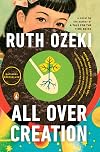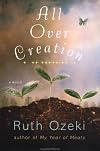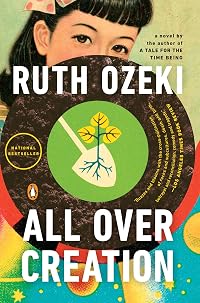
All Over Creation
by Ruth Ozeki
On This Page
Description
A warm and witty saga about agribusiness, environmental activism, and community--from the celebrated author of My Year of Meats and A Tale for the Time Being Yumi Fuller hasn't set foot in her hometown of Liberty Falls, Idaho--heart of the potato-farming industry--since she ran away at age fifteen. Twenty-five years later, the prodigal daughter returns to confront her dying parents, her best friend, and her conflicted past, and finds herself caught up in an altogether new drama. The show more post-millennial farming community has been invaded by Agribusiness forces at war with a posse of activists, the Seeds of Resistance, who travel the country in a camping car, "The Spudnick," biofueled by pilfered McDonald's french-fry oil. Following her widely hailed, award-winning debut novel, My Year of Meats, Ruth Ozeki returns here to deliver a quirky cast of characters and a wickedly humorous appreciation of the foibles of corporate life, globalization, political resistance, youth culture, and aging baby boomers. All Over Creation tells a celebratory tale of the beauty of seeds, roots, and growth--and the capacity for renewal that resides within us all. show lessTags
Recommendations






Member Reviews
Yumi Fuller is summoned home to the family potato farm in rural Idaho she ran away from as a teenager when their neighbour, her childhood friend Cass, decides that it’s about time Yumi took some responsibility for her dying parents. But what was intended as a short visit to say goodbye and arrange final care turns into something rather more when it all gets mixed up with the struggle against big biotech and GMOs.
Ozeki plays around with ideas about seeds, fertility, Luther Burbank, and the history of the potato, to create a complex and often very funny narrative about our collective reluctance to take individual responsibility for anything important. Nothing very earth-shattering, but probably enough to make you look at potatoes more show more carefully for a little while, at least. show less
Ozeki plays around with ideas about seeds, fertility, Luther Burbank, and the history of the potato, to create a complex and often very funny narrative about our collective reluctance to take individual responsibility for anything important. Nothing very earth-shattering, but probably enough to make you look at potatoes more show more carefully for a little while, at least. show less
Ozeki knows how to tell a story, a collection of plots that are rich and complex and embedded in places and times from her characters past and present. I seldom read fiction longer than 300 pages, but the extra hundred in 'All Over Creation' were no burden at all.
A novel that revolves around sex, potato farming, senility, hippies, and genetic engineering is attention-grabbing, if nothing else. In the confident, assured hands of Ruth Ozeki, the result is a novel that preaches without seeming preachy and is as readable as it is intellectually challenging.
The novel opens in the small town of Liberty Falls, Idaho, where potato pro and patriarch Lloyd Fuller is becoming increasing immobile while his wife Momoko is increasingly stricken with dementia. Their only daughter, Yumi, ran away at 15 and has been bouncing unpredictably around the country, leaving the Fullers in the hands of Yumi's childhood friend Cass. But Lloyd's impending death brings Yumi -- and a host of other problems, related and show more unrelated -- to the town, crashing together in a tale that is as moving as it is farcical.
Despite dealing with content that ranges all over the map, from the specificities of potato agriculture to the ethics of science, Ozeki never lets things stray too far from the story, and making it an unabashedly plot-driven narrative is a great move, even if the book wants to be a novel of ideas. She manages this through an obvious but well implemented set of metaphors -- Yumi, for instance, as the "bad seed" -- that tie the strands of the novel together well. This becomes increasingly useful as the Seeds of Resistance, a radical group opposed to genetic modification, become embroiled in both the politics and emotions of the characters.
It is the sketching of these characters, however, that is what drives the novel. The ever-frustrated Cass is maintained by Ozeki as a relatively even-keeled character, which lets the eccentricities of the Fuller family come to the fore. Even the Seeds, drawn at first as caricatures, become round, meaningful characters, and when a shocking tragedy strikes near the novel's end, it feels both utterly random but also horribly affecting. In the end, it is Ozeki's ability to show some degree of sympathy for her characters that makes the novel such a pleasure to read.
While All Over Creation may not necessarily convince you to join the fight against genetic modification, it will almost certainly sink its claws into you and hold on tight. With a complex plot and an involved ideology, the novel establishes Ozeki as one of the most talented "idea novelists" in recent memory. show less
The novel opens in the small town of Liberty Falls, Idaho, where potato pro and patriarch Lloyd Fuller is becoming increasing immobile while his wife Momoko is increasingly stricken with dementia. Their only daughter, Yumi, ran away at 15 and has been bouncing unpredictably around the country, leaving the Fullers in the hands of Yumi's childhood friend Cass. But Lloyd's impending death brings Yumi -- and a host of other problems, related and show more unrelated -- to the town, crashing together in a tale that is as moving as it is farcical.
Despite dealing with content that ranges all over the map, from the specificities of potato agriculture to the ethics of science, Ozeki never lets things stray too far from the story, and making it an unabashedly plot-driven narrative is a great move, even if the book wants to be a novel of ideas. She manages this through an obvious but well implemented set of metaphors -- Yumi, for instance, as the "bad seed" -- that tie the strands of the novel together well. This becomes increasingly useful as the Seeds of Resistance, a radical group opposed to genetic modification, become embroiled in both the politics and emotions of the characters.
It is the sketching of these characters, however, that is what drives the novel. The ever-frustrated Cass is maintained by Ozeki as a relatively even-keeled character, which lets the eccentricities of the Fuller family come to the fore. Even the Seeds, drawn at first as caricatures, become round, meaningful characters, and when a shocking tragedy strikes near the novel's end, it feels both utterly random but also horribly affecting. In the end, it is Ozeki's ability to show some degree of sympathy for her characters that makes the novel such a pleasure to read.
While All Over Creation may not necessarily convince you to join the fight against genetic modification, it will almost certainly sink its claws into you and hold on tight. With a complex plot and an involved ideology, the novel establishes Ozeki as one of the most talented "idea novelists" in recent memory. show less
This novel is about a potato farming family in Idaho, their wayward daughter who returns home when her parents' health fails, and an environmental activist group who works with them to battle GMOs. There are a lot of story lines that all merge, some are better than others. I didn't really care for the activists; they seemed like flat characters and a bit cartoonish. The best story line was the daughter and her former affair, but the problem is that both of them are colossal assholes so I never felt like there was anyone to root for except the neighbor lady who steps in constantly as a do-gooder but really is just enabling very bad behavior. This book was long and I'm not sure why I kept reading it since I felt most of the characters show more were self-centered and unlikable. Not Ozeki's best. show less
"When you're seven years old, you think you know everything. When you're 14, you're certain you do. When you're pushing 40, if you're honest with yourself, you realize that your omniscience is wearing thin."
Yummy Fuller has these sobering thoughts as she watches her daughter, who is 6, and her son, 14, play at their grandparents' farm in Liberty Falls, Idaho. It is late 1998. Yummy is restless and a little sad. She is 39, and omniscience is a thing of the past.
In 1974, when she was 14, Yummy slept with her ninth-grade teacher. When her pious father, Lloyd, found out, she ran away. She managed to survive, but her life has been tumultuous. She now lives in Hawaii, working two jobs to support her three children by three different show more men.
Childhood friend Cass Quinn has tracked her down and called her back to Idaho. Lloyd's heart is failing and Yummy's mother, Momoko (Lloyd's Japanese war bride), has Alzheimer's disease. They need help, and their only child has no choice but to come home. Yummy has not seen or talked to her parents in nearly 25 years.
The return of this prodigal daughter is the core of Ruth Ozeki's new novel, a sprawling, good-hearted story about friendship, family discord, reconciliation and the slow, creative process of social change. It's the kind of book that invites comparison. Ozeki's characters have been likened to those of Anne Tyler, and her novel's spirit to that of Ed Abbey's The Monkey Wrench Gang.
There are lots of characters, including strong women and children with nicknames like Poo and Puddle, and several minor stories play themselves out within the larger tale. Cass, for example, longs for a child, but she and her husband are unable to conceive.
And then there's the Seeds of Resistance, a band of young environmental activists who travel around the country staging protests against genetic engineering and other sins of biotechnology.
The Seeds show up at the farm because they're curious about a natural seed business that Lloyd and Momoko run, and they settle in to cook organic meals and help care for Lloyd. Before long, both their cause and their company are part of the Fullers' lives.
They grow especially close to Lloyd, who, along with Momoko, was one of my favorite characters. They are old and failing but are not to be pitied; they are not cloyingly cute, although Momoko sometimes comes close.
Lloyd's solidarity with the Seeds gives him a symbolic strength that is a worthy finale to his long life.
Other characters aren't always so easy to believe. The Seeds seem more like a band of 1960s hippies than the modern radicals they're supposed to be. And in a lamentable move, Ozeki brings back the teacher who had sex with the adolescent Yummy. He now does public relations work for a biotech firm; and what's more, Yummy is still smitten with him, which makes it difficult to feel any sympathy for her at all.
But the book's pleasures are potent enough to make you want to forgive its weaknesses. Like Ozeki's first novel, My Year of Meats, it places a serious subject (humankind's urge to control nature) in the hands of likable people who, despite their flaws, are the best messengers of all. show less
Yummy Fuller has these sobering thoughts as she watches her daughter, who is 6, and her son, 14, play at their grandparents' farm in Liberty Falls, Idaho. It is late 1998. Yummy is restless and a little sad. She is 39, and omniscience is a thing of the past.
In 1974, when she was 14, Yummy slept with her ninth-grade teacher. When her pious father, Lloyd, found out, she ran away. She managed to survive, but her life has been tumultuous. She now lives in Hawaii, working two jobs to support her three children by three different show more men.
Childhood friend Cass Quinn has tracked her down and called her back to Idaho. Lloyd's heart is failing and Yummy's mother, Momoko (Lloyd's Japanese war bride), has Alzheimer's disease. They need help, and their only child has no choice but to come home. Yummy has not seen or talked to her parents in nearly 25 years.
The return of this prodigal daughter is the core of Ruth Ozeki's new novel, a sprawling, good-hearted story about friendship, family discord, reconciliation and the slow, creative process of social change. It's the kind of book that invites comparison. Ozeki's characters have been likened to those of Anne Tyler, and her novel's spirit to that of Ed Abbey's The Monkey Wrench Gang.
There are lots of characters, including strong women and children with nicknames like Poo and Puddle, and several minor stories play themselves out within the larger tale. Cass, for example, longs for a child, but she and her husband are unable to conceive.
And then there's the Seeds of Resistance, a band of young environmental activists who travel around the country staging protests against genetic engineering and other sins of biotechnology.
The Seeds show up at the farm because they're curious about a natural seed business that Lloyd and Momoko run, and they settle in to cook organic meals and help care for Lloyd. Before long, both their cause and their company are part of the Fullers' lives.
They grow especially close to Lloyd, who, along with Momoko, was one of my favorite characters. They are old and failing but are not to be pitied; they are not cloyingly cute, although Momoko sometimes comes close.
Lloyd's solidarity with the Seeds gives him a symbolic strength that is a worthy finale to his long life.
Other characters aren't always so easy to believe. The Seeds seem more like a band of 1960s hippies than the modern radicals they're supposed to be. And in a lamentable move, Ozeki brings back the teacher who had sex with the adolescent Yummy. He now does public relations work for a biotech firm; and what's more, Yummy is still smitten with him, which makes it difficult to feel any sympathy for her at all.
But the book's pleasures are potent enough to make you want to forgive its weaknesses. Like Ozeki's first novel, My Year of Meats, it places a serious subject (humankind's urge to control nature) in the hands of likable people who, despite their flaws, are the best messengers of all. show less
“Lloyd’s home, Mom.” I fingered the straggling ends of my mother’s hair. And your daughter is having a nervous breakdown. And there’s a caravan of hippies camping out behind the barn. Oh, and you’re a prophet of the Revolution.”
All Over Creation is probably Ruth Ozeki's weakest book to date, and yet, I devoured it in just one hung-over weekend.
I'm not going to say much about the plot other than that it is the story of a family who split apart over a matter of principle and who are slowly coming to terms with each other, life, illness, death, and all the things around them.
Whilst Ozeki's writing is for the most part wonderful, I felt that All Over Creation was trying too hard to accomplish two things:
1. home in on the show more environmental message of the book; and
2. dwell on scenes and descriptions for dramatic effect.
The book did not need to do this and there were a few scenes where I felt that less would have been more - especially at the end.
However, I was moved and engaged, and it made me laugh and provided all "the feelz", and I will not hold the over-kill of emotional writing on a handful of scenes against the rest of a book that clearly engages a more intellectual appreciation for the way Ozeki formed her characters and gave them voices that are so real that I had no trouble imagining them.
As spaced out as my introductory quote sounds, there is much more to the book than the family saga and in a way there are two parallel stories - one about the family and one about the family business (selling plant seeds) - and sometimes it is not clear if the story is about the family or the seeds, and this metaphorical conundrum is where Ozeki's craft shows:
“But they’re ours. We have to keep them safe!” She shook her head. “No. Keeping is not safe. Keeping is danger. Only safe way is letting go. Giving everything away. Freely. Freely.” show less
All Over Creation is probably Ruth Ozeki's weakest book to date, and yet, I devoured it in just one hung-over weekend.
I'm not going to say much about the plot other than that it is the story of a family who split apart over a matter of principle and who are slowly coming to terms with each other, life, illness, death, and all the things around them.
Whilst Ozeki's writing is for the most part wonderful, I felt that All Over Creation was trying too hard to accomplish two things:
1. home in on the show more environmental message of the book; and
2. dwell on scenes and descriptions for dramatic effect.
The book did not need to do this and there were a few scenes where I felt that less would have been more - especially at the end.
However, I was moved and engaged, and it made me laugh and provided all "the feelz", and I will not hold the over-kill of emotional writing on a handful of scenes against the rest of a book that clearly engages a more intellectual appreciation for the way Ozeki formed her characters and gave them voices that are so real that I had no trouble imagining them.
As spaced out as my introductory quote sounds, there is much more to the book than the family saga and in a way there are two parallel stories - one about the family and one about the family business (selling plant seeds) - and sometimes it is not clear if the story is about the family or the seeds, and this metaphorical conundrum is where Ozeki's craft shows:
“But they’re ours. We have to keep them safe!” She shook her head. “No. Keeping is not safe. Keeping is danger. Only safe way is letting go. Giving everything away. Freely. Freely.” show less
What a zany delightful book. Full of quirky characters that you either love or hate and are either heroes or villains. At the same time it has useful information about plants, organic foods, and modern farming. Overall this is a very realistic picture of the beginnings of the slow food movement and at the same time very sympathetic to the plight of the modern farmer. the writing style is very smooth, and the characterizations are realistic and draw you into the life of this very extended family. I really liked this book and think of it as a companion to the non-fiction works by Barbara Kingsolver and Michael Pollen on the same subject.
Members
- Recently Added By
Author Information

10+ Works 10,341 Members
Ruth Ozeki received degrees in English literature and Asian studies from Smith College. She is a novelist, filmmaker, and Zen Buddhist priest. Her first novel, My Year of Meats, was published in 1998. Her other novels include All Over Creation and A Tale for the Time-Being, which was shortlisted for the Man Booker Prize. Her documentary and show more dramatic independent films, including Body of Correspondence and Halving the Bones, have been shown on PBS and at the Sundance Film Festival. (Bowker Author Biography) show less
Some Editions
Awards and Honors
Awards
Distinctions
Notable Lists
Work Relationships
Is contained in
Common Knowledge
- Original publication date
- 2003-03-10
- People/Characters*
- Yumi Fuller; Cass Quinn; Loyd Fuller; Momoko; Phoenix; Ocean
- Important places
- Idaho, USA; Liberty Falls, Idaho, USA
- Dedication
- For my father, who was always kind
- First words
- It starts with the earth. How can it not?
- Last words
- (Click to show. Warning: May contain spoilers.)"That's right," Cass said, gently prying the picture away from her and replacing it with a pacifier. "Daddy's going to save the world."
- Blurbers
- Sharp, Paula; Tsukiyama, Gail; Kingsolver, Barbara; Pollan, Michael
*Some information comes from Common Knowledge in other languages. Click "Edit" for more information.
Classifications
Statistics
- Members
- 953
- Popularity
- 27,960
- Reviews
- 31
- Rating
- (3.83)
- Languages
- Dutch, English, Hebrew
- Media
- Paper, Audiobook, Ebook
- ISBNs
- 27
- ASINs
- 4