On This Page
Description
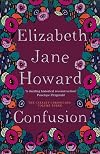
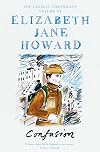
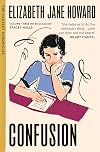
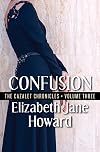
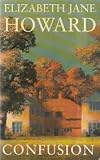
World War II casts a long shadow over the lives of a British family in the third volume of Elizabeth Jane Howard's Cazalet Chronicles, a family saga perfect for fans of Downton Abbey In March 1942, as the world reels in the aftermath of Pearl Harbor, the Cazalets are dealt another tragic blow. Eldest son Hugh's wife, Sybil, has just died. Determined to make a future away from memories of the past, Sybil's daughter, Polly, and Polly's cousin Clary, leave the security of Home Place, their show more Sussex summer estate. But in London, their close relationship is put to the test when they fall in love with the same man. Meanwhile, nineteen-year-old Louise, middle son Edward's eldest daughter, marries older, sought-after bachelor Michael Hadleigh, but life with the charming naval officer isn't what the young bride expects. And Zoe, youngest son Rupert's second wife, despairs of her MIA husband ever returning from war-even as she's drawn into an affair with a divorced American airman and photographer. The turbulence of their own lives mirroring the unrest throughout the world, the Cazalets will be faced with a looming question when Confusion concludes on VE Day in May 1945: Will the end of war bring peace and happiness to their family? show lessTags
Recommendations


















Member Reviews
https://fromtheheartofeurope.eu/confusion-by-elizabeth-jane-howard/
Third in Elizabeth Jane Howard’s brilliant family saga of the Cazalets, set during the Second World War, with the young and middle-aged women who are the central characters falling in love and having plenty of (off-stage) sex, not always with the right people or the same people. I almost feel that we had 900 pages of set-up in the first two volumes, which then explodes into lots and lots of plot here, which is maybe a little unfair as the first two were hardly without incident. Howard’s own gruesome first marriage (to Peter Scott) is unsparingly mined for material, with two particularly memorable passages involving very small babies.
Along with the turbulent love show more lives of the various viewpoint figures, there are some gems of observation about women’s roles in the society of 1940s England, and a quietly devastating subplot about the Holocaust and the uncovering of the concentration camps. Howard is tremendous at showing a society on the verge of tremendous change – mostly of course from the viewpoint of the privileged, but you write about what you know. And again there is an unlooked-for twist at the end which has my appetite whetted for the fourth volume.
This is not a fast-paced series, but I’m hugely enjoying it. show less
Third in Elizabeth Jane Howard’s brilliant family saga of the Cazalets, set during the Second World War, with the young and middle-aged women who are the central characters falling in love and having plenty of (off-stage) sex, not always with the right people or the same people. I almost feel that we had 900 pages of set-up in the first two volumes, which then explodes into lots and lots of plot here, which is maybe a little unfair as the first two were hardly without incident. Howard’s own gruesome first marriage (to Peter Scott) is unsparingly mined for material, with two particularly memorable passages involving very small babies.
Along with the turbulent love show more lives of the various viewpoint figures, there are some gems of observation about women’s roles in the society of 1940s England, and a quietly devastating subplot about the Holocaust and the uncovering of the concentration camps. Howard is tremendous at showing a society on the verge of tremendous change – mostly of course from the viewpoint of the privileged, but you write about what you know. And again there is an unlooked-for twist at the end which has my appetite whetted for the fourth volume.
This is not a fast-paced series, but I’m hugely enjoying it. show less
The war drags on . . . and on and on. What Howard conveys, better than anyone else ever has to me, is how the war affected childhood and adolescence over the long haul. I've read plenty of books about the war with children and young adults in them but never one that stays quite this focussed, quite this thoroughly. The three cousins, Polly, Louise, and Clary even speculate at some point how it might have been different for them or how it might not have been growing up in the midst of this. The biggest difference, for this family, anyway, was how the war keeps them together, at Home Place, where it was safe and there was room for everyone. For some this delays events, for others it is life-saving. The girls are not just expected to be show more ornamental and find husbands, either, they learn to do practical things and look after themselves (more or less). With the war everything is hard work, decisions are hard to make, some couples spend too much time apart and get themselves into various forms of trouble or unhappiness. . . Confusion is the right name for this volume! Couldn't put it down! show less
The third installment of the Cazalet Chronicles takes us from 1942 through to VE Day, with the various members of the sprawling Cazalet family and friends dealing with the war and having, frankly, an awful lot of affairs. That does get a bit much, and Elizabeth Jane Howard's fondness for dropping the reader into a new POV with no names to indicate which characters you're reading about, sometimes for several pages, was also a bit irritating. But set alongside this are Howard's abilities to really capture a character and their complexity on the page. I might not like Louise overly much as a person, but I absolutely believe in Howard's portrait of her, her complex and confused emotions towards marriage, love, and motherhood.
I keep trying to come up with an elevator pitch way to describe this series but I always fall short. "It's about an upper crust-ish English family before, during, and after WWII" is technically accurate but doesn't quite cover it. "Like Downton Abbey but...better?" also isn't quite right although I think technically accurate. "Coming of age series" comes closer. I finally realized that the other piece of storytelling I have felt this way about is Mad Men and for the same reason: it's mostly just a series of great characters living in a time not far from our own (but far enough to feel very different), living their lives, making their mistakes, having their heartbreaks, feeling their feelings. Nothing all that thrilling happens and yet show more you are so invested. It's a perfect slice of life because the emotional lives of the characters are so well realized. I truly cannot recommend this series enough, even if I still don't have a few sentences that might convince someone to read it. show less
(55) I am continuing to read The Cazalet Chronicles back to back such that I cannot really say where one leaves off and the other begins. This one encompasses the years of WW2. They have had no word of Rupert for these long years. Polly, Clary, and Louise continue to be the main characters and in addition Zoe seems to be coming in to her own as well. We hear less from Rachel and almost nothing from the young boys. Their voices are replaced by Archie, a friend of Rupert's who has come into their lives and has almost become a substitute father, uncle, brother.
One of the major plot points is Louise's marriage to momma's boy Michael Hadleigh - her plight is depicted remarkably and so far I think the most literarily successful of the show more storylines. His mother, Zee, creepy. The scene where she and Louise go for a walk in the winter woods was chilling in more ways than one. Talk about a mother-in-law from hell.
Anyway, this is just sooo addicting. As I have said before it is like 'Downton Abbey' on steroids and no self-respecting Anglophile lit lover should be able to resist this series. I am so glad I discovered it through LibraryThing and I will begin reading the next one as soon as possible. Star off only because I recognize less literary gravitas and more 'just' a family drama. Though . . I don't know . . . the ending of this one suggests profound moral dilemmas to come. . . show less
One of the major plot points is Louise's marriage to momma's boy Michael Hadleigh - her plight is depicted remarkably and so far I think the most literarily successful of the show more storylines. His mother, Zee, creepy. The scene where she and Louise go for a walk in the winter woods was chilling in more ways than one. Talk about a mother-in-law from hell.
Anyway, this is just sooo addicting. As I have said before it is like 'Downton Abbey' on steroids and no self-respecting Anglophile lit lover should be able to resist this series. I am so glad I discovered it through LibraryThing and I will begin reading the next one as soon as possible. Star off only because I recognize less literary gravitas and more 'just' a family drama. Though . . I don't know . . . the ending of this one suggests profound moral dilemmas to come. . . show less
I'm still enjoying The Cazalet Chronicles ... but Book 3 Confusion shows signs of an emerging soap opera, and the setting is not quite as well realised as in the first two in the series.
The novel is structured into three years — 1942, 1943 and 1944-5, concluding with the end of the war. Again the three girls, Polly, Clary and Louise, carry most of the narrative with insert chapters to bring the reader up to speed about the rest of the family's doings. But whereas in Book 2, Marking Time, this technique this enabled the reader to hear about events from the girls' private perceptions that they would not express to their families or each other, here in Book 2 where they are young adults living in London, the overall preoccupation with show more love, relationships, affairs and betrayals tends to swamp the reality of a long war. It also sidelines the impact on the working classes, admittedly confined to the staff at Home Place in Books 1 & 2, but they barely rate a mention in Confusion, apart from the nanny for Louise's baby. Miss Milliment has almost disappeared out of the novel, and I missed her.
That is not to say that this perspective is not important. As we saw during the pandemic, young people in this age group had a different experience to adults, and were troubled by different aspects of it. As Donna Coates shows in Shooting Blanks at the Anzac Legend, we have moved on from war fiction solely from the male perspective. Elizabeth Jane Howard — long before the rise of the ubiquitous YA novel — was exploring the impact of war on young people in their late teens. On the verge of adulthood that began legally in those days at 21, they are not quite admitted to adult society, and are still ignorant about some things that are kept from them. But (cushioned financially to some extent with inheritances and parental support) they are coping with the reality of keeping a household and living without adult supervision.
Perhaps the overall intent was to show that as the dangers of the Blitz receded and the war moved offshore, the girls' preoccupations went elsewhere. Adults still listen to the wireless every day (and the war went very badly until Stalingrad in February 1943 when the Soviets destroyed two entire German armies, a defeat from which they never recovered) but the girls are tired of the war, and they feel cheated of what their lives should have been like. There is anxiety about the people they know who are serving, and Clary writes a covert journal for her father missing in action and now presumed dead by everyone except by her. But the girls aren't anxious about getting killed or hurt themselves, not until the V1s and V2s start flying over later in the war, in June 1944.
TO read the rest of my review please visit https://anzlitlovers.com/2024/11/01/confusion-1993-the-cazalet-chronicles-3-by-e... show less
The novel is structured into three years — 1942, 1943 and 1944-5, concluding with the end of the war. Again the three girls, Polly, Clary and Louise, carry most of the narrative with insert chapters to bring the reader up to speed about the rest of the family's doings. But whereas in Book 2, Marking Time, this technique this enabled the reader to hear about events from the girls' private perceptions that they would not express to their families or each other, here in Book 2 where they are young adults living in London, the overall preoccupation with show more love, relationships, affairs and betrayals tends to swamp the reality of a long war. It also sidelines the impact on the working classes, admittedly confined to the staff at Home Place in Books 1 & 2, but they barely rate a mention in Confusion, apart from the nanny for Louise's baby. Miss Milliment has almost disappeared out of the novel, and I missed her.
That is not to say that this perspective is not important. As we saw during the pandemic, young people in this age group had a different experience to adults, and were troubled by different aspects of it. As Donna Coates shows in Shooting Blanks at the Anzac Legend, we have moved on from war fiction solely from the male perspective. Elizabeth Jane Howard — long before the rise of the ubiquitous YA novel — was exploring the impact of war on young people in their late teens. On the verge of adulthood that began legally in those days at 21, they are not quite admitted to adult society, and are still ignorant about some things that are kept from them. But (cushioned financially to some extent with inheritances and parental support) they are coping with the reality of keeping a household and living without adult supervision.
Perhaps the overall intent was to show that as the dangers of the Blitz receded and the war moved offshore, the girls' preoccupations went elsewhere. Adults still listen to the wireless every day (and the war went very badly until Stalingrad in February 1943 when the Soviets destroyed two entire German armies, a defeat from which they never recovered) but the girls are tired of the war, and they feel cheated of what their lives should have been like. There is anxiety about the people they know who are serving, and Clary writes a covert journal for her father missing in action and now presumed dead by everyone except by her. But the girls aren't anxious about getting killed or hurt themselves, not until the V1s and V2s start flying over later in the war, in June 1944.
TO read the rest of my review please visit https://anzlitlovers.com/2024/11/01/confusion-1993-the-cazalet-chronicles-3-by-e... show less
In 1942, the Cazalet family mourns one of their own, an emotional event in no way lessened by foreshadowing in the previous book. And of course the war continues to shape their lives as well. The story unfolds over the next three years mostly through the eyes of Louise, Polly, and Clary, the eldest child of each family, as they become young adults and hope to find their purpose. Their parents have their own issues, from marital infidelities at home to uncertainty about those at the front. As England celebrates VE Day, Elizabeth Jane Howard continues spinning a long story arc. While some threads are neatly tied up in this novel, some remain unresolved and new plot developments have whet my appetite for the next book.
Members
- Recently Added By
Lists

Best family sagas
244 works; 34 members

Books Read in 2025
4,128 works; 98 members
Author Information

46+ Works 6,643 Members
Elizabeth Jane Howard was born in London, England on March 26, 1923. She was educated by governesses at home. Her first novel, The Beautiful Visit, was published in 1950 and won the John Llewellyn Rhys prize. Her other works include the series the Cazalet Chronicles, Falling, and the autobiography Slipstream. The first two novels of the Cazalet show more Chronicles, The Light Years and Marking Time, became the BBC TV series The Cazalets in 2001. The other books in the series are Confusion, Casting Off, and All Change. She also edited several anthologies and wrote short stories, articles, television plays, film scripts and a book on food with Fay Maschler. She was made a CBE in 2000. She died on January 2, 2014 at the age of 90. (Bowker Author Biography) show less
Some Editions
Series

Belongs to Publisher Series
Le strade [Fazi] (294)
Gallimard, Folio (7209)
Work Relationships
Common Knowledge
- Canonical title
- Confusion
- Original title
- Confusion
- Original publication date
- 1993
- People/Characters*
- Hugh Cazalet; Edward Cazalet; Viola "Villy" Cazalet; Zoe Cazalet; Polly Cazalet; Louise Cazalet (show all 24); Clarissa "Clary" Cazalet; Rachel Cazalet; William Cazalet (Il Generale); Kitty Cazalet (La Duchessa); Neville Cazalet; Lydia Cazalet; Raymond Castle; Jessica Castle; Angela Castle; Christopher Castle; Margot Sidney (Sid); Mrs. Cripps; Tonbridge; Archie Lestrange; Michael Hadleigh; Hugo Wentworth; Richard Holt; Nora Castle
- Important places
- London, England, UK; Sussex, England, UK
- Important events
- World War II
- Related movies
- The Cazalets (2001 | IMDb)
- Dedication
- For my brothers, Robin and Colin Howard
- First words
- The room had been shut up for a week; the calico blind over the window that faced south over the front garden had been pulled down; a parchment coloured light suffused the cold stuffy air.
- Last words
- (Click to show. Warning: May contain spoilers.)Somehow, he thought, I must find it in me to make a start.
- Blurbers
- Bedford, Sybille; Bayley, John
- Original language*
- Inglese
*Some information comes from Common Knowledge in other languages. Click "Edit" for more information.
Classifications
Statistics
- Members
- 834
- Popularity
- 32,994
- Reviews
- 27
- Rating
- (4.06)
- Languages
- 8 — Danish, Dutch, English, French, German, Italian, Spanish, Swedish
- Media
- Paper, Audiobook, Ebook
- ISBNs
- 49
- ASINs
- 13