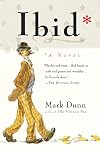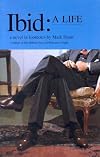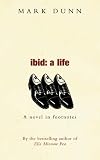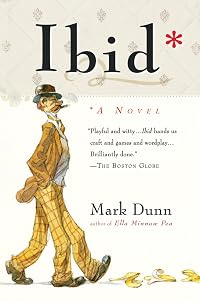
Ibid: A Novel
by Mark Dunn
On This Page
Description
When the only copy of his manuscript - a biography of a three-legged circus performer-cum-entrepreneur - is lost by a careless editor, writer Mark Dunn accepts an offer to publish the only surviving text - the footnotes. With great playfulness, Dunn writes himself into this full-length novel.Tags
Recommendations



Member Reviews
I have been looking forward to reading Ibid: A Life by Mark Dunn. It is the imaginative biography of Jonathan Blashette, a three-legged man. After opening with several letters between the author, his editor, and his brother, that explain what happened to the actual manuscript, the entire story consists of the endnotes (the use of "footnotes" is obviously a pun) to the missing fictional biography.
I found Ibid hilarious, and really did laugh out loud several times. It tackles, tongue in cheek, the addition of all sorts of real historical references while obliquely telling Jonathan Blashette's life story by inference, through endnotes. Using real historical references and people to tell the story made Ibid even more successful and show more accessible for me. Most of the endnotes themselves are quite funny.
While telling a story through endnotes seems like it might be awkward, I thought it really flowed smoother than most of my experiences in reading endnotes and was a fresh take on another way to tell a story. The fact that many of the footnotes were long and rambling segues added to the humor.
My one suggestion would have been to make some of the endnotes more closely resemble those you see in other biographies. Often biographers will discuss the problems with previous biographies or mention discrepancies between them - but that's a minor quibble. All in all, I really quite enjoyed Dunn's Ibid, although I also know it will not be a good choice for everyone.
very highly recommended; http://shetreadssoftly.blogspot.com/ show less
In his new novel, Mark Dunn has painstakingly chronicled the life of the world's most famous three-legged deodorant tycoon, Jonathan Blashette. Only trouble is, Dunn's editor lost the manuscript in an unfortunate bathtub accident, reducing the author's sole copy to a soggy, unreadable pulp. All that's left are the biography's footnotes.
Thus, with an exchange of fictional correspondence between Dunn and Pat Walsh, his real-life editor at Macadam/Cage Publishing, the wildly inventive and chokingly funny Ibid: a Life is off and running like drunk picnickers in a three-legged race. Yes, Dunn sometimes veers off course, but half the amusement comes from watching the story stumble around with hilarious riffs on everything from tent revivals show more to jigsaw puzzles before getting its bearings again and plowing ahead toward the finish line.
The novel is comprised entirely of footnotes so all we get are brief sentences charting the fictional Blashette's life, which are then expanded and expounded upon with the breathless, jokes-and-puns style Dunn displayed in his two previous novels, Ella Minnow Pea and Welcome to Higby. As Dunn explains in a letter to his editor after the loss of the "tragically water-pulped biography": While the notes illuminate the dusty, crepuscular corners of this man's life, they tell its story only through sidebar and discursion. The book, therefore, becomes a biography by inference.
Be honest: when was the last time you saw the word "crepuscular" used in such a witty context? For that matter, when was the last time you saw "crepuscular" used anywhere under any circumstances? Dunn peppers Ibid with esoteric language once found in florid, hyperbolic books published in the early 20th century. Books like Confessions to a Pee Pee Doctor by urologist Byron Blackfoot, My Life as a Wife-Slugging Bastard, with Afterword by Roscoe "Fatty" Arbuckle by Perry Jennings or When We From Sleep Awake by Rev. Boxer Seale, or periodicals like The Journal of American Amputation—all sources cited in Ibid. Dunn celebrates the excess of American culture, throwing the entire 20th century into the pot and coming up with a rich stew of trivia and ephemera.
Jonathan Blashette, the Donald Trump of anti-perspirants, is everywhere in the country's cultural landscape, hob-nobbing with celebrities and politicos. Among the many famous faces who make a cameo appearance in the footnotes: Aimee Semple McPherson, Evelyn Waugh, Leopold and Loeb, Dylan Thomas, Calvin Coolidge, Valentino and James Joyce. He dissuades McDonald's founder Ray Kroc from naming his sandwiches Krocburgers. He even has a hand in helping Lou Gehrig with his famous "I'm the luckiest man" speech. The deodorant king moves through history like Forest Gump.
If there's a flaw in Ibid, it's this: we never get to know Jonathan Blashette as anything more than a cardboard cutout on the flannel board of history. We watch as, at twelve, he joins Thaddeus Grund's Traveling Circus and Wild West Show. Later, he goes off to fight in World War I, where he comes up with the idea of manufacturing deodorant when he's stuck with stinky-pitted men in the trenches. We follow him through all the trials and tribulations of romance—most of his fiancées and wives meet with tragic demises, leaving him bereft, but undaunted. We watch his meteoric rise in the business world with the Dandy-de-odor-o company, whose popular jingle in the Great Depression was "You won't find a job if you smell like a slob." We get all these facts and anecdotes told throughout the novel's marginal digressions, but we never see into the heart of Blashette or understand what makes him tick as the world's most famous three-legged man.
What's center stage in a novel like Ibid is, of course, the novel itself, and the way Dunn bends and twists the idea of what makes a book a book. He's not the first to tell a story through footnotes—Vladimir Nabokov's Pale Fire springs to mind—but he may be the funniest. Dunn, in fact, goes Nabokov one better by eliminating the source text. In Pale Fire, we had those four cantos of the narrative poem; but in Ibid, we have only the ghost of a lost, soggy text.
This gives Dunn the freedom to take off like a rubber ball bouncing around a many-walled room. Timing is everything in his witty repartee. The jokes roll off his pen like a sweaty-haired stand-up comic energized by an enthusiastic crowd on a good night.
Here's just one footnote, reproduced in its entirety to give you some idea of what to expect on these pages:
14. Love finds Jonathan Blashette. Mildred Boyers' family was relatively new to Pettiville. Her father sold Divine Bain sea sponges throughout a territory that included eastern Arkansas, northern Mississippi, and western Tennessee as well as, curiously, Atlantic City, New Jersey, where, it was said, he had a mistress named Sheila who either (sources disagree) ate lye and died, or ate dye and lied about it, bragging that blue tongues ran in her family. Mildred wasn't close to her father, but found comfort and solace at the rectory of St. Bartholomew Catholic Church of Ambless where she performed light housekeeping chores and posed as famous Greek statuary for the amusement of Father Dwayne and his toothless assistant, Toot.
Ibid is a hysterical celebration of America, literature and American literature—not to mention deodorant, circus freaks, summer camps named Chaubunagungamaug, twelve-step programs, and really bad poetry. Footnotes shouldn't be this fun, but in Dunn's hands they're sublime. show less
Thus, with an exchange of fictional correspondence between Dunn and Pat Walsh, his real-life editor at Macadam/Cage Publishing, the wildly inventive and chokingly funny Ibid: a Life is off and running like drunk picnickers in a three-legged race. Yes, Dunn sometimes veers off course, but half the amusement comes from watching the story stumble around with hilarious riffs on everything from tent revivals show more to jigsaw puzzles before getting its bearings again and plowing ahead toward the finish line.
The novel is comprised entirely of footnotes so all we get are brief sentences charting the fictional Blashette's life, which are then expanded and expounded upon with the breathless, jokes-and-puns style Dunn displayed in his two previous novels, Ella Minnow Pea and Welcome to Higby. As Dunn explains in a letter to his editor after the loss of the "tragically water-pulped biography": While the notes illuminate the dusty, crepuscular corners of this man's life, they tell its story only through sidebar and discursion. The book, therefore, becomes a biography by inference.
Be honest: when was the last time you saw the word "crepuscular" used in such a witty context? For that matter, when was the last time you saw "crepuscular" used anywhere under any circumstances? Dunn peppers Ibid with esoteric language once found in florid, hyperbolic books published in the early 20th century. Books like Confessions to a Pee Pee Doctor by urologist Byron Blackfoot, My Life as a Wife-Slugging Bastard, with Afterword by Roscoe "Fatty" Arbuckle by Perry Jennings or When We From Sleep Awake by Rev. Boxer Seale, or periodicals like The Journal of American Amputation—all sources cited in Ibid. Dunn celebrates the excess of American culture, throwing the entire 20th century into the pot and coming up with a rich stew of trivia and ephemera.
Jonathan Blashette, the Donald Trump of anti-perspirants, is everywhere in the country's cultural landscape, hob-nobbing with celebrities and politicos. Among the many famous faces who make a cameo appearance in the footnotes: Aimee Semple McPherson, Evelyn Waugh, Leopold and Loeb, Dylan Thomas, Calvin Coolidge, Valentino and James Joyce. He dissuades McDonald's founder Ray Kroc from naming his sandwiches Krocburgers. He even has a hand in helping Lou Gehrig with his famous "I'm the luckiest man" speech. The deodorant king moves through history like Forest Gump.
If there's a flaw in Ibid, it's this: we never get to know Jonathan Blashette as anything more than a cardboard cutout on the flannel board of history. We watch as, at twelve, he joins Thaddeus Grund's Traveling Circus and Wild West Show. Later, he goes off to fight in World War I, where he comes up with the idea of manufacturing deodorant when he's stuck with stinky-pitted men in the trenches. We follow him through all the trials and tribulations of romance—most of his fiancées and wives meet with tragic demises, leaving him bereft, but undaunted. We watch his meteoric rise in the business world with the Dandy-de-odor-o company, whose popular jingle in the Great Depression was "You won't find a job if you smell like a slob." We get all these facts and anecdotes told throughout the novel's marginal digressions, but we never see into the heart of Blashette or understand what makes him tick as the world's most famous three-legged man.
What's center stage in a novel like Ibid is, of course, the novel itself, and the way Dunn bends and twists the idea of what makes a book a book. He's not the first to tell a story through footnotes—Vladimir Nabokov's Pale Fire springs to mind—but he may be the funniest. Dunn, in fact, goes Nabokov one better by eliminating the source text. In Pale Fire, we had those four cantos of the narrative poem; but in Ibid, we have only the ghost of a lost, soggy text.
This gives Dunn the freedom to take off like a rubber ball bouncing around a many-walled room. Timing is everything in his witty repartee. The jokes roll off his pen like a sweaty-haired stand-up comic energized by an enthusiastic crowd on a good night.
Here's just one footnote, reproduced in its entirety to give you some idea of what to expect on these pages:
14. Love finds Jonathan Blashette. Mildred Boyers' family was relatively new to Pettiville. Her father sold Divine Bain sea sponges throughout a territory that included eastern Arkansas, northern Mississippi, and western Tennessee as well as, curiously, Atlantic City, New Jersey, where, it was said, he had a mistress named Sheila who either (sources disagree) ate lye and died, or ate dye and lied about it, bragging that blue tongues ran in her family. Mildred wasn't close to her father, but found comfort and solace at the rectory of St. Bartholomew Catholic Church of Ambless where she performed light housekeeping chores and posed as famous Greek statuary for the amusement of Father Dwayne and his toothless assistant, Toot.
Ibid is a hysterical celebration of America, literature and American literature—not to mention deodorant, circus freaks, summer camps named Chaubunagungamaug, twelve-step programs, and really bad poetry. Footnotes shouldn't be this fun, but in Dunn's hands they're sublime. show less
The idea of a book consisting entirely of footnotes may sound pretentious. And it may sound like it would, unavoidably, result in tedium. That would be wrong.
I bought Mark Dunn's Ibid: A Life long ago, after a friend told me it was something I should read; then I forgot about it. I confess I doubted a little. And I really like footnotes. That is where all the fun stuff is, even when you are supposed to be reading what is really quite interesting in and of itself. And footnotes in fiction is generally the scene of the most deliciously absurd absurdities (although that might be down to the type of fiction I read).
In theory I should therefore have devoured this book the moment it arrived in my mailbox. But, a tiny voice in the corner of my show more brain, usually more concerned with not talking to strangers or taking candy from unknown men, said: what about the possibility of too much of a good thing? Aren't footnotes primarily charming because they are only incidental, and because you can choose to disregard them; and doesn't this project really sound like hard work, as they are really expecting you to reconstruct a man's life from the allusions in the footnotes to a biography that, in this case, is not there?
Isn't it, in short, an interesting idea, intellectually, and a nice experiment, literarily, but possibly not the world's most relaxing entertainment? Sometimes, occasionally, I am a little prejudiced.
At any rate, I picked up this book (it had been giving me accusatory glances from the bookshelf). And I read it at a time when I was anything but relaxed and full of energy, ready for intellectual labour -- I was too tired and worn out to do any proper work. And this book was lovely.
The beginning sets the tone of it: it consists in an exchange of letters between the author and his publisher, describing how the biography itself, which, after an accident with a paper shredder, only exists in one version, is destroyed in a bathing accident. And why, therefore, all that is available for publication are the footnotes, which were not yet ready when the accident happened.
And the biography about the three-legged man who began his career as a circus attraction before making it big in the male deodorant industry, rises effortlessly from the pages without requiring any extraordinary mental efforts of the reader. A number of the footnotes are longish, allowing them to tell free-standing anecdotes, and several of the shorter function as in-jokes referencing earlier anecdotes or established facts. There is also a great deal of more or less polite disagreement with fictional academics and earlier experts in the field. Sometimes (or, rather, usually) perfectly outrageous. I laughed. Rather a lot. Out loud. show less
I bought Mark Dunn's Ibid: A Life long ago, after a friend told me it was something I should read; then I forgot about it. I confess I doubted a little. And I really like footnotes. That is where all the fun stuff is, even when you are supposed to be reading what is really quite interesting in and of itself. And footnotes in fiction is generally the scene of the most deliciously absurd absurdities (although that might be down to the type of fiction I read).
In theory I should therefore have devoured this book the moment it arrived in my mailbox. But, a tiny voice in the corner of my show more brain, usually more concerned with not talking to strangers or taking candy from unknown men, said: what about the possibility of too much of a good thing? Aren't footnotes primarily charming because they are only incidental, and because you can choose to disregard them; and doesn't this project really sound like hard work, as they are really expecting you to reconstruct a man's life from the allusions in the footnotes to a biography that, in this case, is not there?
Isn't it, in short, an interesting idea, intellectually, and a nice experiment, literarily, but possibly not the world's most relaxing entertainment? Sometimes, occasionally, I am a little prejudiced.
At any rate, I picked up this book (it had been giving me accusatory glances from the bookshelf). And I read it at a time when I was anything but relaxed and full of energy, ready for intellectual labour -- I was too tired and worn out to do any proper work. And this book was lovely.
The beginning sets the tone of it: it consists in an exchange of letters between the author and his publisher, describing how the biography itself, which, after an accident with a paper shredder, only exists in one version, is destroyed in a bathing accident. And why, therefore, all that is available for publication are the footnotes, which were not yet ready when the accident happened.
And the biography about the three-legged man who began his career as a circus attraction before making it big in the male deodorant industry, rises effortlessly from the pages without requiring any extraordinary mental efforts of the reader. A number of the footnotes are longish, allowing them to tell free-standing anecdotes, and several of the shorter function as in-jokes referencing earlier anecdotes or established facts. There is also a great deal of more or less polite disagreement with fictional academics and earlier experts in the field. Sometimes (or, rather, usually) perfectly outrageous. I laughed. Rather a lot. Out loud. show less
Works better as a writing exercise than a novel. The combination of fiction, biography, humor, and history while also telling an entire life in footnotes was an impressive feat, but I think the format adds distance between the characters and the reader, which made it hard for me to fall into the book.
Let me preface this by saying I'm a huge fan of the Author's Ella Minnow Pea. Due to the middling reviews on this book I very nearly removed it from my list. I'm so glad I didn't.
But, you might say, you only gave it 3 stars. True. Let me explain.
Dunn's creative concept is this: to tell a story completely in footnotes. He succeeds... partly. Is the story told? Yes. Did he effectively spoof historical works? Absolutely. Are some good laughs had along the way? Sure.
However, just like I would any historical notes section, I skimmed the majority of the text. Either that is a sign of it's brilliance or it is a sign of it's failure to create content that is intriguing. I, pessimistically, chose the latter because I would prefer not to read show more it again. show less
But, you might say, you only gave it 3 stars. True. Let me explain.
Dunn's creative concept is this: to tell a story completely in footnotes. He succeeds... partly. Is the story told? Yes. Did he effectively spoof historical works? Absolutely. Are some good laughs had along the way? Sure.
However, just like I would any historical notes section, I skimmed the majority of the text. Either that is a sign of it's brilliance or it is a sign of it's failure to create content that is intriguing. I, pessimistically, chose the latter because I would prefer not to read show more it again. show less
Mark Dunn likes playing with literary form, and this book is no exception. Its premise is that it consists of the footnotes for another manuscript which was accidentally destroyed. By leaving out the main story, Dunn creates a narrative based on meticulously annotated minutiae, leaving the reader the exercise of supplying the missing parts of the main narrative.
The reason I read this book is because it was written by Mark Dunn who also wrote Ella Minnow Pea. This book, also, is written in a quirky manner. I wanted to see how that turned out. The book was written on the supposition that the actual manuscript was ruined and all that remains are the copious footnotes. And so the editor decides to publish the book in footnote form. Okay, interesting premise. And the subject was the life of a (fictional) three-legged man. Should have been interesting, right? I am sorry to say that it really wasn't. The blurbs talked of fascinating wordplay. Really? I must have missed all the fascinating parts. All I can say is that it was quirky. It was certainly at least 100 pages too long. I couldn't wait to show more finish it, just so I'd be done with it. show less
Members
- Recently Added By
Published Reviews
ThingScore 75
Lists

Experimental Literature
141 works; 18 members

Books as Objects & Metatextual Works
32 works; 3 members

Gimmicks
56 works; 12 members

Metafiction
84 works; 22 members
Author Information

21 Works 5,354 Members
Common Knowledge
- Original publication date
- 2004
- Epigraph
- Footnotes let us hear the missteps of biases, and hear pathos, subtle decisions, scandal an anger. - Chuck Zerby, The Devil's Details
The author may, therefore, include in the notes such things as lists, poems, and discurs... (show all)ive adjuncts to the text. - The Chicago Manual of Style
I just love footnotes, don't you? - Diana Gabaldon, The Outlandish Companion - Dedication
- For my wife Mary who rocks my world
Thanks for all the years of love and support, and for rescuing me from the Young Republicans - First words
- Dear Pat, Greeting to you and all my other friends in the City by the Bay.
- Last words
- (Click to show. Warning: May contain spoilers.)I hope that readers from that fair metropolis, the Cradle of Liberty, Hub of the Universe, and Athens of America will find it in their hearts to forgive me... and to buy my book.
Classifications
Statistics
- Members
- 332
- Popularity
- 95,570
- Reviews
- 13
- Rating
- (3.30)
- Languages
- English
- Media
- Paper, Ebook
- ISBNs
- 5
- ASINs
- 2