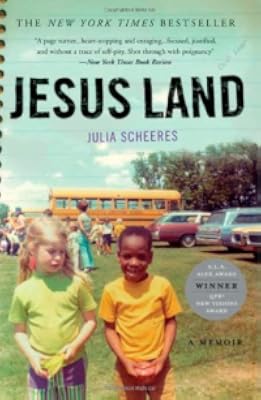
Jesus Land: A Memoir
by Julia Scheeres
On This Page
Description
"A page turner . . . heart-stopping and enraging . . . focused, justified, and without a trace of self-pity. Shot through with poignancy." --The New York Times Book Review Over a decade after its first publication, Jesus Land remains deeply resonant with readers. This New York Times bestselling memoir is a gripping tale of rage and redemption, hope and humor, morality and malice--and most of all, the truth: that being a good person takes more than just going to church. Julia and her adopted show more brother, David, are sixteen years old. Julia is white. David is black. It is the mid-1980s and their family has just moved to rural Indiana, a landscape of cottonwood trees, trailer parks, and an all-encompassing racism. At home are a distant mother--more involved with her church's missionaries than her own children--and a violent father. In this riveting and heartrending memoir Julia Scheeres takes us from the Midwest to a place beyond imagining. Surrounded by natural beauty, Escuela Caribe--a religious reform school in the Dominican Republic--is characterized by a disciplinary regime that extracts repentance from its students by any means necessary. Julia and David strive to make it through these ordeals and their tale is relayed here with startling immediacy, extreme candor, and wry humor. show lessTags
Recommendations
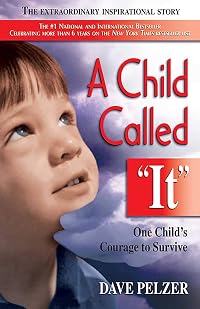
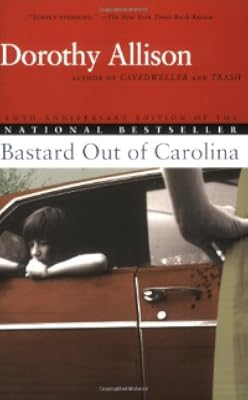
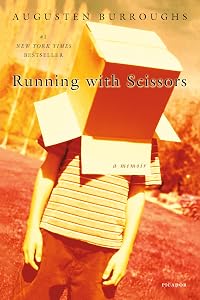
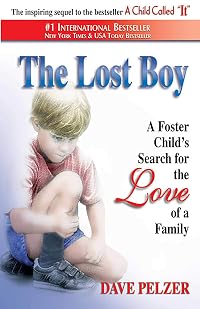


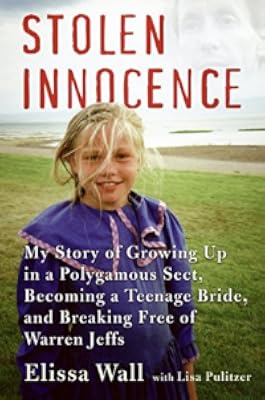
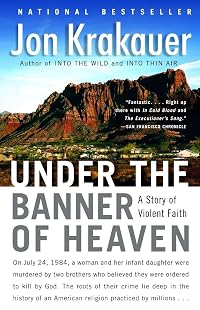
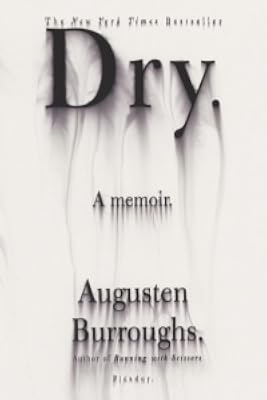
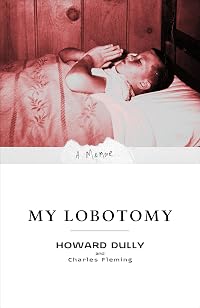


Member Recommendations

Member Reviews
the writing here is really excellent and this story is an important one to tell. she tells it really well; i'm impressed by her writing.
i am super uncomfortable with parts of this book that equate the white author's lived experience with that of her black adopted brother. she says things like "we are black" and while i don't discount the bullying and ostracizing she surely faced for her close relationship with her black brother, it certainly isn't the same as what he endured. not in society, not in her community, not in her school, not in her church, not in her family. i know she does this to show us how close they were, and i don't doubt that they were, that maybe even she was david's only lifeline (limp as it was) in all of those show more places. and that because she did choose david over those things (usually, except in high school), that she suffered, too. i'm not saying she didn't. i just don't think she could ever understand how his blackness felt and was used against him, especially as they so studiously avoided any real discussion of race or of their parents and what the hell was happening there. (what was happening is that her "christian" parents adopted 2 black boys so they could look righteous and holy but abused them physically and emotionally and made a terrible life for them.)
i am so disgusted with these so-called christians who use religion as a shield to hide such awfulness in behavior and character. i'm sure other religions have people like this, and atheists and agnostics as well, but it seems so overwhelmingly christian to claim belief in god and goodness and then to brutally abuse people - children, most especially - in the name of that belief. it's so ugly and gross and i hate it so fucking much. i appreciate, in fiction, when it's the christians who are hypocrites, but in nonfiction like this, it just makes me want to be a vigilante and turn violent. but none of that is about this book specifically. so: the parents in this book are bad enough, and then the christian reform school they are sent to was so over-the-top i would think it was unbelievable if this was fiction. (and i looked up the place. there are other books written and a documentary about the abuses that took place there.) in spite of that, i raged at the very end of the book when the author says that she thinks the worst injustices that david was victim to had occurred at this place. her worst injustices may have been there (and maybe not; i'm not here to rank her sufferings) but david's were so clearly in her own family that rejected and used him for the 14 years of his life before being sent to that place. to almost completely ignore this abuse (except for the time her dad broke david's arm) shows she either never really understood him or perhaps wasn't emotionally willing to delve into that or to risk further fracturing whatever relationship she has left with her family. but it's tone-deaf to make the statement she did. and it shows what is missing from this book: a real excavation of what her parents did to him - and yes, even to jerome, in spite of (or maybe because of) who he became - and the misery they made him live with. she may have been david's only light, but she never shone that light on any of the real issues that he was dealing with, and it seems like she still isn't willing to do that where her family is concerned.
when she tells her own story is when this book is strongest, for me. because i can overlook the assumptions she makes that she can tell us about david in a way that i just don't believe she can. but she can tell us what she felt and went through, and what she thought of growing up with david and jerome and the small town and religion and abuse and so forth. her story weaves in with david's, and that's when this book really resonates. david's story is told through hers, and if she had left off the proclamations about him and his life, and left us to make our own conclusions, this would be an even stronger book, and my main issue with it would probably not exist.
even with this huge (to me) problem, this book is still pretty incredible. maybe it shows my own privilege or whiteness or something to be able to still rate a book this highly in spite of this issue. (i'm also surprised and disappointed that she used the words "gypped" and "retarded" when neither were at all necessary.) without these things, i'd probably be rating this book 4.5 stars for the writing alone. show less
i am super uncomfortable with parts of this book that equate the white author's lived experience with that of her black adopted brother. she says things like "we are black" and while i don't discount the bullying and ostracizing she surely faced for her close relationship with her black brother, it certainly isn't the same as what he endured. not in society, not in her community, not in her school, not in her church, not in her family. i know she does this to show us how close they were, and i don't doubt that they were, that maybe even she was david's only lifeline (limp as it was) in all of those show more places. and that because she did choose david over those things (usually, except in high school), that she suffered, too. i'm not saying she didn't. i just don't think she could ever understand how his blackness felt and was used against him, especially as they so studiously avoided any real discussion of race or of their parents and what the hell was happening there. (what was happening is that her "christian" parents adopted 2 black boys so they could look righteous and holy but abused them physically and emotionally and made a terrible life for them.)
i am so disgusted with these so-called christians who use religion as a shield to hide such awfulness in behavior and character. i'm sure other religions have people like this, and atheists and agnostics as well, but it seems so overwhelmingly christian to claim belief in god and goodness and then to brutally abuse people - children, most especially - in the name of that belief. it's so ugly and gross and i hate it so fucking much. i appreciate, in fiction, when it's the christians who are hypocrites, but in nonfiction like this, it just makes me want to be a vigilante and turn violent. but none of that is about this book specifically. so: the parents in this book are bad enough, and then the christian reform school they are sent to was so over-the-top i would think it was unbelievable if this was fiction. (and i looked up the place. there are other books written and a documentary about the abuses that took place there.) in spite of that, i raged at the very end of the book when the author says that she thinks the worst injustices that david was victim to had occurred at this place. her worst injustices may have been there (and maybe not; i'm not here to rank her sufferings) but david's were so clearly in her own family that rejected and used him for the 14 years of his life before being sent to that place. to almost completely ignore this abuse (except for the time her dad broke david's arm) shows she either never really understood him or perhaps wasn't emotionally willing to delve into that or to risk further fracturing whatever relationship she has left with her family. but it's tone-deaf to make the statement she did. and it shows what is missing from this book: a real excavation of what her parents did to him - and yes, even to jerome, in spite of (or maybe because of) who he became - and the misery they made him live with. she may have been david's only light, but she never shone that light on any of the real issues that he was dealing with, and it seems like she still isn't willing to do that where her family is concerned.
when she tells her own story is when this book is strongest, for me. because i can overlook the assumptions she makes that she can tell us about david in a way that i just don't believe she can. but she can tell us what she felt and went through, and what she thought of growing up with david and jerome and the small town and religion and abuse and so forth. her story weaves in with david's, and that's when this book really resonates. david's story is told through hers, and if she had left off the proclamations about him and his life, and left us to make our own conclusions, this would be an even stronger book, and my main issue with it would probably not exist.
even with this huge (to me) problem, this book is still pretty incredible. maybe it shows my own privilege or whiteness or something to be able to still rate a book this highly in spite of this issue. (i'm also surprised and disappointed that she used the words "gypped" and "retarded" when neither were at all necessary.) without these things, i'd probably be rating this book 4.5 stars for the writing alone. show less
I can only give this 4 stars because of the pain it caused my soul. I am sensitive to tales of mental torture and anguish caused to humans, particularly when it is inflicted for no good reason. And this memoir is rife with it: racism, family violence, sexual exploitation, and of course, religion. I suppose I should be astonished by the resilience of the human spirit in the face of such terrible injustices, but I can only think that "what doesn't kill us makes us stronger" is bullshit. We shouldn't have to gain strength through such violent adversity. Surely we can be strong, whole, healthy people without having to endure abuse and pain? I had a pretty soft upbringing in comparison to Julia Scheeres: my parents love me, nobody ever tried show more to force me to do or believe anything I didn't want to do or believe, nobody injured my body or my soul. And yet I have turned out to be a strong and smart person, without being subjected to exile and alienation from my family. This book is painful but gripping-- I pretty much had to read through it in order to convince myself that people are essentially good. I more or less succeeded. show less
If you care even a whit about the plight of young children of color and women, you'll be outraged by this book. I was. Julia Scheeres's childhood was marred by horrific racist and sexist acts, including numerous acts of violence against her and her brother. Her parents, devoted to Calvinist but lukewarm at best toward their children, were no help.
This book includes a frightening inside look at Christian "reform schools" for "troubled teens" -- you know, the ones who drink and talk back in reaction to the sexual abuse they've had no emotional support in dealing with. Perhaps the most outraging part was the epilogue, where Scheeres notes that these schools are still operating today.
This is not an easy book to read, but it's an eye-opening show more look at the dark side of fundamentalist evangelical Christianity. show less
This book includes a frightening inside look at Christian "reform schools" for "troubled teens" -- you know, the ones who drink and talk back in reaction to the sexual abuse they've had no emotional support in dealing with. Perhaps the most outraging part was the epilogue, where Scheeres notes that these schools are still operating today.
This is not an easy book to read, but it's an eye-opening show more look at the dark side of fundamentalist evangelical Christianity. show less
My 7-year-old son saw me reading this book.
Son: Why are you reading a book called Jesus Land?
Me: It's a true story, about this girl... Oh, here, read the back.
Son (after reading the back of the book): Why are you reading about a girl with a messed up life?
Me: I don't know.
I have seen this book around, but wasn't sure about committing, and then I saw it at the Friends of the Library book sale -- the one where you can fill a grocery bag with books for $1. My standards get lower when faced with tables of super cheap books.
Jesus Land is a train wreck from which I could not look away. Like [b:The Glass Castle|7445|The Glass Castle|Jeannette Walls|https://images.gr-assets.com/books/1400930557s/7445.jpg|2944133] and [b:Running with show more Scissors|242006|Running with Scissors|Augusten Burroughs|https://images.gr-assets.com/books/1438898196s/242006.jpg|828773], it made me appreciate my so-much-less-dysfunctional childhood. Seriously, Julia Scheeres adolescence was messed up. I don't want to ruin anymore than the back synopsis already does, but her story will punch you in the gut over and over. She admits to some literary creativity to protect identities & make the timeline tighter, but there's support for the validity of her story, regarding both her neglectful/abusive family and the church reform school to which she and her brother were sent. If you need to indulge your voyaristic tendencies, read away. show less
Son: Why are you reading a book called Jesus Land?
Me: It's a true story, about this girl... Oh, here, read the back.
Son (after reading the back of the book): Why are you reading about a girl with a messed up life?
Me: I don't know.
I have seen this book around, but wasn't sure about committing, and then I saw it at the Friends of the Library book sale -- the one where you can fill a grocery bag with books for $1. My standards get lower when faced with tables of super cheap books.
Jesus Land is a train wreck from which I could not look away. Like [b:The Glass Castle|7445|The Glass Castle|Jeannette Walls|https://images.gr-assets.com/books/1400930557s/7445.jpg|2944133] and [b:Running with show more Scissors|242006|Running with Scissors|Augusten Burroughs|https://images.gr-assets.com/books/1438898196s/242006.jpg|828773], it made me appreciate my so-much-less-dysfunctional childhood. Seriously, Julia Scheeres adolescence was messed up. I don't want to ruin anymore than the back synopsis already does, but her story will punch you in the gut over and over. She admits to some literary creativity to protect identities & make the timeline tighter, but there's support for the validity of her story, regarding both her neglectful/abusive family and the church reform school to which she and her brother were sent. If you need to indulge your voyaristic tendencies, read away. show less
Horrifying.
A traumatizing memoir about a traumatic childhood in the American mid-west. It's like watching a high speed car wreck in very slow motion. With every safety mechanism failing passengers before your eyes and you can't do anything to stop it. Everyone who should have been there for the author failed her and her brother. Even the justice system should have done more for her. Her family and their faith was the source of the hell in her life. Reform school reminded me of a light version of concentration camps just without the goal of extermination or producing anything. Lots of mind games and soul crushing in the name of Christianity.
Compelling and heart-wrenching.
I will say one small defense of the American mid-west, while I'm show more sure there are hateful people that live here (they can be found most anywhere), I've lived in the mid-west for over 20 years and I've never heard any of the hateful racist comments similar to those used against the author or her brother in real life. I'd like to think that things have improved since the 70s when much of this book took place. show less
A traumatizing memoir about a traumatic childhood in the American mid-west. It's like watching a high speed car wreck in very slow motion. With every safety mechanism failing passengers before your eyes and you can't do anything to stop it. Everyone who should have been there for the author failed her and her brother. Even the justice system should have done more for her. Her family and their faith was the source of the hell in her life. Reform school reminded me of a light version of concentration camps just without the goal of extermination or producing anything. Lots of mind games and soul crushing in the name of Christianity.
Compelling and heart-wrenching.
I will say one small defense of the American mid-west, while I'm show more sure there are hateful people that live here (they can be found most anywhere), I've lived in the mid-west for over 20 years and I've never heard any of the hateful racist comments similar to those used against the author or her brother in real life. I'd like to think that things have improved since the 70s when much of this book took place. show less
You know, I could almost give this book a heart because I could NOT put it down. It's compulsively readable.
Julia tells us about her unique childhood being raised by very strict Christian parents in the Midwest. Her parents have four children of their own, and they adopt two African American boys. One of the African American boys, David, is the same age as Julia, and this memoir relates their story of growing up together as siblings.
Unfortunately, this tale is not a pretty one. Julia's parents are largely absent, in the case of the father, physically, and in the case of the mother, emotionally. Julia and David truly only have each other, and even their relationship is under a lot of stress as their parents treat them differently, and show more David struggles as one of the only African Americans at his school.
This memoir is to some degree in the same vein as Mommy Dearest or Dave Pelzer's books. Not quite as graphic and horrible - - but definitely the situation is not good, and you feel Julia's pain throughout the story. The parents really seem to have NO redeeming qualities whatsoever . . .so I didn't find it quite as strong as The Glass Castle where the writing really goes so far beyond a mere characterization and really develops the family dynamics.
Nonetheless, Jesus Land is pretty gripping. You want so badly for things to take a turn for the better for these two children. Unfortunately, things by and large get grimmer and grimmer . . .but underneath all the pain, Julia and David's love and loyalty to one another takes center stage and makes the book more than a parent bashing session.
For those of you who do not like much in the way of sexual content, it should be noted that there is some here. Not unduly graphic and not gratuitous - - but it's there. show less
Julia tells us about her unique childhood being raised by very strict Christian parents in the Midwest. Her parents have four children of their own, and they adopt two African American boys. One of the African American boys, David, is the same age as Julia, and this memoir relates their story of growing up together as siblings.
Unfortunately, this tale is not a pretty one. Julia's parents are largely absent, in the case of the father, physically, and in the case of the mother, emotionally. Julia and David truly only have each other, and even their relationship is under a lot of stress as their parents treat them differently, and show more David struggles as one of the only African Americans at his school.
This memoir is to some degree in the same vein as Mommy Dearest or Dave Pelzer's books. Not quite as graphic and horrible - - but definitely the situation is not good, and you feel Julia's pain throughout the story. The parents really seem to have NO redeeming qualities whatsoever . . .so I didn't find it quite as strong as The Glass Castle where the writing really goes so far beyond a mere characterization and really develops the family dynamics.
Nonetheless, Jesus Land is pretty gripping. You want so badly for things to take a turn for the better for these two children. Unfortunately, things by and large get grimmer and grimmer . . .but underneath all the pain, Julia and David's love and loyalty to one another takes center stage and makes the book more than a parent bashing session.
For those of you who do not like much in the way of sexual content, it should be noted that there is some here. Not unduly graphic and not gratuitous - - but it's there. show less
I chose this book because my own family is transracial – my husband, my two boys and I are white and my daughter is African American. Because of that, I’m interested in hearing the stories of other transracial families. Good god – I’m glad my family couldn’t be more different from Julia’s family. Julia’s parents adopted her two black brothers because it was the Christian thing to do. It’s another story – this time true – of white people thinking that they can save the black children by immersing them in white society and not acknowledging their race. Julia’s parents are this and worse. They are “spare the rod and spoil the child” Dutch Calvinists. Julia’s mother is cold and distant. Her father, a surgeon, show more seems to be mostly absent. He is mainly mentioned in relation to beating one of her two black brothers as punishment.
The family lives in a small town in Indiana. It’s mostly white and the use of the n-word is common. David and Julia are best friends but even she distances herself from him when dealing with the issues surrounding his race become too much for her. To ease her guilt she turns to drinking and sex. David and Julia’s parents end up sending them both to a reform school in the Dominican Republic called Esculea Caribe, where life is even harder and more brutal than it was at home. I researched Escuela Caribe a bit after reading this and it appears that as unbelievable as the treatment Julia and David endured sounds, it was true. The school could get away with a lot more being in a loosely regulated foreign country than they ever could have in the United States.
Julia writes her story in a detached manner almost devoid of emotion. It works though because I think when she was experiencing these events as a teenager, she detached herself and became numb to the abuse just to get through it. Reading this book was like listening to the teenage Julia telling you her story directly. Much like The Glass Castle, this book was difficult memoir to read but I’m glad I did. show less
The family lives in a small town in Indiana. It’s mostly white and the use of the n-word is common. David and Julia are best friends but even she distances herself from him when dealing with the issues surrounding his race become too much for her. To ease her guilt she turns to drinking and sex. David and Julia’s parents end up sending them both to a reform school in the Dominican Republic called Esculea Caribe, where life is even harder and more brutal than it was at home. I researched Escuela Caribe a bit after reading this and it appears that as unbelievable as the treatment Julia and David endured sounds, it was true. The school could get away with a lot more being in a loosely regulated foreign country than they ever could have in the United States.
Julia writes her story in a detached manner almost devoid of emotion. It works though because I think when she was experiencing these events as a teenager, she detached herself and became numb to the abuse just to get through it. Reading this book was like listening to the teenage Julia telling you her story directly. Much like The Glass Castle, this book was difficult memoir to read but I’m glad I did. show less
Members
- Recently Added By
Lists

Adult Books for YA Readers
194 works; 6 members

Florida's Book Bans and Challenges
311 works; 4 members
Author Information

3+ Works 1,973 Members
Julia Scheeres's essays, articles, and book reviews have been published in The New York Times, Elle, Marie Claire, O, The Oprah Magazine, Wired, and other publications. Her second book, A Thousand Lives: The Untold Story of Jonestown, won the Northern California Independent Bookseller Associations Nonfiction Book of the Year award. She lives in show more Berkeley, California, and is a member of The Grotto. show less
Awards and Honors
Notable Lists
Common Knowledge
- Canonical title
- Jesus Land: A Memoir
- Original publication date
- 2005
- Important places
- Dominican Republic; Indiana, USA
- Dedication
- For David
- First words
- It's just after three o'clock when we hit County Road 50.
- Last words
- (Click to show. Warning: May contain spoilers.)David, I love you.
- Disambiguation notice
- Released in UK as Another Hour on a Sunday Morning (2005)
Classifications
- Genres
- Biography & Memoir, Religion & Spirituality, Nonfiction, General Nonfiction
- DDC/MDS
- 373.7293 — Society, government, & culture Education Secondary education North America Mexico, Central America, and the Caribbean Caribbean Dominican Republic
- LCC
- LE17 .D65 .S34 — Education Individual institutions – America (except United States) America (except United States) West Indies
- BISAC
Statistics
- Members
- 1,545
- Popularity
- 14,866
- Reviews
- 58
- Rating
- (3.90)
- Languages
- English, Norwegian (Bokmål), Swedish
- Media
- Paper, Audiobook, Ebook
- ISBNs
- 19
- ASINs
- 6