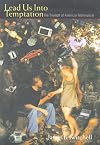
Lead Us into Temptation: The Triumph of American Materialism
by James B. Twitchell
On This Page
Description
Coke adds life. Just do it. Yo quiero Taco Bell. We live in a commercial age, awash in a sea of brand names, logos, and advertising jingles--not to mention commodities themselves. Are shoppers merely the unwitting stooges of the greedy producers who will stop at nothing to sell their wares? Are the producers' powers of persuasion so great that resistance is futile? James Twitchell counters this assumption of the used and abused consumer with a witty and unflinching look at commercial show more culture, starting from the simple observation that "we are powerfully attracted to the world of goods (after all, we don't call them 'bads')." He contends that far from being forced upon us against our better judgment, "consumerism is our better judgment." Why? Because increasingly, store-bought objects are what hold us together as a society, doing the work of "birth, patina, pews, coats of arms, house, and social rank"--previously done by religion and bloodline. We immediately understand the connotations of status and identity exemplified by the Nike swoosh, the Polo pony, the Guess? label, the DKNY logo. The commodity alone is not what we are after; rather, we actively and creatively want that logo and its signification--the social identity it bestows upon us. As Twitchell summarizes, "Tell me what you buy, and I will tell what you are and who you want to be." Using elements as disparate as the film The Jerk, French theorists, popular bumper stickers, and Money magazine to explore the nature and importance of advertising lingo, packaging, fashion, and "The Meaning of Self," Twitchell overturns one stodgy social myth after another. In the process he reveals the purchase and possession of things to be the self-identifying acts of modern life. Not only does the car you drive tell others who you are, it lets you know as well. The consumption of goods, according to Twitchell, provides us with tangible everyday comforts and with crucial inner security in a seemingly faithless age. That we may find our sense of self through buying material objects is among the chief indictments of contemporary culture. Twitchell, however, sees the significance of shopping. "There are no false needs." We buy more than objects, we buy meaning. For many of us, especially in our youth, Things R Us. show lessTags
Recommendations

























Member Reviews
This is a witty and fun book to read. The author provides a well-researched guide to consumerism with an almost tongue-in-cheek attitude. The history of modern advertising is discussed along with some of the psychological insights and shibboleths of the business. He argues that consumers are not victims of commercialism but have eagerly participate in it. He attacks a host of critics of commercialism, including Thorstein Veblen, Vance Packard, Ralph Nader and John Kenneth Galbraith, Effectively rejecting their arguments. The result is a thorough and irreverent view that shares the wealth of capitalism resulting from the "age of consumerism".
Ratings
Members
- Recently Added By
Author Information

19+ Works 808 Members
James B. Twitchell is professor of English and advertising at the University of Florida.
Common Knowledge
- Canonical title
- Lead Us into Temptation: The Triumph of American Materialism
Classifications
- Genres
- Economics, Nonfiction, Sociology, General Nonfiction, Philosophy, Business
- DDC/MDS
- 339.4 — Society, Government, and Culture Economics Macroeconomics and related topics Factors Impacting GDP
- LCC
- HC110 .C6 .T89 — Social sciences Economic history and conditions Economic history and conditions By region or country
- BISAC
Statistics
- Members
- 77
- Popularity
- 409,481
- Reviews
- 1
- Rating
- (4.00)
- Languages
- English
- Media
- Paper, Ebook
- ISBNs
- 3