On This Page
Description
Fiction. Mystery. HTML:"[Van de Wetering] is doing what Simenon might have done if Albert Camus had sublet his skull." —John LeonardOn a quiet street in downtown Amsterdam, a man is found hanging from the ceiling beam of his bedroom, upstairs from the new religious society he founded: a group that calls itself “Hindist” and supposedly mixes elements of various Eastern traditions. Detective-Adjutant Gripstra and Sergeant de Gier of the Amsterdam police are sent to investigate what show more looks like a simple suicide, but they are immediately suspicious of the circumstances.
This now-classic novel, first published in 1975, introduces Janwillem van de Wetering’s lovable Amsterdam cop duo of portly, wise Gripstra and handsome, contemplative de Gier. With its unvarnished depiction of the legacy of Dutch colonialism and the darker facets of Amsterdam’s free drug culture, this excellent procedural asks the question of whether a murder may ever be justly committed. show less
Tags
Recommendations











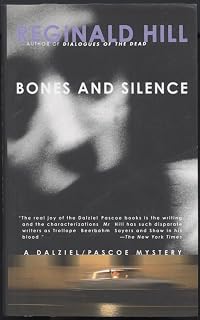





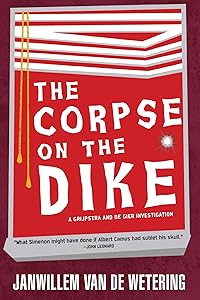


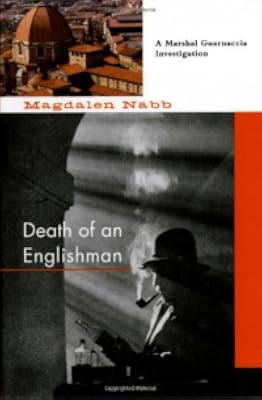





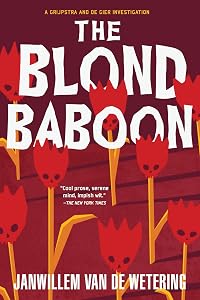



















Member Recommendations

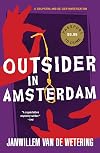
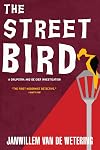
John_Vaughan The mystifying addiction this series of far from simple mystery stories is puzzle; until you get to know the characters. Outsider has my favorite cover as it shows our two heroes!



GeraniumCat The Yellowthread Street Mysteries are also about quirky cops, in the wonderfully exotic setting of Hong Kong before its lease expired in 1999. Like the Amsterdam cops series, they are seriously addictive.

John_Vaughan Another great series set in Holland.


Member Reviews
Het lijk in de Haarlemmer Houttuinen is the first of the Grijpstra and de Gier novels. A man's body is found hanging in the headquarters of an Eastern religious sect in a rambling old house in the centre of Amsterdam. It looks like suicide, but of course when something in a crime story looks like suicide it probably isn't...
The mystery isn't all that sophisticated, but the real interest of this book is in the detail of everyday police work and the interplay of personalities between the policemen and the suspects (one of whom turns out to be a former colonial police officer). I really enjoyed the way that the investigation keeps being held up by random small incidents that the police have to deal with - a drunk collapsing in the street, show more a minor car accident, an escaped prisoner they spot in a restaurant, a street fight, etc. - and by an amazing coincidence, not one of these incidents has any bearing on the case they are investigating. A trick I've never seen in a crime story before!
It's all very Dutch - improbable quantities of coffee, jenever and cigars are consumed during the investigation - and very 1970s - on the rare occasions the detectives are allowed to use a car it's a VW Beetle, and if they don't happen to be in a car they have to use public telephones to summon assistance. Which is another van de Wetering oddity, by the way: they always do summon assistance. They don't seem to realise that the first rule of fictional policing is always to go into dangerous situations without backup.
If you like novels about pets, you'll be pleased to know that de Gier's cat, Oliver, has an excessively large part in the story, and in a small gesture to the conventions of the genre, one of the policemen is allowed to go to bed with one of the witnesses, but that apart, this struck me as a charmingly off-beat example of the police procedural. To be added to my long list... show less
The mystery isn't all that sophisticated, but the real interest of this book is in the detail of everyday police work and the interplay of personalities between the policemen and the suspects (one of whom turns out to be a former colonial police officer). I really enjoyed the way that the investigation keeps being held up by random small incidents that the police have to deal with - a drunk collapsing in the street, show more a minor car accident, an escaped prisoner they spot in a restaurant, a street fight, etc. - and by an amazing coincidence, not one of these incidents has any bearing on the case they are investigating. A trick I've never seen in a crime story before!
It's all very Dutch - improbable quantities of coffee, jenever and cigars are consumed during the investigation - and very 1970s - on the rare occasions the detectives are allowed to use a car it's a VW Beetle, and if they don't happen to be in a car they have to use public telephones to summon assistance. Which is another van de Wetering oddity, by the way: they always do summon assistance. They don't seem to realise that the first rule of fictional policing is always to go into dangerous situations without backup.
If you like novels about pets, you'll be pleased to know that de Gier's cat, Oliver, has an excessively large part in the story, and in a small gesture to the conventions of the genre, one of the policemen is allowed to go to bed with one of the witnesses, but that apart, this struck me as a charmingly off-beat example of the police procedural. To be added to my long list... show less
Ooit kwam ik in een Engelse gids over cultliteratuur een Nederlandse misdaadschrijver tegen. Ik vergat zijn naam te noteren, vond de referentie nergens meer terug (nog steeds niet) en zocht vruchteloos in tweedehandswinkels tot ik zijn naam en meteen het licht zou zien.
Tot ik de referentie terugvind, zal de twijfel blijven knagen, maar sinds ik de naam Janwillem van de Wetering zag opduiken in een tweedehandsboekhandel in Redu, zag ik het licht en ben ik ervan overtuigd dat ik mijn cultauteur gevonden heb.
Het onconventionele Amsterdamse politieduo Grijpstra & de Gier, dat de hoofdrol in dit boek speelt, versterkt mijn vermoeden.
Een hoofdinspecteur die dagelijks de omvang van zijn cactus meet, een agent die zich laveloos drinkt in het show more appartement van vermoedelijke drugsdealers, een sergeant die midden een onderzoek huiswaarts keert om zijn kat eten te geven of een hoofdverdachte om te knuffelen: Outsider in Amsterdam laat ze allemaal de revue passeren in een leuk opgebouwde detective, waarin je met de glimlach leuke of verrassende filosofietjes van beide inspecteurs meekrijgt. De plot werd goed uitgewerkt en heel het boek is doorspekt met een charmant soort humor en een verrassende lieftalligheid voor een misdaadverhaal. Outsider in Amsterdam kadert in een heerlijks sfeertje en is aangenaam verfrissend. show less
Tot ik de referentie terugvind, zal de twijfel blijven knagen, maar sinds ik de naam Janwillem van de Wetering zag opduiken in een tweedehandsboekhandel in Redu, zag ik het licht en ben ik ervan overtuigd dat ik mijn cultauteur gevonden heb.
Het onconventionele Amsterdamse politieduo Grijpstra & de Gier, dat de hoofdrol in dit boek speelt, versterkt mijn vermoeden.
Een hoofdinspecteur die dagelijks de omvang van zijn cactus meet, een agent die zich laveloos drinkt in het show more appartement van vermoedelijke drugsdealers, een sergeant die midden een onderzoek huiswaarts keert om zijn kat eten te geven of een hoofdverdachte om te knuffelen: Outsider in Amsterdam laat ze allemaal de revue passeren in een leuk opgebouwde detective, waarin je met de glimlach leuke of verrassende filosofietjes van beide inspecteurs meekrijgt. De plot werd goed uitgewerkt en heel het boek is doorspekt met een charmant soort humor en een verrassende lieftalligheid voor een misdaadverhaal. Outsider in Amsterdam kadert in een heerlijks sfeertje en is aangenaam verfrissend. show less
Grijpstra and de Gier are detectives with the Amsterdam Police. They are called to the Hindist Society because Piet Verboom, the society’s proprietor, has been found hanging in his room. Initially it appears to be a suicide. Sergeant de Gier and Detective-Adjudant Grijpstra are determined to perform a complete investigation nevertheless. The two detectives make a great team but they are very different. Senior officer, de Gier, is a married family man and very set in his ways. Grijpstra is younger bachelor who and practices Buddhism and shares his home with a quirky Siamese cat named Oliver. Their method of investigation compliments both their strengths.
This is not an action packed series but a very character driven investigation. Both show more detectives have a great sense of sardonic humor. I learned a lot about Amsterdam and the Dutch culture which was fascinating. I thought it was a very engaging and well written mystery with interesting and well developed characters. I definitely plan to read another book in this series soon. show less
This is not an action packed series but a very character driven investigation. Both show more detectives have a great sense of sardonic humor. I learned a lot about Amsterdam and the Dutch culture which was fascinating. I thought it was a very engaging and well written mystery with interesting and well developed characters. I definitely plan to read another book in this series soon. show less
This is the first of a series of mysteries that feature two 1970s Amsterdam policemen: the older and more senior and more cynical Gripstra and the younger, good looking, and more philosophical de Gier. Gripstra lives with his family, de Gier with his cat. I read it because another LTer recommended the Soho Crime series in general and this series in particular.
The story opens when Piet Verboom is found hanging from a beam in the old house that is the home of his Hindist Society: is it suicide or is it murder? The cops are met there by one of the residents of the house, van Meteren; despite his Dutch name, he is almost entirely Papuan, from one of Holland's former colonies (he is the outsider in Amsterdam). Other residents of the house show more include Piet's aging, mad, and opiate-addicted mother and various hangers-on, one of whom Piet had gotten pregnant, but not Piet's wife and daughter who had recently left him and moved to Paris.
Of course, everything is not as it seems, and the Society turns out to be less about religion and being one with the universe and more about money -- for Piet. As Gripstra and de Gier try to figure out what happened, they explore the underworld of drug dealing in Amsterdam, which seems a lot more genteel than the underworld of drug dealing in 1970s New York, and the distinction between marijuana/hashish and heroin. Through the character of van Meteren, the book also examines Dutch colonialism and its lasting impact (a subject also explored in The Buru Quartet] by Indonesian writer Pramoedya Ananta Toer, of which I've read two of the four).
Fundamentally, this is a detective story. While van de Wetering keeps the plot moving along, the most interesting parts of the book are the sense of place, the characters of Gripstra and de Gier, and the interactions between them, and between them and other characters. Parts of it are even humorous. Nevertheless, this novel has a cooler tone to it than other European crime fiction I've read in recent years: Andrea Camilleri (Italy), Manuel Vazquez Montalban (Spain), and even the darkness of Denise Mina's Scotland. I enjoyed it, but I'll have to read at least one more to see if I want to continue with the series. show less
The story opens when Piet Verboom is found hanging from a beam in the old house that is the home of his Hindist Society: is it suicide or is it murder? The cops are met there by one of the residents of the house, van Meteren; despite his Dutch name, he is almost entirely Papuan, from one of Holland's former colonies (he is the outsider in Amsterdam). Other residents of the house show more include Piet's aging, mad, and opiate-addicted mother and various hangers-on, one of whom Piet had gotten pregnant, but not Piet's wife and daughter who had recently left him and moved to Paris.
Of course, everything is not as it seems, and the Society turns out to be less about religion and being one with the universe and more about money -- for Piet. As Gripstra and de Gier try to figure out what happened, they explore the underworld of drug dealing in Amsterdam, which seems a lot more genteel than the underworld of drug dealing in 1970s New York, and the distinction between marijuana/hashish and heroin. Through the character of van Meteren, the book also examines Dutch colonialism and its lasting impact (a subject also explored in The Buru Quartet] by Indonesian writer Pramoedya Ananta Toer, of which I've read two of the four).
Fundamentally, this is a detective story. While van de Wetering keeps the plot moving along, the most interesting parts of the book are the sense of place, the characters of Gripstra and de Gier, and the interactions between them, and between them and other characters. Parts of it are even humorous. Nevertheless, this novel has a cooler tone to it than other European crime fiction I've read in recent years: Andrea Camilleri (Italy), Manuel Vazquez Montalban (Spain), and even the darkness of Denise Mina's Scotland. I enjoyed it, but I'll have to read at least one more to see if I want to continue with the series. show less
Quirky Dutch cops. Smell of Amsterdam. Charming novel!: This book follows two Amsterdam detectives, as they investigate a hanging, reflect on their lives and other matters, make fun of each other, and try to keep hard drugs off Amsterdam. The fine line between hash and heroin is explored, and this might make the book interesting to readers from the U.S. or other countries where marijuana is criminalized like hard drugs.
The construction of the dialog and the characters' thought-trains is outstanding. De Gier's jokes at Grijpstra by themselves make the read worthwhile. Both characters are drawn as very, very human. You follow their thoughts and simple motives and ordinary lives, and you can't help loving them.
The only character that show more doesn't ring quite true is the Outsider himself, the person from Papua New Guinea; he seems somewhat superhuman. However, this character is drawn with great respect, from the author, as well as from the detectives' point of view. I found it quite charming, the European author and his European characters dealing with an extraordinary character from their former colony.
Before ending the review, I can't resist quoting some of the thoughts of our cop friends.
Hiding in a bush in dog poop waiting to catch a good-looking drug dealer, de Gier thinks to himself: "I hope he attacks me. I'll trip him up and break his nose. That beautiful nose in the handsome face. He can bleed a little this time." Then he catches his errant thoughts and thinks: "but I'll only go for him if he provokes me."
Explaining why he's leaving a beautiful woman, de Gier says to his three superior officers, in a dejected voice: "She wants me to leave my cat." The superiors laugh.
Grijpstra the family man, talking to his superior on the phone and looking at his wife's head, says "Yes sir" on the phone and thinks: "Why do curlers have to be pink? Why not brown? If they were brown they would blend with her hair, I wouldn't notice them so much, and I would be less irritated. I wouldn't have such a foul taste in my mouth. My stomach wouldn't cramp. I wouldn't have to worry about ulcers. My wife wouldn't forget to buy medicine for me because I wouldn't need to take medicine. I would be a happier man."
(My evil self thinks: Ha! Any man who lived with a woman will understand that one!)
Grijpstra, at a Chinese restaurant looking at a nervous Chinese waiter, probably an illegal immigrant, thinks: "I wonder what he's hiding? No papers, that's for sure. And a friend of the criminal Lee Fong. Perhaps I should drop a hint at the Aliens department." And then he thinks: "Perhaps not. There's enough trouble in the world."
Vivid and realistic characters, very pleasant novel! show less
Grijpstra and de Gier are detectives in the Amsterdam Special Constabulary. One afternoon they are called to the Hindist Society because Piet Verboom, the society’s proprietor, was found hanging in his room. At first glance, it looks like a suicide. Sergeant de Gier and Detective-Adjudant Grijpstra are determined to perform a complete investigation to ensure that justice is served.
As is probably true of all main characters in a series of novels, we do not learn all there is to know about our Amsterdam detectives. It is clear from the beginning that Grijpstra and de Gier make a good team. de Gier, the pair’s senior officer, is begrudgingly married with children and much more set in his ways. Grijpstra is younger and practices show more Buddhism. I wouldn’t necessarily consider them an odd couple, but their strengths complimented each other.Together they have a wealthy combination of experience and intuition to get the job done. As I was finishing this novel I could see where van de Wetering could build on each of the characters and their relationship over the course of the series. Assuming their cases would become more complex as well, watching them grow would make a good reading experience.
Outsider in Amsterdam is much different from most of the fiction I have read. Not only is the setting out of the ordinary for me, but writing is as well. Although the actual feelings are hard to describe, I feel as though I experienced a little of what it was like to live in Amsterdam during the 1970s. If Grijpstra and de Gier tell us anything at all about their city and country, the Netherlands is a far cry from the America represented by our own 1970s detectives Starsky and Hutch. There aren’t any in high-speed car chases through the streets. These detectives are as likely to walk to their next interview as drive. Still, both sets of detectives have a way with words and that special knack that gets their case solved like no other. What Outsider in Amsterdam lacks in speed and violence, it makes up for it in its deliberateness and culture.
There were aspects of Outsider in Amsterdam that felt out of my reach because of differences in culture or time. I am quite certain that the verbal barbs traded between the two detectives or between the other characters went over my head entirely. I think I would have enjoyed it more had I been able to feel part of what was happening. That isn’t to say that I didn’t enjoy the novel. It was a very subtle read and was very much a creation of its time. While I might opt for a more modern or most historic novel set in the Netherlands next time, I am sure that van de Wetering knew his generation well. I can understand why there are so many Grijpstra and de Gier fans around the world. show less
As is probably true of all main characters in a series of novels, we do not learn all there is to know about our Amsterdam detectives. It is clear from the beginning that Grijpstra and de Gier make a good team. de Gier, the pair’s senior officer, is begrudgingly married with children and much more set in his ways. Grijpstra is younger and practices show more Buddhism. I wouldn’t necessarily consider them an odd couple, but their strengths complimented each other.Together they have a wealthy combination of experience and intuition to get the job done. As I was finishing this novel I could see where van de Wetering could build on each of the characters and their relationship over the course of the series. Assuming their cases would become more complex as well, watching them grow would make a good reading experience.
Outsider in Amsterdam is much different from most of the fiction I have read. Not only is the setting out of the ordinary for me, but writing is as well. Although the actual feelings are hard to describe, I feel as though I experienced a little of what it was like to live in Amsterdam during the 1970s. If Grijpstra and de Gier tell us anything at all about their city and country, the Netherlands is a far cry from the America represented by our own 1970s detectives Starsky and Hutch. There aren’t any in high-speed car chases through the streets. These detectives are as likely to walk to their next interview as drive. Still, both sets of detectives have a way with words and that special knack that gets their case solved like no other. What Outsider in Amsterdam lacks in speed and violence, it makes up for it in its deliberateness and culture.
There were aspects of Outsider in Amsterdam that felt out of my reach because of differences in culture or time. I am quite certain that the verbal barbs traded between the two detectives or between the other characters went over my head entirely. I think I would have enjoyed it more had I been able to feel part of what was happening. That isn’t to say that I didn’t enjoy the novel. It was a very subtle read and was very much a creation of its time. While I might opt for a more modern or most historic novel set in the Netherlands next time, I am sure that van de Wetering knew his generation well. I can understand why there are so many Grijpstra and de Gier fans around the world. show less
This was my first dip into crime fiction from the Netherlands - and I wasn't disappointed. It was a little slow moving to begin with - and here I may have been comparing it with UK & US crime fiction - but my interest was never for a moment left idle, and before you know it, the denouement is upon you.
We have all the elements of a great crime novel - murder, plot twists, interesting characters, police procedurals - all things the avid crime reader will be familiar with. Add into this mix an exotic European location (Amsterdam), and you have an intriguing and punchy storyline.
I actually kept forgetting this this was published in 1975 - so to the uninitiated in Dutch fiction, one would hardly have known the difference - some of the show more "attitudes" prevalent in the novel, whilst dated, could still be applicable in today's world.
I am going to source other novels in this series as this first outting was highly enjoyable. show less
We have all the elements of a great crime novel - murder, plot twists, interesting characters, police procedurals - all things the avid crime reader will be familiar with. Add into this mix an exotic European location (Amsterdam), and you have an intriguing and punchy storyline.
I actually kept forgetting this this was published in 1975 - so to the uninitiated in Dutch fiction, one would hardly have known the difference - some of the show more "attitudes" prevalent in the novel, whilst dated, could still be applicable in today's world.
I am going to source other novels in this series as this first outting was highly enjoyable. show less
Members
- Recently Added By
Lists

Top Cops (Detectives in Fiction)
86 works; 24 members

Scandinavian Crime Fiction
224 works; 37 members

#MysteryBingo2022Silver(Revised)
36 works; 1 member
#MysteryBingo2022Silver(Original)
36 works; 1 member
#JustTheFacts2022Silver
48 works; 1 member
#ReadingBingo2022
25 works; 1 member

Books Read in 2016
4,666 works; 199 members

Translingualism
191 works; 4 members
Author Information

94+ Works 6,386 Members
Janwillem Van de Wetering was born in Rotterdam, Netherlands on February 12, 1931. He traveled extensively, both geographically and philosophically, his adventures ranging from being a motorcycle gang member to a Buddhist, a real estate salesman in Australia to an exporter in Holland. He was a police officer in Amsterdam from 1966 to 1975 and his show more crime novels featuring detectives Grijpstra and De Gier were based on his experiences. He also wrote a trilogy based on the time he spent at a Japanese Zen Buddhist monastery and wrote children's books about a porcupine named Hugh Pine. In 1984, he received the French Grand Prix de Littérature Policière. He died on July 4, 2008 at the age of 77. (Bowker Author Biography) show less
Series

Belongs to Publisher Series
rororo thriller (2414)
Work Relationships
Common Knowledge
- Canonical title
- Outsider in Amsterdam
- Original title
- Outsider in Amsterdam
- Alternate titles*
- Straniero ad Amsterdam
- Original publication date
- 1975
- People/Characters
- Johan Termmer; Henk Grijpstra; Rinus de Gier
- Important places
- Amsterdam, North Holland, Netherlands; The Netherlands; North Holland, Netherlands
- Dedication
- FOR JUANITA
- First words
- The Volkswagen was parked on the wide sidewalk of the Haarlemmer Houttuinen, opposite number 5, and it was parked the way it shouldn't be parked.
- Last words
- (Click to show. Warning: May contain spoilers.)"God."
- Blurbers
- Leonard, John
- Original language
- Dutch
*Some information comes from Common Knowledge in other languages. Click "Edit" for more information.
Classifications
Statistics
- Members
- 704
- Popularity
- 40,488
- Reviews
- 23
- Rating
- (3.58)
- Languages
- 9 — Danish, Dutch, English, French, German, Italian, Norwegian (Bokmål), Spanish, Swedish
- Media
- Paper, Audiobook, Ebook
- ISBNs
- 31
- ASINs
- 11