On This Page
Description
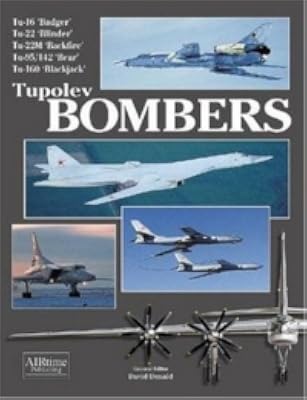
The mainstay of the USSRs strike force, this reliable and adaptable weapons platforms roles include electronic and photographic reconnaissance and maritime patrol, AEW, and command and control. Every variant of the Bear family is examined including cockpits, engines, under-carriages, weapons bays, and more. Written with full access to the Tupolev OKB archives.Tags
Recommendations



















Member Reviews
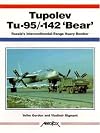
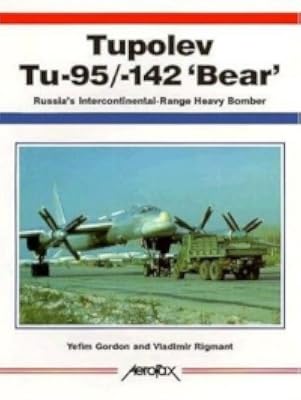
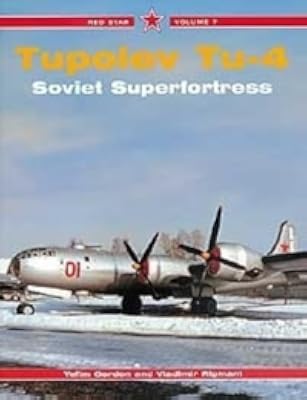
For the best part of fifty years, mention "Russian bombers" to anyone with much of an interest in aviation, and the aircraft they will almost certainly think of will be the Tupolev Tu-95, code-named by NATO "Bear". This book, by two of the best-known Russian writers in the West on Soviet aircraft, gives a detailed history of the type's development. The authors trace its origin back to three Boeing B-29s that made forced landings in the Soviet Far East during the later stages of World War 2, which were promptly sequestered and transported back to Moscow to be pored over and reverse-engineered.
The job was given to the Tupolev design bureau; they eventually produced over 4000 of them. But the advent of atomic weapons and the possibility of show more war with the West meant that the Tu-4 rapidly became obsolete. The Tupolev and Myasishchev design bureaux were given the task of upgrading Soviet long-range strategic aviation. Myasishchev opted for a pure turbojet design, resulting in the M-4 (code-named in the West 'Bison'). The Tupolev bureau investigated swept-wing designs but decided to look at the advantages of turboprop power. The combination turned out highly successful, and the Tu-95 was born.
This book is a fairly factual examination of the Tu-95, illustrated with plentiful photographs of the type (even if many are the traditional "blurred aircraft" photographs we remember from the Cold War era). There are, however, a range of detailed photographs of the type showing close-ups that modellers will find helpful. Many of these, though, do show a restricted tonal range and reproduction could have been better.
The historical account of the type's development and service histories is a bit fact-heavy, although the text shows the different influences of the two writers. Chapters dealing with the type's later variant history have a slightly less heavy style, with the odd anecdote, such as the account of the transfer of production of the Tu-142 naval patrol variant from the factory at Kuibishyev to that at Taganrog, which at first looks like an account of bureaucratic bungling, but which the writer then goes on to describe as an example of how practical problems, overlooked by senior bureaucrats and politicians, had to be overcome in the real world. (This writer also betrays a certain level of hands-on knowledge of his subject.) Other comments show this more real-life approach.
There are accounts of various projects that never made it through development, and also civil and VIP transport variants which saw service as the Tu-114 and -116.
Many aircraft were scrapped as a result of the international Strategic Arms Limitation Treaties, and although recent variants were in production until the 1980s, the type is in the twilight of its years. This is a worthwhile account of an iconic Cold War aircraft. show less
The job was given to the Tupolev design bureau; they eventually produced over 4000 of them. But the advent of atomic weapons and the possibility of show more war with the West meant that the Tu-4 rapidly became obsolete. The Tupolev and Myasishchev design bureaux were given the task of upgrading Soviet long-range strategic aviation. Myasishchev opted for a pure turbojet design, resulting in the M-4 (code-named in the West 'Bison'). The Tupolev bureau investigated swept-wing designs but decided to look at the advantages of turboprop power. The combination turned out highly successful, and the Tu-95 was born.
This book is a fairly factual examination of the Tu-95, illustrated with plentiful photographs of the type (even if many are the traditional "blurred aircraft" photographs we remember from the Cold War era). There are, however, a range of detailed photographs of the type showing close-ups that modellers will find helpful. Many of these, though, do show a restricted tonal range and reproduction could have been better.
The historical account of the type's development and service histories is a bit fact-heavy, although the text shows the different influences of the two writers. Chapters dealing with the type's later variant history have a slightly less heavy style, with the odd anecdote, such as the account of the transfer of production of the Tu-142 naval patrol variant from the factory at Kuibishyev to that at Taganrog, which at first looks like an account of bureaucratic bungling, but which the writer then goes on to describe as an example of how practical problems, overlooked by senior bureaucrats and politicians, had to be overcome in the real world. (This writer also betrays a certain level of hands-on knowledge of his subject.) Other comments show this more real-life approach.
There are accounts of various projects that never made it through development, and also civil and VIP transport variants which saw service as the Tu-114 and -116.
Many aircraft were scrapped as a result of the international Strategic Arms Limitation Treaties, and although recent variants were in production until the 1980s, the type is in the twilight of its years. This is a worthwhile account of an iconic Cold War aircraft. show less
softback
Aviation, Combat Aircraft, Military History, Russia, Russian, Soviet Union, USSR,
Ratings
Members
- Recently Added By
Author Information
140+ Works 2,039 Members
Yefim Gordon is a Russian aviation writer and photographer. He has studied Russian (and Soviet) aviation history for the last thirty years Dmitriy Komissarov is a professional aviation translator and an editor working for Polygon Press Ltd. He has studied Russian (and Soviet) aviation history for the last ten years
All Editions
Series

Classifications
Statistics
- Members
- 28
- Popularity
- 983,283
- Reviews
- 3
- Rating
- (4.50)
- Languages
- English
- Media
- Paper
- ISBNs
- 1