
Russell Miller
Author of The Resistance
About the Author
Russell Miller was born in 1938 in London and now lives in High Wycombe. He is the author of ten previous books and currently writes for The Mail on Sunday. His journalism has won many awards, including Writer of the Year by the Society of British Magazine Editors.
Works by Russell Miller
Magnum: Fifty Years at the Front Line of History: The Story of the Legendary Photo Agency (1997) 144 copies
Codename Tricycle: The True Story of the Second World War's Most Extraordinary Double Agent (2004) 34 copies, 3 reviews
Miller's Australian Competition and Consumer Law Annotated, 37th Edition 2015 - Book (2021) 5 copies
The Clipper Ships 1 copy
Den sanna historien 1 copy
Associated Works
Tagged
Common Knowledge
- Birthdate
- 1938
- Gender
- male
- Occupations
- journalist
author - Nationality
- UK
- Birthplace
- London, England, UK
- Associated Place (for map)
- England, UK
Members
Discussions
Another Blow Against Censorship in Pro and Con (April 2014)
Reviews
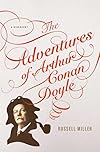
Quite a bio!
Conan Doyle came from a family of intelligent, creative people, including political cartoonists and writers. He inherited and developed both a drawing and writing ability, but also a personality susceptible to a kind of romantic view of the world.
Arthur wrote many "serious" books, and was disappointed that none of them ever attracted the attention his Sherlock Holmes stories did. He considered Holmes lightweight stuff and didn't particularly like being associated only with his show more famous sleuth. He tried to kill him off more than once to divert attention away from him and toward his work on wars, whaling, and, later, spiritualism and faeries. But his bigger works never caught on, and were often the subject of ridicule by critics.
As a person, Conan Doyle was "larger than life". He was tall, broad, a formidable person. He was an adventurer, always looking for more from the world. Thus he sailed on a whaling ship and took part in whaling as well as the killing of seals and other sea animals. He got into the Boer Wars as a medic (he was trained as a doctor) and survived horrific conditions. He later visited the front in the first World War, and wrote a six-volume history of the war (not well received).
When Conan Doyle took up spiritualism he was ridiculed mercilessly, but ridicule only spurred him on. He and his second wife, Jean, blazed a trail across the United States, speaking on spiritualism, and later did the same in Africa, with less success. His gullibility in this venture is difficult to understand if one compares it to the personality of Sherlock Holmes, who was guided by science. But the two are not alike.
Arthur's devotion to his beliefs was both endearing and frustrating. While still married to his first wife, Touie, he fell in love with Jean and carried on a chaste "affair" with her until Touie died. Touie was sick for many years and couldn't have not known about this other interest, especially as Jean was often a guest at their home. Yet Arthur felt he was behaving entirely appropriately. As long as the affair was not consummated he couldn't see the problem.
When Touie died, Jean arranged that Conan Doyle's two older children (by Touie) were away at school until grown. It is clear in this book that the author has no love for Jean and I admit I shared that feeling.
A highly detailed and readable biography of a man of almost boyish beliefs and integrity, an intelligent yet naive and oddly trusting writer. show less
Conan Doyle came from a family of intelligent, creative people, including political cartoonists and writers. He inherited and developed both a drawing and writing ability, but also a personality susceptible to a kind of romantic view of the world.
Arthur wrote many "serious" books, and was disappointed that none of them ever attracted the attention his Sherlock Holmes stories did. He considered Holmes lightweight stuff and didn't particularly like being associated only with his show more famous sleuth. He tried to kill him off more than once to divert attention away from him and toward his work on wars, whaling, and, later, spiritualism and faeries. But his bigger works never caught on, and were often the subject of ridicule by critics.
As a person, Conan Doyle was "larger than life". He was tall, broad, a formidable person. He was an adventurer, always looking for more from the world. Thus he sailed on a whaling ship and took part in whaling as well as the killing of seals and other sea animals. He got into the Boer Wars as a medic (he was trained as a doctor) and survived horrific conditions. He later visited the front in the first World War, and wrote a six-volume history of the war (not well received).
When Conan Doyle took up spiritualism he was ridiculed mercilessly, but ridicule only spurred him on. He and his second wife, Jean, blazed a trail across the United States, speaking on spiritualism, and later did the same in Africa, with less success. His gullibility in this venture is difficult to understand if one compares it to the personality of Sherlock Holmes, who was guided by science. But the two are not alike.
Arthur's devotion to his beliefs was both endearing and frustrating. While still married to his first wife, Touie, he fell in love with Jean and carried on a chaste "affair" with her until Touie died. Touie was sick for many years and couldn't have not known about this other interest, especially as Jean was often a guest at their home. Yet Arthur felt he was behaving entirely appropriately. As long as the affair was not consummated he couldn't see the problem.
When Touie died, Jean arranged that Conan Doyle's two older children (by Touie) were away at school until grown. It is clear in this book that the author has no love for Jean and I admit I shared that feeling.
A highly detailed and readable biography of a man of almost boyish beliefs and integrity, an intelligent yet naive and oddly trusting writer. show less

Bare-Faced Messiah is a well-written account of the life of L. Ron Hubbard, prolific writer of pulp fiction, inventor of Dianetics, and founder of the Church of Scientology. The author cuts through the mythical life story created by Hubbard himself and reinforced by decades of Scientology propaganda to tell a remarkable story of Hubbard’s upbringing, including his family’s many moves across the USA to follow his father, who was in the Navy, and of Hubbard’s journey to see his parents show more in Guam, where his father was stationed, which required travelling through Shanghai, Manila, and Japan. These experiences, his immense imagination, and his ability to work all night if need be to turn out a story, fueled Hubbard’s success as a pulp writer. Like most such writers, however, he longed for more. With the encouragement of John W. Campbell, the legendary editor of Astounding Science Fiction, Hubbard invented and published his first piece on Dianetics in 1937. Science Fiction fans and others flocked to him to be “audited” and “cleared” of impediments created in their past lives. Some of the examples provided in the book are hilarious.
The popularity of Dianetics continued to grow despite some rough spots here and there. As in all such ventures, personality clashes ensued, and Hubbard, who even in his younger years was a bit paranoid, did what he had to do to maintain control. The icing on the cake was the invention of Scientology, which subsumed Dianetics and added a whole new class of immortal beings roaming about the galaxy and inhabiting our bodies temporarily on Earth. Afraid of governments and tax collectors, Hubbard even took to the high seas for a few years on a huge ship manned by a crew of Scientologists with only a couple of professional seamen to maintain order.
Oh well—I could go on and on relating parts of the story, but that really isn’t the point. It is fascinating, just trust me. The key part of this review has to be an assessment of a couple of things—Hubbard himself and the religion he created. Was he insane? I think not, although he certainly did a few insane things. The discipline and punishments he dealt out onboard his ship, for instance, were both puerile and draconian. And doing his speaking through teenage messengers clad in hot pants and halter tops might also seem a little weird. But through it all, he managed to outmaneuver the government and just about everyone else. He engendered fierce loyalty in enough people for a long enough time to effect his various escapes and moves from one hiding place to another. He kept the money rolling in. Not many insane people can do that. Despite his cruelty and paranoia—not to mention the way he treated his family—one can’t help but admire the achievement of a lowly pulp writer lifting himself to the status, in the eyes of many of his followers, of a god. The author’s extensive interviews with the people who were closest to Hubbard help paint a well-rounded picture.
As for weaknesses, the rise of Scientology from its shaky initial status to an organization that was pulling in millions of dollars each month is not really explained, since much of this took place somewhere else while Hubbard was at sea. Clearly there were some smart folks in charge back home, but we don’t hear enough about them to understand how they pulled it off. Also, since the book ends shortly after Hubbard’s death, the ability of Scientology to survive (and, I suppose, thrive) after the death of its creator, isn’t covered.
And Scientology itself? I don’t buy it. But is it any more ridiculous than the story of Joseph Smith digging up those plates in the desert that he conveniently lost later? Is it more ridiculous than a virgin birth? Is it more ridiculous than hundreds of millions of Catholics believing the Pope talks to god despite the pitiful record of the church through the ages?
Again—just trust me and read this book. It is fascinating. The entire text is available online. show less
The popularity of Dianetics continued to grow despite some rough spots here and there. As in all such ventures, personality clashes ensued, and Hubbard, who even in his younger years was a bit paranoid, did what he had to do to maintain control. The icing on the cake was the invention of Scientology, which subsumed Dianetics and added a whole new class of immortal beings roaming about the galaxy and inhabiting our bodies temporarily on Earth. Afraid of governments and tax collectors, Hubbard even took to the high seas for a few years on a huge ship manned by a crew of Scientologists with only a couple of professional seamen to maintain order.
Oh well—I could go on and on relating parts of the story, but that really isn’t the point. It is fascinating, just trust me. The key part of this review has to be an assessment of a couple of things—Hubbard himself and the religion he created. Was he insane? I think not, although he certainly did a few insane things. The discipline and punishments he dealt out onboard his ship, for instance, were both puerile and draconian. And doing his speaking through teenage messengers clad in hot pants and halter tops might also seem a little weird. But through it all, he managed to outmaneuver the government and just about everyone else. He engendered fierce loyalty in enough people for a long enough time to effect his various escapes and moves from one hiding place to another. He kept the money rolling in. Not many insane people can do that. Despite his cruelty and paranoia—not to mention the way he treated his family—one can’t help but admire the achievement of a lowly pulp writer lifting himself to the status, in the eyes of many of his followers, of a god. The author’s extensive interviews with the people who were closest to Hubbard help paint a well-rounded picture.
As for weaknesses, the rise of Scientology from its shaky initial status to an organization that was pulling in millions of dollars each month is not really explained, since much of this took place somewhere else while Hubbard was at sea. Clearly there were some smart folks in charge back home, but we don’t hear enough about them to understand how they pulled it off. Also, since the book ends shortly after Hubbard’s death, the ability of Scientology to survive (and, I suppose, thrive) after the death of its creator, isn’t covered.
And Scientology itself? I don’t buy it. But is it any more ridiculous than the story of Joseph Smith digging up those plates in the desert that he conveniently lost later? Is it more ridiculous than a virgin birth? Is it more ridiculous than hundreds of millions of Catholics believing the Pope talks to god despite the pitiful record of the church through the ages?
Again—just trust me and read this book. It is fascinating. The entire text is available online. show less
Codename Tricycle: The True Story of the Second World War's Most Extraordinary Double Agent by Russell Miller
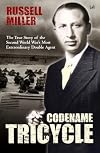
The writing is good and clear. What is wonderful is the story -- the person. Dusko Popov was Yugoslavian playboy and the man that James Bond was modelled after, only the kind of spying he did had nothing to do with the Ian Fleming novels. As Popov pointed out and Miller writes, "James Bond wouldn't have lasted forty-eight hours in the real world of espionage." But that doesn't make Popov's story any less interesting or exciting. In fact it is more of both of those because it is all true. And show more the real world of espionage is much more involved and intricate, involving much more knowledge, memory, and acting than anything Bond took part in. show less
Codename Tricycle : the true story of the Second World War's most extraordinary double agent by Russell Miller
A good book on a fascinating story. Like many, I knew the name and a vague connection to Operation Fortitude, the D-Day deception, but no more. This biography goes into far more detail.
As a personal biography, this is excellent. It gives a real sense of the person, his background before the war and his simple motivation for just what a complex path he ended up taking between the various factions: three Yugoslav groups, the British, the Americans and even the internal feuds within the show more different German military and security services.
The most surprising aspect was his time in the US, of which I'd not heard before, including some clear indications of a likely attack on Pearl Harbour. Famously this was not acted on, and the question of whether that was due to accident, Hoover's bigotry, or a deliberate plot on the Coventry model still remains open.
Sadly the book did fall down a little when it came to D-Day. It's hardly mentioned. Popov's part in the build-up is clear, but what happened afterwards? Did his Abwehr handler realise that they had been duped? How did they react? This is skipped over so lightly that it's hard to say where in the book's chronology D-Day even took place.
The focus of the later part of the book switches to Popov's friend and Abwehr colleague (or co-conspirator), Johnny Jebsen. After surviving through most of the war, despite also working as a double-agent, he was arrested in 1945 and disappeared into a concentration camp.
Overall this is a very good book. But the handling of D-Day is lacking and does leave something of a gap. I'd also love to read another book of this level on the intelligence position regarding Pearl Harbour, and how that came to have so little effect on any response to the attack. show less
As a personal biography, this is excellent. It gives a real sense of the person, his background before the war and his simple motivation for just what a complex path he ended up taking between the various factions: three Yugoslav groups, the British, the Americans and even the internal feuds within the show more different German military and security services.
The most surprising aspect was his time in the US, of which I'd not heard before, including some clear indications of a likely attack on Pearl Harbour. Famously this was not acted on, and the question of whether that was due to accident, Hoover's bigotry, or a deliberate plot on the Coventry model still remains open.
Sadly the book did fall down a little when it came to D-Day. It's hardly mentioned. Popov's part in the build-up is clear, but what happened afterwards? Did his Abwehr handler realise that they had been duped? How did they react? This is skipped over so lightly that it's hard to say where in the book's chronology D-Day even took place.
The focus of the later part of the book switches to Popov's friend and Abwehr colleague (or co-conspirator), Johnny Jebsen. After surviving through most of the war, despite also working as a double-agent, he was arrested in 1945 and disappeared into a concentration camp.
Overall this is a very good book. But the handling of D-Day is lacking and does leave something of a gap. I'd also love to read another book of this level on the intelligence position regarding Pearl Harbour, and how that came to have so little effect on any response to the attack. show less
Lists
Read in 2016 (1)
Awards

You May Also Like


Associated Authors
Statistics
- Works
- 39
- Also by
- 3
- Members
- 2,210
- Popularity
- #11,600
- Rating
- 3.9
- Reviews
- 24
- ISBNs
- 120
- Languages
- 10