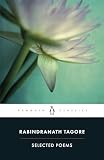
Selected Poems
by Rabindranath Tagore
On This Page
Description
HarperCollins is proud to present its incredible range of best-loved, essential classics.In 1913, Rabindranath Tagore became the first non-European to win the Nobel Prize in Literature, and he remains one of the most important voices of Bengali culture to this day. Tagore's poetry continues to rise above geographic and cultural boundaries to capture the imaginations of readers around the world.Tags
Recommendations

















Member Reviews
An excellent collection of poems sampled over Tagore’s life, from age 21 to 79, with intelligent commentary and translation from William Radice. Tagore was truly enlightened, and an advocate for women, the poor, and children. He was well-read in Indian classics and loved his native Bengal, yet had regular contact with the West and traveled throughout his life, finding himself ‘discovered’ by W.B. Yeats and then winning the Nobel Prize for Literature in 1913. He was a deeply spiritual man and yet balanced, seeing a need to avoid asceticism, which he associated with science without poetry, and passionless intellect. He was an idealist who refused to compromise, criticizing the Rowlatt Act against Sedition five years after his Nobel show more Prize, angering Britain, and yet detaching himself from Gandhi and the Swaraj (home rule) campaign a few years later.
All of that comes out in his poems, which are lyrical, inventive, and often contain dual meaning. It seems translation is extraordinarily difficult, but I really enjoyed what I was able to read here, and that was true from beginning to end; his poems did not diminish in quality with age. Clearly an author to read more of for me.
Quotes:
On beauty:
“I can only gaze at the universe
In its full, true form,
At the millions of stars in the sky
Carrying their huge harmonious beauty –
Never breaking their rhythm
Or losing their tune,
Never deranged
And never stumbling –
I can only gaze and see, in the sky,
The spreading layers
Of a vast, radiant, petalled rose.”
On children, this to the “bespectacled grandfather” who is “trapped in my work like a spiderwebbed fly”:
“Flooding of my study with your leaps and your capers,
Work gone, books flying, avalanche of papers.
Arms round my neck, in my lap bounce thump –
Hurricane of freedom in my heart as you jump.
Who has taught you, how he does it, I shall never know –
You’re the one who teaches me to let myself go.”
On hospitality, and communicating without language:
“Lady, your kindness is a star, the same solemn tune
In your glance seems to say, ‘I know you are mine.’
I do not know your language, but I hear your melody:
‘Poet, guest of my love, my guest eternally.’”
On idealism:
“I know what a risk one runs from the vigorously athletic crowds in being styled an idealist in these days, when thrones have lost their dignity and prophets have become an anachronism, when the sound that drowns all voices is the noise of the market-place. Yet when, one day, standing on the outskirts of Yokohama town, bristling with its display of modern miscellanies, I watched the sunset in your southern sea, and saw its peace and majesty among your pine-clad hills, - with your great Fujiyama growing faint against the golden horizon, like a god overcome with his own radiance, - the music of eternity welled up through the evening silence, and I felt that the sky and the earth and the lyrics of the dawn and the dayfall are with the poets and the idealists, and not with the marketmen robustly contemptuous of all sentiment, - that, after the forgetfulness of his own divinity, man will remember again that heaven is always in touch with his world, which can never be abandoned for good to the hounding wolves of the modern era, scenting human blood and howling to the skies.”
On joy:
“It dances today, my heart, my heart, like a peacock it dances, it dances.”
On love without boundaries, without regard to convention (with a meaning that can be spiritual pursuit or beliefs):
“I find you when and where I choose,
Whenever it pleases me –
No fuss or preparation: tell me,
Who will know but we?
Throwing caution to the winds,
Spurned by all around,
Come, my outcaste love, O let us
Travel, freedom-bound.”
On the Taj Mahal, and undying love:
“The names you softly
Whispered to your love
On moonlit nights in secret chambers live on
Here
As whispers in the ear of eternity.”
On trees:
“O profound,
Silent tree, by restraining valour
With patience, you revealed creative
Power in its peaceful form. Thus we come
To your shade to learn the art of peace,
To hear the world of silence; weighed down
With anxiety, we come to rest
In your tranquil blue-green shade…” show less
All of that comes out in his poems, which are lyrical, inventive, and often contain dual meaning. It seems translation is extraordinarily difficult, but I really enjoyed what I was able to read here, and that was true from beginning to end; his poems did not diminish in quality with age. Clearly an author to read more of for me.
Quotes:
On beauty:
“I can only gaze at the universe
In its full, true form,
At the millions of stars in the sky
Carrying their huge harmonious beauty –
Never breaking their rhythm
Or losing their tune,
Never deranged
And never stumbling –
I can only gaze and see, in the sky,
The spreading layers
Of a vast, radiant, petalled rose.”
On children, this to the “bespectacled grandfather” who is “trapped in my work like a spiderwebbed fly”:
“Flooding of my study with your leaps and your capers,
Work gone, books flying, avalanche of papers.
Arms round my neck, in my lap bounce thump –
Hurricane of freedom in my heart as you jump.
Who has taught you, how he does it, I shall never know –
You’re the one who teaches me to let myself go.”
On hospitality, and communicating without language:
“Lady, your kindness is a star, the same solemn tune
In your glance seems to say, ‘I know you are mine.’
I do not know your language, but I hear your melody:
‘Poet, guest of my love, my guest eternally.’”
On idealism:
“I know what a risk one runs from the vigorously athletic crowds in being styled an idealist in these days, when thrones have lost their dignity and prophets have become an anachronism, when the sound that drowns all voices is the noise of the market-place. Yet when, one day, standing on the outskirts of Yokohama town, bristling with its display of modern miscellanies, I watched the sunset in your southern sea, and saw its peace and majesty among your pine-clad hills, - with your great Fujiyama growing faint against the golden horizon, like a god overcome with his own radiance, - the music of eternity welled up through the evening silence, and I felt that the sky and the earth and the lyrics of the dawn and the dayfall are with the poets and the idealists, and not with the marketmen robustly contemptuous of all sentiment, - that, after the forgetfulness of his own divinity, man will remember again that heaven is always in touch with his world, which can never be abandoned for good to the hounding wolves of the modern era, scenting human blood and howling to the skies.”
On joy:
“It dances today, my heart, my heart, like a peacock it dances, it dances.”
On love without boundaries, without regard to convention (with a meaning that can be spiritual pursuit or beliefs):
“I find you when and where I choose,
Whenever it pleases me –
No fuss or preparation: tell me,
Who will know but we?
Throwing caution to the winds,
Spurned by all around,
Come, my outcaste love, O let us
Travel, freedom-bound.”
On the Taj Mahal, and undying love:
“The names you softly
Whispered to your love
On moonlit nights in secret chambers live on
Here
As whispers in the ear of eternity.”
On trees:
“O profound,
Silent tree, by restraining valour
With patience, you revealed creative
Power in its peaceful form. Thus we come
To your shade to learn the art of peace,
To hear the world of silence; weighed down
With anxiety, we come to rest
In your tranquil blue-green shade…” show less
The Bengal poet is the sanyasi at the foot of siva would he best the first yogis? Recalcitrant and aloof but a seer no less
Ratings
Members
- Recently Added By
Lists

Nobel Price Winners
222 works; 20 members

In Our Time books
4,934 works; 2 members
Author Information

1,022+ Works 9,564 Members
Rabindranath Tagore was born on May 7, 1861 in Calcutta, India. He attended University College, at London for one year before being called back to India by his father in 1880. During the first 51 years of his life, he achieved some success in the Calcutta area of India with his many stories, songs, and plays. His short stories were published show more monthly in a friend's magazine and he played the lead role in a few of the public performances of his plays. While returning to England in 1912, he began translating his latest selections of poems, Gitanjali, into English. It was published in September 1912 in a limited edition by the India Society in London. In 1913, he received the Nobel Prize for literature. He was the first non-westerner to receive the honor. In 1915, he was knighted by King George V, but Tagore renounced his knighthood in 1919 following the Amritsar massacre of 400 Indian demonstrators by British troops. He primarily worked in Bengali, but after his success with Gitanjali, he translated many of his other works into English. He wrote over one thousand poems; eight volumes of short stories; almost two dozen plays and play-lets; eight novels; and many books and essays on philosophy, religion, education and social topics. He also composed more than two thousand songs, both the music and lyrics. Two of them became the national anthems of India and Bangladesh. He died on August 7, 1941 at the age of 80. (Bowker Author Biography) show less
Some Editions
Awards and Honors
Notable Lists
Series
Belongs to Publisher Series
Common Knowledge
- Canonical title
- Selected Poems
- Original title
- rabindraracanabali
- Original publication date
- 1985
- Original language
- Bengali
Classifications
- Genres
- Poetry, Fiction and Literature
- DDC/MDS
- 891.4415 — Literature & rhetoric Literatures of other languages East Indo-European and Celtic literatures Modern Indic languages Bengali Poetry 1895–1920
- LCC
- PK1722 .A2 .R3 — Language and Literature Indo-Iranian languages and literatures Indo-Iranian philology and literature Indo-Aryan languages Modern Indo-Aryan languages Particular languages and dialects Bengali
- BISAC
Statistics
- Members
- 365
- Popularity
- 85,423
- Reviews
- 2
- Rating
- (3.79)
- Languages
- English
- Media
- Paper, Ebook
- ISBNs
- 12
- ASINs
- 4