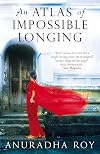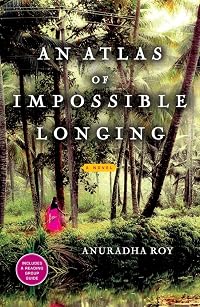
An Atlas of Impossible Longing
by Anuradha Roy
On This Page
Description
"Roy's impressive American debut covers multiple generations of an Indian family from the turn of the 20th century to India's partition. Three distinct sections revolve around Amulya, who runs an herbal medicine and fragrance business; his mentally ill wife, Kananbala, who spies on the goings-on of her English neighbors from the room Amulya keeps her locked in; their sons, Kamal and Nirmal; their wives; Nirmal's daughter Bakul, whose mother died in childbirth; and finally Mukunda, an orphan show more that Amulya helps support, at which point Nirmal brings Mukunda home as a companion for Bakul. Tales weave backward and forward, and characters wallow in their longings, occasionally taking action; Mukunda and Bakul form a lasting bond that doesn't change with their circumstances. The book unfolds in third person until the final section, when Mukunda steps in as narrator to provide a welcome personal perspective on years of events. Roy is especially good at sensory description, making the sounds, smells, and feel of Bengal come vividly to life. Cultures may differ, but longing and love are universal." --Publishers weekly show lessTags
Recommendations






















Member Reviews
Anuradha Roy (whose Wikipedia page warns from the start: "Not to be confused with Arundhati Roy", a bestselling author, both writers having a Bengali heritage) is a new author to me, and for a moment at that bookstore, I confess, I did confuse her with the other, more known novelist.
But even judging from this debut novel (and she wrote 3 more since then) Anuradha Roy struck me as quite a mature writer. I especially liked this book, as I have some intimate knowledge of Bengali culture.
The story starts in 1920s and goes on until after the Partition of India. An interesting feature is that it's hard to pinpoint a single protagonist until the last third of the book, which from then on is written from the first person. Also, only then one show more can gets a glimpse into the title of the novel as well. Another thing I liked was that the story line was NOT predictable, the characters very colorful, and their traits confirmed all that I know about Bengali culture and many things of India in general. Also, marvelous attention to detail in describing even secondary characters - they truly come to life, with all their quirks, passions, and what not... And although the whole story is permeated with melancholy, it flows lyrically and beautifully. I shall certainly seek Anuradha Roy's other novels. show less
But even judging from this debut novel (and she wrote 3 more since then) Anuradha Roy struck me as quite a mature writer. I especially liked this book, as I have some intimate knowledge of Bengali culture.
The story starts in 1920s and goes on until after the Partition of India. An interesting feature is that it's hard to pinpoint a single protagonist until the last third of the book, which from then on is written from the first person. Also, only then one show more can gets a glimpse into the title of the novel as well. Another thing I liked was that the story line was NOT predictable, the characters very colorful, and their traits confirmed all that I know about Bengali culture and many things of India in general. Also, marvelous attention to detail in describing even secondary characters - they truly come to life, with all their quirks, passions, and what not... And although the whole story is permeated with melancholy, it flows lyrically and beautifully. I shall certainly seek Anuradha Roy's other novels. show less
An Atlas of Impossible Longing is essentially a book that details what happens within a small-town Indian family for three generations (one of those "three-generational Indian sagas"). It can be described as historical fiction, its events ranging in time from the 1920s to the 1940s, but historical detail takes a backseat to the trials, mistakes, and longings of the central characters of the story.
The book is divided into three sections. The first is about Amulya and his wife, Kananbala. The couple is getting on in years; of their two sons, the elder is married and the younger marries during the course of the story. All's going well in home life and business, until Kananbala begins showing signs of madness, there's a murder across the show more street, and the new daughter-in-law, pregnant with her first child, is trapped in her father's flooded house. In the second section, Kananbala continues to live in her family's home, along with her son, daughter-in-law, granddaughter (Bakul), and two stray relatives: an orphan boy, Mukunda, and a widowed cousin. Bakul and Mukunda, growing up with little supervision, are unusually close to each other, which begins to be problematic as the two mature into adulthood. By the third section, Mukunda is on his own in Calcutta, cut loose from his former family, yet still, buried deep inside him, is an "impossible longing" for Bakul and his life back in the town he grew up in.
I rarely read books that seem magical simply because of the way the stories they tell are written. This is one of those, and it reminded me a lot of One Hundred Years of Solitude by Gabriel Garcia Marquez (only without the magical realism). Unfortunately, the magic didn't last for the entire book. It ended after the second section, though it kept coming back briefly (and, barely, in time for the conclusion). I'm not sure if this was Roy's intention or not, but the most "magical" parts of the story are the ones that take place in the small towns of India. The portion of the book when Mukunda lives in Calcutta is the most irritating part: Mukunda is a hard character to sympathize with; the setting, writing, and characters lose their magic; readers lose track of the "impossible longing" of the story and want to smack Mukunda upside the head to wake him up. All in all, however, I loved this book. With the exception of Mukunda's idiocies in Calcutta, all of the events seem to flow naturally. My one real complaint about An Atlas of Impossible Longing? The author never really tells us what happens to Meera, the widowed cousin in the second section whose story, had it taken a different path, could have filled up a separate book. show less
The book is divided into three sections. The first is about Amulya and his wife, Kananbala. The couple is getting on in years; of their two sons, the elder is married and the younger marries during the course of the story. All's going well in home life and business, until Kananbala begins showing signs of madness, there's a murder across the show more street, and the new daughter-in-law, pregnant with her first child, is trapped in her father's flooded house. In the second section, Kananbala continues to live in her family's home, along with her son, daughter-in-law, granddaughter (Bakul), and two stray relatives: an orphan boy, Mukunda, and a widowed cousin. Bakul and Mukunda, growing up with little supervision, are unusually close to each other, which begins to be problematic as the two mature into adulthood. By the third section, Mukunda is on his own in Calcutta, cut loose from his former family, yet still, buried deep inside him, is an "impossible longing" for Bakul and his life back in the town he grew up in.
I rarely read books that seem magical simply because of the way the stories they tell are written. This is one of those, and it reminded me a lot of One Hundred Years of Solitude by Gabriel Garcia Marquez (only without the magical realism). Unfortunately, the magic didn't last for the entire book. It ended after the second section, though it kept coming back briefly (and, barely, in time for the conclusion). I'm not sure if this was Roy's intention or not, but the most "magical" parts of the story are the ones that take place in the small towns of India. The portion of the book when Mukunda lives in Calcutta is the most irritating part: Mukunda is a hard character to sympathize with; the setting, writing, and characters lose their magic; readers lose track of the "impossible longing" of the story and want to smack Mukunda upside the head to wake him up. All in all, however, I loved this book. With the exception of Mukunda's idiocies in Calcutta, all of the events seem to flow naturally. My one real complaint about An Atlas of Impossible Longing? The author never really tells us what happens to Meera, the widowed cousin in the second section whose story, had it taken a different path, could have filled up a separate book. show less
I too bought this book by mistake, I was looking instead for Arundathi Roy's God of Small Things. However I believe that it was a mistake I would gladly make again.
I enjoyed this book tremendously, it was beautifully written and draws you in. While I had trouble reading it due to it's slow phase (Spanning three generations of characters) once I got over it, I could not stop. It's melancholic, infused with realism and there isn't a point where I could deny the possibility of it happening in real life. The authoress captured the essence of India perfectly, from the silent and lifeless villages to the bustling, chaotic Calcutta. I liked how she pulled away from a third person perspective to finally introducing the readers to a first person show more narrative.
There were a few parts though that pained me. The first was how the authoress sift through characters without prior thought, namely Meera and Suleiman Chacha. I would have liked to know more about them, what happened to Meera for instance after she left Songarh. It seemed a little rushed to me but maybe it's the style. The ending was good, bittersweet and nothing too fairy-tale like but I had to think about Mukunda's wife. Yes, given the circumstances, they are technically separated but I don't see the justification in ending the story there without any follow up.
Overall, I found this book to be quite the jewel. show less
I enjoyed this book tremendously, it was beautifully written and draws you in. While I had trouble reading it due to it's slow phase (Spanning three generations of characters) once I got over it, I could not stop. It's melancholic, infused with realism and there isn't a point where I could deny the possibility of it happening in real life. The authoress captured the essence of India perfectly, from the silent and lifeless villages to the bustling, chaotic Calcutta. I liked how she pulled away from a third person perspective to finally introducing the readers to a first person show more narrative.
There were a few parts though that pained me. The first was how the authoress sift through characters without prior thought, namely Meera and Suleiman Chacha. I would have liked to know more about them, what happened to Meera for instance after she left Songarh. It seemed a little rushed to me but maybe it's the style. The ending was good, bittersweet and nothing too fairy-tale like but I had to think about Mukunda's wife. Yes, given the circumstances, they are technically separated but I don't see the justification in ending the story there without any follow up.
Overall, I found this book to be quite the jewel. show less
In this beautiful and melancholic story, we follow several generations of a Bengali family and their intertwining lives. Whoever they are, every character secretly pines for something or someone, but never being able to sever the strong bonds of family and tradition, their lives go on and their longings remain desperately impossible...
This novel is delicately written and lively with colorful characters. Stories of impossible love are always sad, but Anuradha Roy's beautiful narration uncovers the hidden joy of hope in the most desperate situations.
This novel is delicately written and lively with colorful characters. Stories of impossible love are always sad, but Anuradha Roy's beautiful narration uncovers the hidden joy of hope in the most desperate situations.
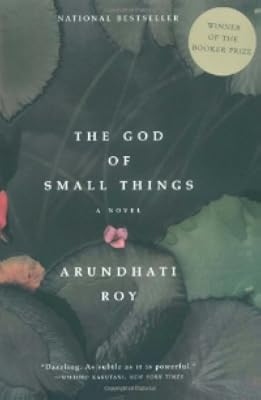
When I took note of this book, I had mistook the author as the one who had written The God Of Small Things. In case you are in the same pickle, these are different authors - the other being Arundhati Roy. Close, but not the same. And it becomes obvious when I opened to the first page of An Atlas Of Impossible Longing when typical prose greets me instead of the lyrical joie de vivre of words that The God Of Small Things had.
But this is not supposed to be a comparison piece. So I'll get on with the review of An Atlas Of Impossible Longing now:
The story unfolds slowly - and while there had been a cast of characters at the beginning, I still got a little lost with putting names to the characters. It was especially hard to learn everyone's show more names since I was unfamiliar with them and could not tell between male and female names. Once the characters started to distinguish themselves by personality, I was able to focus more on the story and therefore dive into the dominant characters' inner conflicts.
An Atlas Of Impossible Longing is a story full of longing - for love, for attention, for respect, for revenge, for money, for comfort, for things that may never fall within one's grasp. As I got to know the characters better, their desires and needs swept me away like the river that acted as a catalyst for changing the family dynamics. I don't know much about Indian culture, but I am always shocked at how stifled / passive-aggressive / unfair things can be for both women and men, poor and rich, young and old, parent and child.
It was interesting to watch as the children - Bakul and Mukunda - grow up into their adult selves. I wish we had gained more insight of Bakul, but the story instead gives us the first-person perspective of Mukunda in Part 3. Don't get me wrong, I appreciated Mukunda's thoughts - but he is male, and I think that gave him a little leg up in the world than Bakul who has more limitations as a female.
While this is not the usual reading I go for, I am glad that I stuck with it because the story is truly well worth the journey. A slow start that does not seem to have a reason, but each character's yearning builds as the pages turn and I became anxious to see if they would become stagnant or finally find what they were looking for.
I can definitely see An Atlas Of Impossible Longing providing great food-for-thought in book clubs and classrooms. show less
But this is not supposed to be a comparison piece. So I'll get on with the review of An Atlas Of Impossible Longing now:
The story unfolds slowly - and while there had been a cast of characters at the beginning, I still got a little lost with putting names to the characters. It was especially hard to learn everyone's show more names since I was unfamiliar with them and could not tell between male and female names. Once the characters started to distinguish themselves by personality, I was able to focus more on the story and therefore dive into the dominant characters' inner conflicts.
An Atlas Of Impossible Longing is a story full of longing - for love, for attention, for respect, for revenge, for money, for comfort, for things that may never fall within one's grasp. As I got to know the characters better, their desires and needs swept me away like the river that acted as a catalyst for changing the family dynamics. I don't know much about Indian culture, but I am always shocked at how stifled / passive-aggressive / unfair things can be for both women and men, poor and rich, young and old, parent and child.
It was interesting to watch as the children - Bakul and Mukunda - grow up into their adult selves. I wish we had gained more insight of Bakul, but the story instead gives us the first-person perspective of Mukunda in Part 3. Don't get me wrong, I appreciated Mukunda's thoughts - but he is male, and I think that gave him a little leg up in the world than Bakul who has more limitations as a female.
While this is not the usual reading I go for, I am glad that I stuck with it because the story is truly well worth the journey. A slow start that does not seem to have a reason, but each character's yearning builds as the pages turn and I became anxious to see if they would become stagnant or finally find what they were looking for.
I can definitely see An Atlas Of Impossible Longing providing great food-for-thought in book clubs and classrooms. show less
The ‘impossible longings’ of this fine novel are caused by the social restrictions imposed on Indians of low caste, and on women, in 20th century India. The story is in three parts, set in the 1920’s, 1940’s and 1950’s. In part one, Amulya’s wife, Kananbala, forced to live in the remote village of Songarh, finds her life to be empty, apart from her son, Nirmal, and the strange doings at the Barnum house across the road (where she witnesses a murder). Kananbala gradually succumbs to dementia. Nirmal marries Shasti, who dies in childbirth. Bakul, Nirmal’s daughter, is brought up in Amulya’s household, along with the orphan, Mukunda, and they become inseparable, until Nirmal is forced by his brother and sister-in-law, to show more send Mukunda off to boarding school.
After graduating from school, Mukunda works for a shady property developer in Calcutta. He marries and has a son, but coincidentally is drawn into saving his old family home from the developer, by purchasing it and consequently plunging his new family into poverty and squalor. Mukunda is finally reunited with Bakul, his childhood friend. The characters, background and social tensions are all beautifully developed in this well written novel. show less
After graduating from school, Mukunda works for a shady property developer in Calcutta. He marries and has a son, but coincidentally is drawn into saving his old family home from the developer, by purchasing it and consequently plunging his new family into poverty and squalor. Mukunda is finally reunited with Bakul, his childhood friend. The characters, background and social tensions are all beautifully developed in this well written novel. show less
So sad, just longings and even the end was only bittersweet. I really was heartbroken at this book. Most lives were nothing but heartache.
Members
- Recently Added By
Lists

BBC World Book Club
265 works; 5 members
Author Information

14 Works 1,226 Members
Anuradha Roy is an Indian novelist who has won the 2016 DSC Prize for South Asian Literature for her novel Sleeping on Jupiter. Roy's novel was selected from a shortlist of six to win the US$50,000 (A$72,907) prize, which is awarded annually to the best work of fiction pertaining to the South Asian region published in English. Her other novels show more include An Atlas of Impossible Longing and The Folded Earth. Her previous awards include the Crossword Book Award, the 2015 Man Booker Prize longlist, and the Hindu Literary Prize 2015 shortlist. (Bowker Author Biography) show less
Awards and Honors
Common Knowledge
- Canonical title
- An Atlas of Impossible Longing
- Original title
- An Atlas of Impossible Longing
- Original publication date
- 2008
- Dedication
- For Baba, still here
- First words
- The house in the picture is afloat on a river the innocuous colour of darkening sepia.
- Blurbers
- Crouch, Katie
Classifications
Statistics
- Members
- 418
- Popularity
- 73,762
- Reviews
- 13
- Rating
- (3.66)
- Languages
- 9 — Dutch, English, Estonian, French, Norwegian (Bokmål), Portuguese, Romanian, Spanish, Swedish
- Media
- Paper, Ebook
- ISBNs
- 23
- ASINs
- 6