On This Page
Description
After the presumed death of their long-absent father, Edred inherits the title of Lord Arden and moves with his sister Elfrida into the decrepit family castle where they find an ancient spell that conjures up the magical Mouldiwarp and, with his help, set off on a journey through time in search of the lost Arden treasure.Tags
Recommendations





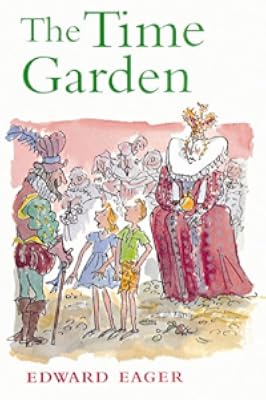
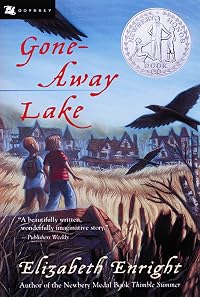

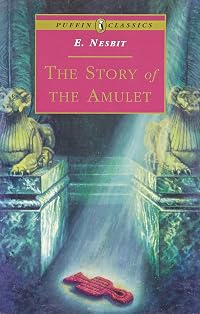
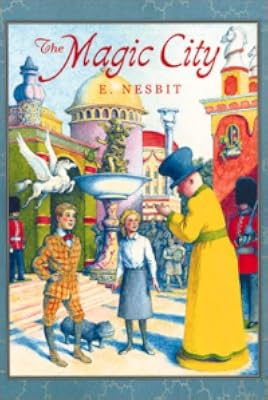





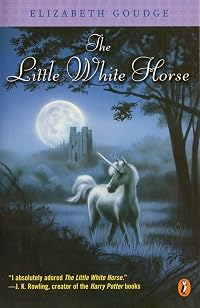
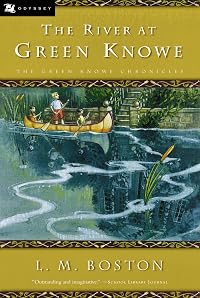

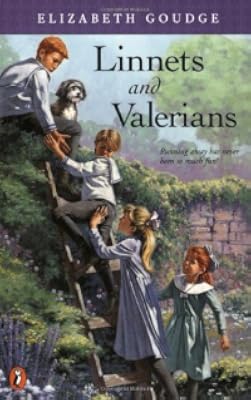
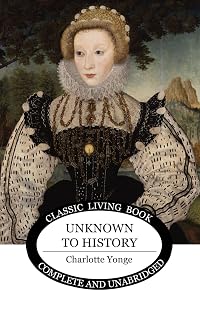





Member Recommendations

Member Reviews
Edred and Elfrida Arden discover that Edred is the next Lord Arden and that they are to live in run-down old Arden Castle in this 1908 children's fantasy novel from the pen of E. Nesbit, the celebrated Edwardian author of such classics as The Enchanted Castle and The Five Children and It. Learning the story of the lost Arden treasure, and the tale of how the Mouldiwarp—the magical white mole who is also the emblem of the House of Arden—can be summoned to help them, the brother and sister embark on a quest through time, traveling to various periods of English history in search of the treasure. From Napoleonic times to the reign of Queen Anne, the days of the Gunpowder Plot to the Tudor period, they travel through time, having show more exciting adventures and meeting a number of fascinating characters, from Cousin Dick to the witch, Betty Lovell. Eventually they do find treasure, although perhaps not the one they were thinking of...
Although I have read and enjoyed a number of E. Nesbit's books, including The Enchanted Castle and her Psammead Trilogy, this was my first time reading The House of Arden, which I enjoyed immensely. Nesbit is an accomplished storyteller, and her prose is often amusing and invariably involving, making you care about her characters and their adventures. Edred and Elfrida are realistic children, and I appreciated their occasional quarrels, as well as their essentially loving bond. The time travel was fun, and I enjoyed each adventure, from Elfrida's experience with the highwayman to both children's time in the Tower of London. The magic of the Mouldiwarp was interesting, and I thought the use of the time-travel clocks was a nice touch. That being said, the concluding adventure of the book, in which Edred and Elfrida, spurred on by Cousin Dick,rescue their father and Uncle Jim from the lost South American civilization where they are being held captive , felt oddly out of place. We go from traveling to different periods in English history to traveling to a different region of the world during the same time period , and somehow it didn't quite work for me. I would have preferred for the children to find the actual treasure they sought, and for that concluding adventure to be a sequel, more fully fleshed out. As it was, not only did it feel incongruous, when tacked on to the end, but it also felt rather rushed and incompletely developed. Leaving that aside, I still enjoyed this one a great deal, and look forward both to the sequel, Harding's Luck, as well as to reading Edward Eager's The Time Garden, which was apparently inspired by this. show less
Although I have read and enjoyed a number of E. Nesbit's books, including The Enchanted Castle and her Psammead Trilogy, this was my first time reading The House of Arden, which I enjoyed immensely. Nesbit is an accomplished storyteller, and her prose is often amusing and invariably involving, making you care about her characters and their adventures. Edred and Elfrida are realistic children, and I appreciated their occasional quarrels, as well as their essentially loving bond. The time travel was fun, and I enjoyed each adventure, from Elfrida's experience with the highwayman to both children's time in the Tower of London. The magic of the Mouldiwarp was interesting, and I thought the use of the time-travel clocks was a nice touch. That being said, the concluding adventure of the book, in which Edred and Elfrida, spurred on by Cousin Dick,
One of the best Nesbit I've read. More thoughtful, and sophisticated, more dramatic, less twee, than others. The moral lessons are more carefully presented. The historical time travel is fascinating. The characters are well-rounded. The magic is, imo, perfect - just sufficient to enable the adventure, with rules that make wonderful sense, and a beauty that reminds me of the best of [a:George MacDonald|2413|George MacDonald|https://d.gr-assets.com/authors/1201019294p2/2413.jpg].
My only 'complaint' is the unsatisfactory ending. I've been trying to think about the literary merit of ending the book that way, only to get here to GR and see that there's a sequel. I wonder if the author had the sequel planned while writing that ending, or show more bowed to pressure to write it.
Another concern some might have is a bit of classism, but it's only what is fitting for a British story from 1908. There are also lots of references to sexism, but the author (not surprisingly, because the E. is for Edith, after all) rejects gender stereotypes and, in fact, one could argue that the changing roles of male and female, over the centuries in Britain, is one of her themes.
Now I just have to decide whether to seek out the sequel... I think I will, just for more of this brilliant writing. show less
My only 'complaint' is the unsatisfactory ending. I've been trying to think about the literary merit of ending the book that way, only to get here to GR and see that there's a sequel. I wonder if the author had the sequel planned while writing that ending, or show more bowed to pressure to write it.
Another concern some might have is a bit of classism, but it's only what is fitting for a British story from 1908. There are also lots of references to sexism, but the author (not surprisingly, because the E. is for Edith, after all) rejects gender stereotypes and, in fact, one could argue that the changing roles of male and female, over the centuries in Britain, is one of her themes.
Now I just have to decide whether to seek out the sequel... I think I will, just for more of this brilliant writing. show less
We meet Richard Arden in this book, with hints of his story which will be explained fully in "Harding's Luck"; there is some overlap of the same incidents too. Only a Mouldiwarp could sort out the plot lines.The affectionate and bickering relationship between brother and sister Edred and Elfrida is very naturally done, and the historical adventures quite swashbuckling. We also learn how Edwardians developed photographic film at home.
Anyone who has loved, read, or written children's fantasy needs to read E. Nesbit. All of her books are good, some are great, but what impresses me is that she always gets the children exactly right. Their reactions are absolutely believable, every time. I also like the way the fantasies flow out of games and fantasies children actually have. Imagine having your own ruined castle to explore. It has a cool attic full of mysterious chests. The chests are full of clothes from olden days - and when you try them on, you go back in time and have adventures.
That was a fun read.
This is one of the Edith Nesbit books which I have NOT read as a child (actually, I think it is the only one). I bought it in England on my fifteenth summer and read it on the flight back home.
The truth is, that when I took it off the shelf yesterday, in search of something which will be a bit more interesting (and magical) then the Hemingway I was reading, which was starting to bore me - I didn't really remember the plot.
What dissapointed me in the book was its' similiarity to other books which she has written. The clever, magical being, who fulfills the childrens' wishes and then later rescues them out of the trouble which they manage to get themselves into, and is always grumpy and cross even though he secretly show more harbours those kids a lot of affection. And also the obssesive quest for treasure.
But apart from that, it was a lovely book. I especially liked the fact that the girl was braver than her brother most of the time.
A cute book, and charming and magical and just plain good. show less
This is one of the Edith Nesbit books which I have NOT read as a child (actually, I think it is the only one). I bought it in England on my fifteenth summer and read it on the flight back home.
The truth is, that when I took it off the shelf yesterday, in search of something which will be a bit more interesting (and magical) then the Hemingway I was reading, which was starting to bore me - I didn't really remember the plot.
What dissapointed me in the book was its' similiarity to other books which she has written. The clever, magical being, who fulfills the childrens' wishes and then later rescues them out of the trouble which they manage to get themselves into, and is always grumpy and cross even though he secretly show more harbours those kids a lot of affection. And also the obssesive quest for treasure.
But apart from that, it was a lovely book. I especially liked the fact that the girl was braver than her brother most of the time.
A cute book, and charming and magical and just plain good. show less
I love this author. I do. I'll read anything she writes. I won't always love it, but I'll read it, because I know that each individual sentence, at least, won't irk.
This isn't one of my favourites, though, because (a) the magic system was weird and inconsistent, (b) I'm not a huge fan of "let's time travel to different periods" books (I love time travel books, but for the plot twists and turns they can engender, not for a light history lesson), and (c) the characters themselves weren't so thrilling.
It may say something that I thought the tightest, tensest passages were literally about developing photographic prints. Seriously! That was a great scene.
If you're an E. Nesbit fan and you enjoy light historical time travel books, then this show more will be much more up your alley. Also, I'm 54, so not the original target marget.
(Note: 5 stars = amazing, wonderful, 4 = very good book, 3 = decent read, 2 = disappointing, 1 = awful, just awful. I'm fairly good at picking for myself so end up with a lot of 4s). I feel a lot of readers automatically render any book they enjoy 5, but I grade on a curve! show less
This isn't one of my favourites, though, because (a) the magic system was weird and inconsistent, (b) I'm not a huge fan of "let's time travel to different periods" books (I love time travel books, but for the plot twists and turns they can engender, not for a light history lesson), and (c) the characters themselves weren't so thrilling.
It may say something that I thought the tightest, tensest passages were literally about developing photographic prints. Seriously! That was a great scene.
If you're an E. Nesbit fan and you enjoy light historical time travel books, then this show more will be much more up your alley. Also, I'm 54, so not the original target marget.
(Note: 5 stars = amazing, wonderful, 4 = very good book, 3 = decent read, 2 = disappointing, 1 = awful, just awful. I'm fairly good at picking for myself so end up with a lot of 4s). I feel a lot of readers automatically render any book they enjoy 5, but I grade on a curve! show less
Just wonderful! The search for treasure that leads to the unexpected and greatest treasure of all! I enjoyed the way Ms Nesbit spoke to the reader. Sometimes this bothers me, but here it felt natural. This book was donated to the library in honor of my dear friend and coworker Geraldine. It is just the sort of book she would have loved, a perfect tribute! I highly recommend!
Members
- Recently Added By
Lists

1001 Children's Books You Must Read Before You Grow Up
774 works; 101 members

Best Time Travel Novels
165 works; 125 members

Reading history in Children's Books
78 works; 3 members

Time travel -- children's/young adult fiction
231 works; 11 members

Stories Featuring Passages, Gateways and Doors
39 works; 11 members

Children's Literature 1900 - 1950 in order
413 works; 8 members

Which house?
423 works; 16 members

Ambleside Year 8
80 works; 1 member
Author Information

301+ Works 31,942 Members
E. Nesbit (1858-1924) wrote her first highly successful work for children, The Story of the Treasure Seekers, in 1899. Her many books for young readers, including The Magic City, Wet Magic, The Railway Children, Five Children and It, and The Enchanted Castle, gained her a popularity that has lasted for more than a century Peter Glassman is the show more owner of Books of Wonder, the New York City bookstore and publisher specializing in both new and old imaginative books for children show less
Some Editions
Series

Belongs to Publisher Series
Common Knowledge
- Canonical title
- The House of Arden
- Original publication date
- 1908
- Important places
- England, UK
- Important events
- Napoleon's planned invasion of the United Kingdom (1807); The Gunpowder Plot (1605)
- First words*
- Früher einmal, in lange vergangenen Zeiten, waren die Ardens ein berühmtes Geschlecht, mit großen Feldern, Fluren und Wäldern, mit festen Häusern und reichen Schätzen, mit Knappen und Pächtern und wohlbewaffneten Solda... (show all)ten.
(In der Übersetzung von Sybil Gräfin Schönfeldt) - Last words*
- (Click to show. Warning: May contain spoilers.)Und dann überwältigte sie eine Woge von Liebe und Sehnsucht, und sie wußte, daß sie den Schatz wahrhaft besaß, und schon hatte sie den Raum durchquert und lag in ihres Vaters Armen und schluchzte und lachte und stammelte immer wieder: "O mein Vati! O mein Vati, mein lieber Vati!"
(In der Übersetzung von Sybil Gräfin Schönfeldt)
*Some information comes from Common Knowledge in other languages. Click "Edit" for more information.
Classifications
- Genres
- Fiction and Literature, Children's Books, Kids, Fantasy
- DDC/MDS
- 823.8 — Literature & rhetoric English & Old English literatures English fiction 1837-1899
- LCC
- PZ7 .N43777 .H — Language and Literature Fiction and juvenile belles lettres Fiction and juvenile belles lettres Juvenile belles lettres
- BISAC
Statistics
- Members
- 533
- Popularity
- 55,930
- Reviews
- 9
- Rating
- (3.93)
- Languages
- English, German, Swedish
- Media
- Paper, Audiobook, Ebook
- ISBNs
- 36
- ASINs
- 21