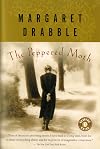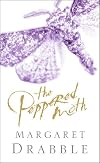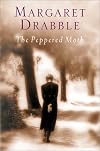
The Peppered Moth
by Margaret Drabble
On This Page
Description
Bessie Bawtry is a young girl living in the early 1900s in Breaseborough, a mining town in South Yorkshire, England. Unusually gifted, she longs to escape a life burdened by unquestioned tradition. She studies patiently, dreaming of the day when she will take the entrance exam for Cambridge and be able to leave her narrow world. A generation later, Bessie's daughter Chrissie feels a similar impulse to expand her horizons, which she in turn passes on to her own daughter. Nearly a century show more later, Bessie's granddaughter, Faro Gaulden, finds herself listening to a lecture on genetics and biological determinism. She has returned to Breaseborough and wonders at the families who remained in the humble little town where Bessie grew up. Confronted with what would have been her life had her grandmother stayed, she finds herself faced with difficult questions. Is she really so different from the plain South Yorkshire locals? As she soon learns, the past has a way of reasserting itself-not unlike the peppered moth that was once thought to be nearing extinction but is now enjoying a sudden unexplained resurgence. The Peppered Moth is a brilliantly conceived novel, full of irony, sadness, and humor. show lessTags
Recommendations



















Member Reviews
In this novel, Drabble examines the lives of three generations of women over the course of the 20th century. Bessie Bawtry is born in the early 20th century in Breaseborough, a mining town in the industrial north of England. Bessie eventually “escapes” from the provincial north. By the end of the 20th century, Bessie's daughter, Chrissie, lives in Oxfordshire and Chrissie's daughter, Faro, lives in London. However, their Yorkshire roots extend beyond recorded history. They may be genetically related to a man who lived thousands of years ago whose skeletal remains have recently been unearthed. Faro and Bessie's sister Dora, now a very elderly woman, have just contributed DNA samples to a research project seeking living descendants of show more the ancient man. (Or more exactly, living people who share a common maternal ancestor with him. The researcher will use mitochondrial DNA, which is passed from a mother to her children, to identify living relatives.)
Drabble explores questions raised by genetic and evolutionary science. To what extent is the shape of a person's life determined by the genes they've inherited from parents, grandparents, great-grandparents, and unknown generations? Is it possible for later generations to change their destinies by adapting to new environments? The unusual narrative voice may alienate some readers. The style reminds me of the narration in newsreels of the 1940s and 1950s. Drabble reveals in an afterword that Bessie Bawtry is based on her mother, whom she describes as “harsh, dismissive, censorious”, and she states that she “went down into the underworld to look for {her} mother.” Perhaps Drabble used a distant narrative voice to deflect some of the pain she relived while she wrote this novel. show less
Drabble explores questions raised by genetic and evolutionary science. To what extent is the shape of a person's life determined by the genes they've inherited from parents, grandparents, great-grandparents, and unknown generations? Is it possible for later generations to change their destinies by adapting to new environments? The unusual narrative voice may alienate some readers. The style reminds me of the narration in newsreels of the 1940s and 1950s. Drabble reveals in an afterword that Bessie Bawtry is based on her mother, whom she describes as “harsh, dismissive, censorious”, and she states that she “went down into the underworld to look for {her} mother.” Perhaps Drabble used a distant narrative voice to deflect some of the pain she relived while she wrote this novel. show less
'The Peppered Moth' might be an unusual introduction to Margaret Drabble's writing, but even based on this part-family saga, part-scientific study, her style and skill have inspired me to seek out more of her books.
The heart of this story is the female line of a family from the coal mining communities of South Yorkshire. Bessie Bawtry, and her frustrated attempts to rise above and escape the polluted, smalltown life of her parents and sister; daughter Chrissie, whose rebellion against her mother's confined lifestyle and depression leads to a Bronte-esque first marriage; and granddaughter Faro (named after the Faroe Islands where she was conceived), who writes about science and wants to find out who she is. I loved them all! Margaret show more Drabble, in writing about her own mother and collecting anecdotes from family history, has perfectly captured the love and the repression, the innocence and the anger, of each generation. Bessie is a young girl in the 1920s, feeling unloved by her parents and suffocated by the smoky air of a pit town, has the brains and the dedication to win a place at Cambridge, but lacks the confidence to leave the safety of home behind. Chrissie, tortured by her mother's fears and prejudices, also leaves for Cambridge, while waiting for life to happen to her - which it does, in the form of a whirlwind romance and a baby. Faro, a beautiful free spirit troubled by her parents' lives, is drawn to the history of her family and her ancestors in South Yorkshire. The intertwining of all three generations is captured with honesty, and the comfort and contempt of close family ties is both reassuring and painful to read in places.
The narrative device of an investigation into mitochondrial DNA, and the discovery of an ancient skeleton in the spoil heaps of local mine, is interesting to begin with, but the background scientific theory and the omniscient narrator linking the individual histories seems to mock the characters and their lives. In fact, the final part of the novel, entirely fictitious and no longer based on the author's own family, becomes overly contrived (Faro finding her mother's brooch by the side of the motorway), and feels both rushed and far too neat. There is too much imagery - the fire and the results from the DNA survey - and not enough substance. After Bessie's death, which is achingly poignant with the sense of the author's own regret and relief, Faro's return to her roots seems tacked on, as if there needs to be a happy ending. But then, Faro was the least real character throughout for me, serving as another device to link past and present. Bessie was far too real!
The genealogical element of the story, about how where we come from shapes who we are, and the question of why our ancestors chose to move on or stay put (and if they flourished or faded, like the peppered moth of the title), also holds a rather sad professional fascination to a local/family history library assistant. Drabble's comments on the hobby/addiction of researching the family tree ring true. 'Handwritten records illegibly transferred to microfilm', 'inspecting census returns', and 'snaking spools of slippery sepia' are my current stock in trade, but I dread the day when such a laborious and time-consuming investigation might be reduced to 'plunging a needle into bone to extract some DNA' - family historians do not need any encouragement! They already seem to think that all their personal information is neatly catalogued on computer.
A well written, funny, touching, insightful and depressing story about three generations of women when 'the world was all before them'. show less
The heart of this story is the female line of a family from the coal mining communities of South Yorkshire. Bessie Bawtry, and her frustrated attempts to rise above and escape the polluted, smalltown life of her parents and sister; daughter Chrissie, whose rebellion against her mother's confined lifestyle and depression leads to a Bronte-esque first marriage; and granddaughter Faro (named after the Faroe Islands where she was conceived), who writes about science and wants to find out who she is. I loved them all! Margaret show more Drabble, in writing about her own mother and collecting anecdotes from family history, has perfectly captured the love and the repression, the innocence and the anger, of each generation. Bessie is a young girl in the 1920s, feeling unloved by her parents and suffocated by the smoky air of a pit town, has the brains and the dedication to win a place at Cambridge, but lacks the confidence to leave the safety of home behind. Chrissie, tortured by her mother's fears and prejudices, also leaves for Cambridge, while waiting for life to happen to her - which it does, in the form of a whirlwind romance and a baby. Faro, a beautiful free spirit troubled by her parents' lives, is drawn to the history of her family and her ancestors in South Yorkshire. The intertwining of all three generations is captured with honesty, and the comfort and contempt of close family ties is both reassuring and painful to read in places.
The narrative device of an investigation into mitochondrial DNA, and the discovery of an ancient skeleton in the spoil heaps of local mine, is interesting to begin with, but the background scientific theory and the omniscient narrator linking the individual histories seems to mock the characters and their lives. In fact, the final part of the novel, entirely fictitious and no longer based on the author's own family, becomes overly contrived (Faro finding her mother's brooch by the side of the motorway), and feels both rushed and far too neat. There is too much imagery - the fire and the results from the DNA survey - and not enough substance. After Bessie's death, which is achingly poignant with the sense of the author's own regret and relief, Faro's return to her roots seems tacked on, as if there needs to be a happy ending. But then, Faro was the least real character throughout for me, serving as another device to link past and present. Bessie was far too real!
The genealogical element of the story, about how where we come from shapes who we are, and the question of why our ancestors chose to move on or stay put (and if they flourished or faded, like the peppered moth of the title), also holds a rather sad professional fascination to a local/family history library assistant. Drabble's comments on the hobby/addiction of researching the family tree ring true. 'Handwritten records illegibly transferred to microfilm', 'inspecting census returns', and 'snaking spools of slippery sepia' are my current stock in trade, but I dread the day when such a laborious and time-consuming investigation might be reduced to 'plunging a needle into bone to extract some DNA' - family historians do not need any encouragement! They already seem to think that all their personal information is neatly catalogued on computer.
A well written, funny, touching, insightful and depressing story about three generations of women when 'the world was all before them'. show less
This novel starts with Bessie, a brilliant scholar in a small mining town in Yorkshire, she is encouraged to get an education and move away. The detail of Bessie's early life until university is quite dense and engrossing with occasional flashes forward in time to her granddaughter, Faro. So far, so good. Bessie seems to be a well bought up girl who has a selfish streak. Her enjoyment of working during the war and her frustration when she has to give that up after the war are understandable for an intelligent woman. We then see her slide in to misery and unhappiness and the affect this has on her daughter is painful to see. The novel seemed to lose something at this point, as others have said Faro is difficult to grasp as a character. show more However, the section when Bessie dies and her daughter's reaction is excellent - making more sense when reading the author's afterword, which was very moving. Margaret Drabble pulls it all together reasonably well, linking DNA and families and place in a family saga. show less
I struggled with this one. The writing style is solid, but the story has that meandering quality to it that kept bring up the same question over and over in my head: "Why?" I probably should have read the Afterword first.... A story that is an author's attempt to develop understanding and meaning of the life of a departed family member through a fictional writing exercise is bound to leave some readers wondering about the direction of the story they are reading. For me, The Peppered Moth is more of a Drabble's catharsis then about the family stories contained on the pages. At least she admits that the exercise had mixed results, even for her. I did enjoy the historical detail the story contains and parts of the story reminded me of the show more manner in which Carol Shields chose to write her story The Stone Diaries... another book that some readers sings praise over while others wish to see it confined to the dustbin. If you haven't already guessed, The Peppered Moth is not an easy book to write a review for, so lets turn this review into a quick Q & A session instead:
Do I regret the time I invested to read this story? No. It didn't jump out and grab my attention but part of me could relate to or at least express sympathy for some of the emotions and experiences... although I did find the story to have a rather dour effect on me, which isn't a great positive.
Do I understand the choice for the title? Not really, so if anyone can explain their thoughts about why the title, I would appreciate it!
Will I read more books by Margaret Drabble? Not sure. I think the summary would really have to grab my attention, or if it was the only book available to read.
See.... even my Q & A isn't overly helpful in trying the capture my thoughts regarding this one. Let's try something a little different. The following quote, in my opinion, sums up this story quite nicely:
Do I regret the time I invested to read this story? No. It didn't jump out and grab my attention but part of me could relate to or at least express sympathy for some of the emotions and experiences... although I did find the story to have a rather dour effect on me, which isn't a great positive.
Do I understand the choice for the title? Not really, so if anyone can explain their thoughts about why the title, I would appreciate it!
Will I read more books by Margaret Drabble? Not sure. I think the summary would really have to grab my attention, or if it was the only book available to read.
See.... even my Q & A isn't overly helpful in trying the capture my thoughts regarding this one. Let's try something a little different. The following quote, in my opinion, sums up this story quite nicely:
"There are too many memories here. Impatience is overcoming Faro. She has several plastic bags full of rubbish, and she is sure she is about to discard something important. Though how could any of this be of any importance? These are such little lives. Unimportant people, in an unimportant place. They have been young, they have endured, they have taken their wages and their punishment, and then they have grown old, and all for no obvious purpose. And now she is throwing them all into a plastic bag.show less
I enjoyed the beginning of this novel, it reminded me of my own northern upbringing, my hometown is very like Breaseborough; Bessie and Christine's relationship was all too familiar. But Faro I just found annoying, and it felt like the ending of the novel had been rushed through. Drabble's afterword was very moving.
I found this book too drab and unexciting to be able to get into. I never got to the moth bit and hardly know what the book is really about though it seems to tell the tale of a little girl called Bessie Bawtry, a sickly child, born into a family in the South Yorkshire coal belt.
In my view, Margaret Drabble writes well, so I’m sure it would have been worthwhile to read the book properly, if I’d been able, but I was not.
I’m giving the book three stars on the strength of the author’s writing. I understand that the novel describes the life of her mother.
In my view, Margaret Drabble writes well, so I’m sure it would have been worthwhile to read the book properly, if I’d been able, but I was not.
I’m giving the book three stars on the strength of the author’s writing. I understand that the novel describes the life of her mother.
Well – the Daily Mail described this book as “Wonderfully fluent and engrossing…dazzling” – they lied is all I have to say. I found the tone patronising and positively nasal in some parts of the tale…
“Now let us return to….” Or “We will hear about that later” The Narrator (which on the last page we discover was in fact the author talking through her psychotherapist, or some sort of excuse vaguely familiar… The author should have been renamed Margaret Dribble. She does though explain her difficulties with sorting out who should tell the story and how she had a difficult relationship with her Mother, on whom the book is based. There were some lovely phrases - very poetic snippets running through the tale... but show more that was the only thing to its credit I warn you. show less
“Now let us return to….” Or “We will hear about that later” The Narrator (which on the last page we discover was in fact the author talking through her psychotherapist, or some sort of excuse vaguely familiar… The author should have been renamed Margaret Dribble. She does though explain her difficulties with sorting out who should tell the story and how she had a difficult relationship with her Mother, on whom the book is based. There were some lovely phrases - very poetic snippets running through the tale... but show more that was the only thing to its credit I warn you. show less
Members
- Recently Added By
Lists

Works by Authors I have Yet to Read
8 works; 1 member
Author Information

68+ Works 13,768 Members
Margaret Drabble was born on June 5, 1939 in Sheffield, England. She attended The Mount School in York and Newnham College, Cambridge University. After graduation, she joined the Royal Shakespeare Company at Stratford during which time she understudied for Vanessa Redgrave. She is a novelist, critic, and the editor of the fifth edition of The show more Oxford Companion to English Literature. Her works include A Summer Bird Cage; The Millstone, which won the John Llewelyn Rhys Prize in 1966; Jerusalem the Golden, which won James Tait Black Prize in 1967; and The Witch of Exmoor. She also received the E. M. Forster award and was awarded a Society of Authors Travelling Fellowship in the 1960s and the Commander of the Order of the British Empire in 1980. (Bowker Author Biography) show less
Common Knowledge
- Canonical title
- The Peppered Moth
- Original publication date
- 2000
- People/Characters*
- Ellie, overgrootmoeder; Bessie, grootmoeder; Dora, zus Bessie; Chrissie, moeder; Faro, dochter
- Important places
- Sheffield, South Yorkshire, England, UK
- Epigraph
- On Remembering Getting into Bed with Grandparents
It's amazing we got that far, loveless'
As you were supposed to be, yet suddenly
I have a longing for your tripeish thigh;
Swallows, thronging to the ea... (show all)ves; a teasmade
Playing boring Sunday news and all sorts of
Rites and rituals which seemed notable but
Were really just trips in and out of the
Bathroom, the neurotic pulling back of
Curtains, stained-glass window at the top of
Hall stairs; dark chocolate like the secret
Meaning of the world in a corner cupboard:
Three-quarter circle smooth as a child's
Dreams and as far above reach ...
'Loveless', the daughters said, years later when
The slow-lack peppered their brains like a dust,
And life had grown as troublesome as thought.
Yet just tonight, I am dreaming of your thigh,
And of the unconscious swallows thronging the eaves.
Rebecca Swift, 1993 - Dedication
- For Kathleen Marie Bloor
- First words
- It is a hot summer afternoon, in the hall of a Wesleyan Methodist chapel in South Yorkshire.
- Quotations
- ... whereas Breaseborough once had three cinemas, it now has none, and that it has no 10-pin bowling, no McDonald's, no Kentucky Fried Chicken — you name it, Breaseborough hasn't got it.
- Last words
- (Click to show. Warning: May contain spoilers.)But Faro can sing, and her clear voice floods the valleys.
*Some information comes from Common Knowledge in other languages. Click "Edit" for more information.
Classifications
Statistics
- Members
- 764
- Popularity
- 36,572
- Reviews
- 15
- Rating
- (3.31)
- Languages
- Danish, English, French, Swedish
- Media
- Paper, Audiobook, Ebook
- ISBNs
- 18
- ASINs
- 6