On This Page
Description
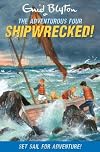
This wartime adventure finds four children shipwrecked miles off course from their destination. They encounter threatening planes and submarines but they have no way of raising the alarm, until the boys have an idea!Tags
Recommendations












Member Recommendations


Member Reviews
This is an interesting story of Blyton's because is was written during the opening stages of World War II, set during World War II and involved the antagonists of World War II. Actually, I believe that it is the only book of Enid Blyton's that actually makes reference to the war. It is interesting how Blyton portrayed the Germans, that is as 'the enemy' and the 'crooked cross' but she never actually mentions them by name. Maybe it is because, from the eyes of a child, it was something that was still far off, though to many in England at the time, especially during the blitz, the reality of war had struck home.
In this story four children go out on a sailing trip to an island but end up getting caught in a storm and sent off course. At show more first they are simply trying to find out how to survive on a deserted island in the middle of the North Sea however during their exploration they come across a cave full of food. They then see a sea plane (adorned with the crooked cross) land and then take off, and after a little more exploration, and a hazardous swim, they stumble upon a submarine base.
This story is a little different that many of Blyton's other books as it jumps straight into the action, and while it is not as violent, or as bleak, as the sequel, it does seem to come off a little different than her later adventure stories such as the Famous Five. In a way, in her later books, the children all seem to be somewhat protected, despite coming up against some rather unsavoury characters, but maybe it is because they are never really cut off from the rest of the world as they seem to be in these stories.
Unlike the Famous Five, where there always seems to be a farm house, or at least a friendly adult, nearby, or the Secret Seven, which occurs in the children's home town, the Adventurous Four, in both stories that I have read, are completely cut off from the rest of the world, and in many cases everything seems to be touch and go. Also, the risk of serious injury, or even death, seems to be much higher. In fact, at one point, there is a threat that the children would be taken back to Germany and placed in a POW camp (or even a concentration camp).
I thought this one was better than the sequel (surprise, surprise) but it still does not seem to have the child like quality that some of her other books have. However, I do feel that maybe the target audience is somewhat older than the Famous Five, though maybe not as old as, say, a full blown teenager (which didn't exist at the writing of this book, by the way). show less
In this story four children go out on a sailing trip to an island but end up getting caught in a storm and sent off course. At show more first they are simply trying to find out how to survive on a deserted island in the middle of the North Sea however during their exploration they come across a cave full of food. They then see a sea plane (adorned with the crooked cross) land and then take off, and after a little more exploration, and a hazardous swim, they stumble upon a submarine base.
This story is a little different that many of Blyton's other books as it jumps straight into the action, and while it is not as violent, or as bleak, as the sequel, it does seem to come off a little different than her later adventure stories such as the Famous Five. In a way, in her later books, the children all seem to be somewhat protected, despite coming up against some rather unsavoury characters, but maybe it is because they are never really cut off from the rest of the world as they seem to be in these stories.
Unlike the Famous Five, where there always seems to be a farm house, or at least a friendly adult, nearby, or the Secret Seven, which occurs in the children's home town, the Adventurous Four, in both stories that I have read, are completely cut off from the rest of the world, and in many cases everything seems to be touch and go. Also, the risk of serious injury, or even death, seems to be much higher. In fact, at one point, there is a threat that the children would be taken back to Germany and placed in a POW camp (or even a concentration camp).
I thought this one was better than the sequel (surprise, surprise) but it still does not seem to have the child like quality that some of her other books have. However, I do feel that maybe the target audience is somewhat older than the Famous Five, though maybe not as old as, say, a full blown teenager (which didn't exist at the writing of this book, by the way). show less
I read this right after The Book Thief which made for a different reading experience than might have been otherwise - this story is set during WWII, and is about adventurous, plucky, Blyton, British youngsters who are shipwrecked on an island that turns out to be around the corner from another island where the enemy hides submarines meant to destroy British ships. The loyalty and patriotism - not to mention daring and survival-smarts - are not cloying at all, but inspiring. I was surprised by my response, and recommend this Blyton highly - together with the literary artistry and quality story-telling of The Book Thief, these two books worked in unexpected and affecting ways for me. (Is this a comment, rather than a review?)
The Adventurous Four – Tom, the twins Pippa and Zoe, and their special friend Andy who has a sailing boat on which the four love to go exploring.
Tom, Pippa and Zoe are excited at spending the night camping on an uninhabited island with their friend Andy. But before they can get there, a violent storm blows their boat off course and on to some rocks.
When the children explore their surroundings, they stumble on some very strange goings-on, indeed. With no boat, they have no chance of getting away, but before long they realise that somehow or other, they'll have to escape before they become prisoners for good!
The children encounter some frightening moments and difficult challenges.
This is an excellent book for children who like reading show more an island adventure.
Recommended Age: 8
This book was first published in 1947.
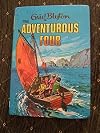
My paperback edition was published in 2003 and was Illustrated by Gavin Rowe. show less
Tom, Pippa and Zoe are excited at spending the night camping on an uninhabited island with their friend Andy. But before they can get there, a violent storm blows their boat off course and on to some rocks.
When the children explore their surroundings, they stumble on some very strange goings-on, indeed. With no boat, they have no chance of getting away, but before long they realise that somehow or other, they'll have to escape before they become prisoners for good!
The children encounter some frightening moments and difficult challenges.
This is an excellent book for children who like reading show more an island adventure.
Recommended Age: 8
This book was first published in 1947.
My paperback edition was published in 2003 and was Illustrated by Gavin Rowe. show less
I don’t remember this at all.
"She feels a good boat, bonny and brave!" said Andy's father.
"The Andy is like her master then!" cried Tom. "For he's just the same..."
"The Andy is like her master then!" cried Tom. "For he's just the same..."
Novels/novelettes
Members
- Recently Added By
Lists

Children's Chapter Books from 1940s, ...
77 works; 4 members

Survival, islands -- children's/young adult fiction
123 works; 7 members

Survival, shipwrecks -- children's/young adult fiction
104 works; 4 members

Books with Twins
175 works; 12 members

Books We Loved As Children
603 works; 252 members
Author Information

2,532+ Works 111,492 Members
Enid Blyton, 1897 - November 28, 1968 Enid Blyton was born in London in 1897. She was educated in a private school and thought that she would become a musician until she realized that writing was her passion. She attended Ipswich High School where she trained to become a kindergarten teacher and eventually opened her own school for infants. show more Blyton's first poem was published in 1917, entitled "Have You-" which appeared in Nash's Magazine. In 1922, her first book of verses was published, entitled "Child Whispers." In 1926 she accepted a position editing the children's magazine "Sunny Stories" as well as writing the column "Teachers World." Blyton's first full length children's book was published din 1938 and was titled "The Secret Island." After working on the column for years, Blyton quit "Teachers World" in 1945 and also ended her stint as editor of "Sunny Stories" seven years later. In 1953 she started her own children's magazine called "The Edith Blyton Magazine" which featured stories about her characters and news on the clubs formed around them. Her most famous stories were those of the "Famous Five" The Magazine closed in 1959. In the 50's and 60's Blyton was criticized for the language in her book, for being to simple, but some 300 are still in print today. Blyton has published over 600 books in the course of her career. Enid Blyton died in her sleep on November 28, 1968. She was 71 years old. show less
Series

Belongs to Publisher Series
Work Relationships
Is contained in
Enid Blyton Collection: "Adventurous Four", "Adventurous Four Again" and "Children of Willow Farm" by Enid Blyton
Enid Blyton's Adventure Stories: " Adventurous Four " , " Adventurous Four Again " and " Adventure of the Strange Ruby " by Enid Blyton
Common Knowledge
- Canonical title
- The Adventurous Four
- Original title
- The Adventurous Four
- Alternate titles
- The Adventurous Four: Shipwrecked!
- Original publication date
- 1941
- First words
- Three children ran down a rocky path to the seashore.
- Last words
- (Click to show. Warning: May contain spoilers.)Good luck!
- Original language
- English
- Disambiguation notice
- The Adventurous Four (Republished title: The Adventurous Four : Shipwrecked!)
Classifications
- Genres
- Children's Books, Fiction and Literature
- DDC/MDS
- 823.912 — Literature & rhetoric English & Old English literatures English fiction 1900- 1901-1999 1901-1945
- LCC
- PZ7 .B629 .A — Language and Literature Fiction and juvenile belles lettres Fiction and juvenile belles lettres Juvenile belles lettres
- BISAC
Statistics
- Members
- 399
- Popularity
- 77,950
- Reviews
- 8
- Rating
- (3.75)
- Languages
- 8 — Arabic, Danish, Dutch, English, German, Portuguese, Spanish, Swedish
- Media
- Paper, Audiobook, Ebook
- ISBNs
- 19
- ASINs
- 15