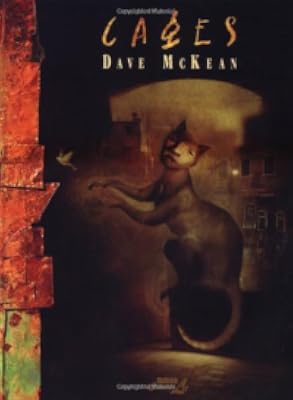
On This Page
Description
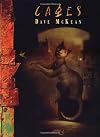
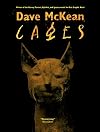
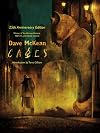
"Cages tells the story of three artists: Leo Sabarsky, a painter in need of inspiration; Angel, a nightclub musician who seems oblivious to the adulation of his fans; and Jonathan Rush, a writer whose novel Cages so enraged his readers that he now lives in captivity. How these characters break free of their mental cages forms the central conflict of this book, which evolves into a meditation on creativity and godhood."--Library Journal.Tags
Recommendations
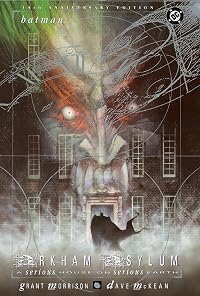
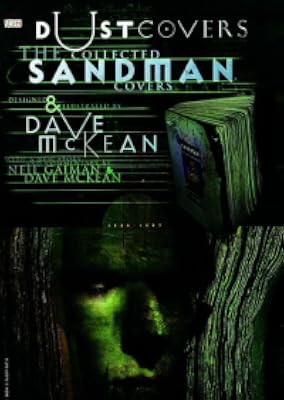

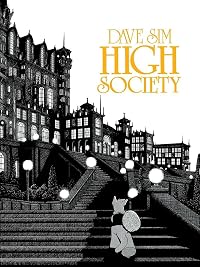
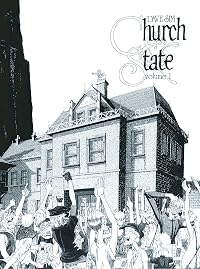
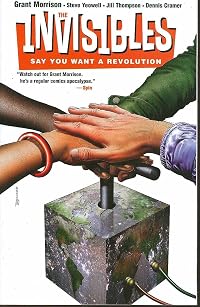
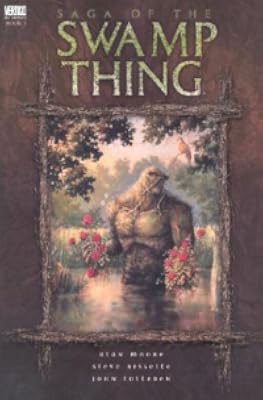

Member Recommendations

Member Reviews
I bought this on a pure whim today when I should have been doing other things. But, in addition to working on a resume and keeping up, barely, at a Sisyphean hamster wheel slog of a job, I do try to remain something like social.
So with a friend I suggested a brief sojourn at our local comics shop. And whereas he purchased a massive door stopping Jack Kirby omnibus I elected for this strange little volume. I hadn't known much of McKean outside of his cover work for Neil Gaiman and Morrison's Arkham story and, from the outside, his aesthetic always struck me as too particularly and strangely esoteric, too late 80's and early 90's for some reason, reminiscent of Peter Chung (of Aeon Flux) on a bender.
But, in a mood of ever expanding show more horizons, I purchased this. And after a two plus hour reading binge I can safely say that this is a masterwork. And the fact that this is a masterwork of English comic bookery without the name Gaiman, Moore, Miller or insert the name of any other of the 'bigs' just adds, for to its appeal.
This is a story of the creative process, all of it, told with the bare minimum but with an apex of sensitivity and brutality. McKean negotiates this divide, between showing and telling, with a consummate professionalism that would be cool and off putting if it also wasn't straddling the passion of the creative urge so adroitly well. Mortal men and women slaves of a universe that they can express, at times, through their work and justifying it to utter profundity. Not without pain not without loss, but like a chiaroscuro, it's all necessary because it has to be. And cats. So many writers have a thing for cats, that one always went past me.
This isn't an easy read. And it's not as pretty as Gaiman or, maybe, as profound as Moore or even as funny as the likes of Ennis; it's singular, it's its own, it's a work that deserves recognition. I hopefully have done my share. Read it, take your time, let yourself open to its strange beauty.
"Creativity is your God."
Indeed. show less
So with a friend I suggested a brief sojourn at our local comics shop. And whereas he purchased a massive door stopping Jack Kirby omnibus I elected for this strange little volume. I hadn't known much of McKean outside of his cover work for Neil Gaiman and Morrison's Arkham story and, from the outside, his aesthetic always struck me as too particularly and strangely esoteric, too late 80's and early 90's for some reason, reminiscent of Peter Chung (of Aeon Flux) on a bender.
But, in a mood of ever expanding show more horizons, I purchased this. And after a two plus hour reading binge I can safely say that this is a masterwork. And the fact that this is a masterwork of English comic bookery without the name Gaiman, Moore, Miller or insert the name of any other of the 'bigs' just adds, for to its appeal.
This is a story of the creative process, all of it, told with the bare minimum but with an apex of sensitivity and brutality. McKean negotiates this divide, between showing and telling, with a consummate professionalism that would be cool and off putting if it also wasn't straddling the passion of the creative urge so adroitly well. Mortal men and women slaves of a universe that they can express, at times, through their work and justifying it to utter profundity. Not without pain not without loss, but like a chiaroscuro, it's all necessary because it has to be. And cats. So many writers have a thing for cats, that one always went past me.
This isn't an easy read. And it's not as pretty as Gaiman or, maybe, as profound as Moore or even as funny as the likes of Ennis; it's singular, it's its own, it's a work that deserves recognition. I hopefully have done my share. Read it, take your time, let yourself open to its strange beauty.
"Creativity is your God."
Indeed. show less
A fascinating book, immediately impressive in its sheer physical size and the consistent quality of the varied and often quite ambitious art. The writing swings wildly between enjoyable slices of life, high-school-level pretentious poetry, and touching little details. McKean isn't a great storyteller and he handles a metaphor like a chainsaw, but the visuals more than make up for it.
Nope.
I love McKean's artwork. It's the reason I bought this doorstop of a book. It's also the reason I continued to wade through its 500 pages.
I get the central theme, and I enjoyed some of the characters (Karen, the woman from across the way that Leo draws, etc). But overall, often far too wordy (the ratatouille section really tried my patience). And then there were the weird side trips.
Overall, though beautiful to look at, the writing was definitely missing something for me.
I love McKean's artwork. It's the reason I bought this doorstop of a book. It's also the reason I continued to wade through its 500 pages.
I get the central theme, and I enjoyed some of the characters (Karen, the woman from across the way that Leo draws, etc). But overall, often far too wordy (the ratatouille section really tried my patience). And then there were the weird side trips.
Overall, though beautiful to look at, the writing was definitely missing something for me.
This is one of the most beautiful books ever made. Story and illustrations are the handiwork of the brilliant Mr. McKean, and have a subtle whirlwind beauty and thoughtfulness that is simply stupefying. Also, he draws adorable cats.
Beautiful book. Classic McKean illustrations and collages.
I will always treasure this book.
From Publishers Weekly
Best known for his work with Neil Gaiman, McKean is also an accomplished cartoonist in his own right. This is his magnum opus to date: an immense, pulsing graphic novel that's also a treatise on art, creativity and the uses and misuses of technique. Originally serialized between 1990 and 1996 (and collected in 1998), it's been out of print for several years. The book's plot is fairly rudimentary: a painter, a writer and a musician who live in the same apartment building find their lives intersecting. But the book's gradual shift from literalism to fanciful allegories and stories-within-stories mostly serves as the springboard for a visual tour de force. For most of the book, McKean restricts himself to wobbly, show more jagged two-tone pen-and-ink drawings, occasionally in the manner of Egon Schiele. But he often signals shifts in storytelling mode by switching media or style (to ink-wash brushwork, airbrushed photography, white-on-black "woodcuts," bold near-abstractions or whatever seems appropriate); when the artwork erupts into full-color paintings and collages, the effect is explosive. Even when the story falters or drifts into endless philosophical chitchat, McKean's artwork saves the day. His characters, built out of crazily bent lines and splatters, have perfectly choreographed body language, and his daring visual experiments serve the ideological goals of his writing.
Copyright 2002 Cahners Business Information, Inc.--This text refers to the Hardcover edition.
From Library Journal
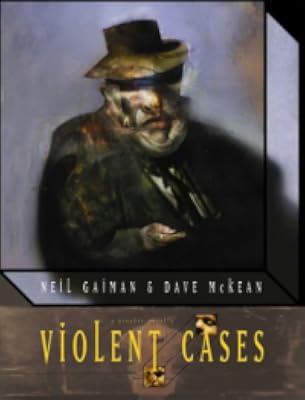
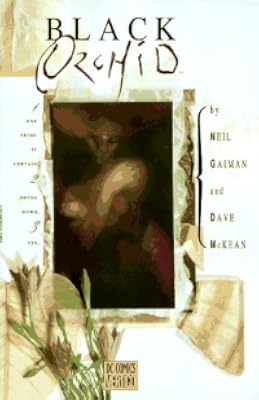
McKean is possibly the most widely known of the current artists creating comics for adults; he painted the covers of all 75 Sandman issues and has also drawn The Black Orchid and Violent Cases. Cages is the only work that McKean has both written and drawn, and he uses the opportunity to present a dialog on the rewards and hazards of creativity. Cages tells the story of three artists: Leo Sabarsky, a painter in need of inspiration; Angel, a nightclub musician who seems oblivious to the adulation of his fans; and Jonathan Rush, a writer whose novel Cages so enraged his readers that he now lives in captivity. How these characters break free of their mental cages forms the central conflict of this book, which evolves into a meditation on creativity and godhood. The artwork is dynamic and changes form as McKean feels appropriate. This is as much an art book as a narrative. If your library is only going to buy one graphic novel for adults this year, make it this one. For public and academic libraries. Stephen Weiner, Maynard P.L., MA
Copyright 1998 Reed Business Information, Inc.--This text refers to the Hardcover edition. show less
Best known for his work with Neil Gaiman, McKean is also an accomplished cartoonist in his own right. This is his magnum opus to date: an immense, pulsing graphic novel that's also a treatise on art, creativity and the uses and misuses of technique. Originally serialized between 1990 and 1996 (and collected in 1998), it's been out of print for several years. The book's plot is fairly rudimentary: a painter, a writer and a musician who live in the same apartment building find their lives intersecting. But the book's gradual shift from literalism to fanciful allegories and stories-within-stories mostly serves as the springboard for a visual tour de force. For most of the book, McKean restricts himself to wobbly, show more jagged two-tone pen-and-ink drawings, occasionally in the manner of Egon Schiele. But he often signals shifts in storytelling mode by switching media or style (to ink-wash brushwork, airbrushed photography, white-on-black "woodcuts," bold near-abstractions or whatever seems appropriate); when the artwork erupts into full-color paintings and collages, the effect is explosive. Even when the story falters or drifts into endless philosophical chitchat, McKean's artwork saves the day. His characters, built out of crazily bent lines and splatters, have perfectly choreographed body language, and his daring visual experiments serve the ideological goals of his writing.
Copyright 2002 Cahners Business Information, Inc.--This text refers to the Hardcover edition.
From Library Journal
McKean is possibly the most widely known of the current artists creating comics for adults; he painted the covers of all 75 Sandman issues and has also drawn The Black Orchid and Violent Cases. Cages is the only work that McKean has both written and drawn, and he uses the opportunity to present a dialog on the rewards and hazards of creativity. Cages tells the story of three artists: Leo Sabarsky, a painter in need of inspiration; Angel, a nightclub musician who seems oblivious to the adulation of his fans; and Jonathan Rush, a writer whose novel Cages so enraged his readers that he now lives in captivity. How these characters break free of their mental cages forms the central conflict of this book, which evolves into a meditation on creativity and godhood. The artwork is dynamic and changes form as McKean feels appropriate. This is as much an art book as a narrative. If your library is only going to buy one graphic novel for adults this year, make it this one. For public and academic libraries. Stephen Weiner, Maynard P.L., MA
Copyright 1998 Reed Business Information, Inc.--This text refers to the Hardcover edition. show less
Members
- Recently Added By
Author Information

95+ Works 13,764 Members
Dave McKean was born on December 29, 1963 in Maidenhead, England. He is an illustrator, photographer, comic book artist, filmmaker and musician. McKean is best known for his regular collaboration with Neil Gaiman. MirrorMask, McKean's first feature film as director and visual designer, premiered at the Sundance Film Festival in January 2005. The show more screenplay was written by Neil Gaiman. (Bowker Author Biography) show less
Awards and Honors
Awards
Notable Lists
Series

Work Relationships
Contains
Common Knowledge
- Canonical title
- Cages
- Original publication date
- 1998-02
- First words
- first sight, the anomalous black cat; first words, "and how are you this fine, fine night"
Classifications
- Genre
- Graphic Novels & Comics
- DDC/MDS
- 741.5973 — Arts & recreation Drawing & decorative arts Drawing Comic books, graphic novels, fotonovelas, cartoons, caricatures, comic strips History, geographic treatment, biography North American United States (General)
- LCC
- PN6727 .M29 .C34 — Language and Literature Literature (General) Literature (General) Collections of general literature Comic books, strips, etc.
- BISAC
Statistics
- Members
- 549
- Popularity
- 53,916
- Reviews
- 10
- Rating
- (4.31)
- Languages
- English, French, Italian, Spanish
- Media
- Paper
- ISBNs
- 8
- ASINs
- 3