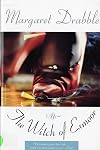
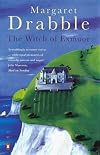
The Witch of Exmoor
by Margaret Drabble
On This Page
Description
A Los Angeles Times Best Book of the Year: ?Part social satire, part thriller, and entirely clever ? ( Elle ). ? It is a midsummer ?s evening in the English countryside, and the three grown Palmer children are coming to the end of an enjoyable meal in the company of their partners and offspring. From this pleasant vantage point they play a dinner-party game: What kind of society would you be willing to accept if you didn ?t know your place in it? But the abstract question of justice, show more like all their family conversations, is eventually brought back to the more pressing problem of their eccentric mother, Frieda, the famous writer, who has abandoned them and her old life, and gone to live alone in Exmoor. ? Frieda has always been a powerful and puzzling figure, a monster mother with a mysterious past. What is she plotting against them now? Has some inconvenient form of political correctness led her to favor her enchanting half-Guyanese grandson? What will she do with her money? Is she really writing her memoirs? And why has she disappeared? Has the dark spirit of Exmoor finally driven her mad? ? The Witch of Exmoor brilliantly interweaves high comedy and personal tragedy, unraveling the story of a family whose comfortable, rational lives, both public and private, are about to be violently disrupted by a succession of sinister, messy events. ?Leisurely and mischievous, ? it is a dazzling, wickedly gothic tale of a British matriarch, her three grasping children, and the perils of self-absorption ( The New Yorker ). ? ?As meticulous as Jane Austen, as deadly as Evelyn Waugh. ? ? Los Angeles Times show lessTags
Recommendations




















Member Reviews
On a beautiful summer evening in Hampshire, esteemed author Frieda Haxby’s three middle-aged children and their spouses meet to decide what to do about her. Although she has always independent and eclectic, her recent move from London to a rotting abandoned hotel on a cliff in Exmoor has convinced them that she has gone mad. When she mysteriously disappears, they are beside themselves, though most of their concern surrounds their inheritance rather than her well-being. Haxby’s children are all a little self-centred, and the narrator makes sure we dislike them. This is a novel of family dynamics, but it’s also a state of the nation novel, complete with scathing satirical commentary on corporate greed and consumerism, human rights show more issues, the struggling health care system, and toxins in our food and environment.
Drabble is an absolute pleasure for me to read. The Witch of Exmoor is a post-modern fairy tale, told by a strong narrator who makes it clear that she is telling you a story. She does this by playing with layers of storytelling techniques—family stories, historical tales, classical mythology, Nordic mythology, the stories we tell ourselves, nation-building stories, Bible stories, advertising, poetry, Shakespeare, 19th century literature, lies, and so on. She also weaves through this themes of death (by drowning and suicide), dreams, decay, and nature (especially birds and sealife). Some readers will find this narrator overly intrusive and aggressive, and I can see their point. But I thought it cleverly complimented the fairytale structure of the story.
Recommended for: definitely recommended. Margaret Drabble draws extensively on literary allusion, so her books would appeal to the well-read person who enjoys detail. The novels Drabble wrote after about 1980 earned some harsh reviews, but I very much like her writing. The famous critic James Woods wrote a scathing review on[the Witch of Exmoor, but I think he missed the point of the novel, or at least completely missed its charm. show less
Drabble is an absolute pleasure for me to read. The Witch of Exmoor is a post-modern fairy tale, told by a strong narrator who makes it clear that she is telling you a story. She does this by playing with layers of storytelling techniques—family stories, historical tales, classical mythology, Nordic mythology, the stories we tell ourselves, nation-building stories, Bible stories, advertising, poetry, Shakespeare, 19th century literature, lies, and so on. She also weaves through this themes of death (by drowning and suicide), dreams, decay, and nature (especially birds and sealife). Some readers will find this narrator overly intrusive and aggressive, and I can see their point. But I thought it cleverly complimented the fairytale structure of the story.
Recommended for: definitely recommended. Margaret Drabble draws extensively on literary allusion, so her books would appeal to the well-read person who enjoys detail. The novels Drabble wrote after about 1980 earned some harsh reviews, but I very much like her writing. The famous critic James Woods wrote a scathing review on[the Witch of Exmoor, but I think he missed the point of the novel, or at least completely missed its charm. show less
Only a writer as talented smart and disciplined as Margaret Drabble could make a story like this eminently readable, compelling, brilliant, and uplifting. About once a year, I indulge in another Margaret Drabble novel - usually a re-reading, because I have always gobbled them up when published or when I find them, but somehow I missed this one at the time. Reading it was a completely engaging experience, similar to how I felt when I first read The Middle Ground when it was published - and some of her earlier books many years ago. Her protagonist Frieda Haxby is just a remarkable creature and I wanted to hear everything she had to say or thought - she has wisdom and insights that are profound and clearly come from a deep intelligence and show more perception and reflection, understanding so much about who we are and how we live today. I loved the occasional little "between you and me" asides from the author to the reader - reminding us we're in a story that doesn't pretend to be anything other than what it is, and the tangents on culture, modern history, etc., that we expect from Drabble - I know some readers mind them, but I relish them - they are always interesting and educational! The pace, editing, and language were faultless - I was never bored, never wanted to skip a passage or a word, and from time to time was again struck by a sentence that was so remarkably crafted I had to slow down and savor it. Only a master could convey some very profound ideas in such a compelling, story-like way without beating us over the head with them. Too few writers have the ability, or the interest, in going deep while sustaining a great story line and realistic characterizations - in other words, I didn't think she relied on technique, or gimmick - just remarkably well-done narrative strength and command of a richly complex language that provides
enough depth for nuance and subtle precision. The ending - ah the ending - Emily and Benjie, two of the grandchildren - so "normal" and reasonable. The color of the last 25-30 pages, vivid and quickly-paced, full of hope, curiosity, wonder at the beauty of the earth and sea and energy and optimism and romance of the next generation. Life-affirming and uplifting. show less
enough depth for nuance and subtle precision. The ending - ah the ending - Emily and Benjie, two of the grandchildren - so "normal" and reasonable. The color of the last 25-30 pages, vivid and quickly-paced, full of hope, curiosity, wonder at the beauty of the earth and sea and energy and optimism and romance of the next generation. Life-affirming and uplifting. show less
‘The Witch of Exmoor’ begins with the adult children of Frieda Haxby Palmer having a weekend together for the purpose of deciding what to do about their mother. She has, they feel, lost her mind or gone senile. The problem is, there is not one sign that she is incompetent, except by the standards of her upper middle class, consumerist children. What they call signs of a failing mind are selling the house they grew up in, suing the government over tax issues, making a public investigation and scene over a manufacturer of over processed foods, and moving to a rambling, falling apart white elephant on the coast far from ‘civilization’. And embarrassing them in the process of all that. That’s the worst; the embarrassment and the show more worries over what she might be doing with their future inheritance. Frieda doesn’t care what they think; she’s never been an attentive mother; when they were young, she was busy writing and earning a living, now they mostly bore her so she doesn’t bother with them. The only family members she cares to interact with are her son-in-law, who believes in social activism, and his son, who is bright and curious and has so far avoided becoming average. Her children feel she is a monster because of her past and current inattentiveness. They really have no idea how she spends her days and who her friends are.
The characters are close to caricatures: the moral-less lawyer, the good wife who hides concerns in a Martha Stewart existence, the bad child (drugs), the good child (does what her family wants), the poor man who has no chance at an equitable life because of the circumstances of his birth, etc. Frieda is the character who is best filled out; she is like a 1960s hippie and feminist who has grown into old age with her values intact; we find more and more about her as the book goes on, like peeling an onion.
The book is really less a family novel (although it is that) than it is a social commentary that is as apt today as it was in 1996. Britain is still trying to figure out how to fix the NHS, human rights are still being trampled everywhere. Corporations are still soulless entities who will do anything for a profit.
I really enjoyed this book. I wanted to know more about Frieda; she’s a woman with a sense of adventure, one whom I would like to sit down and have a drink and a good conversation with. She’s a real person in a cardboard world. show less
The characters are close to caricatures: the moral-less lawyer, the good wife who hides concerns in a Martha Stewart existence, the bad child (drugs), the good child (does what her family wants), the poor man who has no chance at an equitable life because of the circumstances of his birth, etc. Frieda is the character who is best filled out; she is like a 1960s hippie and feminist who has grown into old age with her values intact; we find more and more about her as the book goes on, like peeling an onion.
The book is really less a family novel (although it is that) than it is a social commentary that is as apt today as it was in 1996. Britain is still trying to figure out how to fix the NHS, human rights are still being trampled everywhere. Corporations are still soulless entities who will do anything for a profit.
I really enjoyed this book. I wanted to know more about Frieda; she’s a woman with a sense of adventure, one whom I would like to sit down and have a drink and a good conversation with. She’s a real person in a cardboard world. show less
As the end of her life approaches, English social critic and author Frieda Haxby surprises her three grown children by selling their childhood home in the suburbs and moves into a huge, decrepit house perched precariously right on the edge of the sea in the wilds of the West County. What can she possibly be up to? Is she of sound mind? And what, if anything, should they do about it?
In some ways I don't know what to think--Drabble is smart and she can write, but, I guess to entertain herself(?) she uses an annoying narrative style, the authorial intervention, interrupting to say, "And now we shall introduce a new character," and the like. The focus is on three grown children, their spouses and children and their not-quite-over-the-hill mother (somewhere in her sixties) who has been behaving strangely. They are all of them, in different ways, upwardly mobile, successful people. And not nice at all. No indeed, with the exception, perhaps, of one or two of the children. The book is cleverly put together, make no mistake. One character, a thoughtful British Guyanian, has a game he likes to play, the Veil of Ignorance, show more where you get to decide how to re-allocate all the wealth of a country for the greatest benefit of the people and Frieda, the grandmother, plays out her version of it in the course of the book. It's clever, and it has its moments, such as when grand-daughter Emily steps right into a fairytale, saving the hind from the cruel hunters. There is also a fabulous ramshackle house by the sea (shades of Iris). The best thing in it, as far as I'm concerned was a fabulous quote from Schiller, which I can't reproduce in its entirety in a review, but I can give you the page number! (p. 118-9 or the very last page of the chapter entitled "The Valley of Rocks"). I'm not sorry I read it. The ***1/2 reflects that Drabble has written better books. ***1/2 show less
The eponymous witch of this novel is Frieda, a feminist best-selling author who has recently sold her family home and moved to a remote and crumbling mansion by the sea to write her memoirs. Her family thinks she has lost her marbles, and worries about her testamentary intent. Frieda's most recent book was a failure, and the family has been mostly ignoring Frieda, that is until a movie producer expresses an interest into turning it into a film. When her family tries to contact her, they discover Frieda has disappeared. Drabble uses this set-up to make wickedly funny comments on the state of current society. She writes in a semi-19th century tone with frequent ironic authorial asides. This was an enjoyable read.
This book looks at the dynamics of a well-off family after the mother - always on the eccentric side - moves to a crumbling house on the edge of a cliff, and starts to cut herself off from her offspring.
The book is pretty blistering about the lives of the "chattering classes" (a term I hate, but I can't think of a better one to use here). Frieda's children - all grown and with families of their own - are selfish and greedy, and although Frieda's motivations are explained (as she gets older, less and less matters to her - and she has "grown out of" her love for her children) she's not an especially sympathetic character. There's a hint that the youngest generation might be better, but overall it's pretty bleak.
Sometimes the book seems show more to want to be a modern fairytale, with archetypes for characters (and scenes which hint at other fairytales - beauty and the beast, Cinderella and the ugly sisters). I'm not quite sure what this is meant to achieve. Also, the whole book is written in a very arch tone - which got boring, for me, very quickly, and which undermines any emotional force the story could have had otherwise. show less
The book is pretty blistering about the lives of the "chattering classes" (a term I hate, but I can't think of a better one to use here). Frieda's children - all grown and with families of their own - are selfish and greedy, and although Frieda's motivations are explained (as she gets older, less and less matters to her - and she has "grown out of" her love for her children) she's not an especially sympathetic character. There's a hint that the youngest generation might be better, but overall it's pretty bleak.
Sometimes the book seems show more to want to be a modern fairytale, with archetypes for characters (and scenes which hint at other fairytales - beauty and the beast, Cinderella and the ugly sisters). I'm not quite sure what this is meant to achieve. Also, the whole book is written in a very arch tone - which got boring, for me, very quickly, and which undermines any emotional force the story could have had otherwise. show less
Members
- Recently Added By
Published Reviews
ThingScore 50
In the end, this book gives off an unwitting pathos, because it seems to represent a genuine confusion about how to write fiction at the end of the century. Drabble's suffocating intrusions, her tossed plot, her disregard for character or plausibility or coherence, suggest the agitation of a sensibility that has missed an important appointment and is madly waiting for something to happen. In show more her frustration, Drabble is hardly alone. No novelist of penetration is really content, any longer, with the punctuation of traditional realism. show less
added by Nickelini
A startling, mordantly funny portrait of contemporary Britain, and Drabble's (The Gates of Ivory, 1992, etc.) best and most assured novel in years.
added by Nickelini
Swimming in the murk of post-Thatcher Britain and taking a stern but knowing view of the English bourgeoisie, this is postmodern family drama at its best.
added by Nickelini
Lists

BBC Radio 4 Bookclub
340 works; 13 members
Author Information

68+ Works 13,776 Members
Margaret Drabble was born on June 5, 1939 in Sheffield, England. She attended The Mount School in York and Newnham College, Cambridge University. After graduation, she joined the Royal Shakespeare Company at Stratford during which time she understudied for Vanessa Redgrave. She is a novelist, critic, and the editor of the fifth edition of The show more Oxford Companion to English Literature. Her works include A Summer Bird Cage; The Millstone, which won the John Llewelyn Rhys Prize in 1966; Jerusalem the Golden, which won James Tait Black Prize in 1967; and The Witch of Exmoor. She also received the E. M. Forster award and was awarded a Society of Authors Travelling Fellowship in the 1960s and the Commander of the Order of the British Empire in 1980. (Bowker Author Biography) show less
Common Knowledge
- Canonical title*
- La sorcière d'Exmoor
- Original title
- The witch of Exmoor
- Original publication date
- 1996
- People/Characters
- Patsy Palmer; Frieda Palmer; Daniel Palmer; Rosemary Herz; Nathan Herz; Gogo (Grace) D'Anger (Grace) (show all 8); David D'Anger; Benjamin D'Anger
- Important places
- Exmoor, Somerset / Devon, England
- Dedication
- For Adam Swift and Sindamani Bridglal
- First words
- Begin on a midsummer evening.
- Last words
- (Click to show. Warning: May contain spoilers.)'Jump for it!' cries Emily Palmer, as the tide comes in. And Benjamin D'Anger jumps.
*Some information comes from Common Knowledge in other languages. Click "Edit" for more information.
Classifications
Statistics
- Members
- 478
- Popularity
- 63,496
- Reviews
- 10
- Rating
- (3.53)
- Languages
- Danish, English, French
- Media
- Paper, Audiobook, Ebook
- ISBNs
- 17
- ASINs
- 6