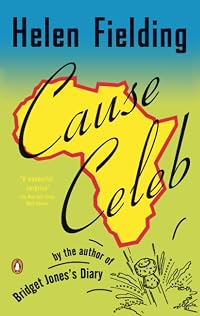
Cause Celeb
by Helen Fielding
On This Page
Description
"Disillusioned with life as a literary publicist in London, as well as with her hotshot, unevolved TV presenter boyfriend, Rosie Richardson chucks the glitz and escapes to run a refugee camp in the African desert. When famine strikes and a massive refugee influx threatens to overwhelm the camp ... Richardson returns to London to organize a star-studded and risky emergency appeal."--Front jacket.Tags
Recommendations
Member Reviews
I really don't think this book deserves such a low rating. It's not at all what I expected when I picked it up and read the tag line, "from the author of Bridget Jones' Diary," but that's not something the book should be punished for.
Truly, the blending of genres within this book, the biting swing between satirical humor and a no holds bar look at the world's inequality, is masterfully done. It's jarring because it's supposed to be jarring. One second you're laughing about pompous celebrities and then you're reading about some of the most unfair, fixable yet remaining unfixed, horrors of the world. But that's life--especially for all of us happily ensconced in our 1st world lives: it's easy to spare a thought for less fortunate, to show more offer your pity and sometimes your credit cards, but then you move on and go about your day filled with its messy relationships, career ladders, and tabloids. The point of this book is to make you think a little bit harder and a little bit further than the simple existence of things like Red Nose Day, etc.
This "chick lit" book is far more than meets the eye, light on romance (though it does take on emotional abuse and unhealthy relationships) and heavy on world issues- definitely worth the read.
(Docked a star because I'm not British as well as 20 years too late to understand some of the humor and cultural references) show less
Truly, the blending of genres within this book, the biting swing between satirical humor and a no holds bar look at the world's inequality, is masterfully done. It's jarring because it's supposed to be jarring. One second you're laughing about pompous celebrities and then you're reading about some of the most unfair, fixable yet remaining unfixed, horrors of the world. But that's life--especially for all of us happily ensconced in our 1st world lives: it's easy to spare a thought for less fortunate, to show more offer your pity and sometimes your credit cards, but then you move on and go about your day filled with its messy relationships, career ladders, and tabloids. The point of this book is to make you think a little bit harder and a little bit further than the simple existence of things like Red Nose Day, etc.
This "chick lit" book is far more than meets the eye, light on romance (though it does take on emotional abuse and unhealthy relationships) and heavy on world issues- definitely worth the read.
(Docked a star because I'm not British as well as 20 years too late to understand some of the humor and cultural references) show less
This is gutsily written, and highly informative when it comes to the ins and outs of running a refugee camp, and the difficulty of raising awareness and money when people aren’t seen to be “starving enough”. I don’t think I’ve ever read a book that tackles the subject with quite such zeal. It was an eye-opener. And yet the storyline back in London, where the narrator gets involved in an emotionally abusive relationship with a media personality and rubs noses with all sorts of flamboyant (and almost universally dislikeable) slebs, sits uncomfortably alongside it. Both were well written, but despite the fact that having the celebs come over and support an emergency appeal was a key part of the novel, the two strands of the story show more felt horribly jarring. Maybe it’s significant that there is a nostalgic feel to the London sections with the yuppie culture (at its height when the novel came out), and that only recently have questions started to be seriously posed about “white saviours” and the focus on celebrities by organisations like Comic Relief. Either way, an informative read but one that never felt quite like a rounded whole. show less
When Helen Fielding writes about the celebrity culture, you have the distinct feeling that the sort of culture she is thinking of is something unpleasant that one might find growing on a dish in a lab, or on suspicious cheese at the back of the fridge, rather than culture as associated with the arts and, in particular, the arts as discussed by earnest people with thick hair, an extensive wardrobe of black clothes and enough bullshit to fertilise half of the developing world.
There are three stories in Cause Celeb that begin by running alongside one another before crashing together in the middle of the story and then continuing, weaving ever more tightly together, to the conclusion.
To begin with, there's girl meets boy. Or rather; girl show more meets maniac. Our heroine falls for a chap who is at the very centre of London's celebrity culture, a leading figure in the 'Famous Club' of celebs who wine and dine in an endless series of parties and events, he is both famous and dashing and clever and talented and an utter, utter shit. Rosie Richardson lusts after and then gets her man, except that her man, Oliver, swings wildly between being a normal sweet natured boyfriend (who just happens to be famous, know lots of famous people and leads a glamorous that’s life not so much sprinkled with showbiz magic as showered with the stuff) and a grade one listed nutter with the morals of a concentration camp guard. It takes Rosie a trip to famine struck Africa, a minor breakdown and an entire Christmas selection box of chocolate before she has a sugar-rush induced breakthrough that sees off her breakdown and allows her to see through him. She then drops him faster than plutonium poo and heads back to Africa to be an aid worker.
Life in the aid camp is the second strand of the story. The African landscape is described vividly, especially the dusty browns and reds of the soil (this is a famine zone after all) but even the landscape is not as colourful as the characters working for the various charities providing famine relief. All are there for different reasons (Rosie has a broken heart) and all come with more baggage than a Victorian safari.
Then there's the Famous Club itself. Fielding explains the rules and behavior of the famous people of London with the same care she takes to explain the exotic wild life of Africa. When the two collide (Rosie returning to London to try and persuade former acquaintances to work to raise awareness of an impending humanitarian disaster) it's culture shock after culture shock as Rosie finds the world of celebs and the media as irritating as African bureaucracy and as tricky as rebel ambushes.
The book is very, very funny. It turns a spotlight on the Famous Club and its attitude to charity (one celeb adopts foreign orphans, another champions the plight of the rainforests - sound familiar?) but it's also very affecting, not just in the way the thoroughly likeable Rosie's heart is kicked around by a bully of a boyfriend but in the descriptions of what war and famine does to people. The final chapter in particular is nothing short of harrowing.
This is an excellent examination of what’s important. The attitude of non-famous people to those who are famous is explored but not as thoroughly as the attitude of famous people to other famous people and, if any of it is true (and there’s no reason why it should not be), then it would appear that actors, actresses, playwrights, models and assorted meeja wankers are just as vapid as you’d secretly suspected while their agents are the last word in vile and the people who run commercial television are beyond redemption. It’s fascinating to read such a compelling description of the fame food chain in a story about famine.
Fielding has pulled off quite a feat here: a story about the fame culture in London, kick started by a romance and used to deliver a tale about famine, suffering and what charity, and dedicating your life to something worthwhile rather than something that brings the trappings of success, means. show less
There are three stories in Cause Celeb that begin by running alongside one another before crashing together in the middle of the story and then continuing, weaving ever more tightly together, to the conclusion.
To begin with, there's girl meets boy. Or rather; girl show more meets maniac. Our heroine falls for a chap who is at the very centre of London's celebrity culture, a leading figure in the 'Famous Club' of celebs who wine and dine in an endless series of parties and events, he is both famous and dashing and clever and talented and an utter, utter shit. Rosie Richardson lusts after and then gets her man, except that her man, Oliver, swings wildly between being a normal sweet natured boyfriend (who just happens to be famous, know lots of famous people and leads a glamorous that’s life not so much sprinkled with showbiz magic as showered with the stuff) and a grade one listed nutter with the morals of a concentration camp guard. It takes Rosie a trip to famine struck Africa, a minor breakdown and an entire Christmas selection box of chocolate before she has a sugar-rush induced breakthrough that sees off her breakdown and allows her to see through him. She then drops him faster than plutonium poo and heads back to Africa to be an aid worker.
Life in the aid camp is the second strand of the story. The African landscape is described vividly, especially the dusty browns and reds of the soil (this is a famine zone after all) but even the landscape is not as colourful as the characters working for the various charities providing famine relief. All are there for different reasons (Rosie has a broken heart) and all come with more baggage than a Victorian safari.
Then there's the Famous Club itself. Fielding explains the rules and behavior of the famous people of London with the same care she takes to explain the exotic wild life of Africa. When the two collide (Rosie returning to London to try and persuade former acquaintances to work to raise awareness of an impending humanitarian disaster) it's culture shock after culture shock as Rosie finds the world of celebs and the media as irritating as African bureaucracy and as tricky as rebel ambushes.
The book is very, very funny. It turns a spotlight on the Famous Club and its attitude to charity (one celeb adopts foreign orphans, another champions the plight of the rainforests - sound familiar?) but it's also very affecting, not just in the way the thoroughly likeable Rosie's heart is kicked around by a bully of a boyfriend but in the descriptions of what war and famine does to people. The final chapter in particular is nothing short of harrowing.
This is an excellent examination of what’s important. The attitude of non-famous people to those who are famous is explored but not as thoroughly as the attitude of famous people to other famous people and, if any of it is true (and there’s no reason why it should not be), then it would appear that actors, actresses, playwrights, models and assorted meeja wankers are just as vapid as you’d secretly suspected while their agents are the last word in vile and the people who run commercial television are beyond redemption. It’s fascinating to read such a compelling description of the fame food chain in a story about famine.
Fielding has pulled off quite a feat here: a story about the fame culture in London, kick started by a romance and used to deliver a tale about famine, suffering and what charity, and dedicating your life to something worthwhile rather than something that brings the trappings of success, means. show less
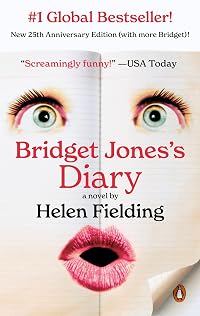
Very, very smart. This made me re-read Bridget Jones with a different eye and take back all those nasty things I said about satire and modern writers.
Rosie Richardson works at a refugee camp in Nambula, Africa, where she's been for the last four years after breaking off a toxic relationship with the famous television man Oliver Merchant in London. It took me a while to get into this book, as it couldn't decide whether it wanted to be a serious look at starvation in the Third World, or Bridget Jones Goes to Africa (yes, I know it was written before Bridget Jones's Diary, but you get my drift). Some parts were very funny, and others made me feel like Fielding was trying to browbeat me into donating to charity. At first it stirred my compassion, but by the end it felt more like a lecture than a story. Fielding also relied a bit too heavily on dialect for differentiation, turning her show more characters into charicatures. Still, there was a fair bit of humor and reasonably engrossing drama; this was certainly not a bad first novel, but I can understand why Bridget Jones is so much more popular. show less
This is Helen Fielding's first book, written ages before Bridget Jones. She worked in BBC TV and knows whereof she speaks, this book really raises some issues about celebrities and causes. A wry, satirical look at the whole attitude to charity for the 3rd world, and written long before Bono, Angelina Jolie, Madonna et al had jetted off to improve their "caring" quotient and make themselves feel good.
I actually liked this better than [b:Bridget Jones's Diary|227443|Bridget Jones's Diary|Helen Fielding|http://ecx.images-amazon.com/images/I/51J5NZ2MJ4L._SL75_.jpg|3185154]. I believe it was a less-successful earlier novel that was republished after Bridget's success. The setting among relief workers in Africa is both unusual and lends a certain gravitas to what is, essentially, "chick lit." But good chick lit.
Members
- Recently Added By
Author Information

20+ Works 32,797 Members
Helen Fielding was born in Morley, West Yorkshire, England on February 19, 1958. She studied English at Oxford University. After college, she got a job working for the BBC television studios. She worked for numerous years as a newspaper and TV journalist. Her first book, Cause Celeb, was based on the experiences she had while filming documentaries show more in Africa for Comic Relief. Her other books include Bridget Jones's Diary, The Edge of Reason, Olivia Joules and the Overactive Imagination, Mad about the Boy, and Bridget Jones's Baby. She co-wrote the screenplays for the movies Bridget Jones's Diary and the sequel based on The Edge of Reason. She has received several awards including British Book of the Year in 1997 and the Evening Standard Award Best Screenplay in 2002. She works as a full-time novelist and screenwriter. (Bowker Author Biography) show less
Series
Belongs to Publisher Series
J'ai lu (5774)
Common Knowledge
- Canonical title*
- Hummer zum Dinner
- Original publication date
- 1994
- Important places
- Sudan
- Dedication
- For my father, Michael Fielding
- First words
- It used to seem extraordinary to me that someone like Henry could actually exist, extraordinary that a person could be transported into an environment so alien to his own, and remain to utterly unaffected by his surroundings.
- Last words
- (Click to show. Warning: May contain spoilers.)He snores a bit, but I'm getting used to it.
- Original language
- English
*Some information comes from Common Knowledge in other languages. Click "Edit" for more information.
Classifications
Statistics
- Members
- 1,485
- Popularity
- 15,635
- Reviews
- 22
- Rating
- (3.07)
- Languages
- 11 — Czech, Danish, Dutch, English, French, German, Indonesian, Polish, Portuguese, Spanish, Swedish
- Media
- Paper, Audiobook, Ebook
- ISBNs
- 58
- ASINs
- 13