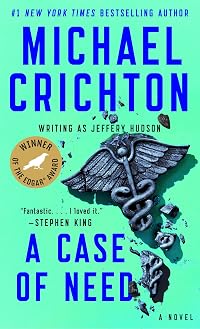
A Case of Need
by Michael Crichton
On This Page
Description
When one doctor is accused of murder, it takes another to set him free In the tightly knit world of Boston medicine, the Randall family reigns supreme. When heart surgeon J. D. Randall's teenage daughter dies during a botched abortion, the medical community threatens to explode. Was it malpractice? A violation of the Hippocratic Oath? Or was Karen Randall murdered in cold blood? The natural suspect is Arthur Lee, a brilliant surgeon and known abortionist, who has been carrying out the show more illegal procedure with the help of pathologist John Berry. After Karen dies, Lee is thrown in jail on a murder charge, and only Berry can prove his friend wasn't the one who wielded the scalpel. Behind this gruesome death, Berry will uncover a secret that would shock even the most hardened pathologist. This ebook features an illustrated biography of Michael Crichton including rare images from the author's estate. show lessTags
Recommendations






Member Recommendations
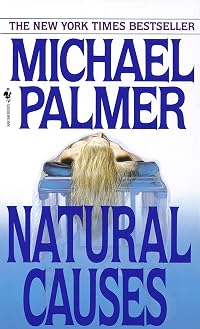
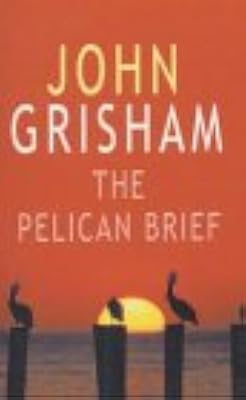
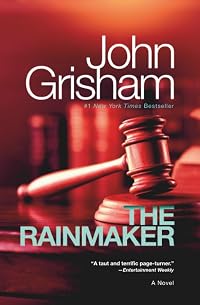
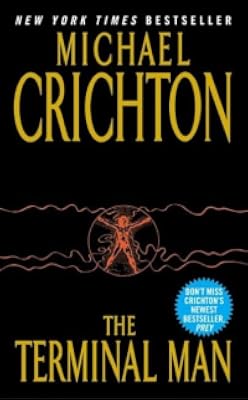
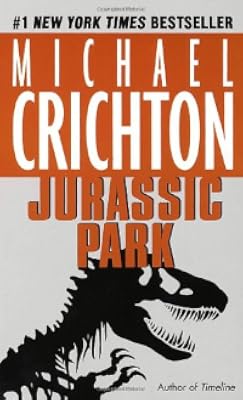
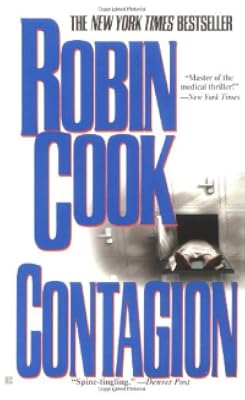
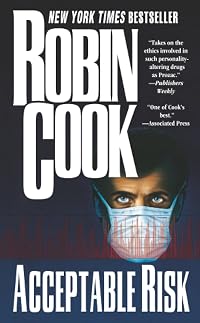
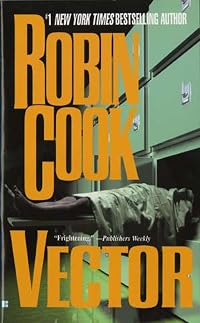
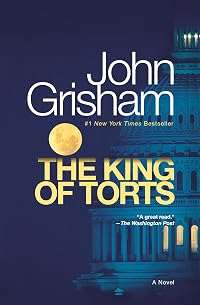
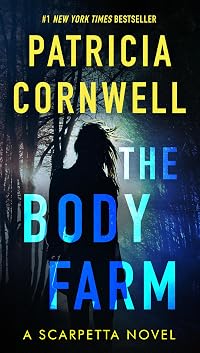
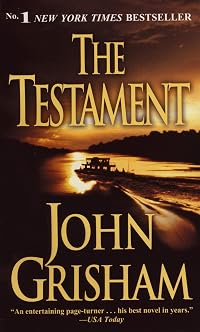
VictoriaPL Both books are mysteries with a young woman's death at the center and a web of suspects among those who knew her.
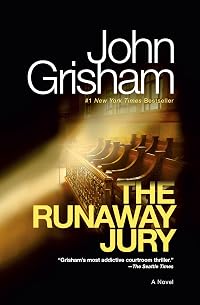
Thogek "Turning Angel" has a similar helping-a-wrongly-accused-doctor-friend scenario, but with an arguably more tightly and interestingly developed story.
Member Reviews
This is the first book published by Michael Crichton (pseudonym Jeffery Hudson). I still miss his writing, and I had never read this book before so it was time for me to dive into his back list. I can't remember what alerted me to this book, but I was also intrigued to read more about the clandestine abortions that women had to seek out in the days before Roe v Wade.
This is definitely a book of its time when the safest communication was a pay phone, when a young white woman would rebel against a parent by dating or sleeping with a Negro, and when LSD was prevalent. It's difficult as a modern reader to encounter the racism, the misogyny, and the hatred towards abortionist doctors and pregnant women.
A Case of Need was a compelling read show more for me because of the subject matter of abortion and the impact on women, particularly in these times of rollbacks with healthcare in general. It's inconceivable
that we're still so close to a woman bearing all the responsibility for sexual encounters, to the point of the poor being either lucky enough or unfortunate enough to find back alley methods or to the wealthy being able to afford the privacy of confidential and convoluted reasons for a D&C. A Case of Need is scary for its portrayal of how little agency women have, particularly women without financial resources.
Crichton's writing is clumsy and rushed. He uses a lot of medical terminology with footnotes, so it is a slog to make it through all of the narrative. This was a book that meant a lot to me because of the subject matter but it's definitely not a favorite due to the level of writing skill. I'm still glad that I read it, but I would recommend this book only to other readers who are interested in exploring a "slice of life" rather than a well written book. show less
This is definitely a book of its time when the safest communication was a pay phone, when a young white woman would rebel against a parent by dating or sleeping with a Negro, and when LSD was prevalent. It's difficult as a modern reader to encounter the racism, the misogyny, and the hatred towards abortionist doctors and pregnant women.
A Case of Need was a compelling read show more for me because of the subject matter of abortion and the impact on women, particularly in these times of rollbacks with healthcare in general. It's inconceivable
that we're still so close to a woman bearing all the responsibility for sexual encounters, to the point of the poor being either lucky enough or unfortunate enough to find back alley methods or to the wealthy being able to afford the privacy of confidential and convoluted reasons for a D&C. A Case of Need is scary for its portrayal of how little agency women have, particularly women without financial resources.
Crichton's writing is clumsy and rushed. He uses a lot of medical terminology with footnotes, so it is a slog to make it through all of the narrative. This was a book that meant a lot to me because of the subject matter but it's definitely not a favorite due to the level of writing skill. I'm still glad that I read it, but I would recommend this book only to other readers who are interested in exploring a "slice of life" rather than a well written book. show less
How could I give Michael Crichton four stars? How could I, a nobody, give the great, fantastic, man-who-mesmerizes-the-entire-world four stars? He was a nobody at the time he wrote this book as well. It is a good story and well deserves the four stars it gets -- "4-Stars The book accomplished all of its storytelling goals." Re: Current abortion laws: 1) Procedures are still being performed by doctors by those who can afford to pay and by nonprofessionals for those who can't; 2) Professionals are imprisoned and practices ruined but this will not stop abortions. It was a fleshed out morality tail. It was good and a foreshadowing of things to come.
Early Crichton novel, from 1968, shows promise but is a tangle of too many characters, late surprise revelations that really don’t have anything to do with the main plot thread, and an up-in-the-air ending with the protagonist, after 400 pages of dogged investigation, seeming to just walk away from the final reveal.
Essentially, it’s the story of a doctor who is falsely accused of performing an illegal abortion that results in the death of a young woman from a prominent family. The protagonist, a friend of the accused, sets out to determine what really happened, and uncovers a coiling nest of prominent people with dirty secrets. It’s not a bad story, but it’s certainly the first novel I’ve ever read with footnotes. Somebody show more apparently thought it would be a good idea to footnote virtually every medical term used in the text – a disruptive and largely unnecessary step.
It’s a compelling read until the last quarter of the book, when the cast of characters reaches critical mass and the reader really has trouble remembering who was what and how they all tie together. show less
Essentially, it’s the story of a doctor who is falsely accused of performing an illegal abortion that results in the death of a young woman from a prominent family. The protagonist, a friend of the accused, sets out to determine what really happened, and uncovers a coiling nest of prominent people with dirty secrets. It’s not a bad story, but it’s certainly the first novel I’ve ever read with footnotes. Somebody show more apparently thought it would be a good idea to footnote virtually every medical term used in the text – a disruptive and largely unnecessary step.
It’s a compelling read until the last quarter of the book, when the cast of characters reaches critical mass and the reader really has trouble remembering who was what and how they all tie together. show less
It is so interesting to read a book from 1968 - and other then some language issues- feel as if you're reading a book written today. Abortion is still such a hot button issue and it's so interesting to see how little the issue has evolved. The book flowed eloquently and made me want to keep going until I reached the conclusion.
Dr. John Berry, a pathologist, is interrupted at work by a call from his wife: Dr. Arthur Lee, an obstetrician friend of theirs, is in jail. John goes to see him and finds out what happened. Karen Randall, the daughter of a wealthy family, was brought into a hospital by her mother after an illegal abortion, bleeding profusely. She died, and Karen's mother claimed that Dr. Lee had done the abortion. Although he tells John that he did indeed speak to Karen, he hadn't performed the abortion - in fact, he'd turned her away, telling her that, at four months, she was too far along and he couldn't do it. She'd seemed to accept this and left, but clearly she'd gone to someone else instead.
Unfortunately, Dr. Lee makes a good scapegoat. He's half show more Chinese, so racism is a factor, and it won't take much work to uncover that he does, in fact, perform abortions (and people like John and other doctors helped him hide it). It won't matter to anyone but John and Dr. Lee's wife that he didn't perform this particular abortion. John figures that if he doesn't try to find out the truth, no one will.
This is one of the works on Rep. Matt Krause's list of books he wanted banned from Texas schools. It caught my eye for several reasons - the author, how old it was, and overall how odd it was to see it on the list. From what I can tell, it isn't YA fiction and was never marketed as such, although that's not to say it wouldn't appeal to teens. Still, if a school library has this in their collection, I'm guessing it's a pretty good indicator that they're sorely in need of funds for new books.
Anyway, it's pretty obvious that it ended up on the list because of its frank discussion of abortion. It even includes an appendix that lays out the arguments for and against abortion, at the time this book was written, and it's clear that Crichton considered the former to be stronger and more convincing than the latter. However, it's also clear that Rep. Krause didn't read all the books he included in his list, because one could argue that the text itself had anti-abortion aspects in the way Karen was written and John's surprising inability to explain the word "abortionist" to Dr. Lee's young son in a way that didn't make it sound like a terrible thing.
The story had a very noir feel to it. It was written in first person, from John's POV, and I often found myself thinking that he read like an old school detective who happened to know a lot of medical jargon. There was even a scene in which he followed a guy around for a bit, like some kind of private investigator. And a surprising number of people talked to him and told him everything he needed to know, even though literally no one was required to tell him anything.
The mystery was extremely convoluted and confusing - I kept forgetting who everyone was, since the primary identifying characteristic of most of them was that they were male doctors. While it kept my attention, it didn't come together in a satisfying way in the end. I was left with a bunch of questions about details that were never fully addressed. I'm still not sure if I missed something, or if Crichton really did just opt not to explain the various odd details that John kept coming across and puzzling over. I finished this feeling like I'd read maybe 95% of a book, as though the chapter that was supposed to tie everything together was left out.
This wasn't necessarily a horrible reading experience, but it did come across as extremely dated. The casual racism grated on my nerves, and it was amazing how few women had speaking roles considering this was a book dealing with an issue that primarily affects women. I did appreciate that it dealt with abortion almost entirely from a medical perspective, although the revelations about Karen possibly undermined that somewhat. Characters' opinions on abortion weren't always clear, but one thing the book never wavered on was the safety factor: abortions performed by trained doctors in medical facilities are safer than both amateur abortions and giving birth.
In case this wasn't already clear: This book is absolutely not for anyone who has phobias about going to the doctor, and not just because of the graphic descriptions of what happened to Karen. Pretty much all of the doctors were horrible in some way - arrogant, misogynistic, sleazy, etc. It's one thing to know intellectually that doctors are imperfect and human like everyone else, and another thing entirely to have all the ugliness on-page.
Extras:
Various footnotes throughout explaining some of the medical jargon. Also, six appendices: "Delicatessen Pathologists" (explains why some pathologists describe diseased organs as though they were food), "Cops and Doctors" (why doctors don't trust police), "Battlefields and Barberpoles" (the link between surgery and war), "Abbreviations," "Whites" (medical uniforms), "Arguments on Abortion," and "Medical Morals."
(Original review posted on A Library Girl's Familiar Diversions.) show less
Unfortunately, Dr. Lee makes a good scapegoat. He's half show more Chinese, so racism is a factor, and it won't take much work to uncover that he does, in fact, perform abortions (and people like John and other doctors helped him hide it). It won't matter to anyone but John and Dr. Lee's wife that he didn't perform this particular abortion. John figures that if he doesn't try to find out the truth, no one will.
This is one of the works on Rep. Matt Krause's list of books he wanted banned from Texas schools. It caught my eye for several reasons - the author, how old it was, and overall how odd it was to see it on the list. From what I can tell, it isn't YA fiction and was never marketed as such, although that's not to say it wouldn't appeal to teens. Still, if a school library has this in their collection, I'm guessing it's a pretty good indicator that they're sorely in need of funds for new books.
Anyway, it's pretty obvious that it ended up on the list because of its frank discussion of abortion. It even includes an appendix that lays out the arguments for and against abortion, at the time this book was written, and it's clear that Crichton considered the former to be stronger and more convincing than the latter. However, it's also clear that Rep. Krause didn't read all the books he included in his list, because one could argue that the text itself had anti-abortion aspects in the way Karen was written and John's surprising inability to explain the word "abortionist" to Dr. Lee's young son in a way that didn't make it sound like a terrible thing.
The story had a very noir feel to it. It was written in first person, from John's POV, and I often found myself thinking that he read like an old school detective who happened to know a lot of medical jargon. There was even a scene in which he followed a guy around for a bit, like some kind of private investigator. And a surprising number of people talked to him and told him everything he needed to know, even though literally no one was required to tell him anything.
The mystery was extremely convoluted and confusing - I kept forgetting who everyone was, since the primary identifying characteristic of most of them was that they were male doctors. While it kept my attention, it didn't come together in a satisfying way in the end. I was left with a bunch of questions about details that were never fully addressed. I'm still not sure if I missed something, or if Crichton really did just opt not to explain the various odd details that John kept coming across and puzzling over. I finished this feeling like I'd read maybe 95% of a book, as though the chapter that was supposed to tie everything together was left out.
This wasn't necessarily a horrible reading experience, but it did come across as extremely dated. The casual racism grated on my nerves, and it was amazing how few women had speaking roles considering this was a book dealing with an issue that primarily affects women. I did appreciate that it dealt with abortion almost entirely from a medical perspective, although the revelations about Karen possibly undermined that somewhat. Characters' opinions on abortion weren't always clear, but one thing the book never wavered on was the safety factor: abortions performed by trained doctors in medical facilities are safer than both amateur abortions and giving birth.
In case this wasn't already clear: This book is absolutely not for anyone who has phobias about going to the doctor, and not just because of the graphic descriptions of what happened to Karen. Pretty much all of the doctors were horrible in some way - arrogant, misogynistic, sleazy, etc. It's one thing to know intellectually that doctors are imperfect and human like everyone else, and another thing entirely to have all the ugliness on-page.
Extras:
Various footnotes throughout explaining some of the medical jargon. Also, six appendices: "Delicatessen Pathologists" (explains why some pathologists describe diseased organs as though they were food), "Cops and Doctors" (why doctors don't trust police), "Battlefields and Barberpoles" (the link between surgery and war), "Abbreviations," "Whites" (medical uniforms), "Arguments on Abortion," and "Medical Morals."
(Original review posted on A Library Girl's Familiar Diversions.) show less
1968. I was in college near Boston. One of my housemates, a girl I didn't know well, was pregnant. Her roommate learned that the ex-boyfriend and father, a pre-med student, was planning to perform an amateur abortion. This was 5 years before Roe v. Wade. My housemates, all urban people, were galvanized into action, calling friends and even their mothers to locate a safe abortionist. I really had nothing to contribute except hand-wringing. The girl eventually decided to have the baby, and I think it was given up for adoption as I seem to recall she was back in school during my senior year.
The following year, in summer, I found a room in an off-campus house. One of my flatmates had taken some time off from school the previous year. It show more turned out she had had a legal abortion at one of the best hospitals in Boston. You could get one if a panel of three doctors agreed that it was necessary for your health, and mental health counted. Unfortunately something had gone wrong, and she would now be unable to bear children. Since the abortion took place in a hospital, she didn't die.
For these reasons and a few other stories from women I've known, I was interested immediately in A CASE OF NEED when, looking it up in the library catalog, I saw the tracing "Abortion - Fiction." (I was going to read it anyway as part of my Edgar-winners project.) I brought the book home and started reading it right away. I'm going to give it a rating four stars, because the story certainly pulled me along. But for my tired old eyes, I would have finished it in one sitting.
Why not five stars -- which was evidently the consensus of the Edgar committee? One reason is that there were some definite plot holes. I can't really describe them for fear of spoilers, but since the story centers around doctors and others performing illegal abortions, I will point out that the three-doctor panel option existed at the time of the book, and is not mentioned. There are several more, which I'm sure any of you who read the book will spot.
Another reason is Hudson/Crichton's annoying practice of using medical jargon and abbreviations and then FOOTNOTING them! Yes, footnotes in a mystery thriller! I realize that this book preceded /Chicago Hope/ and /ER/, which made us all so conversant with hospital talk, but after all, it did follow /Dr. Kildare /and /Ben Casey/! I haven't read any of Crichton's other books, so I trust this was just a matter of youthful inexperience. I've read many books set in milieus unfamiliar to me, and nearly all the authors have been able to explain unfamiliar terms without resorting to footnotes. Talk about taking the reader out of the story!
The third reason I have for withholding the fifth star is the evident misogyny of the narrator/protagonist and, I fear, of the author himself. Maybe it's just me, but the way the protagonist interacts with his wife, the nurses, and the other women who come into the story suggested to me that he really didn't believe women were people. Perhaps I'm being unduly harsh and perhaps my view is skewed by having read that Crichton has been married 5 times. I will accept correction if someone believes differently. The character of the narrator is problematic in some other ways as well, again, I can't really explain that without spoilers.
To be fair, I'm still impressed that Crichton wrote a book this good while studying at Harvard Medical School. In spite of some very dated attitudes, it's still worth reading. show less
The following year, in summer, I found a room in an off-campus house. One of my flatmates had taken some time off from school the previous year. It show more turned out she had had a legal abortion at one of the best hospitals in Boston. You could get one if a panel of three doctors agreed that it was necessary for your health, and mental health counted. Unfortunately something had gone wrong, and she would now be unable to bear children. Since the abortion took place in a hospital, she didn't die.
For these reasons and a few other stories from women I've known, I was interested immediately in A CASE OF NEED when, looking it up in the library catalog, I saw the tracing "Abortion - Fiction." (I was going to read it anyway as part of my Edgar-winners project.) I brought the book home and started reading it right away. I'm going to give it a rating four stars, because the story certainly pulled me along. But for my tired old eyes, I would have finished it in one sitting.
Why not five stars -- which was evidently the consensus of the Edgar committee? One reason is that there were some definite plot holes. I can't really describe them for fear of spoilers, but since the story centers around doctors and others performing illegal abortions, I will point out that the three-doctor panel option existed at the time of the book, and is not mentioned. There are several more, which I'm sure any of you who read the book will spot.
Another reason is Hudson/Crichton's annoying practice of using medical jargon and abbreviations and then FOOTNOTING them! Yes, footnotes in a mystery thriller! I realize that this book preceded /Chicago Hope/ and /ER/, which made us all so conversant with hospital talk, but after all, it did follow /Dr. Kildare /and /Ben Casey/! I haven't read any of Crichton's other books, so I trust this was just a matter of youthful inexperience. I've read many books set in milieus unfamiliar to me, and nearly all the authors have been able to explain unfamiliar terms without resorting to footnotes. Talk about taking the reader out of the story!
The third reason I have for withholding the fifth star is the evident misogyny of the narrator/protagonist and, I fear, of the author himself. Maybe it's just me, but the way the protagonist interacts with his wife, the nurses, and the other women who come into the story suggested to me that he really didn't believe women were people. Perhaps I'm being unduly harsh and perhaps my view is skewed by having read that Crichton has been married 5 times. I will accept correction if someone believes differently. The character of the narrator is problematic in some other ways as well, again, I can't really explain that without spoilers.
To be fair, I'm still impressed that Crichton wrote a book this good while studying at Harvard Medical School. In spite of some very dated attitudes, it's still worth reading. show less
Medical Thriller that has the same fingerprints as Airframe and Rising Sun - pacey, readable, and a real slice of 1968 including some extremely racist language and attitudes. However, these feel like a representation of the time, and also feel like the MC does not share them (although he is not an anti-racist either). Would be an interesting film adaptation.
Members
- Recently Added By
Lists

Edgar Award
418 works; 15 members

Best Sellers / Popular 1968
237 works; 5 members
Author Information

143+ Works 172,440 Members
John Michael Crichton, known as Michael Crichton, was born on October 28, 1942 in Chicago, Illinois. He wrote novels while attending Harvard University and Harvard Medical School to help pay the tuition. One of these, The Andromeda Strain, which was published in 1969, became a bestseller. After graduating summa cum laude, he was a postdoctoral show more fellow at the Salk Institute in California before becoming a full-time writer and film director. His carefully researched novels included Eaters of the Dead, The Terminal Man, The Great Train Robbery, Congo, Sphere, Jurassic Park, Rising Sun, Disclosure, The Lost World, Airframe, and Micro. He also wrote non-fiction works including Five Patients: The Hospital Explained, Jasper Johns, and Travels. In the late 1960s, he also wrote under the pen names Jeffrey Hudson and John Lange. He has received several awards including Writer of the Year in 1970 from the Association of American Medical Writers and two Edgar Awards in 1968 and in 1979. Many of his novels have been made into highly successful films, six of which he directed. He was also the creator and executive producer of the Emmy Award-winning television series ER. In addition to his writing and directorial success, his expertise in information science enabled him to run a software company and develop a computer game. He died of cancer on November 4, 2008 at the age of 66. (Bowker Author Biography) show less
Awards and Honors
Awards
Distinctions
Notable Lists
Series
Belongs to Publisher Series
Knaur Taschenbuch (60288)
Work Relationships
Is contained in
Has as a student's study guide
Common Knowledge
- Canonical title
- A Case of Need
- Original title
- A Case of Need
- Alternate titles*
- Casi di emergenza
- Original publication date
- 1968
- People/Characters
- Dr. John Berry; Dr. Art Lee; Karen Randall
- Important places
- Boston, Massachusetts, USA
- Related movies
- The Carey Treatment (1972 | IMDb)
- Epigraph
- I will prescribe regimen for the good of my pa-
tients, according to my judgment and ability, and
never do harm to anyone. To please no one will I
prescribe a deadly drug, nor give advice which may
cause his death... (show all). Nor will I give a woman a pessary
to procure abortion. But I will preserve the purity
of my life and my art. . .
—FROM THE HIPPOCRATIC OATH
DEMANDED OF THE YOUNG PHYSICIAN
ABOUT TO ENTER UPON THE PRACTICE
OF HIS PROFESSION.
There is no moral obligation to conserve DNA.
—GARRETT HARDIN - First words
- All heart surgeons are bastards and Conway is no exception.
- Last words
- (Click to show. Warning: May contain spoilers.)Then I was all right.
- Blurbers
- King, Stephen
- Original language
- English
- Canonical DDC/MDS
- 513.54
- Canonical LCC
- PS3553.R48
- Disambiguation notice
- Originally published under the name of Jeffery Hudson
*Some information comes from Common Knowledge in other languages. Click "Edit" for more information.
Classifications
Statistics
- Members
- 3,596
- Popularity
- 4,545
- Reviews
- 48
- Rating
- (3.38)
- Languages
- 13 — Czech, Dutch, English, French, German, Greek, Hungarian, Italian, Japanese, Portuguese, Slovak, Spanish, Turkish
- Media
- Paper, Audiobook, Ebook
- ISBNs
- 62
- ASINs
- 29