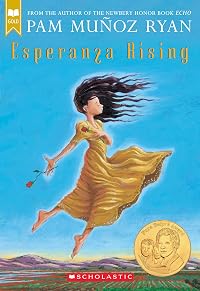
Esperanza Rising
by Pam Muñoz Ryan
On This Page
Description
Esperanza and her mother are forced to leave their life of wealth and privilege in Mexico to go work in the labor camps of Southern California, where they must adapt to the harsh circumstances facing Mexican farm workers on the eve of the Great Depression.Tags
Recommendations
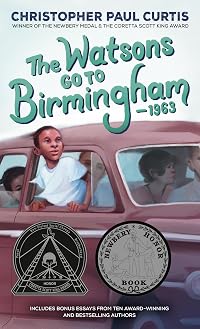
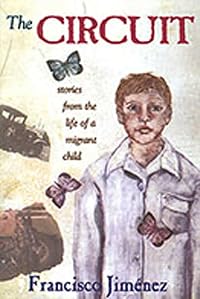
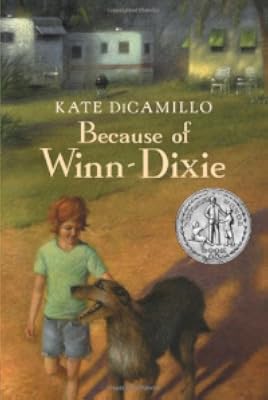
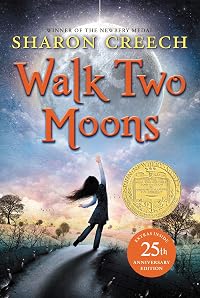



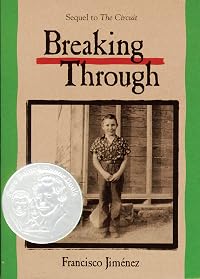
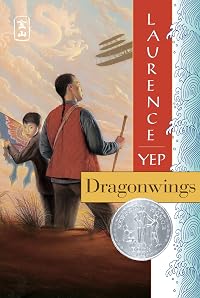
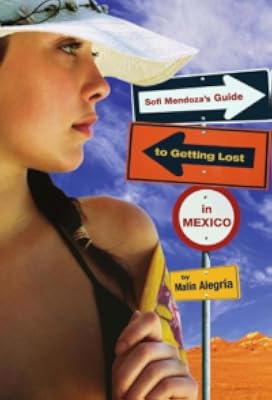
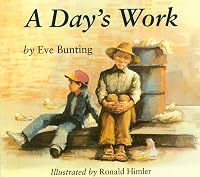


Member Recommendations
Member Reviews
Is it possible to fall in love with a book? This book made me smile, cry, become angry, had me remember, and just so much more. We travel the pages of this book with Esperanza and become part of the tale with her. As a Mexican American whose own family immigrated here, I can understand some of her story as it was that of my own parents. I think the author painted the story with just enough color to capture the reader's attention. This is a must-read.
Esperanza Rising by Pam Munoz Ryan is an award-winning YA work of historical fiction that chronicles the life a Mexican farmworker in the 1930s. In the book's beginning, Esperanza's wealthy father is killed by bandits in Mexico; then, a scheming uncle sets fire to her family’s ranch in order to pressure her mother into marriage. Esperanza & her mother escape to the United States with only their lives and life changes drastically for them. Former servants help them to find work as farm laborers and Esperanza finds out what life is like when one is no longer a member of the privileged class. Both the conditions of 1930’s farm workers and the status of Mexicans who came to America for a better life with more choices are examined in show more this story.
This is a beautifully written book that educates while it tells an engaging story. Capturing an era of California history, readers will sympathize with Esperanza, who must learn to work hard after living a life of luxury -- but more than that, they will be amazed by the strength she shows as she adjusts to the difficult life of a farmworker.
Esperanza Rising celebrates the Latino cultural experience in a realistic way and the author does not shirk away from exposing both the ethnic tensions that existed along with the plight of the Mexican-American workers during the Great Depression which included forced deportation, horrific living conditions and competition from the incoming “Okies. The author knows what she is writing about as she based this story on her own grandmother’s experience when she came from Mexico which gives the book a very authentic feel. show less
This is a beautifully written book that educates while it tells an engaging story. Capturing an era of California history, readers will sympathize with Esperanza, who must learn to work hard after living a life of luxury -- but more than that, they will be amazed by the strength she shows as she adjusts to the difficult life of a farmworker.
Esperanza Rising celebrates the Latino cultural experience in a realistic way and the author does not shirk away from exposing both the ethnic tensions that existed along with the plight of the Mexican-American workers during the Great Depression which included forced deportation, horrific living conditions and competition from the incoming “Okies. The author knows what she is writing about as she based this story on her own grandmother’s experience when she came from Mexico which gives the book a very authentic feel. show less
I liked this book for three reasons. First, the language the author used was very descriptive and lyrical, and I found it especially interesting that there were Spanish words integrated into the text. This helped me as a reader connect and identify with the characters and the Mexican culture. The following passage from the text shows the descriptive nature of the language, as well as the use of Spanish words.
“Señor Rodriguez stared blankly, then said, '¿Qué pasó, niña? What happened?'
She took a quivery breath. As she told the story, she watched the grief twist Senor Rodriguez's face and overtake him as he sat down on the patio bench, shaking his head. She felt as if she were in someone else's body, watching a sad scene but show more unable to help.”
Second, I enjoyed the plot of the book. The way the chapters are organized by the harvest seasons (Grapes, Potatoes, etc.) brings the reader closer to the characters and to what is happening in the novel. There is also a lot of suspense and tension in the book. For example, I was on the edge of my seat as the family was escaping their farm and leaving Mexico. Also, in the last chapter, Alfonso leaves his work in the fields to get the women at the sheds. Esperanza senses something is wrong.
“Esperanza felt the blood drain from her face and she suddenly knew why Alfonso was here. It had to be Mama.”
The rest of the paragraph continues to talk about Mama having a possible relapse and how scared Esperanza was, but then it is resolved that it was not Mama and turns out to be something good. But the author adds such suspense to the situation through those lines and brings the reader even greater joy to find out that nothing was wrong.
Lastly, this book pushes readers to think about what it must have been like for Mexican immigrants during this time period, and what it might still be like today for some. There was lots of racism and prejudice against Mexicans. It also makes readers think about what rights should be given to workers such as fair pay and decent working and living conditions. The following passage depicts these struggles:
“We have gone to work through angry crowds of our own people, and I'm afraid they might be right! They send people back to Mexico even if they don't belong there, just for speaking up. We live in a horse stall. And none of this bothers you? Have you heard they are building a new camp for Okies, with a swimming pool? The Mexicans can only swim in it on the afternoon before they clean it! Have you heard they will be given inside toilets and hot water? Why is that, Miguel? Is it because they are the fairest in the land?”
I feel as though there is more than one big idea in this story. One is that you can't be afraid to start over. Sometimes life throws us curve balls, but we have to fight through it to succeed. Another theme is that despite what conditions under which you may live, it is always possible and easier to get through it if you have the right support from friends and family. show less
“Señor Rodriguez stared blankly, then said, '¿Qué pasó, niña? What happened?'
She took a quivery breath. As she told the story, she watched the grief twist Senor Rodriguez's face and overtake him as he sat down on the patio bench, shaking his head. She felt as if she were in someone else's body, watching a sad scene but show more unable to help.”
Second, I enjoyed the plot of the book. The way the chapters are organized by the harvest seasons (Grapes, Potatoes, etc.) brings the reader closer to the characters and to what is happening in the novel. There is also a lot of suspense and tension in the book. For example, I was on the edge of my seat as the family was escaping their farm and leaving Mexico. Also, in the last chapter, Alfonso leaves his work in the fields to get the women at the sheds. Esperanza senses something is wrong.
“Esperanza felt the blood drain from her face and she suddenly knew why Alfonso was here. It had to be Mama.”
The rest of the paragraph continues to talk about Mama having a possible relapse and how scared Esperanza was, but then it is resolved that it was not Mama and turns out to be something good. But the author adds such suspense to the situation through those lines and brings the reader even greater joy to find out that nothing was wrong.
Lastly, this book pushes readers to think about what it must have been like for Mexican immigrants during this time period, and what it might still be like today for some. There was lots of racism and prejudice against Mexicans. It also makes readers think about what rights should be given to workers such as fair pay and decent working and living conditions. The following passage depicts these struggles:
“We have gone to work through angry crowds of our own people, and I'm afraid they might be right! They send people back to Mexico even if they don't belong there, just for speaking up. We live in a horse stall. And none of this bothers you? Have you heard they are building a new camp for Okies, with a swimming pool? The Mexicans can only swim in it on the afternoon before they clean it! Have you heard they will be given inside toilets and hot water? Why is that, Miguel? Is it because they are the fairest in the land?”
I feel as though there is more than one big idea in this story. One is that you can't be afraid to start over. Sometimes life throws us curve balls, but we have to fight through it to succeed. Another theme is that despite what conditions under which you may live, it is always possible and easier to get through it if you have the right support from friends and family. show less
This is such a compelling story. It opens with a description of Esperanza's loving and happy life on her family's ranch, but the sense of foreboding is strong. The reader knows this is all about to change. The story of Esperanza's tragedy and her path through grief and change is beautifully told as the agricultural season in the San Joaquin valley unfolds. There are so many connections to this book - agriculture, immigration, minimum wage and unions, socioeconomic class. An author study of Ryan would be a great addition because the story is largely based on Ryan's grandmother's experience.
I loved every moment and every sentence of this book - and it touched on so many memories and stories told to me by my own light skinned mexican-born grandmother who also worked the canning/packing sheds as a young woman. My only critique was at the beginning of Ezperanza's transition: I wanted her mother's desire to be more complex. After her mother was diagnosed with depression (towards the end) my critique was satisfied. Again, and incredible book - I forgot I was reading a book written for children.
Esperanza Rising is one of those lovely young adult books that is also a wonderful read for an adult. The protagonist is complex and compelling, and her voice rings true. It was so refreshing to read about a character who is flawed, but gains understanding of these flaws over the course of the story. I think it would be a great book for class discussions - it covers immigration, racism, and other ugly parts of American history. I liked the use of Spanish interspersed throughout the book, and I found the language to be rich but easy to read. I am interested to know how different the lives of migrant workers then and now are - what an interesting research project.
I was surprised by how much sixth grade book club seemed to like this. It's a downer, to be sure, but their discussion was so insightful that I think we'll want to stick it in our back pocket for years to come. Even the boys dug it.
Members
- Recently Added By
Lists

Favorite Childhood Books
1,651 works; 515 members

Kids' Tour of the US in Books
50 works; 5 members
NPRs Ultimate Backseat Bookshelf: 100 Must-Reads for kids 9-14
222 works; 30 members

4th Grade Books
312 works; 5 members

Satori Smiles Children's Book List
262 works; 7 members

Blue Pyramid 1,276 Best Books of All Time
1,248 works; 32 members

Books Read in 2016
4,666 works; 199 members

Historical Fiction
889 works; 91 members
Books Mentioned in The Wedding Planner's Daughter series
107 works; 2 members

Books Read in 2022
5,226 works; 115 members

Beautiful Feet Books
304 works; 7 members

Newbery Adjacent
747 works; 3 members

The Story of the World: Activity Book Four: The Modern Age
333 works; 2 members
Author Information

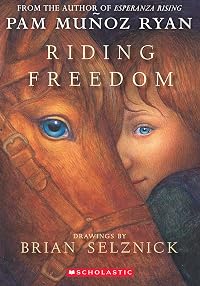
Author Pam Muñoz Ryan was born in Bakersfield, California on December 25, 1951. She received a B. A. in child development and a M. A. in education from San Diego State University. Before becoming a full-time author, she worked as a bilingual Head Start teacher and as an early childhood program administrator. At first, she wrote adult books about show more child development, but soon switched to writing children's books. She has written over twenty-five picture books, novels, and nonfiction books for young readers. The novel Esperanza Rising, winner of the Pura Belpre Medal, the Jane Addams Peace Award, an ALA Top Ten Best Book for Young Adults, and the Americas Award Honor Book, is based on her own grandmother's immigration from Mexico to California. Riding Freedom has also won many awards including the national Willa Cather Award and the California Young Reader Medal. When Marian Sang, a picture book about singer Marian Anderson, won numerous awards including the ALA Sibert Honor and NCTE's Orbis Pictus Award. In 2015 her title Echo made The New York Times Best Seller List. She also won a Kirkus Prize in the children's literature category with her title 'Echo'. (Bowker Author Biography) show less
Some Editions
Awards and Honors
Awards
Distinctions
Notable Lists
Work Relationships
Has as a student's study guide
Common Knowledge
- Canonical title
- Esperanza Rising
- Original title
- Esperanza Rising
- Alternate titles
- Esperanza Rising (Book on CD) (Book on CD)
- Original publication date
- 2000
- People/Characters
- Esperanza Ortega; Miguel; Abuelita; Isabel; Hortensia; Ramona (show all 7); Marta
- Important places
- Mexico; San Joaquin Valley, California, USA; California, USA
- Important events
- Great Depression
- Epigraph
- Aquel que hoy se cae, se levantará mañana.
He who falls today may rise tomorrow.
Es más rico el rico cuando empobrece que el pobre cuando enriquece.
The rich person is richer when he becomes poor, than the p... (show all)oor person when he becomes rich.
- Mexican proverbs - Dedication
- To the memory of Esperana Ortega Muñoz Hernandez Elgart, mi abuelita.
Baskets of grapes to my editor, Tracy Mack, for patiently waiting for fruit to fall.
Roses to Ozella Bell, Jess Marquez, Don Bell, and Hope... (show all) Muñoz Bell for sharing their stories.
Smooth stones and yarn dolls to Ibabel Schon, PhD., and Leticia Guadarrama, Teresa Mlawerr, and Macarena Salas for their expertise and assistance. - First words
- "Our land is alive, Esperanza," said Papa, taking her small hand as they walked through the gentle slopes of the vineyard.
- Quotations
- Did you know that when you lie down on the land, you can feel it breathe? That you can feel it's heart beating?
"We are like the phoenix," said Abuelita. "Rising again, with a new life ahead of us." - Last words
- (Click to show. Warning: May contain spoilers.)Then she looked into Isabel's trusting eyes and said, "Do not ever be afraid to start over."
Classifications
- Genres
- Kids, Tween, Fiction and Literature, Children's Books
- DDC/MDS
- 813.54 — Literature & rhetoric American literature in English American fiction in English 1900-1999 1945-1999
- LCC
- PZ7 .R9553 .E — Language and Literature Fiction and juvenile belles lettres Fiction and juvenile belles lettres Juvenile belles lettres
- BISAC
Statistics
- Members
- 13,515
- Popularity
- 571
- Reviews
- 853
- Rating
- (4.21)
- Languages
- English, Indonesian, Korean, Spanish
- Media
- Paper, Audiobook, Ebook
- ISBNs
- 53
- UPCs
- 1
- ASINs
- 26